|
|
 
|
More than 80% of North American retailers have integrated AI into their operations, focusing on digital commerce, merchandising pricing and strategy, marketing and IT, according to Berkeley Research Group, Sam's Club utilizes its AI-powered Scan & Go app to verify purchases as it redesigns checkout at 600 locations, Levi Strauss & Co. uses a Microsoft-supported agentic framework for its operations and the Target Trend Brain AI platform creates new ideas for its merchants. However, despite widespread implementation, AI's business impact is unclear without strategic planning.
|
|
|
| |
 |
| (SOPA Images/Getty Images) |
Walmart attributes its strong Black Friday and Cyber Monday sales, in part, to the use of its Sparky generative AI agent, which customers used to compare products, get purchase suggestions and plan parties. Increased app usage by nearly 10 million in-store shoppers contributed to a 25% increase in spending. Popular conversational topics with Sparky included electronics, the Walmart+ subscription program and gift cards.
|
|
|
Various companies, including Tom Ford Fashion, Warby Parker, Walmart and GlassesUSA, have rolled out a variety of virtual eyewear try-on solutions that use AI and AR technologies to allow customers to see how specific frames would look on them. Tom Ford's tool will incorporate pupillary distance calculation for true-to-scale eyewear visualization while Warby Parker's mobile AI tool, Advisor, provides tailored suggestions based on a face scan in its app.
|
|
|
Fashion brand Topshop will debut an AI-driven catwalk in February that will showcase a blend of physical and digital fashion experiences, marking a significant step in fashion innovation. The event will feature immersive experiences with AI-generated models and interactive shopping, facilitated by Google Cloud technology. The event, in collaboration with PayPal, aims to redefine fashion through technology and culture, as well as set a new standard for fashion experiences.
|
|
|
Personalized recommendations are at the forefront of AI's influence on holiday shopping this year. Tools like Amazon's Rufus and OpenAI's upgraded ChatGPT use browsing history, purchase patterns and detailed user prompts to suggest gifts tailored to individual preferences and occasions. Walmart's Sparky assistant and Target's app-based gift finder further enhance the experience by offering suggestions based on recipient age and hobbies. These AI-driven features help shoppers find thoughtful gifts with less effort, reflecting the growing trend toward highly personalized online shopping experiences.
|
|
|
| |
 |
| (NurPhoto/Getty Images) |
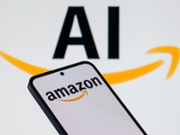
Amazon Web Services (AWS) has launched its latest AI chip, Trainium3, aiming to compete with Nvidia and Google in the AI hardware market. The chip promises cost-effective and efficient performance for AI model calculations but lacks the comprehensive software libraries that make Nvidia's GPUs user-friendly. AWS hopes to attract companies seeking affordable AI solutions, with Trainium3 already deployed in several data centers, but despite the chip's potential, AWS faces challenges in gaining traction among AI developers who currently favor Nvidia's offerings.
|
|
|
|
AI tools are increasingly popular among shoppers, with AI-driven traffic to retail sites expected to surge by more than 500% this holiday season, according to Adobe Analytics. Tools like ChatGPT and Google's Gemini help consumers by providing price histories and price change predictions, aiding in gift selection. Despite AI's advantages in finding the best deals, Mike Todasco of San Diego State University's AI Center emphasizes that AI lacks the ability to create meaningful, personal gifts, underscoring the irreplaceable value of human creativity.
|
|
 |
|
Generative AI tools have significantly increased their role in driving traffic to US retailers, with an 830% year-over-year growth in early November, per Adobe Analytics. AI-driven shoppers are 30% more likely to make purchases compared to traditional search users.
|
 |
|
|
|
Bing illustrates that AI-powered search is fundamentally changing how users engage with content online by moving the research and discovery phases of the customer journey into conversational AI environments. Users now obtain synthesized answers directly from the AI experience, resulting in fewer but more intentional clicks. Consequently, engagement is shifting to AI-generated content, prompting brands to adjust their metrics and touchpoints to effectively reach potential customers.
|
|
|
Discover what's next with cutting-edge innovations from AI-driven solutions to sustainable practices shaping the industry at Retail's Big Show this January. Explore 100-plus product categories and connect with 1,000-plus exhibitors redefining retail. Every aisle is packed with ideas to transform your business. Don't miss retail's biggest marketplace — lock in your Expo Pass today! Retailers can claim a free Expo Pass through Dec. 30. Non-retailers can purchase a pass and experience the latest retail tech firsthand. Start scanning the future — secure your spot now! |
|
A record-breaking 202.9 million Americans shopped over the Thanksgiving holiday weekend from Thanksgiving to Cyber Monday, surpassing last year's 197 million and NRF's initial forecast of 186.9 million. Black Friday remained the top shopping day, with 80.3 million in-store and 85.7 million online customers, while Cyber Monday saw 75.9 million online shoppers. Sunday also set records: 32.6 million shopped in-store and 38.7 million shopped online. Consumers spent an average of $337.86, largely on holiday-related purchases. Get more details. |
|
|
 |
|
| |
| Every child is in a way a genius; and every genius is in a way a child. |
Arthur Schopenhauer,
philosopher |
|
| |
 |
|
|
| | |


.png)