Design Miami special: Galerie Signé’s debut, Brazilian modernism and Japanese craft
|
Wednesday 3/12/25
|

|
|
London
Paris
Zürich
Milan
Bangkok
Tokyo
Toronto
|
|
|
|

back to the future
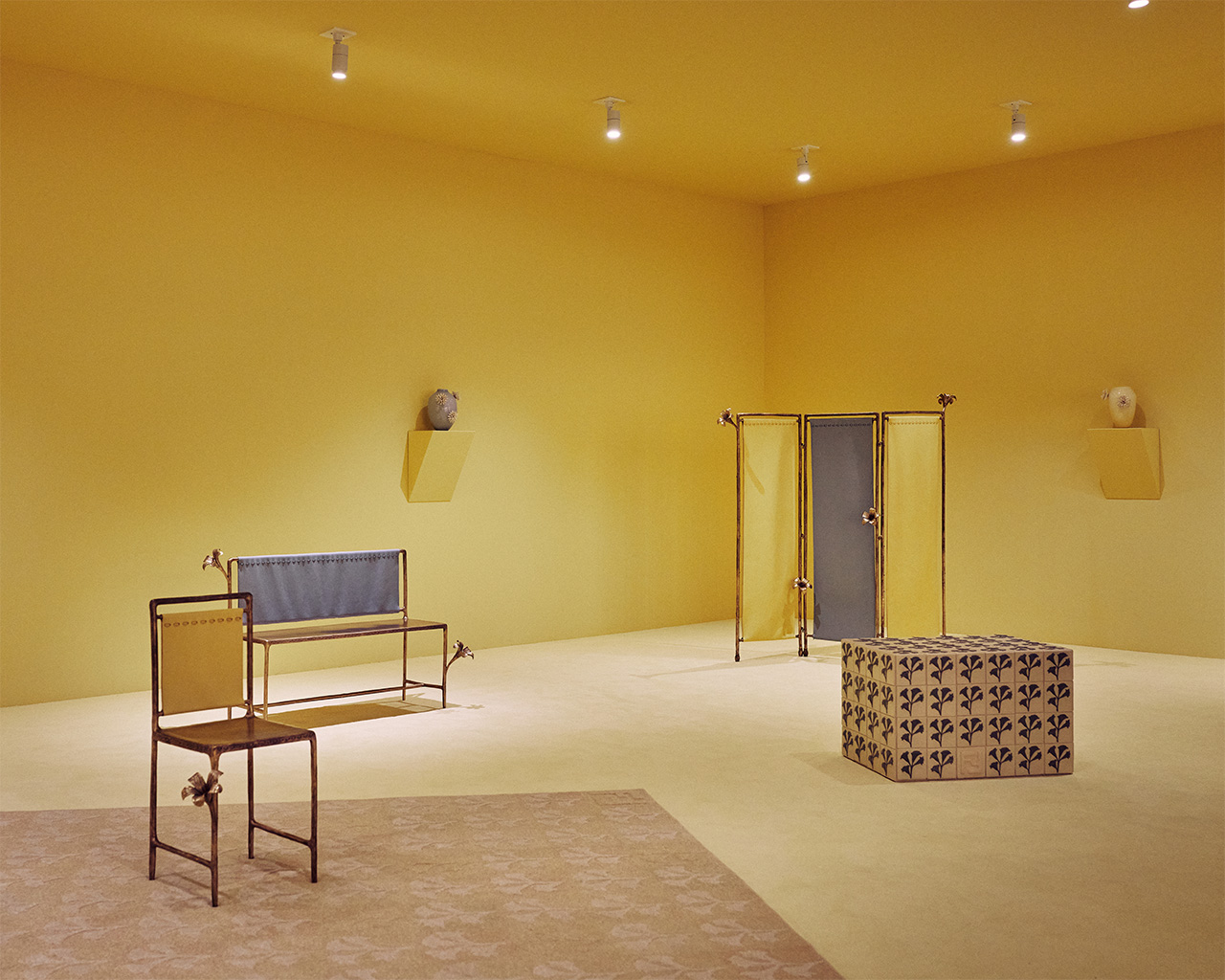
We’re at Design Miami for this week’s dispatch, which provides us with plenty of past wisdom for the present. Nic Monisse starts us off on the trade floor with insight into big-name brands such as Fendi (pictured) and a few tips from the collectable-design industry, before speaking to the duo behind New York-based practice Stephen Burks Man Made. We also get a behind-the-scenes look at Galerie Signé’s colourful debut and a down-to-earth showcase from Philadelphia’s Moderne Gallery. Plus: what Brazil’s mid-century masters can tell us about contemporary design with Mercado Moderno.
|
|
OPINION: NIC MONISSE
Object lessons
Collectable design is on the rise. While there’s no hard-and-fast definition of the term, it can encompass everything from bespoke contemporary pieces and limited-edition creations to rare, out-of-production works from mid-century masters. For proof of the sector’s growing popularity, you only have to look to major auction houses such as Christie’s, Phillips and Sotheby’s. In June this year they collectively reported a year-on-year increase in design sales of 62.3 per cent.
Experts suggest that this sales spike is thanks to growing budgets for interior fit-outs; institutional buying; and clearer auction records that demonstrate design’s investment value. The trend is also reflected in the rise of collectable-design events – and the mother of them all is Design Miami. Its 20th-anniversary edition is taking place in its namesake city this week, featuring 70 exhibitors from across the globe. Monocle attended the preview yesterday and picked up these industry tips from the trade floor.
1. Blur boundaries
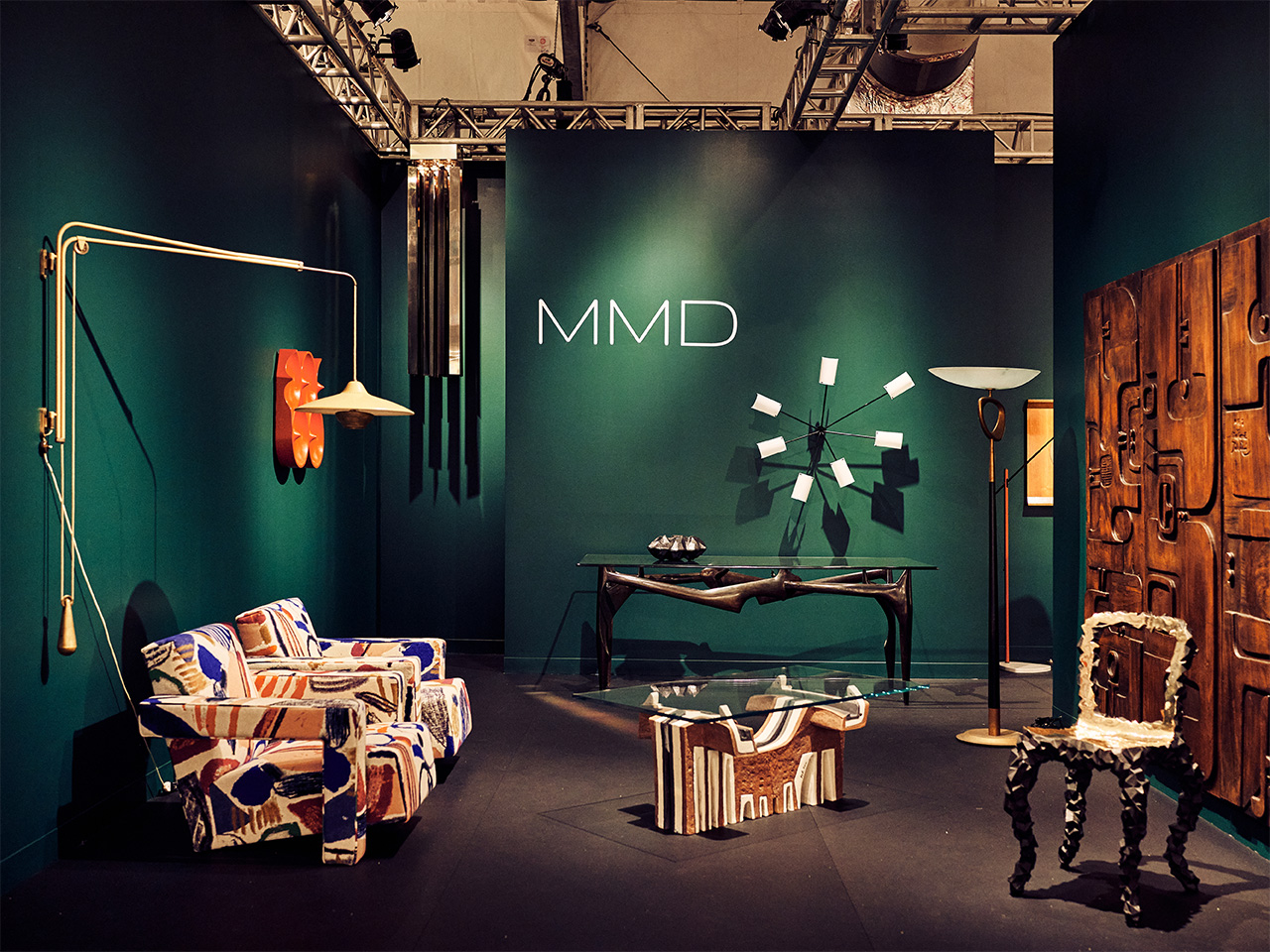
There are plenty of parallels between the fine-art and collectable-design markets, so the two could learn from each other. At Design Miami, Roosendaal-based Mass Modern Design is presenting works by the likes of David Delthony and Studio Job, which blur these disciplinary boundaries. “It challenges our perception of daily life, transforming furniture into a medium for artistic expression,” says the gallery’s founder, Etienne Feijns. “It can provoke thought, evoke feeling and elevate the spaces that we inhabit into experiences of art itself.”
2.Find room for industry
If collectable design is focused on rare or bespoke pieces, where does that leave industrial production powerhouses? Certainly not out of the picture, according to high-end appliance specialists Gaggenau, which won a Monocle Design Award earlier this year. In Miami, the German brand is presenting its Expressive Series oven on a monolithic wall of deep-green marble. “Being present at a collectable design fair lets us engage with an audience that values objects for their cultural and material qualities,” says Gaggenau’s managing director, Peter Goetz. “It’s the right context to show off our appliances for what they truly are: thoughtfully crafted design pieces.”
3.Bring design to the people
To share the power of design with the public, the event makes an effort to bring the fun of the fair beyond the marquee with its annual commission in Miami Design District. It’s an important initiative that installs work in the civic realm. This year’s winning project by New York-based Katie Stout is called “Gargantua’s Thumb” and features sculptural benches drawn from the forms of miniature clay animal figures.
4. Lean on the past
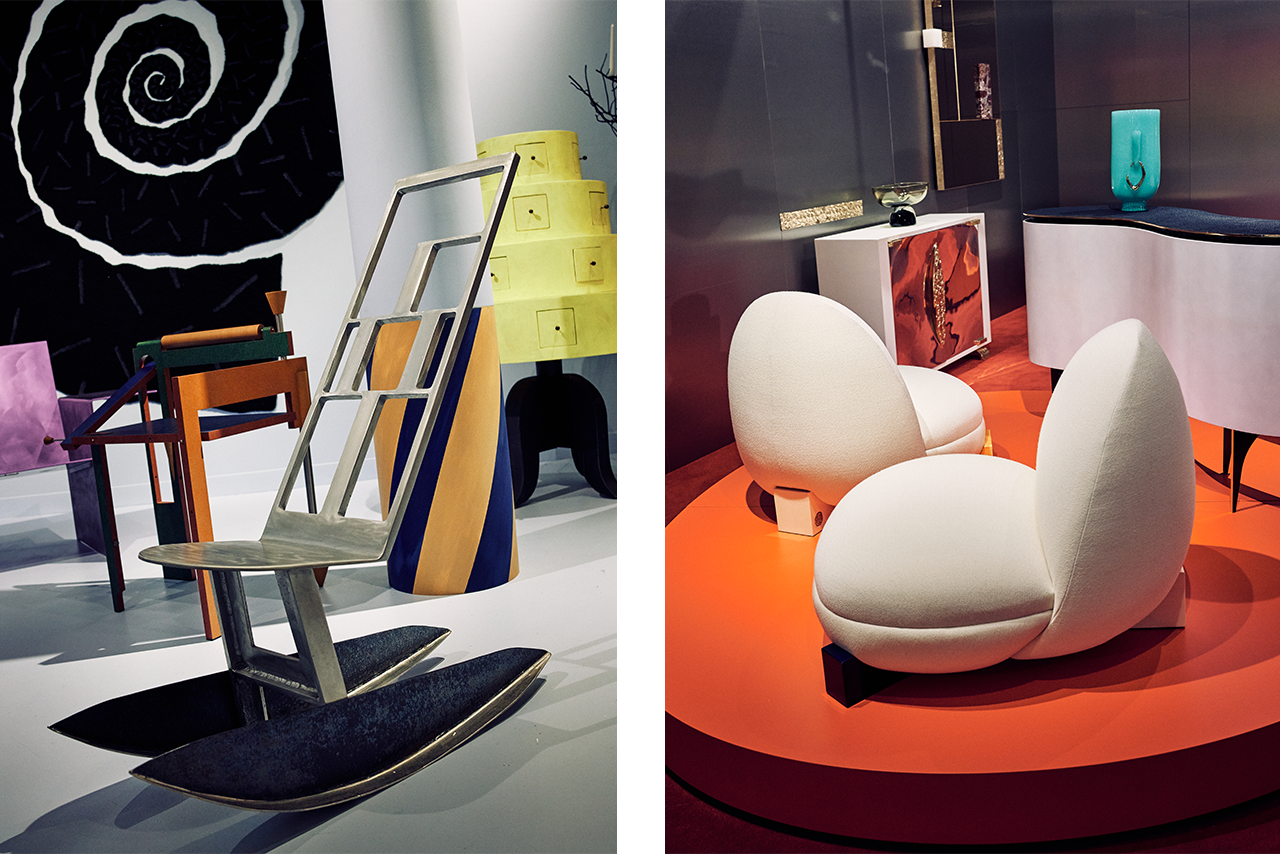
New York-based gallery Superhouse has titled its showcase American Art Furniture: 1980-1990, a reflection on what its founder and director, Stephen Markos, says is a defining period in design history. “Many of the works on view were made in small studios, far from the mainstream industry, and they collectively defined a new American avant-garde,” says Markos. “The decade’s energy reflected broader cultural shifts; artists pushing against convention, questioning identity and using materiality as a form of rebellion.” It’s a noble brief for today’s designers.
5. Expand your horizons
In this case, to the Gulf – or at least that’s what Design Miami is doing. The fair’s CEO, Jennifer Roberts, announced a new, multi-year partnership with Dubai-based cultural organisation Alserkal. The organisation will curate a flagship fair in early 2027, reflecting the simultaneous rise of collectable design and Gulf markets.
Nic Monisse is Monocle’s design editor. For more news and analysis, subscribe to Monocle today.
|
|
BMW  MONOCLE MONOCLE
|
|
DESIGN NEWS: Galerie Signé, Paris
Present company
Paris-based Galerie Signé is making its debut at this year’s Design Miami tent in Pride Park. The gallery’s booth, which picked up a prize for Best New Voice, is particularly hard to miss, with an eclectic line-up that includes pieces rendered in glass, textiles, wood, metal and paper from new and established talent. “The important thing is to create a connection between the past and the present,” says Maxime Bouzidi, founder of Galerie Signé. “There’s a continuity to design; even if there are occasional ruptures or breaks, everything is still part of the same sequence.”
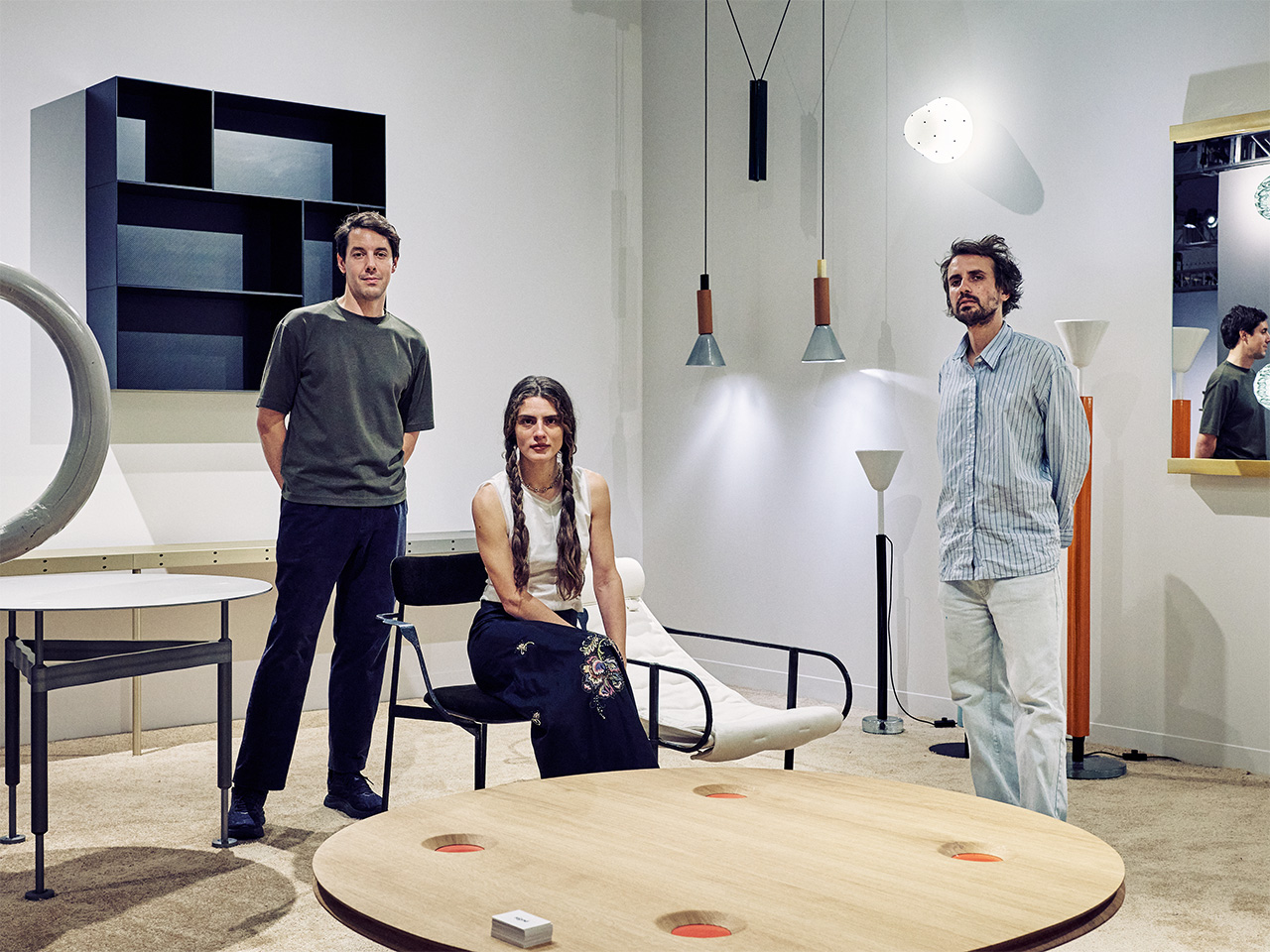
To furnish the booth and explore the link between past and present, Bouzidi tapped emerging names such as creative duo Marie & Alexandre (pictured) and Swiss-French designer Julie Richoz to present new lighting pieces and plush sofas. These sit alongside pieces by legendary designer Martin Szekely. The works are, complementary, exemplifying design continuity.
Visit Galerie Signé at Booth G12.
|
|
WORDS WITH... Malika Leiper & Stephen Burks, New York
It takes two
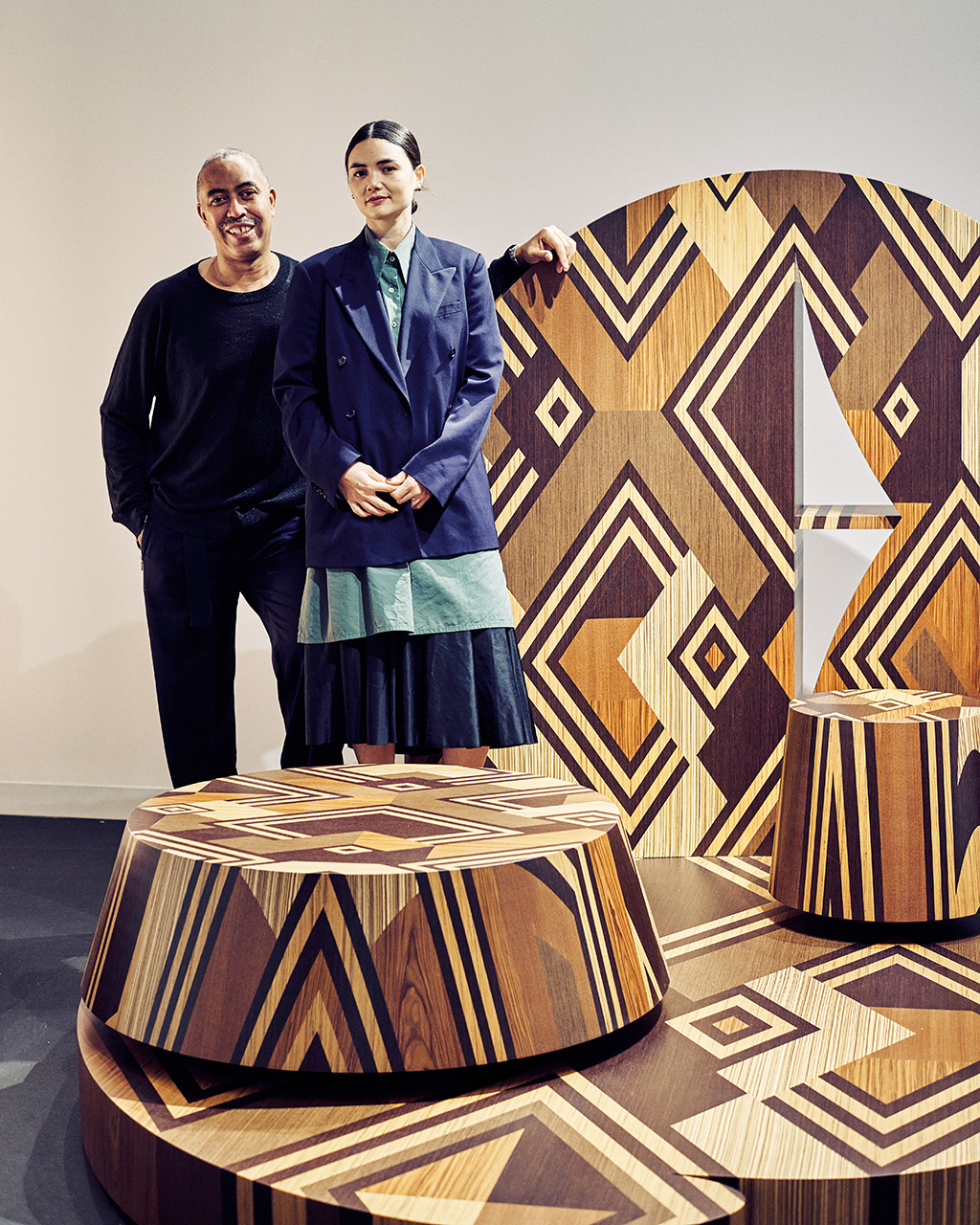
New York-based Stephen Burks is an industrial designer whose practice bridges craft, community and industry. He runs Stephen Burks Man Made with his partner, Malika Leiper, a cultural strategist and the director of cultural affairs for the business. Together, they have collaborated with artisans and immersed themselves in creative communities across six continents, producing work that spans furniture, lighting and interiors. Their pieces can be found in the permanent collections of institutions such as the Cooper Hewitt Smithsonian Design Museum and at global creative events such as the Venice Biennale, Salone del Mobile and, of course, Design Miami.
Tell us what you’re presenting at Design Miami this year.
Stephen Burks: Malika and I are presenting The Lost Cloth Object in collaboration with Italian wooden-surface manufacturer Alpi. It’s at the Design Miami 2.0 special-project booth curated by Glenn Adamson. It’s a hybrid project fusing Kuba textile arts and wood marquetry into a speculative ceremonial site that is both a place and a kind of portal. It’s also a conceptual starting point for a commercial wood veneer that we’re developing with Alpi.
Which designer has influenced you the most?
Malika Leiper: We like to think of Isamu Noguchi as our spiritual ancestor. His belief that everything is art allowed him to move fluidly between the disciplines of design, landscape, sculpture and theatre sets. His Japanese-American outsiderness informed the deeper sociopolitical themes that he expressed through abstract form. Our pilgrimage to his home and atelier in Takamatsu revealed the kind of timeless essentialism that we’re searching for in our own artistic practice.
Christmas is on the horizon: is there a work of design you’d love to receive as a gift?
ML: We have always wanted Cassina’s Feltri armchair in the vintage quilted Raf Simons/Calvin Klein edition from 2018. It’s a project that we have greatly admired for its repurposing of found Shaker quilts, adding a degree of comfort to Gaetano Pesce’s masterpiece.
What’s a recurring source of inspiration?
SB: Travel has always been our greatest inspiration. As a nomadic practice, we’re constantly finding new forms of expression in encounters with new people and places. This year we’ve found ourselves in Montana, Senegal, Brazil, the Democratic Republic of the Congo and Japan.
A favourite project that you’ve worked on?
ML: Stephen and I fulfilled a lifelong dream of collaborating with Gee’s Bend of Alabama in a project called Quilting, which just closed at the Venice Architecture Biennale. As members of the curatorial design team for the 2025 US Pavilion under the theme “Porch: An Architecture of Generosity”, we worked with Italian fabric house Dedar to create a collection of unique abstract quilts. We spent two weeks in Boykin, Alabama, with the non-profit Sew Gee’s Bend Heritage Builders and 10 black female artists to carry forward the distinct language of the community through Dedar’s exquisite silks, linens and velvets.
We’re mapping out our 2026. Where should we visit for design inspiration?
SB: We highly recommend spending some time in Cedar House by Go Hasegawa in the village of Yoshino in Japan’s Nara Prefecture. Yoshino is the birthplace of modern forestry and has a deep spiritual tradition. Its mountainous river valley is covered in Shinto shrines made from cedar and cypress.
For more from designers such as Stephen Burks and Malika Leiper, tune in to ‘Monocle on Design’ on Monocle Radio.
|
|
from the fair: Mercado Moderno, Rio de Janeiro
What’s past is prologue
Rio de Janeiro-based Mercado Moderno is bringing some welcome Brazilian flair to Design Miami. Since launching in 2001, the gallery’s relentless championing of Brazilian modernism has helped to elevate the standing of the design movement on a global scale. At this year’s edition of the fair, the space will present historic pieces alongside contemporary talent.
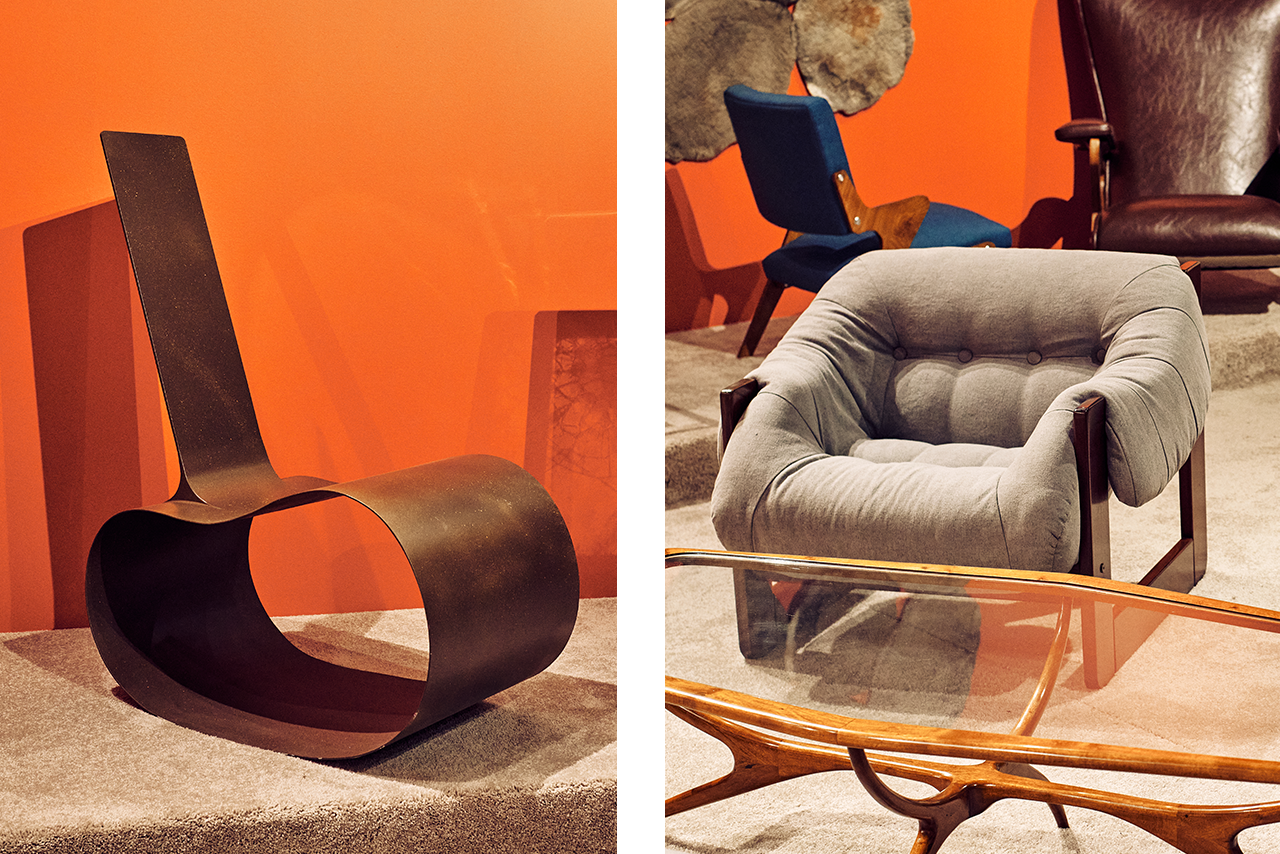
There are standout inclusions from mid-century masters Joaquim Tenreiro and José Zanine Caldas, whose low slung chairs and dark wood creations continue to entice audiences today. More modern names represented at the fair by Mercado Moderno include Rodrigo Simão, Inês Schertel and Alê Jordão, whose output proves that Brazil is still fertile ground when it comes to outstanding design. Mercado Moderno’s offerings possess sinuous silhouettes and shapes with organic appeal – a vernacular that we have come to expect and appreciate from Brazilian designers old and new.
Visit Mercado Moderno at Booth G16.
|
|
in the booth: Moderne Gallery, Philadelphia
Second nature
For this year’s edition of Design Miami, Philadelphia-based Moderne Gallery is channeling the concept of shokunin – a Japanese term associated with skilled craftspeople that carries ideals of mastery, achieved through dedication, humility and a relentless pursuit of perfection. As expert dealers in the work of American-Japanese designer George Nakashima, Moderne Gallery will be showcasing what this notion of artisanship looks like in action. “George Nakashima’s work endures because it embodies both innovation and reverence for nature. His use of the tree’s natural contours and his celebration of what others saw as flaws set a new standard for honoring material integrity,” says Joshua Aibel, co-director of Moderne Gallery.
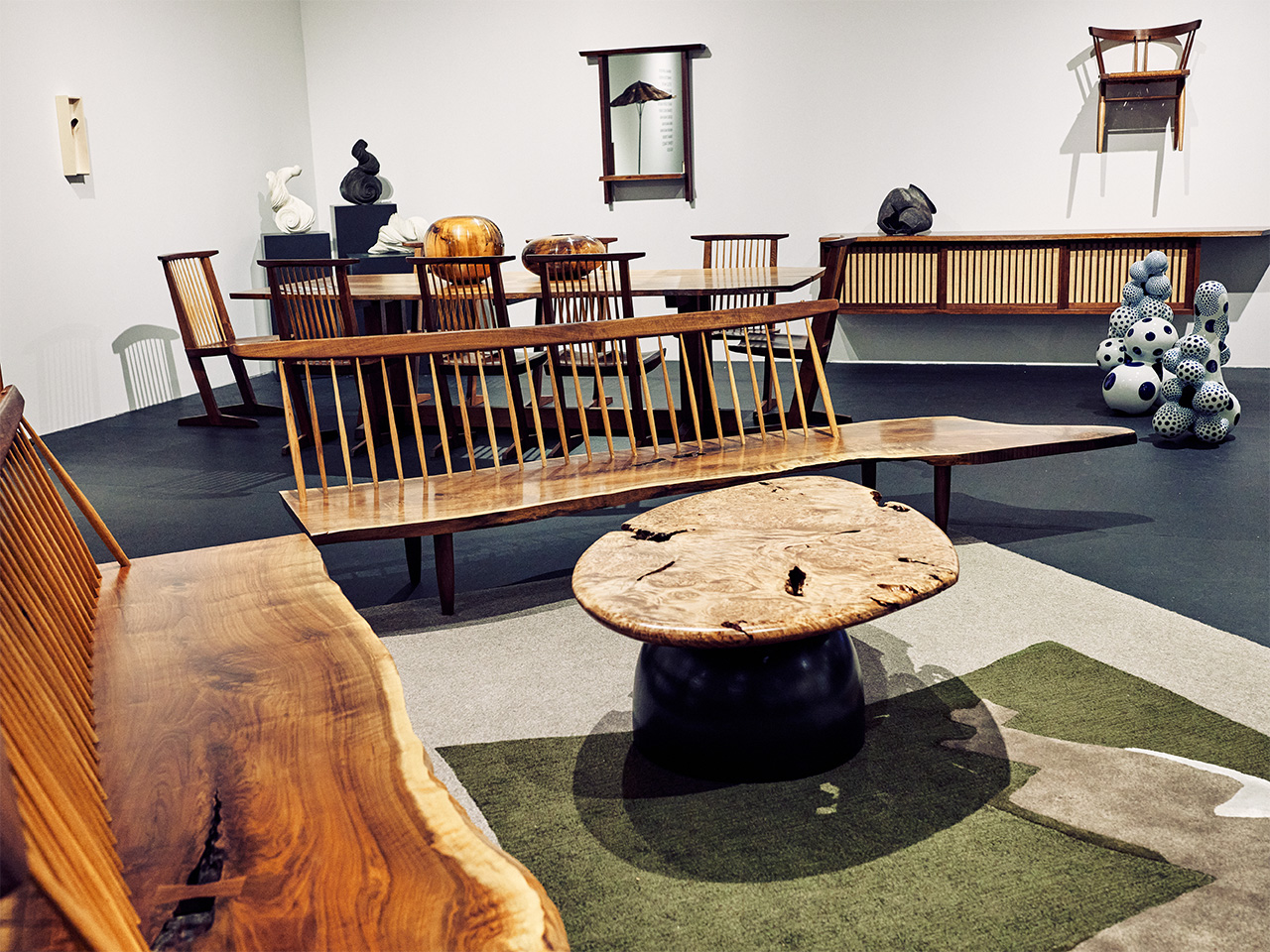
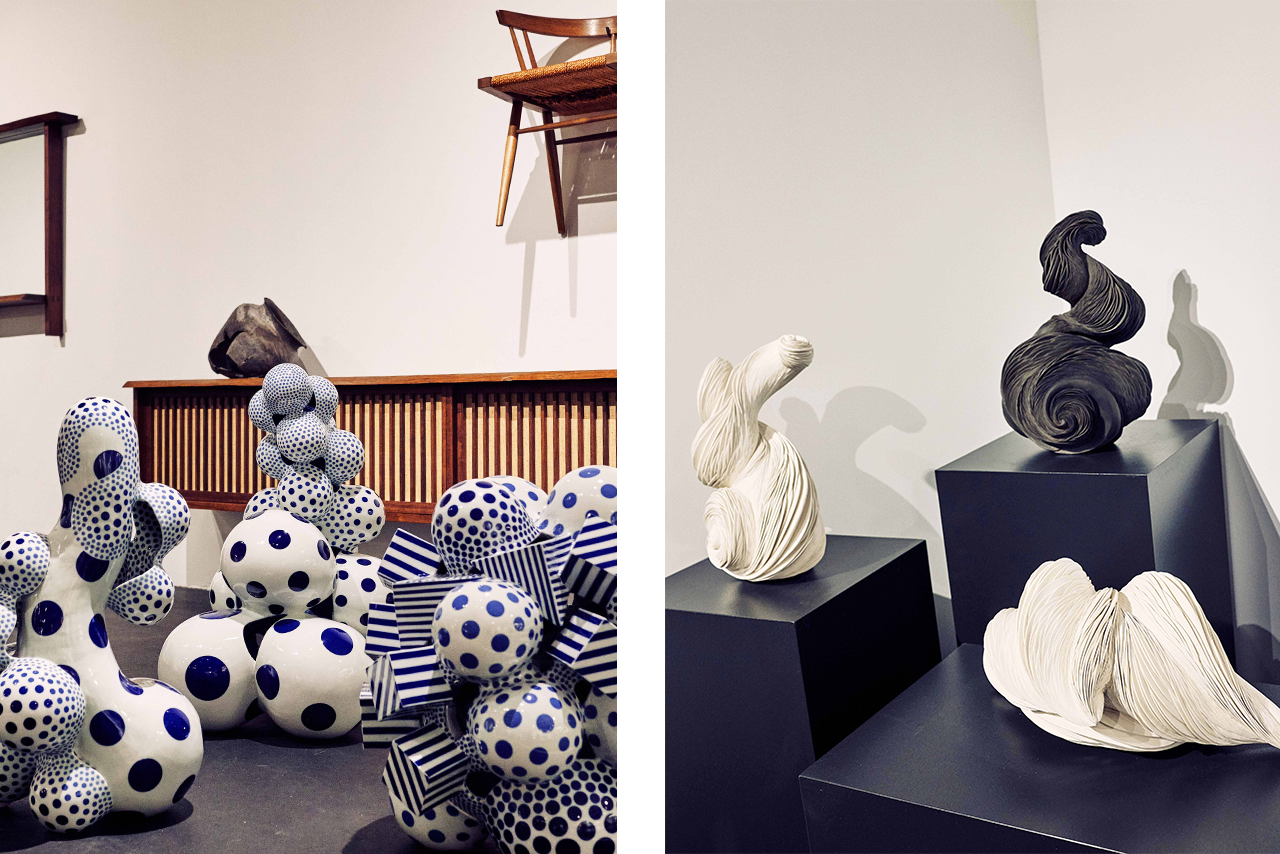
As part of its display, the gallery is presenting Nakashima’s Conoid Benches, which were made in 1972 from the same piece of American black walnut wood. Another eye-catching piece is the Kevin end table, made from English walnut in 1981. Alongside these original Nakashima pieces, are new ceramic works by Nagoya-based Harumi Nakashima and a coffee table by US woodworker Miriam Carpenter – how about that for some nominative determinism? “Rooted in a philosophy that united craftsmanship, spirituality and nature, [Nakashima’s] ethos offers enduring guidance: approach materials with humility and pursue design as a collaboration with the natural world,” says Aibel.
Visit Moderne Gallery at Booth G19.
Look out for more design stories in Monocle’s winter newspaper, ‘Alpino’, which is out today on all good newsstands.
|
|
| | |