By Jorge Liboreiro
The European Union has entered the final countdown.
In two weeks from now, the 27 leaders will gather in Brussels to make a decision that could potentially define the continent’s security architecture for generations to come: how to finance Ukraine’s budgetary and military needs as it resists Russia’s relentless invasion.
The urgency couldn’t be any higher. Ukraine will need a fresh injection of foreign assistance as early as April, with the United States completely removed from the Western front. The responsibility is now squarely on European shoulders, whether some leaders are willing to carry it or not. (Or whether they are willing to tell their national audiences what’s really at stake.)
Nothing highlights the sense of emergency like the news we heard earlier today. Friedrich Merz, the federal chancellor of Germany, has suddenly cancelled his trip to Norway and will instead fly to Brussels to meet with Belgian Prime Minister Bart De Wever and European Commission President Ursula von der Leyen in a bid to unblock the reparations loan for Ukraine.
The three will gather for a private dinner on Friday evening.
The fact that the German leader, of all people, feels the need to change his agenda in such an abrupt manner highlights the extremely fragile state of the debate and the enormous stakes at play.
De Wever, whose country holds the bulk of the Russian assets (€185 billion) at Euroclear, has become the prime opponent of the unprecedented proposal. Last week, he sent a scathing letter to von der Leyen, lambasting the reparations loan as “fundamentally wrong” and ridden with “multifold dangers” that could lead to multi-billion-euro losses for both Belgium and Euroclear.
“Why would we thus venture into uncharted legal and financial waters with all possible consequences, if this can be avoided?” De Wever wrote. “I will never commit Belgium to sustain on its own the risks and exposures that would arise from the option of (a) reparations loan.”
De Wever also described the untested project as an obstacle to the White House’s ongoing push to strike a deal between Ukraine and Russia. (Remember: the original 28-point plan pitched a highly controversial idea to use the assets for America’s and Russia’s commercial profit.)
“Hastily moving forward on the proposed reparations loan scheme would have, as collateral damage, that we, as the EU, are effectively preventing reaching an eventual peace deal,” he said.
De Wever’s letter was the talk of the town this week, particularly his remarks about the peace process, which some EU officials and diplomats saw as provocative, out of line and simply unhelpful.
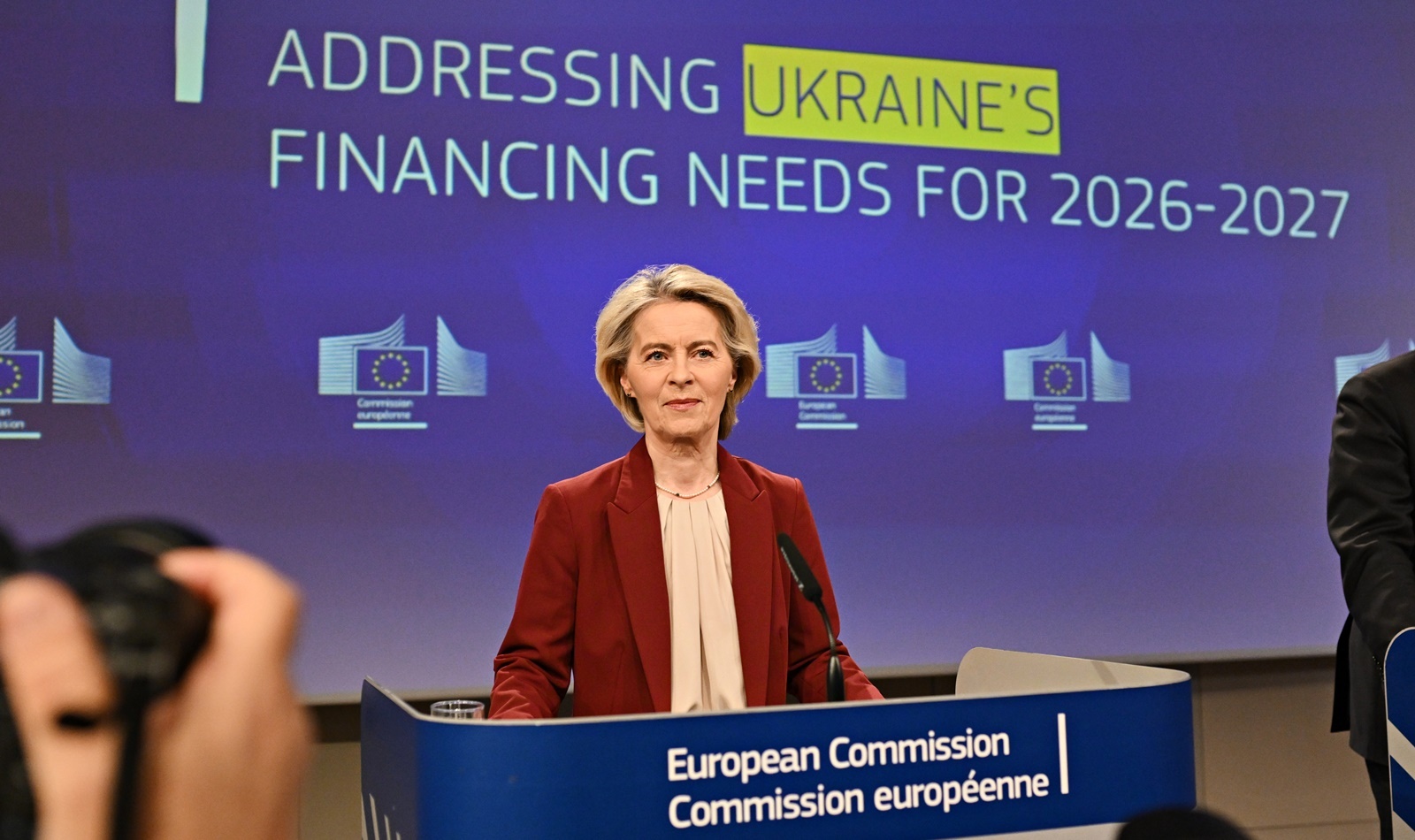
Von der Leyen faced repeated questions about De Wever when she presented the legal texts to establish the reparations loan. She offered sweeping guarantees to protect Euroclear and ensure it has liquidity at all times to honour the claim with the Russian Central Bank.
“We have created a very strong solidarity mechanism where in the very end the Union can intervene, because we want to make very sure to all our member states, but specifically also to Belgium, that we will share the burden in a fair way, as it is the European way,” she said on Wednesday.
By far, the most eye-catching element of the package is a new law that would prohibit returning the sovereign assets to Russia. It is based on Article 122 of the EU treaties, which, until now, has only been used for economic emergencies, such as the energy crisis. Crucially, Article 122 only requires a qualified majority, meaning it would override the unanimity of foreign policy.
The ban, if approved, would come with a very high bar to release the €210 billion: it would happen only after Russia’s actions “have objectively ceased to pose substantial risks for the stability of the economy” and Moscow has paid reparations to Ukraine “without economic and financial consequences” for the bloc, the text says.
In other words, the Russian assets would remain firmly immobilised for the foreseeable future and be shielded against individual vetoes from member states that might be tempted to break ranks and unfreeze the funds to comply with Washington’s pressure campaign.
It is an act of resistance and defiance, a declaration of intent and leverage. Europe, for all the talk about being sidelined and ignored, which in some respects is actually fair and accurate, is now ready to play its cards and, if necessary, go into uncharted waters to stand its ground.
“If we are serious about this, we cannot leave it to non-European states to decide what happens to the financial resources of an aggressor state that have been lawfully frozen within the jurisdiction of our own rule-of-law and in our own currency,” Friedrich Merz said in a new op-ed.
“The decisions we make now will shape Europe’s future.”
|