|
|
 
| |
 |
| (Designer491/Getty Images) |
Four former federal employees have filed a class-action lawsuit challenging President Donald Trump's executive orders that eliminate diversity, equity and inclusion programs in the federal government. The lawsuit, Fell et al. v. Trump et al., alleges that the orders resulted in unlawful terminations based on perceived ideology and past equity-related duties. The plaintiffs seek reinstatement, back pay and damages, and the case could set a precedent regarding presidential authority over the civil service.
|
|
|
|
|
Sometimes layoffs are necessary, but brand damage isn't. Discover how top companies use career transition services to protect morale, culture, and reputation. Get the 2025 Improving Career Transition report and lead with empathy and impact. Download now » |
|
|
|
| ADVERTISEMENT |  |
|

| |
 |
| Lucas (Tom Williams/Getty Images) |
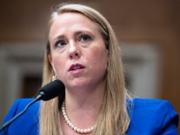
On a recent podcast, EEOC Chair Andrea Lucas underscored that while DEI programs are not inherently unlawful, those that result in discrimination, stereotyping or racism will be classified as illegal DEI. Lucas outlined different employer responses to recent executive actions, ranging from maintaining robust DEI efforts to making cosmetic changes and enacting meaningful compliance reforms. Lucas warned that employers failing to shift from DEI-focused to compliance-focused programs face imminent consequences, noting that the EEOC is actively monitoring organizations, including using web archives, to detect non-compliance.
|
|
 |
Lucas's remarks provide an important counterweight in a moment where "illegal DEI" is being used broadly -- and often inaccurately -- in public debate. Her clarification returns the focus to what actually governs employer conduct: federal civil-rights law. By stating plainly that DEI initiatives are not unlawful by definition, she reinforces a distinction that has become increasingly blurred. The significance is twofold. First, it dispels the notion that all DEI carries legal risk; the risk arises only when protected characteristics are treated as determinants in employment decisions. Second, it underscores that lawful DEI continues to have a clear place within the federal framework when structured around neutral, job-related criteria. In an environment marked by shifting rhetoric and inconsistent agency signals, this type of clarity is essential. Lucas's framing is a reminder that compliance is anchored in long-standing statutory protections -- not politics, terminology or public controversy. --BRIDGE CEO Sheryl DaijaFor actionable strategies, context and analysis to inform strategy, safeguard brand trust and lead with conviction in a volatile environment, subscribe to BRIDGE's weekly Project FORWARD leadership briefing. |
 |
|
|
|
|
See the world, build the future with Roboflow's vision AI. Enable your team to efficiently train and deploy vision models for automated quality oversight. Download the SmartPulse today! |
|
|
|
|
|

| |
 |
| (David Ramos/Getty Images) |
Microsoft has ended its practice of publishing an annual diversity and inclusion report and has removed diversity as a core priority from employee performance reviews, following an executive order from President Donald Trump targeting DEI initiatives. The company now emphasizes more general formats like stories and videos to showcase inclusion, with internal documentation shifting from the term "diversity" to "inclusion." Some employees see these moves as evidence of a longstanding lack of genuine commitment to DEI.
|
|
|
The Interior Department has directed national parks to review and eliminate gift shop items that support diversity, equity and inclusion programs to ensure gift shops "remain neutral spaces that serve all visitors." The order, stemming from President Donald Trump's executive actions against DEI initiatives, has drawn criticism from groups such as the National Parks Conservation Association, which argues that the move attempts to "sanitize, soften or erase history in our national parks."
|
|
|

| Inclusive Growth Strategies |
|
|
Media companies are quietly retreating from diversity, equity and inclusion initiatives amid political and revenue pressure, a move that risks undermining long-term growth and audience trust, Chris Sutcliffe writes. The percentage of top editors of color in the US has dropped to 15% from 29% last year, and job cuts have disproportionately affected minority journalists, Sutcliffe notes, citing a Reuters Institute for the Study of Journalism study. "Media platforms who are offloading 'the diversity' within their newsrooms and editorial departments are essentially accelerating their decline in my opinion," says Black Ballad head of editorial Jendella Benson.
|
|
|
|
In 2025, the Trump administration intensified its campaign against corporate diversity, equity and inclusion programs, using executive orders, verbal threats and leveraging government agencies. These actions targeted not only traditional DEI initiatives but also employee resource groups, causing widespread concern and uncertainty among businesses. The heightened government scrutiny and political rhetoric led many companies to reconsider or scale back their DEI efforts, often out of fear of legal or regulatory repercussions. Apple and Costco stood out for upholding their DEI programs. In the cosmetics sector, brands such as Sephora, e.l.f. Beauty, Lush and Ulta continued to support DEI despite external pressures.
| | | | | |