|
|
 
|
AI could unlock an additional 1 trillion barrels of previously unrecoverable oil by improving efficiency and sharpening reservoir analysis, according to Wood Mackenzize. "The sky is the limit in terms of the production. The days of predicting peak oil are long gone," said American Petroleum Institute President and CEO Mike Sommers. However, analysts note AI may not meaningfully alter demand patterns or downstream emissions, even as it reshapes expectations for future supply.
|
|
|
|
|
Sometimes layoffs are necessary, but brand damage isn't. Discover how top companies use career transition services to protect morale, culture, and reputation. Get the 2025 Improving Career Transition report and lead with empathy and impact. Download now » |
|
|
|
| ADVERTISEMENT |  |
|

|
The push for greater scale and efficiency is setting the stage for another round of consolidation among small and midsize US shale producers as competition intensifies and high-quality assets become scarce, according to Rystad Energy. Potential movers include Permian Resources, HighPeak, Matador and Chord, while Coterra Energy, Devon Energy and Ovintiv could also pursue deals to optimize portfolios. "Most assets on the market range between $500 million and $1 billion and lack both quality inventory and significant production value, making investments unlikely to increase scale for buyers looking to grow inorganically," said Rystad's Vice President of Oil and Gas M&A Atul Raina.
|
|
|
US crude oil stockpiles declined by 4.8 million barrels last week following a 2.5-million-barrel drop the week prior, according to the American Petroleum Institute. In contrast, gasoline and distillate inventories added 7 million barrels and 1 million barrels, respectively.
|
|
|
ExxonMobil expects earnings and cash flow growth of $25 billion and $35 billion, respectively, by 2030 from 2024 levels, while higher Permian Basin and Guyana output is seen lifting its total production to 5.5 million barrels of oil equivalent per day by the next decade. Advances such as AI-guided drilling and new completion technologies are lowering costs and raising recovery rates, bringing projected Permian supply costs down to about $30 per barrel, $5 below previous estimates.
|
|
|
|
|
ABB Motion OneCare is a customized service agreement to fit your needs. •Locked-in service pricing — No budget surprises •Higher reliability — Fewer breakdowns, lower risk •Guaranteed expert support — No waiting, no hassle Learn more. |
|
|
|
| ADVERTISEMENT |  |
|

|
The Energy Information Administration raised its 2025 US oil production forecast to a record 13.61 million bpd and trimmed its 2026 outlook to 13.53 million bpd, while projecting steady US oil demand in 2026. The agency also increased its 2026 dry gas production forecast to 109.1 Bcf/d, citing higher gas-to-oil ratios in the Permian Basin.
|
|
|
|
|
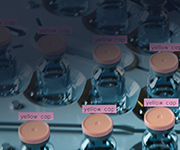
See the world, build the future with Roboflow's vision AI. Enable your team to efficiently train and deploy vision models for automated quality oversight. Download the SmartPulse today! |
|
|
|
|
|


|
Cornell University is advancing the Earth Source Heat project to heat its campus with geothermal energy by 2035. The initiative involves drilling deep wells to access heat from 2 miles underground, a challenging task in upstate New York's rocky geology. Unlike typical geothermal projects, Earth Source Heat focuses solely on heating, rather than generating electricity. "We can't decarbonize without solving the heat problem," says project manager Wayne Bezner Kerr.
|
|
|
|
|
The GSMA's SGP.32 specification enables streamlined eSIM connection and management across entire IoT device lifespans. SGP.32 uses RSP to provide a compelling alternative to legacy M2M eSIM specifications – read this new white paper to learn how SGP.32 can simplify your next deployment. |
|
|
|
|
|

|
Pennsylvania's Environmental Quality Board voted to have the Department of Environmental Protection review a proposal to expand well pad setbacks from 500 feet currently to 3,281 feet for residences, 5,280 feet for schools and hospitals and 750 feet for surface waters. The department has 60 days to evaluate the petition and return to the board with a recommendation. American Petroleum Institute Pennsylvania, the Marcellus Shale Coalition and Republican lawmakers challenged the board's authority to advance the petition and warned such changes would amount to a de facto ban on new g | | | | | |