Partner Updates
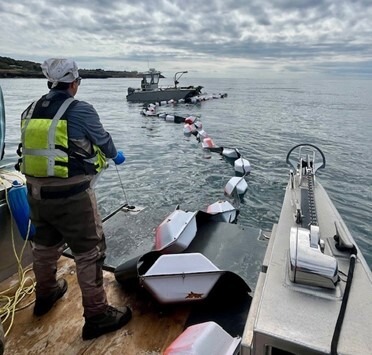 Conservation Corps member prepares to pull oil boom aboard (Photo Credit: Elena Fischer).
Samish Indian Nation Ends Removal Season with a Boom
Samish Indian Nation ended their marine debris removal season with a boom—an oil boom. With help from a brave swimmer, the oil boom was recovered from San Juan Island’s rocky shoreline and brought out to Samish’s boat Chinook (Yómech in Straits Salish) for proper disposal. Throughout the summer, the Samish Tribe removed over 75,000 pounds of diffuse creosote and marine debris from their ancestral lands (San Juan Archipelago) with partners Washington Department of Natural Resources and Washington Conservation Corps. Learn more about our 10-year-long cleanup project in the Creosote and Marine Debris Clean Up StoryMap.
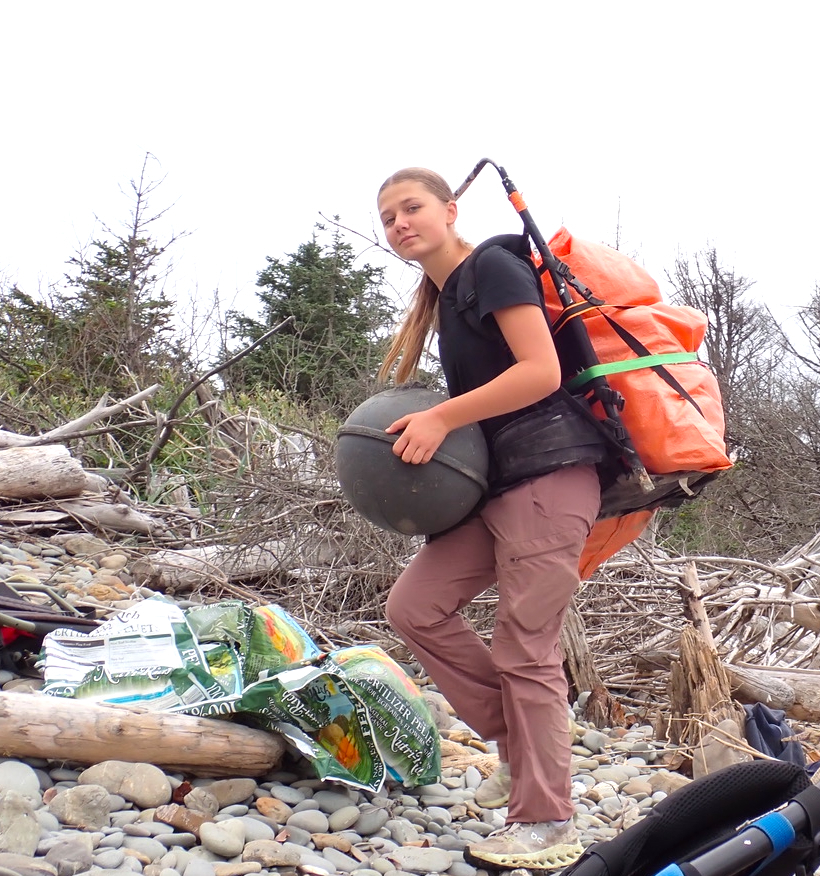 Harlow Deerkop carries a load at her 6th cleanup, helping to remove over 10 tons of debris in three years (Photo Credit: Lee First, Twin Harbors Waterkeeper).
Cleaning Up Over 20,000 Pounds of Debris From Quinault Beaches
Submitted by: Harlow Deerkop, Intern, Twin Harbors Waterkeeper
"As a fifteen-year-old, I believe I have the duty to help preserve the environment for years to come. My role as an intern for Twin Harbors Waterkeeper provides me with the amazing opportunity to work with Pacific Seafood and the Quinault Indian Nation to remove marine debris from the Quinault beaches twice a year. These beach cleanups have become an important part of my life. My favorite part of these cleanups is walking the stunning beaches and making a positive impact on the environment by collecting marine debris with other dedicated volunteers, which fosters an environment of shared purpose. I am proud to be an intern for Twin Harbors Waterkeeper and participate in an impactful partnership that helps preserve the Quinault Beaches."
 NOAA Marine Debris Program Updates
 |
|
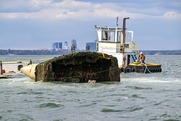
The NOAA Marine Debris Program Awards 13 New Projects for Funding
The National Oceanic and Atmospheric Administration (NOAA) Marine Debris Program is pleased to announce 13 new projects awarded under our NOAA Marine Debris Removal and Interception Technologies award competitions. These projects represent an investment of over $26.4 million for marine debris removal. The projects awarded under these nationwide competitive funding opportunities continue the NOAA Marine Debris Program’s commitment to benefit the American economy, local communities, and coastal and marine habitats across the nation.
Learn more about this year's awarded projects.
(Photo Credit: Daniel Avila, New York City Department of Parks and Recreation)
|
 |
|
The William and Mary’s Batten School and the Virginia Institute of Marine Science Announces 13 New Projects Under the Nationwide Trap Removal, Assessment, and Prevention (TRAP) Program
The William and Mary’s Batten School and the Virginia Institute of Marine Science, in partnership with the NOAA Marine Debris Program, announced 13 new marine debris removal projects under the Nationwide Trap Removal, Assessment, and Prevention (TRAP) Program. These projects represent an investment of over $1.8 million for removal of derelict fishing traps with funds provided by the NOAA Marine Debris Program. The projects will remove derelict traps in California, Florida, Maine, Maryland, Massachusetts, New Jersey, Rhode Island, South Carolina, and Washington.
In Washington, the Northwest Straits Foundation will conduct a crab trap removal and prevention project in Port Angeles Harbor and Sequim Bay on the northern coast of the Olympic Peninsula.
Learn more on the William and Mary’s Batten School and the Virginia Institute of Marine Science TRAP Program website.
|
 |
|
EPA Solid Waste Infrastructure for Recycling Grants for Tribes and Intertribal Consortia
The Solid Waste Infrastructure for Recycling (SWIFR) grant program will assist local waste management authorities by supporting improvements to local post-consumer materials management, including municipal recycling programs, and aiding local waste management authorities in making improvements to local waste management systems.
Deadline: December 12, 2025 11:59 PM ET
Learn more about these grants.
|
 |
|
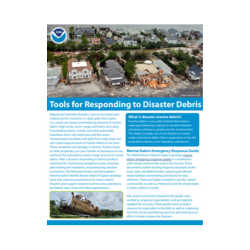
Now Available: New Fact Sheet on Disaster Response Tools
Responding to disaster debris can be challenging, so the NOAA Marine Debris Program, in partnership with other federal, state, and local organizations, has created resources that can help these organizations be better prepared. This document outlines how the Marine Debris Emergency Response Guides can be used as a tool to help mitigate disaster debris impacts by facilitating a coordinated, and well managed response.
View the fact sheet.
|
 |
|
Calling all Ocean Guardian Youth Ambassadors!
The NOAA Ocean Guardian Youth Ambassador program provides a new level of engagement for youth aged 13-18 committed to ocean conservation and stewardship of our blue planet. The NOAA Office of National Marine Sanctuaries is looking for enthusiastic youth with new ideas and a unique perspective to learn more about America’s underwater treasures and to share their passion with others.
See how past NOAA Ocean Guardian Youth Ambassadors have made a big impact at their schools or in their communities around the United States and U.S. territories. Together, we can make a difference in the conservation and stewardship of the ocean through marine protected areas, and enhanced ocean and climate literacy.
Applications are due on January 4, 2026 by 11:59 ET.
|
|