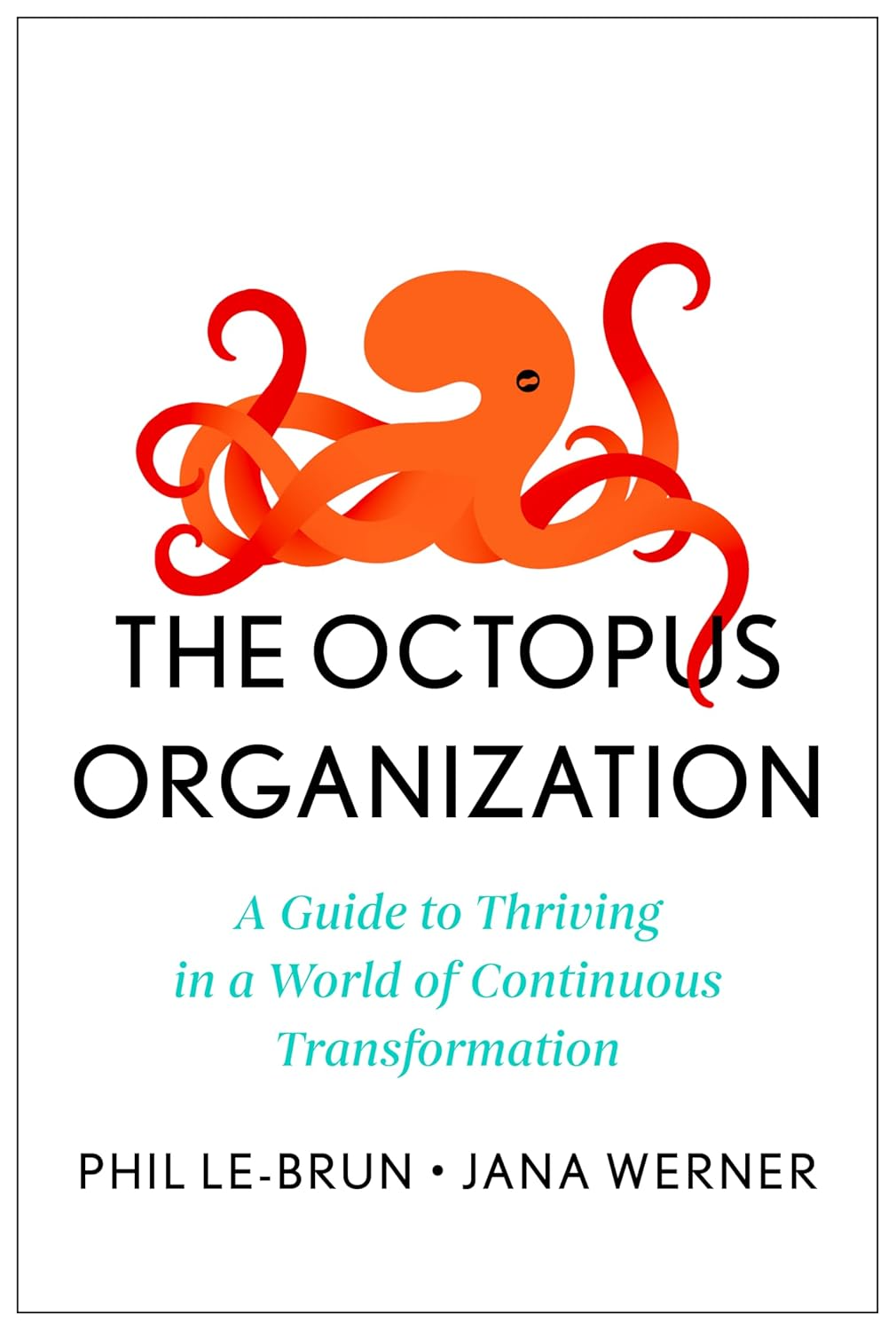
Being a data-driven organization is a good thing—to a point. When organizations are overly deferential to data, they take on certain risks: adopting false certainty that leads to bad decisions; missing key context; and overlooking valuable human judgment. Octopus Organizations take a different approach. They balance quantitative and qualitative insights and treat data as a tool, not as a replacement for human experience. Here's how your organization can do the same.
Actively seek counternarratives. Identify one recent decision made using data. Then find one person directly affected by that decision (employee or customer) and have a ten-minute chat to understand their perspective without any data present. Listen intently, and note any insights that weren't reflected in the initial data.
Go beyond averages. Dive into granular data. Look at distributions, not just means. Actively investigate unusual data points, outliers, and clusters. They might signal key trends, problems, or opportunities.
Elevate data literacy. Create data literacy programs tailored to different employees’ roles and functions. Even basic upskilling across the organization will go a long way. Cement the learning through mentor partnerships between analysts and business leaders.
Rehumanize your data. Translate abstract data points into stories about people by combining quantitative metrics with qualitative feedback (pairing customer churn charts with customer interviews, for example). Allow analysts to include their subjective views and intuition in their presentations of data. And make sure that every data-driven decision includes a “human impact assessment” that considers how real-world stakeholders will be affected.
Break down silos between data experts and domain experts. Instead of setting up a centralized data team that fields requests, embed analysts and data scientists directly into the business, product, or operational teams they support. This transforms them from report-builders into thought partners.