|
|
| News & ideas for college & university leaders | SIGN UP ⋅ SHARE |
|
|
 
|
In this issue, we examine a court ruling that stops an outgoing Republican governor from filling university board seats.
We also look at
✨A new prison education research center
✨How elite colleges are maintaining diversity
✨An opportunity to weigh in on accreditation reform
Hope you have a productive Thursday! -- Lilla
|
|
|
|
|
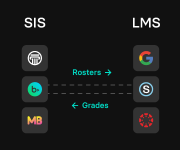
Flow automatically syncs classes, rosters, assignments, and grades between your Student Information System and Learning Management System. No more manual updates or duplicate work. Learn more about Flow. |
|
|
|
| ADVERTISEMENT |  |
|

The Education Department has issued a request for information to gather public input on updating the accreditation handbook, following an executive order from President Donald Trump aimed at reforming the accreditation process. The department aims to reduce bureaucratic requirements and increase transparency and efficiency. Feedback can be submitted for 45 days. |
|
|
|
|
Navigating data challenges in retail and CPG demands strong governance to tackle insights inconsistency, security issues, and rising costs. A governance-first approach ensures seamless data integration and management. Read more in this whitepaper. |
|
|
|
|
|

| Leadership & Best Practices |
|
| |
 |
| (The Washington Post/Getty Images) |
A legal battle over university board appointments in Virginia has been resolved after a judge scheduled a trial for 2026, rendering the case moot as Governor-elect Abigail Spanberger prepares to take office. The case stemmed from Gov. Glenn Youngkin's attempt to appoint board members, many of whom were rejected by Democrats. Spanberger will now have the opportunity to appoint 22 board members, potentially shifting the political balance of the boards. The new governor is expected to quickly fill several vacancies, including those at George Mason University, which currently lacks a quorum.
|
|
|
|
|
Join our experts Jason Kikta and Katherine Chipdey, as they reveal findings from the 2026 State of Endpoint Management Report. Learn why time-to-remediate is becoming a key business metric and how Autonomous Endpoint Management boosts security and efficiency. Register now » |
|
|
|
| ADVERTISEMENT |  |
|


|
Elite colleges and universities are enrolling a record number of low-income students, with Princeton University, Yale University, Duke University, Johns Hopkins University and the Massachusetts Institute of Technology reporting increased numbers of Pell Grant-eligible students. However, this focus on economic diversity has not necessarily translated to increased racial diversity, as some institutions have seen a decline in Black student enrollment.
|
|
|
| | | |