| Health informatics news and insights from AMIA | SIGN UP ⋅ SHARE |
|
|
 
Preliminary data from the CDC show the US suicide rate decreased in 2024, falling to 13.7 per 100,000 people, from some of the highest levels previously recorded. Experts are unsure if this trend will continue, citing factors such as depression, limited mental health services and firearm availability. The rate dropped among people in their late 20s and early 30s, as well as in some Southern and Midwestern states. The Department of Veterans Affairs' screening programs and the 988 crisis line may have contributed to the decline in suicide, which is the nation's 10th leading cause of death. |
|
|
|
|
Navigating data challenges in retail and CPG demands strong governance to tackle insights inconsistency, security issues, and rising costs. A governance-first approach ensures seamless data integration and management. Read more in this whitepaper. |
|
|
|
|
|

| Clinical Informatics & Analytics |
|
|
Researchers at the Icahn School of Medicine at Mount Sinai presented a study on a new AI model at the San Antonio Breast Cancer Symposium, which improves the prediction of breast cancer recurrence. The model combines clinical data, pathology imaging, and molecular profiling, outperforming the existing 21-gene recurrence score. This advancement offers more refined prognostic information for distant recurrence, validated through the TAILORx clinical trial, and aims to guide systemic therapy decisions.
|
|
A study in the Journal of the American Medical Association found that the Pediatric Emergency Care Applied Research Network clinical prediction rule had a sensitivity of 94.2% and a specificity of 41.6% in identifying invasive bacterial infections in febrile infants 28 days or younger who did not appear to have an illness. The rule found 41.1% of infants were low risk, potentially reducing the need for lumbar punctures, hospitalizations and antibiotic use. |
|
|
|
|
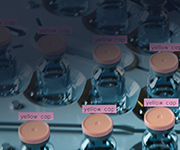
See the world, build the future with Roboflow's vision AI. Enable your team to efficiently train and deploy vision models for automated quality oversight. Download the SmartPulse today! |
|
|
|
|
|

| Health Data Science & Artificial Intelligence |
|
|
The Defense Advanced Research Projects Agency has funded the ASKEM program to develop AI tools that enhance the speed and transparency of modeling viral outbreaks. Launched in 2022 with a $29.4 million budget, ASKEM aims to automate and simplify the creation of epidemiological models, addressing the limitations of traditional methods. The program's tools, which have been tested to build models 83% faster, allow researchers to interact with models without delving into complex code. While the tools show promise in improving response times during pandemics, their widespread adoption by scientists remains uncertain.
|
|
 |
| "In a pandemic, time is always our biggest constraint." -- Mohsen Malekinejad, epidemiologist at the University of California San Francisco |
|
 |
|
|
AI is transforming clinical research by enabling the use of real-world EHR data through a framework called TRIALSCOPE, developed by Microsoft Health Futures and Providence Cancer Institute. This AI-powered tool simulates and validates clinical trial outcomes, addressing challenges like low enrollment and high costs in traditional trials. TRIALSCOPE allows researchers to use de-identified patient data to generate insights without exposing new patients to experimental treatments, potentially accelerating the development of effective therapies.
|
|
The new open-platform preprint server aiXiv embraces AI in scientific publishing by accepting AI-authored papers and utilizing AI reviewers for quality screening. Created by Guowei Huang from the University of Manchester and collaborators from institutions including the University of Toronto, University of Oxford and Tsinghua University, aiXiv aims to alleviate the burden on the human peer-review system. While it promises efficiency and transparency, concerns remain about maintaining scientific rigor and avoiding low-quality submissions. "AI-generated knowledge shouldn’t be treated differently," says Huang. "We should only care about quality -- not who produced it." |
|
|
|
|
Join our experts Jason Kikta and Katherine Chipdey, as they reveal findings from the 2026 State of Endpoint Management Report. Learn why time-to-remediate is becoming a key business metric and how Autonomous Endpoint Management boosts security and efficiency. Register now » |
|
|
|
| ADVERTISEMENT |  |
|

A study in the journal Science Translational Medicine found that the molecules CXCL10 and interferon-gamma were present at higher levels in the blood of people who developed myocarditis after receiving a COVID-19 vaccine. The researchers found that using antibodies to block the molecules reduced cardiac stress in mice that received the vaccine. |
|
Researchers have identified five genetic clusters that link 14 psychiatric disorders, according to a study published in Nature. The analysis, which included data from over 1 million individuals, suggests that disorders traditionally viewed as separate, such as schizophrenia and bipolar disorder, share genetic risk factors. The study identifies 238 genomic regions linked to these categories, offering new insights into the biological underpinnings of mental health disorders and potential pathways for more integrated treatment approaches and reshaping how mental health conditions are diagnosed and treated. |
|
|
The Trump administration's new rule for US cancer registries, effective in 2026, mandates classifying patients' gender as male, female or not stated/unknown, which could erase transgender and non-binary individuals from health data. LGBTQ+ health advocates argue this change undermines public health efforts and patient care by limiting the visibility of transgender patients in cancer data. The policy is part of broader actions perceived to restrict health care resources for LGBTQ+ communities.
|
|
|
| | |