| | A forthcoming change to rules for tallying electricity emissions has energy and tech companies divid͏ ͏ ͏ ͏ ͏ ͏ |
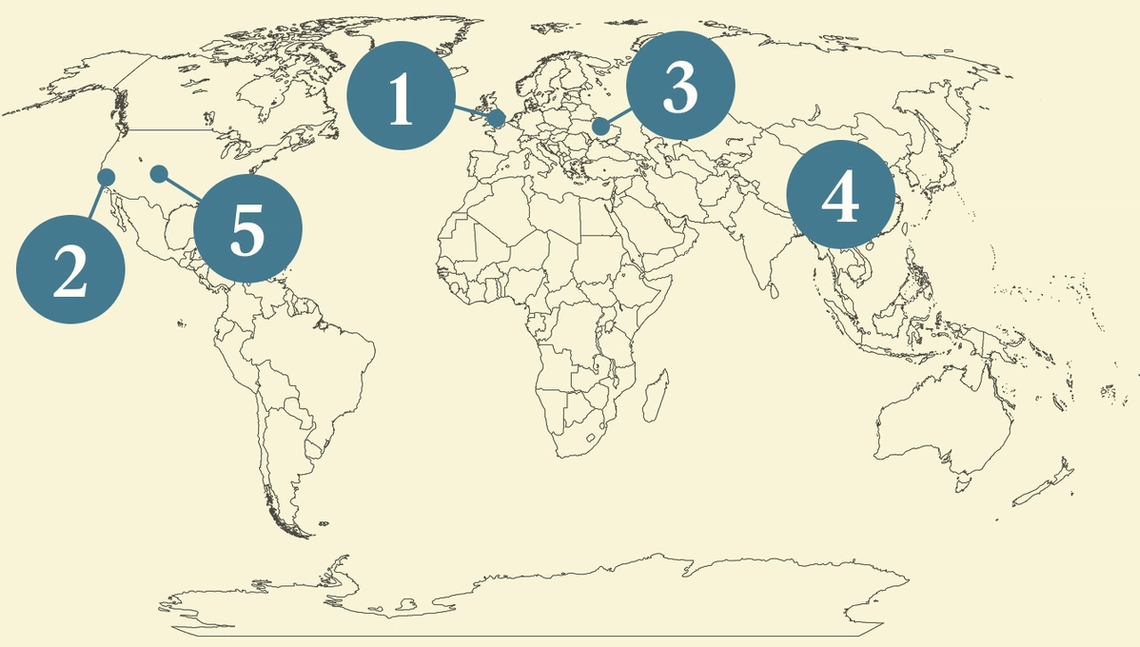
| |  San Francisco San Francisco |  Kyiv Kyiv | Denver |
 | Energy |  |
| |
|
 - Oil majors’ first female CEO
- Big Tech split on emissions
- Grid at risk
- New coal peak
- Climate research shut down
 Is the US Navy prepared for a blockade on Venezuelan oil? |
|
Oil majors’ first female CEO |
 Mark Felix/AFP via Getty Images Mark Felix/AFP via Getty ImagesMeg O’Neill, CEO of Australian oil and gas producer Woodside Energy, will replace Murray Auchincloss as CEO of the British major BP. O’Neill, a former ExxonMobil executive, will be the first woman to lead any of the world’s top oil companies and the first outsider to take the reins at BP. Her appointment is a sign of the pressure that activist hedge fund Elliott Management has brought to bear on BP’s board to give up its ill-fated push into renewable energy — which Auchincloss had worked to unwind following his ascension to the top job two years ago — and refocus on the core business of drilling for oil and gas. O’Neill, who will be BP’s fourth CEO in the past six years, had recently pushed Woodside into the LNG business, investing nearly $20 billion in US LNG projects and acquisitions. She was also a close adviser to former Exxon CEO, and secretary of state during US President Donald Trump’s first term, Rex Tillerson. Auchincloss had led a campaign for BP to divest up to $20 billion in assets by 2027, including its US wind energy business and its Castrol lubricants unit, which had helped keep BP’s share price up this year despite a drop in oil prices. |
|
Big Tech split on emissions |
 An Amazon AI data center. Noah Berger for AWS/File Photo/Reuters. An Amazon AI data center. Noah Berger for AWS/File Photo/Reuters.Big Tech firms including Amazon and Meta are lining up against rivals like Google in a battle over ostensibly obscure rules on tallying emissions which could have huge implications for how — and where — clean energy projects are financed worldwide in years to come. At issue are the accounting standards for Scope 2 emissions — those that come from a company’s purchased energy — which are currently being reviewed by a little-known nonprofit that administers them. An overhaul of the regulations is expected early next year, driving a wave of lobbying by Silicon Valley giants and major energy providers. Proponents of the changes say they will force large power consumers to be more honest about their carbon footprint. But doing so could come at the cost of drying up streams of capital for green power projects. It’s easy to see why this seemingly obscure debate would matter so much to Silicon Valley: All of the tech giants have ambitious decarbonization goals that are increasingly in tension with their AI agendas. To cut their carbon footprints and oversee a massive buildout of data infrastructure will require a creative patchwork of solutions and will already be hard enough without taking some options off the table. |
|
 Thomas Peter/Reuters Thomas Peter/ReutersUkraine’s grid is in its most dire state since the first year of the full-scale invasion, and a total collapse into prolonged, nationwide blackouts is possible as a result of ongoing bombardment by Russian forces, the CEO of the country’s state-owned grid operator told Semafor. A combination of new distributed energy resources, clever engineering, and military defenses are so far working well to keep Ukraine’s battered electric grid relatively protected, Vitaly Zaichenko, the newly appointed boss of Ukrenergo, said in an interview. But new bureaucratic measures are needed, he said, to defend his company against the corruption that remains pervasive in Ukraine’s energy industry, despite recent high-profile investigations of officials close to President Volodymyr Zelenskyy. In recent weeks, Kyiv and other cities have faced daily power cuts spanning 12 or more hours, in some cases for days at a time. But a true “blackout,” in which the entire system shuts down for all users, outside the company’s control, has not happened since 2022, Zaichenko stressed. The power cuts Ukrainians now experience in their homes and offices, he said, are strategized to keep power flowing to critical social and military infrastructure, and to keep the flow of electrons one step ahead of incoming rockets. Still, he added, Russian forces are increasingly honing in on a relatively small number of transmission stations that keep the eastern half of the country connected to nuclear power plants in the west, which after the devastation of many large coal plants are Ukraine’s most vital remaining source of baseload power generation. When these substations face a barrage that often includes dozens of drones and several ballistic or cruise missiles at once, he said, “no air defense system in the world can protect from that kind of attack.” |
|
 Metric tons of coal that will be consumed globally this year, a record high, according to the International Energy Agency. Several factors, including the war in Ukraine, the Trump administration’s climate policy, and natural gas prices have all contributed to the uptick. But coal use is expected to peak by 2030, the IEA projects in a new report. The biggest variable is China: if the country sees “faster-than-expected growth in electricity consumption, slower integration of renewables, or strong investment in coal gasification, it could push global coal demand above the forecasts,” the report said. |
|
Climate research shut down |
 John Greim/LightRocket via Getty Images John Greim/LightRocket via Getty ImagesUS President Donald Trump plans to dismantle a major climate and weather lab, prompting alarm among scientists who hailed its groundbreaking work. The administration called the Colorado-based National Center for Atmospheric Research a hub for “climate alarmism” in the US. Colorado’s Democrat governor noted that NCAR’s work “goes far beyond climate science.” One expert argued the dismantling would “decimate… the kind of weather, wildfire, & disaster research underpinning half a century of progress in prediction, early warning, & increased resilience,” while a climate scientist lamented that it was “like taking a sledgehammer to the keystone holding up our scientific understanding of the planet.” GPS dropsondes — instruments dropped into the eye of a hurricane to gather data — were developed at NCAR. |
|
 New Energy- Renewables remain the cheapest and fastest-growing power source around the world, and for investors with “a disciplined approach, access to scale capital and high-quality projects, the opportunity is growing,” Connor Teskey, CEO of renewable power at the private equity firm Brookfield, wrote in a new outlook.
 Fossil FuelsTechEVs |
|
Mark Montgomery is a retired rear admiral in the US Navy. 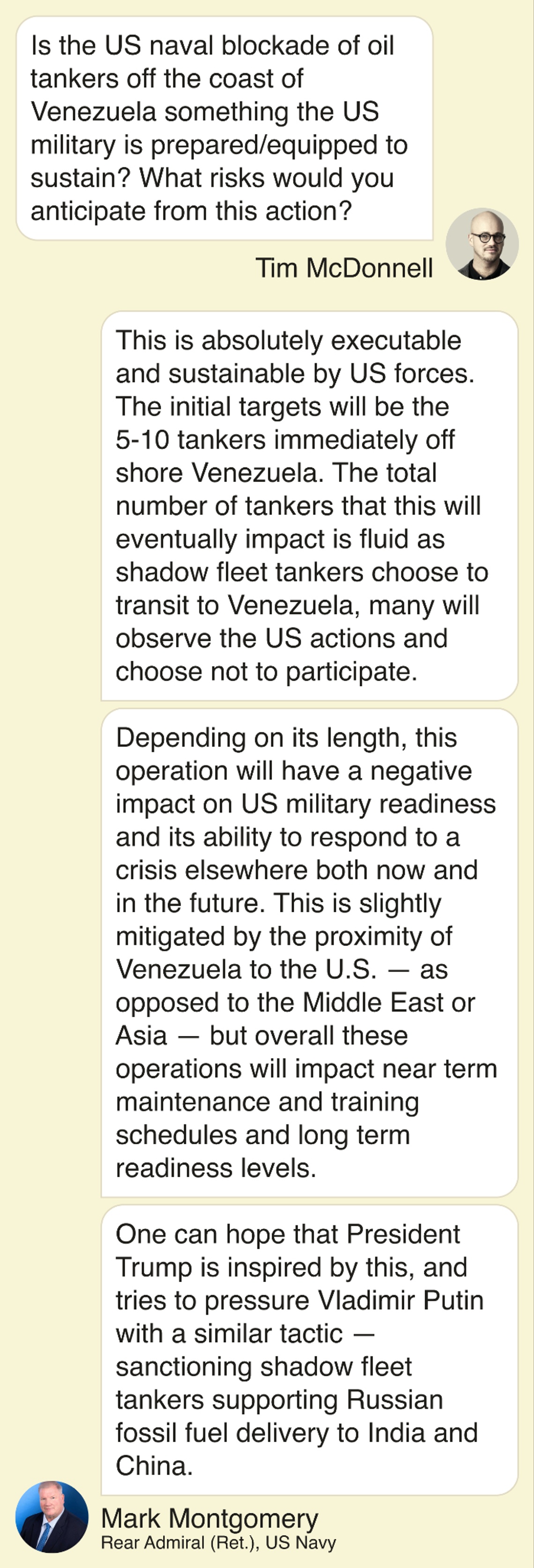 |
|
| |  | | | You’re receiving this email because you signed up for briefings from Semafor. |
|


