| | US inflation ticks down, India opens its nuclear power sector to private companies, and Donald Trump͏ ͏ ͏ ͏ ͏ ͏ |
| |  | Flagship |  |
| |
|
The World Today | 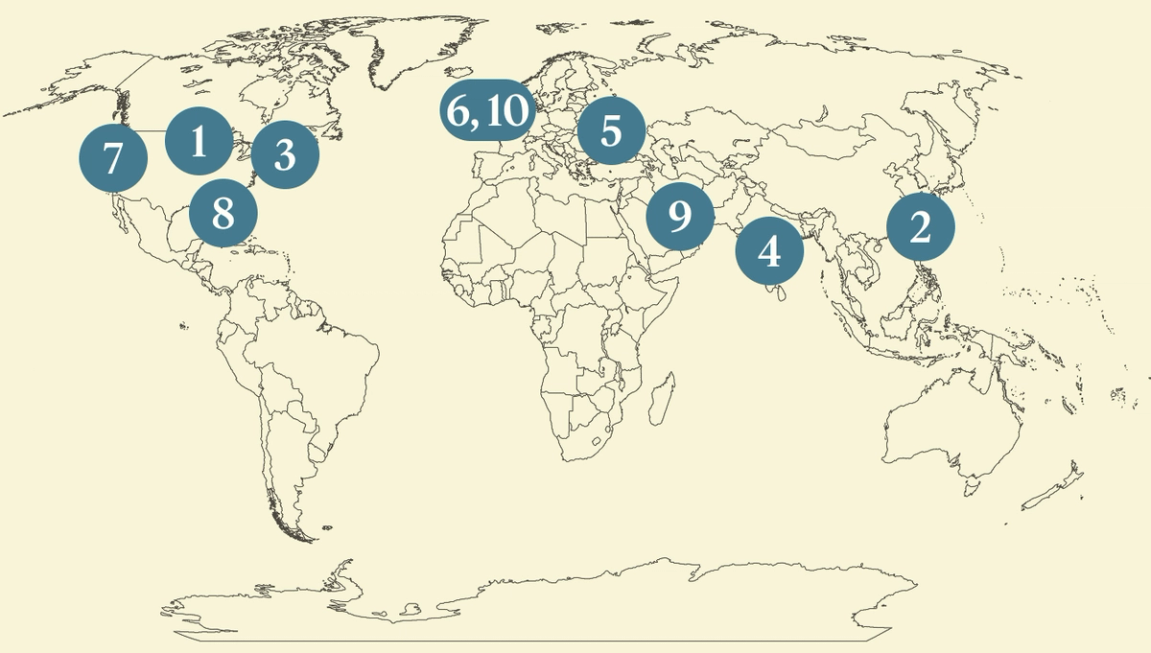 - US inflation down
- $11B arms sale to Taiwan
- Trump eyes nuclear fusion
- India embraces nuclear power
- Ukraine’s grid challenges
- BP taps new CEO
- K-cup drama
- Nonfiction book sales fall
- Saudi needs bartenders
- RIP, holiday parties
 A Javier Milei statuette once gifted to Giorgia Meloni could be yours. |
|
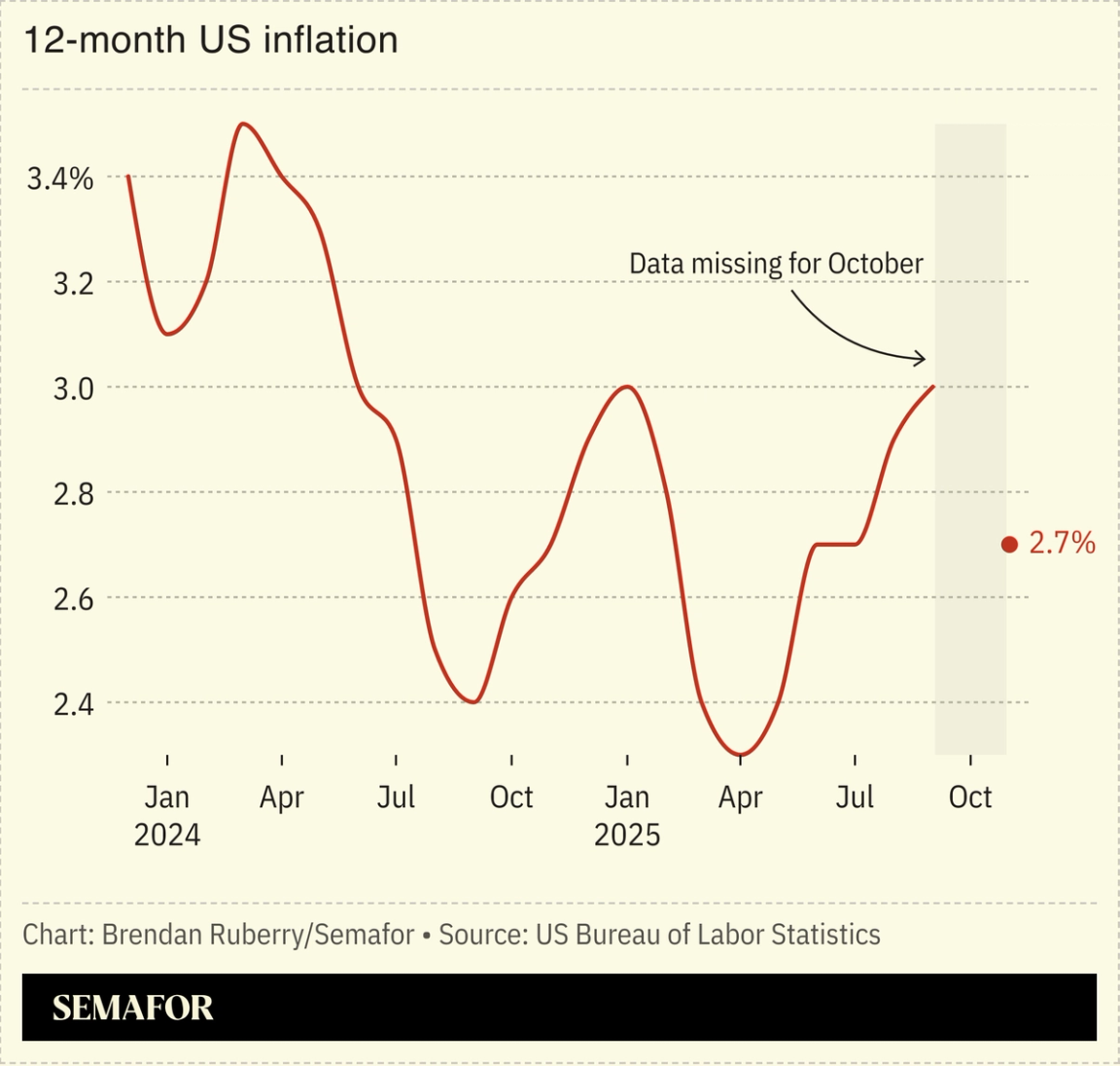 US inflation cooled in November, though experts cautioned the government shutdown may have distorted the data released Thursday. The 2.7% inflation reading, down from 3% in September, is welcome news for US President Donald Trump, who has looked to bolster his affordability messaging in recent weeks as his economic approval hits new lows: “Inflation has stopped,” Trump declared Wednesday. But the shutdown changed how federal officials gathered November’s data, which should be taken “with the entire salt shaker,” Wells Fargo economists wrote. Many Americans are still feeling price pressures — home energy costs are up 7.2% annually — and next month’s numbers will help verify “whether this is a statistical blip or a genuine disinflation,” Capital Economics wrote. |
|
Washington OKs Taiwan arms sale |
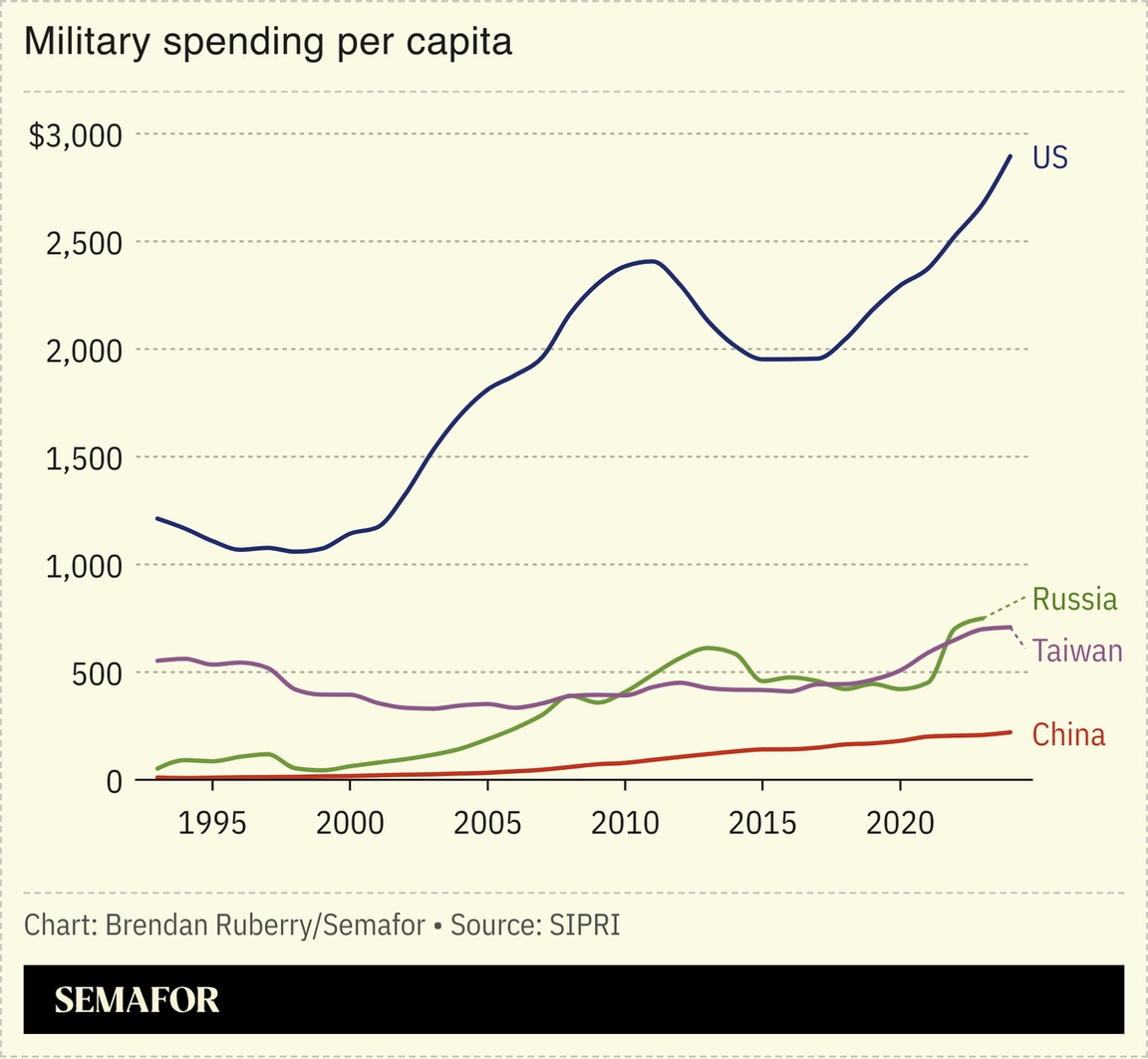 The US approved $11 billion in arms sales to Taiwan, rankling Beijing even as the White House softens its approach to China in other arenas. The weapons include missiles, drones, and artillery systems, Bloomberg wrote, marking one of Washington’s “most significant efforts in recent years” to support Taiwan’s deterrence of China, which views the island as a renegade province. Beijing said Washington was “turning Taiwan into a powder keg.” Even though US President Donald Trump is expanding the Overton window on China — viewing it less as an adversary than a peer — he would “still face enormous pressure” to respond to Beijing’s quarantine or blockade of Taiwan, lest US allies depict him as weak, an International Crisis Group expert argued. |
|
Trump Media merging with fusion startup |
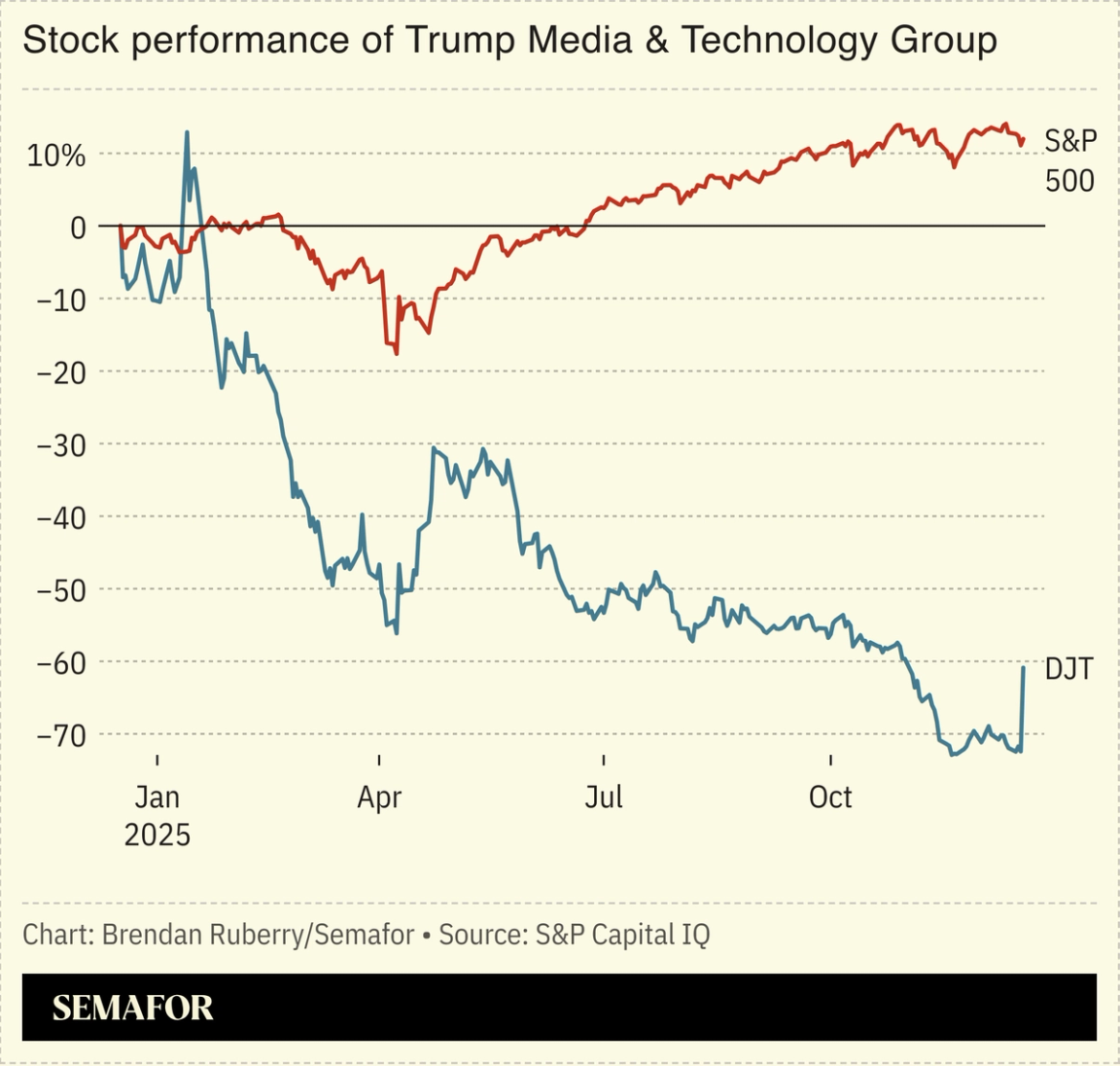 US President Donald Trump’s social media company is making a play for nuclear fusion. Trump Media & Technology Group is merging with startup TAE Technologies, which aims to generate fusion power, potentially offering inexpensive clean energy. But technical and financial hurdles have made it impossible, so far, to produce fusion at a commercial scale. Even as the White House has looked to boost the country’s nuclear sector, the $6 billion deal “doesn’t even pretend to make business sense,” Semafor’s Liz Hoffman argued, noting that Trump Media has ventured into other sectors favored by the president. “The world’s leading democracy is starting to look like a family office with a meme hobby.” |
|
India opens up nuclear to private sector |
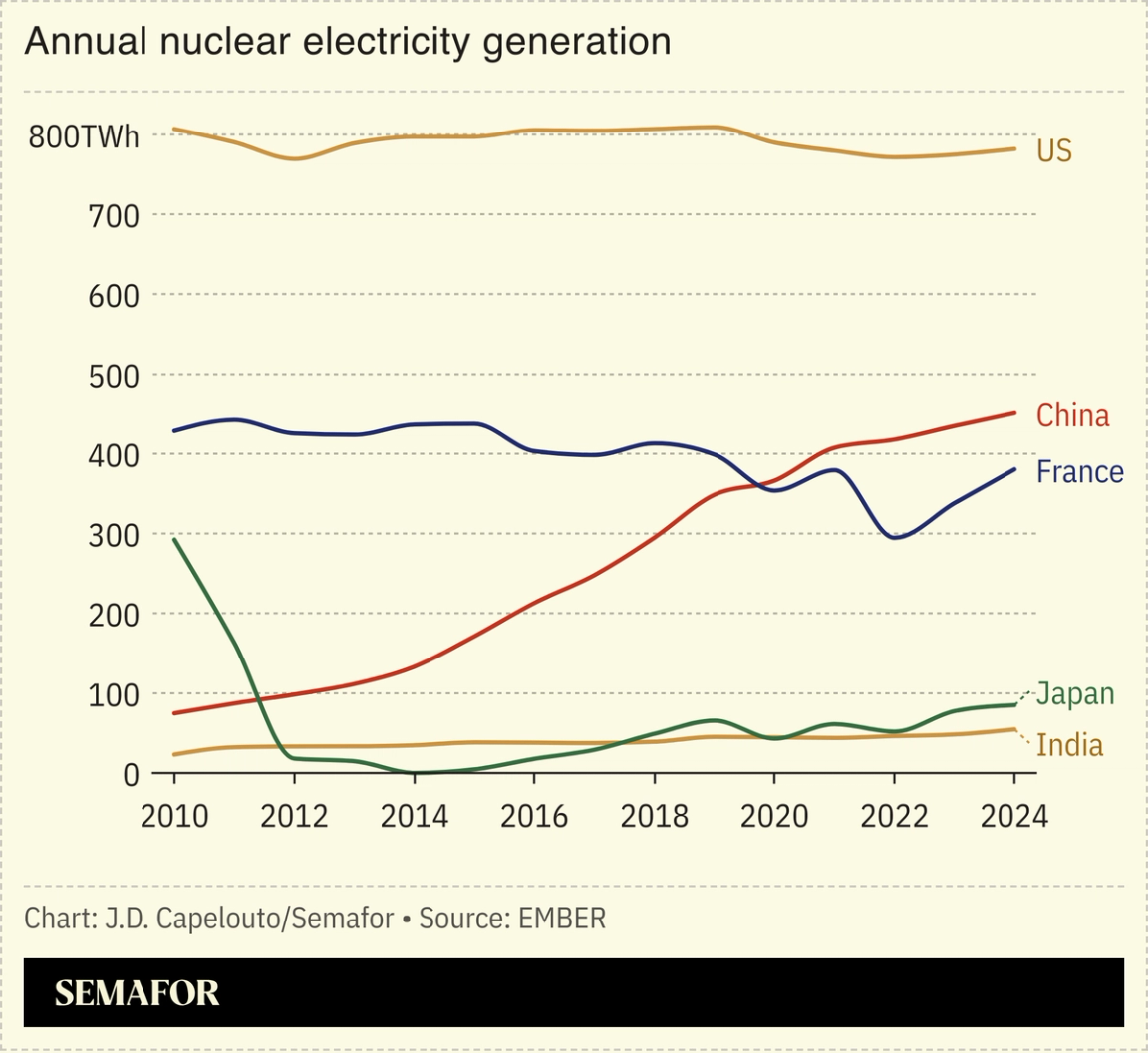 India is opening up its nuclear energy industry to the private sector, echoing a global shift toward atomic power. The bill, approved by the Indian parliament Thursday, is poised to unlock a new source for the country’s energy mix: Nuclear provides just 3% of India’s electricity, and until now has been state-controlled. After decades of underinvestment, more countries are embracing nuclear in part due to ballooning demand for energy to power AI data centers: At least 31 nations have pledged to triple nuclear energy capacity by 2050. New Delhi’s opposition politicians, though, argued the changes will only benefit a handful of conglomerates — the Adani Group, the Tata Group, and Reliance Industries — who already enjoy considerable control over Indian industry. |
|
Ukraine energy grid in dire state |
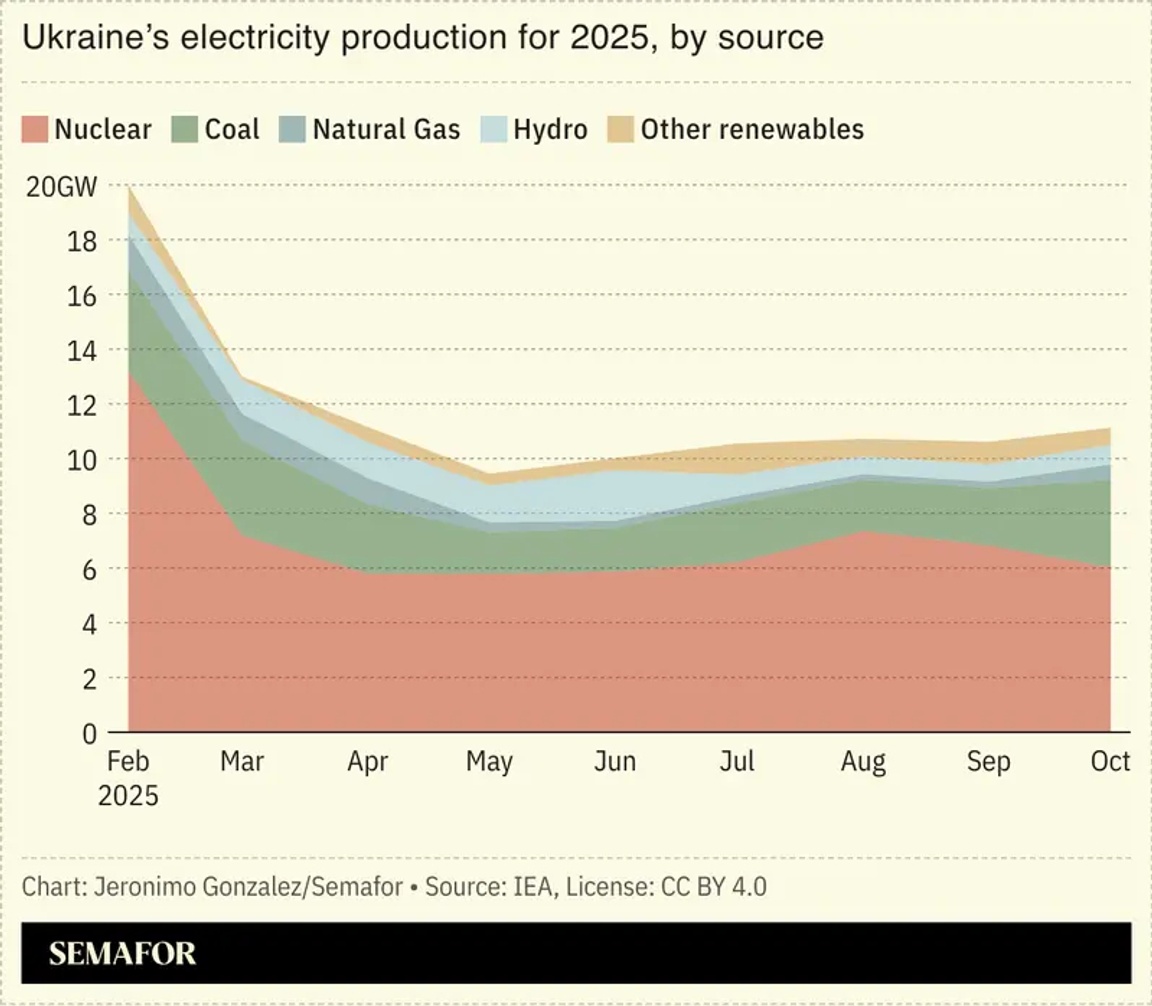 Ukraine’s grid is in its most dire state since the first year of Russia’s full-scale invasion, the head of the country’s state-owned grid operator told Semafor. A total collapse into prolonged, nationwide blackouts is now possible as a result of ongoing bombardment by Russian forces, Vitaly Zaichenko said, as Russian forces increasingly target transmission stations that keep much of Ukraine connected. Corruption also remains a challenge in the energy industry. Efforts to defend the grid come at a precarious moment for Ukraine writ large: EU leaders met Thursday to discuss whether to use Russian assets to aid Kyiv’s war efforts, but the plan appears on shaky ground. |
|
BP taps oil, gas supporter as CEO |
 Callaghan O’Hare/Reuters Callaghan O’Hare/ReutersBP named Meg O’Neill its new CEO on Wednesday, tapping a longtime supporter of oil and gas to steer the British major. O’Neill’s appointment reflects pressure on BP from an activist hedge fund to abandon its ill-fated push into renewable energy and refocus on the core drilling business; as an energy executive, she has previously clashed with environmental activists and “is a dealmaker willing to go to bat for the oil-and-gas business,” The Wall Street Journal wrote. The shakeup comes as BP looks to boost its oil and gas production, especially in the US, where the industry has been buoyed by Donald Trump’s push to cut regulations. |
|
Battle brews over coffee-pod control |
 Joey Pfeifer/Semafor Joey Pfeifer/SemaforA battle over the global coffee-pod market could be decided in a US courtroom. After its patent for “K-cups” expired in 2012, Keurig has fought to maintain iron-fisted control of the sector, choking off competitors’ access to key distributors. Keurig is now trying to take over one of those competitors, Peet’s, in an $18 billion deal. Keurig’s dominance is also the subject of a private antitrust lawsuit that is winding slowly toward a trial, even as US regulators give the merger their tacit blessing, Semafor reported. It comes as grocery prices become a deepening pain point for Americans and the White House balances competing antitrust impulses. Republicans’ traditional light-touch approach has come up against a populist faction skeptical of corporate power. |
|
 Award-winning podcast Face-Off: The U.S. vs China is an inside look at the relationship between the world’s two superpowers, and the men in charge. In the latest season, host and longtime New York Times correspondent Jane Perlez covers Xi Jinping at the negotiating table, Gen Z disillusionment, China’s tech advances, and more. Listen now. |
|
Escapism triumphs over nonfiction |
 Brendan McDermid/Reuters Brendan McDermid/ReutersA rough year for nonfiction book sales has set alarm bells ringing about the industry’s future. Nonfiction soared in the years leading up to 2020, as readers snapped up titles proffering explanations of populism, social justice, and climate change. But sales are down 8.4% from last summer, and the success of “romantasy” novels has prompted publishing industry insiders to conclude that readers overwhelmed by a relentlessly bleak news cycle are “seeking refuge rather than clarity,” The Guardian wrote. “People want to escape a little bit and borrow the lives of others,” the host of a writing club said. Still, in a sign of confidence in reader appetites, US hedge fund Elliott is mulling a combined Barnes & Noble and Waterstones IPO. |
|
Now hiring: Bartenders in Saudi |
 Fayez Nureldine/AFP via Getty Images Fayez Nureldine/AFP via Getty ImagesA growing number of bartender jobs are available in Saudi Arabia as the kingdom eases its restrictions on alcohol. Global hotel brands are advertising roles in Riyadh, Jeddah, and along the Red Sea coast, Arabian Business reported, with some jobs requiring cocktail prep experience or wine and spirits knowledge. Crown Prince Mohammed bin Salman has been attempting to make the country attractive to Western tourists, and loosening drink laws is seen as key to that plan. Some non-Muslim foreigners can now buy alcohol at stores previously reserved for diplomats, Semafor reported, and the advertised roles suggest that those rules could soon be relaxed further, with events such as the 2034 men’s World Cup on the horizon. |
|
The office holiday party is dying |
|
|


