|
 |
Ⓜ️ For multidisciplinary rebels learning to orchestrate humans and AI. Ⓜ️
Closing the Lid on the Echo Chamber
How to Be Less Like Everyone Else and Start Thinking for Yourself
|

| |||||||||||||||


 |
We’re all trapped in digital echo chambers, consuming the same content as millions of others while pretending to be unique. But what happens when you deliberately choose the road less scrolled and start thinking for yourself?
On Christmas Eve this year, I watched the film The Holdovers with our family. Never heard of it. Nobody recommended it to me. I just stumbled onto it by refusing to play the algorithm’s game—by deliberately hunting through the digital underbrush for lesser-known Christmas movies instead of letting some recommendation engine pre-chew my entertainment. Turns out, the film was excellent.
Had I trusted ChatGPT’s curated wisdom, Google’s search results with “best of” listicles, or any popularity ranking designed to maximize engagement, we’d have landed squarely in the algorithmic popularity pile: Home Alone, Die Hard, Elf, The Grinch, Scrooged—the same holiday rotation everyone else watches because everyone else watches it. A perfect closed loop of manufactured consensus.
I didn’t want that. I wanted something else. Something outside the gravitational pull of collective taste-making.
I’m done pretending to be unique while marching in perfect lockstep with everyone else on the planet.
Do you like this post? Please consider supporting me by becoming a paid subscriber. It’s just one coffee per month. That will keep me going while you can keep reading! PLUS, you get my latest book Human Robot Agent FOR FREE! Subscribe now.
Exactitudes
I’m not much of an art enthusiast, but if there’s one project that I can appreciate, it’s Exactitudes.
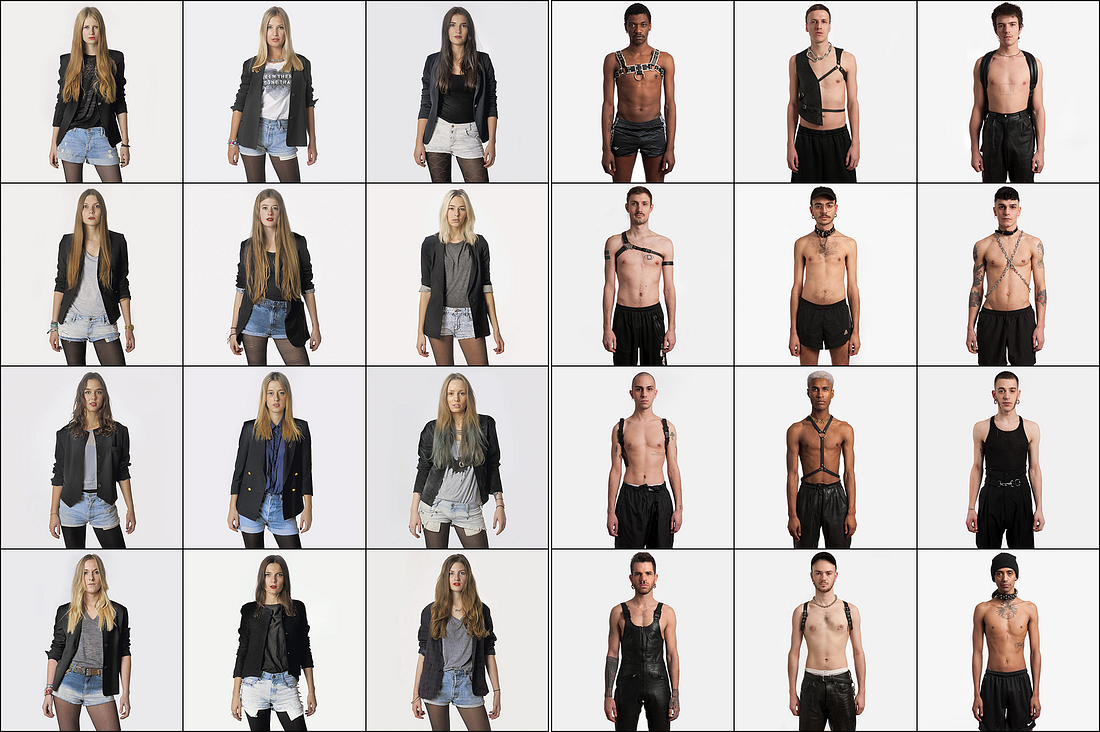 |
Exactitudes is a decades-long photographic experiment by Dutch duo Ari Versluis and Ellie Uyttenbroek, launched in my hometown Rotterdam back in 1994. They systematically catalog people who dress, style, and pose nearly identically, then photograph them against neutral backgrounds in identical frames. Arranged in strict 3×4 grids and labeled by “tribe” and location, the work exposes the beautiful absurdity at the heart of modern identity: everyone is desperate to stand out, yet they all end up indistinguishable from everyone else in their chosen subculture.
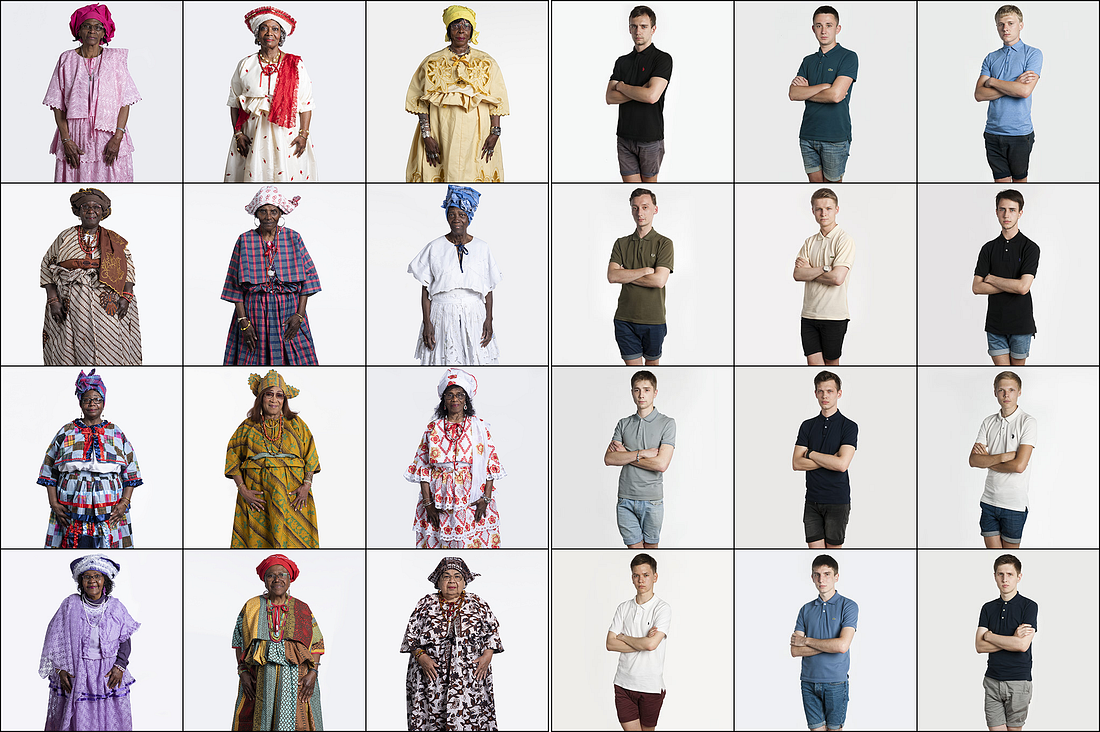 |
The punchline isn’t subtle. We think we’re expressing ourselves. We think we’re differentiating. But zoom out, and we’re all just pixels in the same tired mosaic, locked into the aesthetic codes of whichever group we’ve picked to represent us. Identity isn’t some pure inner flame. It’s a negotiation between absorption and expression, a dance we’ve always done within the collective tapestry of humankind.
“Show me your friends, and I’ll tell you who you are.” - ancient proverb
And thanks to technology, this choreography has gotten exponentially worse.
Social Contagion
We’ve always been mirrors, reflecting our families, friends, the five people we spend the most time with. This isn’t breaking news. What’s changed is the scale. We’ve expanded the guest list from a few dozen people to several billion.
A few decades ago, you absorbed preferences from your punk-rock cousin and your neighbor who swore by Toyota. Now you’re absorbing and mimicking behaviors from a million strangers whose lives you scroll through on a device you can’t put down, plus the collective unconscious of eve