| | Donald Trump ramps up pressure on Cuba, Iran cracks down on protests, and China’s AI leaders warn ab͏ ͏ ͏ ͏ ͏ ͏ |
| |  | Flagship |  |
| |
|
The World Today | 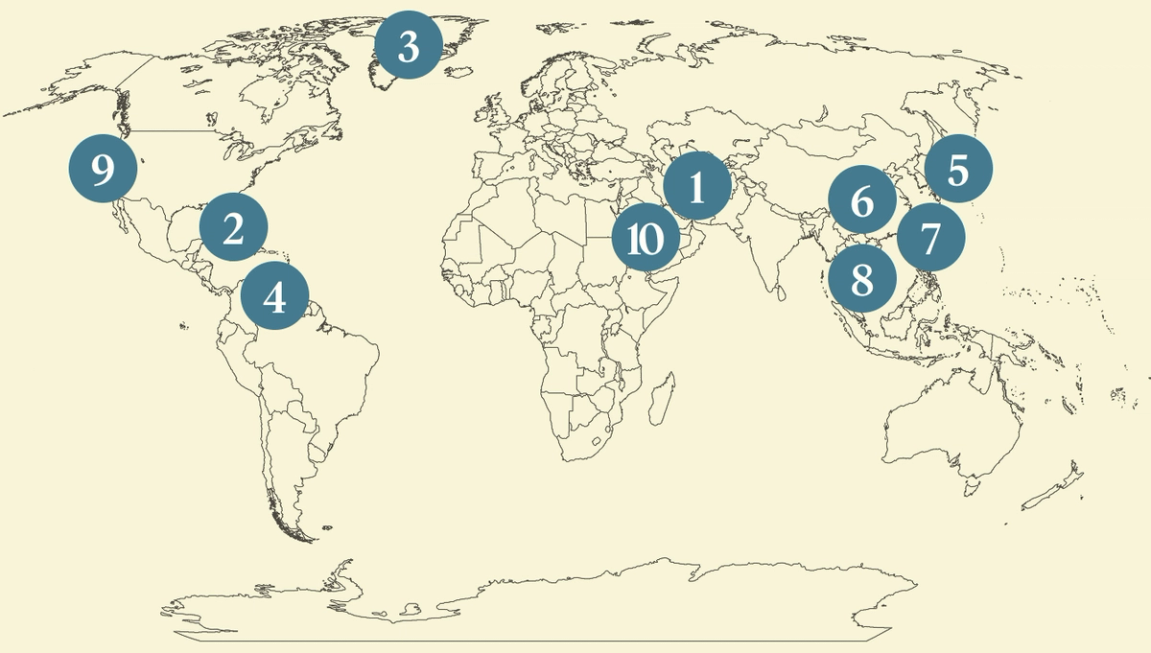 - Protests and crackdown in Iran
- Trump pressures Cuba
- Pitfalls of US’ Greenland push
- A carved-up world order
- China-Japan tensions flare
- Warning from China AI scene
- Tech fuels Taiwan’s exports
- Vietnam pushes for more EVs
- Mars sample not coming back
- Saudi’s new theme park
 An Iron Age battle trumpet, recovered. |
|
Crackdown in Iran as Trump weighs action |
 Screenshots of social media via Reuters Screenshots of social media via ReutersMass anti-government protests gripped Iran for a third night, as reports trickled out of a dramatic crackdown and US President Donald Trump weighed military intervention. Despite an internet blackout, footage showed thousands of Iranian demonstrators taking to the streets, while a human rights group feared a “massacre is unfolding” in response. Iran warned against US action, threatening to launch retaliatory attacks against American troops and Israel. The unrest, fueled by economic discontent, creates the most favorable conditions for revolution since 1979, two experts wrote in The Atlantic: Tehran is weakened, and “what keeps it alive is lethal force… Brutality can delay the regime’s funeral, but it’s unlikely to restore its pulse.” |
|
Trump ratchets up pressure on Cuba |
 Norlys Perez/Reuters Norlys Perez/ReutersUS President Donald Trump on Sunday ramped up pressure on Cuba to strike a “deal” with Washington, warning its flow of Venezuelan oil would stop. One week after the US’ stunning capture of Venezuelan leader Nicolás Maduro, Trump’s message to Cuba underscores his administration’s focus on American dominance in the Western Hemisphere. Cuba is facing “an endless succession of crises,” El País wrote, and “the era of the thaw is long gone.” The US has seized five oil tankers in the last month, raising concerns about Havana’s supply. As Washington asserts control over Venezuela’s oil, Trump is pushing American energy giants to tap the country’s reserves, though the industry appears skeptical: ExxonMobil’s CEO told Trump the South American country is “uninvestable” without “significant changes.” |
|
Economic impact of US’ Greenland push |
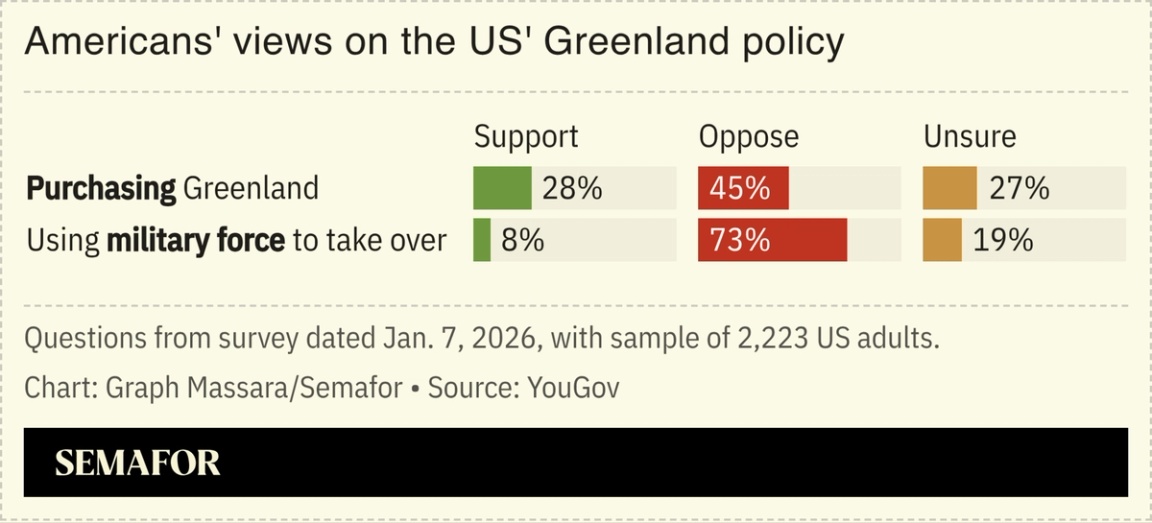 As US President Donald Trump sharpens his interest in acquiring Greenland, experts warned an American annexation attempt could carry heavy economic consequences for Europe. A US military takeover would dent consumer and business confidence on the continent and risks escalations including tariffs and sanctions, Dutch bank analysts wrote. An ING strategist agreed that economic retaliation poses the largest risk, even as Denmark’s currency markets have seen some ripples in recent days, and Greenland’s own economy is slowing, Denmark’s central bank warned. Trump is eyeing Greenland’s critical mineral deposits, but the harsh environment and lack of infrastructure mean the island won’t be a rare earth producer for years, if ever, The Associated Press wrote. |
|
Fallout from ‘spheres of influence’ |
 Kevin Lamarque/Reuters Kevin Lamarque/ReutersGeopolitical analysts warned of the fallout from a transformed world order defined by “spheres of influence.” The US’ ouster of Venezuela’s Nicolás Maduro cemented President Donald Trump’s focus on expanding its control over the Western Hemisphere, but that paradigm is a “recipe for disaster,” International Crisis Group executives wrote, by emboldening authoritarian governments to be more assertive in their own backyards. The changing norms put Europe in a precarious position — though the EU has successfully pursued a form of expansionism for decades as it has grown its membership, an expert wrote. A Bloomberg columnist, however, questioned whether “spheres of influence” ever went away: Rather, the world had become a single US sphere that’s now fragmenting. |
|
China aims to squeeze Japan’s economy |
 Kiyoshi Ota/Pool via Reuters Kiyoshi Ota/Pool via ReutersTensions between China and Japan are deepening as a diplomatic row over Taiwan morphs into an urgent economic conflict. Tokyo is reaching out to G7 peers to discuss critical minerals and strengthen its position after Beijing enacted new export restrictions that could affect rare earths, including products with non-military uses, Nikkei reported. China’s playbook — weaponizing its supply chain dominance — is similar to the one it deployed against the US during last year’s trade war. Japanese Prime Minister Sanae Takaichi is now reportedly considering calling a snap election to bolster her legislative majority; her hardline stance on China appeals to right-wing voters, and a stronger domestic standing could embolden her foreign policy stance, analysts said. |
|
Chinese AI leaders say US lead widening |
 Tommy Wang/AFP via Getty Images Tommy Wang/AFP via Getty ImagesSome of China’s top minds in artificial intelligence publicly warned that the superpower has only a slim chance of catching up to the US in tech. Officials from Alibaba, Tencent, and Zhipu cautioned that despite the global hype surrounding Chinese AI — two Chinese AI unicorns went public last week — the sector is too stretched and lacks the resources to rival American giants OpenAI and Anthropic. They cited US export controls on chips as constraints on innovation; one China tech analyst suggested the tech leaders were trying to lobby Beijing to allow purchases of powerful Nvidia H200 chips. China is reportedly poised to approve the imports, despite a top-down push for technology self-sufficiency. |
|
AI demand fuels Taiwan exports |
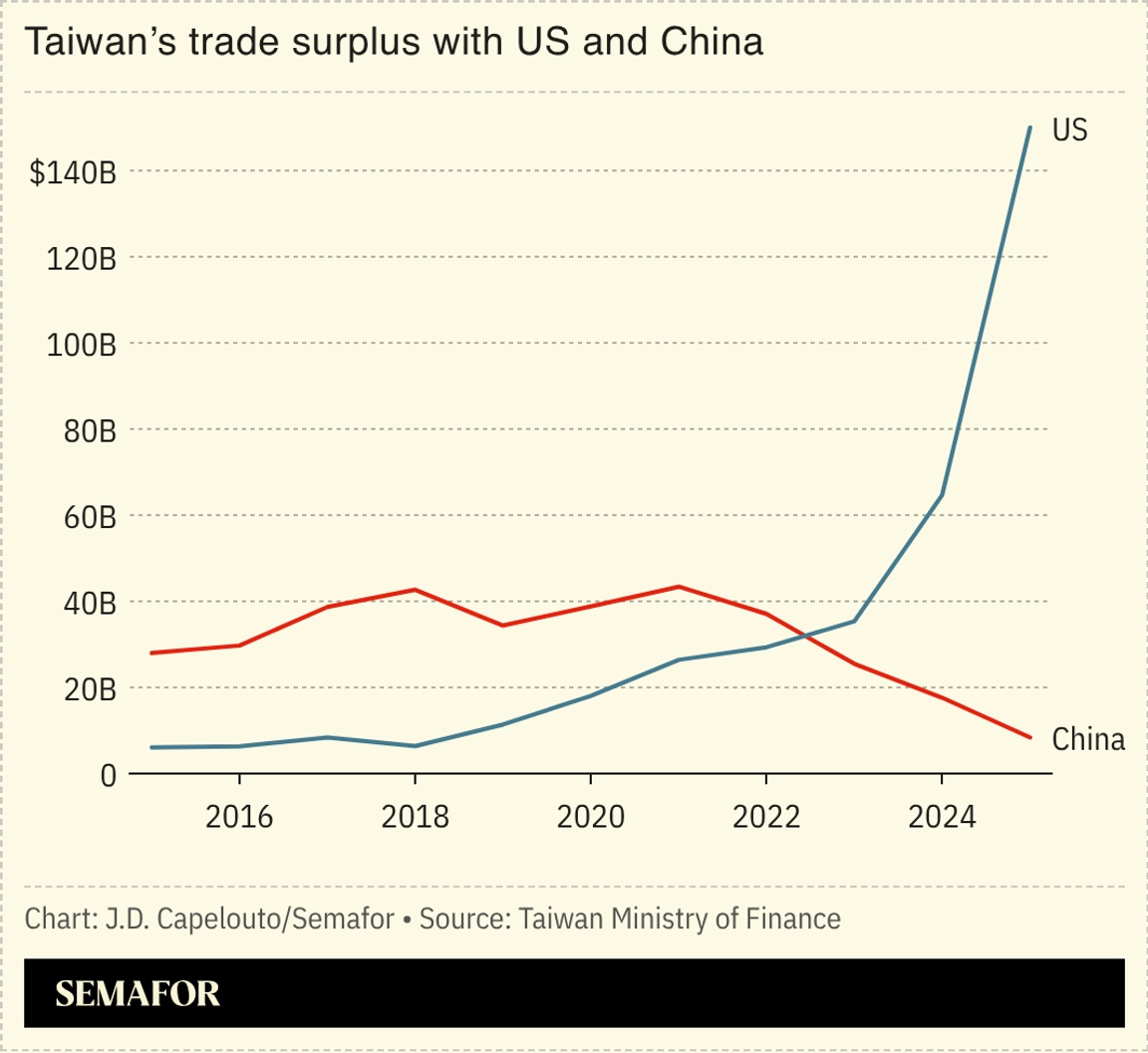 Taiwan’s exports to the US in 2025 surpassed its exports to China for the first time in 26 years, fueled by AI-driven demand, new data showed. The island’s trade surplus with the US hit $150 billion last year, more than twice the figure for 2024, according to The Wall Street Journal — an imbalance that could draw the ire of President Donald Trump, who has focused on narrowing the US’ trade deficit. He has also shown ambivalence toward Taiwan, blaming it for stealing the US microchip industry. Taiwan’s TSMC, the world’s leading semiconductor manufacturer as well as Nvidia’s main supplier, said on Friday that its quarterly revenue beat projections, sending a bullish signal for sustained AI spending in 2026, Bloomberg noted. |
|
 In today’s fast-changing global environment, business leaders are responding by innovating and seizing opportunities in real time. Shifting dynamics, emerging technologies, and rising expectations demand leadership that is both decisive and forward-looking. On Tuesday, Jan. 20, Semafor editors will sit down with global executives in Davos, including President & Chief Investment Officer of Alphabet and Google Ruth Porat and Aon CEO Greg Case to discuss agility, cross-border collaboration, and bold action in the next era of business. Jan. 20 | Davos | Request Invitation |
|
Vietnam makes push for EVs |
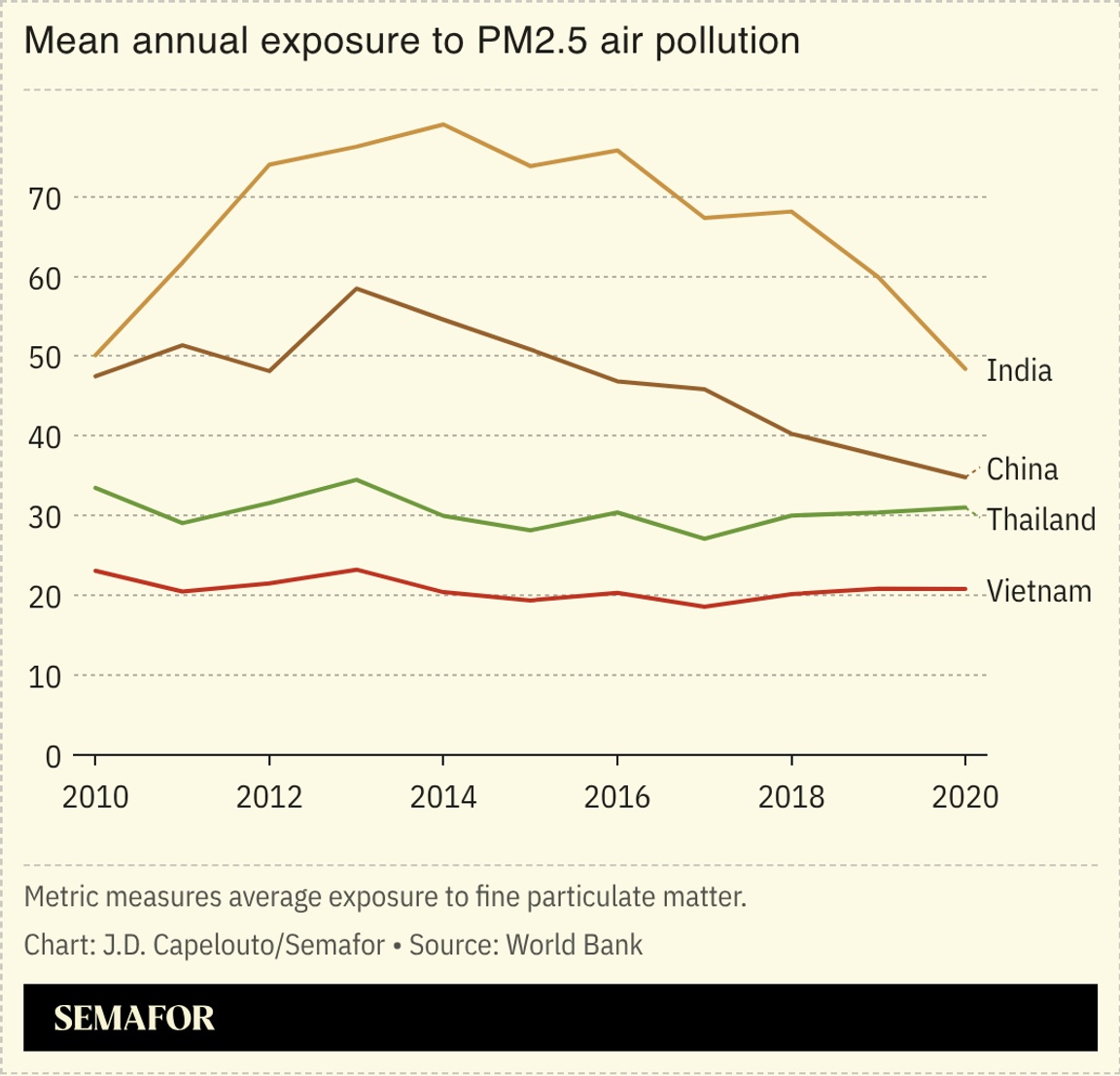 Vietnam’s major cities plan to limit where petrol-powered vehicles can go by 2030. Hanoi and Ho Chi Minh City are among the world’s worst cities for air pollution, largely thanks to the millions of motorbikes that throng their streets. Hanoi will restrict petrol vehicles from designated areas from July, and Ho Chi Minh City from January 2027. Both will also encourage EV use: Ho Chi Minh City wants 50% of motorbikes used by officials and ride-hailing firms to be electric by 2027, and 100% by 2030, Nikkei Asia reported. There are obstacles, however. Both cities lack charging infrastructure, and some residential buildings have banned EVs, over fears of battery fires. |
|
NASA won’t bring back Mars sample |
 NASA/JPL-Caltech/MSSS/Handout via Reuters NASA/JPL-Caltech/MSSS/Handout via ReutersNASA canceled its plan to bring samples of rock from Mars back to Earth. The Perseverance rover has been traversing the surface of the Red Planet since 2021, gathering and analyzing samples, but it is just the first of two stages. A later, as-yet unscheduled mission was intended to return the sealed specimens to Earth. But that is a much more complex operation than the outward journey and was expected to cost $11 billion by its eventual completion around 2040. The White House has long been skeptical, and Congress’ new spending bill “effectively signals the end” of the plan, Science reported. In 2024, Perseverance discovered rocks that some scientists said showed “leopard spots” similar to those left by microbes on Earth. |
|
Saudi Arabia bets on roller coasters |
|
|


