Saks Global’s financial woes, London’s Luso restaurant and designer Oyuna Tserendorj.
|
Tuesday 13/1/26
|

|
|
London
Paris
Zürich
Milan
Bangkok
Tokyo
Toronto
|
|
|
|

Buongiorno. Today our editors are bound for Florence to report on menswear fair Pitti Uomo. Stay tuned for more. Here’s what’s coming up in the Monocle Minute:
THE OPINION: The customer is always right – just ask them
RETAIL: Saks Global prepares to file for bankruptcy
DAILY TREAT: Grab a table at London’s Luso
FROM MONOCLE.COM: Designer Oyuna Tserendorj’s Pantone collaboration
|
|
When did ‘The customer is always right’ become ‘The customer is always rude’?
By Michael Booth
|

|
I ask this, having frequently been told a variation of the same story by friends, who have been on the phone to a bank or an airline, an internet service provider or an energy company. The organisation has screwed up and they, the customer, are attempting to rectify things.
In response, the customer-care call-centre employee is parrying their efforts with a rota of empathetic phrases that they were taught on a one-hour induction course. Finally, exasperated, my friend will have expressed their frustration a little more firmly. Not the F-bomb. No raised voice. Nothing personal. But at this point a ripcord is pulled: “I am sorry, I do not have to accept language like that, I am transferring you to my supervisor.” The supervisor, without being privy to what has preceded, informs them that the call is being terminated because they, the customer, have not remained civil.
It has happened to me too. A young plumber, visiting to fix a repeatedly failing pump in our basement, explained that the problem was a faulty batch from the manufacturer. He removed the pump and returned an hour later with a new one. On closer questioning, he conceded that it was from the same faulty batch. I hesitated, fearful of appearing naive. “But mightn’t that also be unreliable?” The plumber admitted that, yes, there was that possibility. But I could always go down to the basement and just, you know, nudge the ballcock, if the drain filled up. Presumably he imagined that I should sit all night beside it, like an Inuit at a fishing hole.
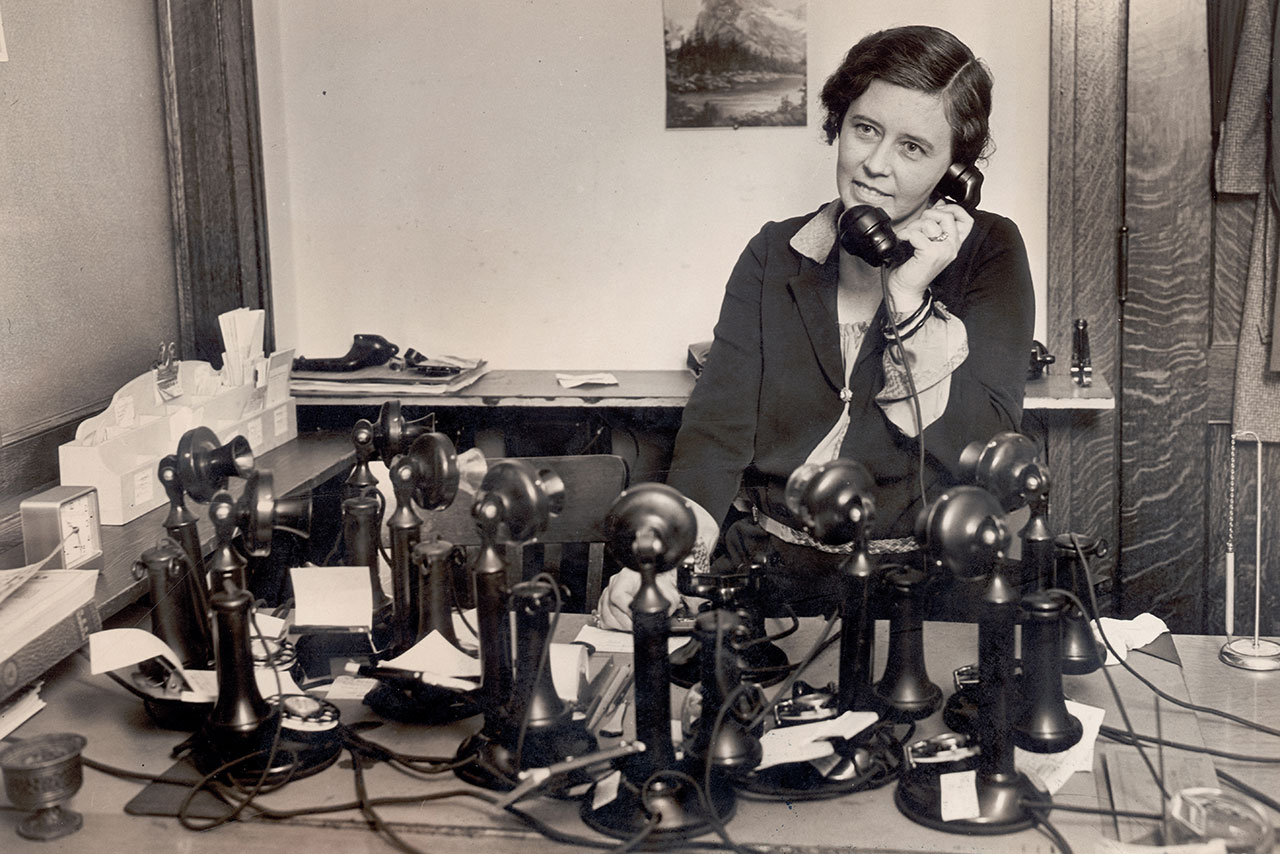
Wake-up call: It’s time to stop taking offence to customer demands
Instead, I made him an offer. “If the basement floods, you come on Monday morning and clear up the water. Or pay me compensation. How does that sound?” He blanched and stuttered. A few moments later, his boss rang me. “You should talk nicely to people,” he admonished. “You should behave properly. It isn’t Alan’s fault.” Alan was upset. I apologised to Alan. He replaced the faulty pump with the other potentially faulty pump. And so, the circle of life continued. I hadn’t raised my voice to Alan. I hadn’t insulted him personally; I had merely expressed my frustration and offered what I thought was a reasonable solution. But I had supposedly overstepped the mark.
I have been reflecting on how that mark must have moved in recent years, without anyone telling me. Or had there been some other shift, a diminishment in a sense of personal responsibility, an increase in the fragility of the collective ego?
I offer these stories not with any eyeroll about snowflakes or political correctness gone mad. The most famous perspective on all this is probably Greg Lukianoff and Jonathan Haidt’s The Coddling of the American Mind, which focuses on the youth of their homeland, but I don’t think that the issue is generation-specific.
What is odd is the anonymising distance afforded by the digital world, turning a large section of the population into total monsters, unafraid to hurl obscenities and wild accusations. Similarly, offence can now be taken so easily and, it seems to me, arbitrarily.
So who is to blame? Well, as ever, it’s the politicians: this kind of tactical, performative offence-taking is particularly loved by the right wing. Here in Denmark, one far-right politician often deploys the “Are you accusing me of being a racist?” defence in the manner of an affronted maiden aunt fluttering her lacy handkerchief at the mention of sexual impropriety. In the UK, Nigel Farage uses the technique of pretending to get upset at some imagined slight, raising his voice in protest – “How dare you suggest…!”; “That is grossly offensive!” – when he knows that he is on shaky moral or factual ground.
Politicians might be beyond saving but the rest of us really need to buck up. If the Russian army really is about to roll across Western Europe, are we as robust as we need to be? Before we spend billions on our defence hardware, shouldn’t we also spend a little time considering our mental resilience to the quotidian vicissitudes of life? If we indulge in offence-taking to evade our basic responsibilities, is that likely to help us resist the crushing heel of the Russian jackboot? And if anyone has a good water pump spare, feel free to drop me a line.
Michael Booth is Monocle’s Copenhagen correspondent. For more opinion, analysis and insight, subscribe to Monocle today.
|
|
HITACHI ENERGY  MONOCLE MONOCLE
|
|
retail: usa
As Saks Global teeters on the brink of bankruptcy, what can be done to save the department store?
Saks Global is expected to file imminently for Chapter 11 bankruptcy, Bloomberg reports (writes Jack Simpson). Marc Metrick resigned as CEO last week, just 13 months after the company penned a multibillion-dollar deal to merge US department stores Neiman Marcus and Saks. The demise of this retail behemoth, which includes dozens of shops across the country, as well as two Bergdorf Goodman locations, raises renewed questions over the future of US department stores.
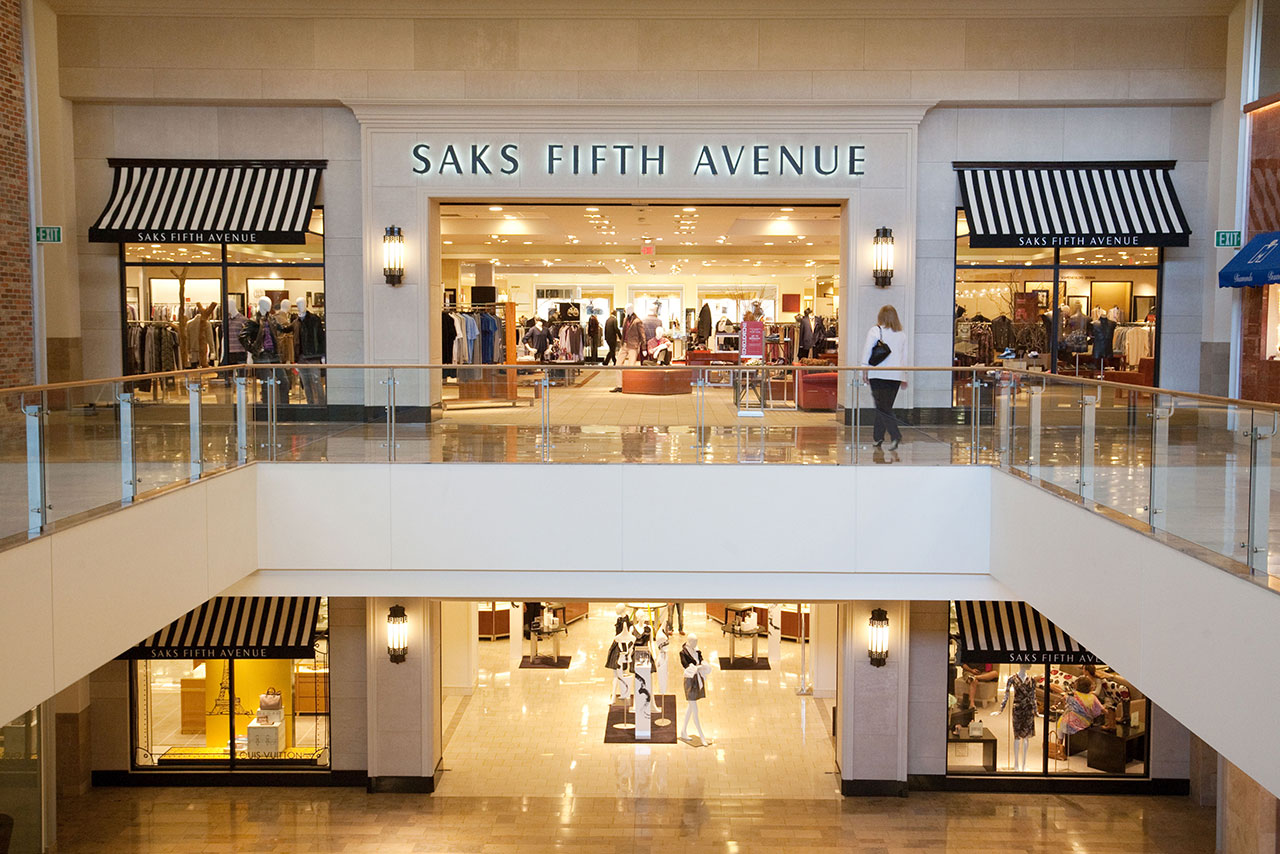
Talking shop: Saks faces an uncertain future
While online shopping has affected in-store sales, other problems have plagued the retailer. “Notions of breadth have been lost – these locations have become speciality shops focused on fashion and beauty,” says Monocle’s editorial director, Tyler Brûlé. In their prime, these institutions treated visitors to an array of products, from linens and porcelain to fine wines and fashion. The owners of department stores sometimes indulged in engaging, often whimsical marketing strategies that today’s consolidation-focused CEOs seemingly wouldn’t dare to invest in.
But there are still reasons to be optimistic: Isetan in Tokyo continues to prioritise abundance under one roof, Parisian institution Printemps’s first North American venture in New York has proved popular and Liberty in London is championing emerging brands. These successful shops all know how to create experiences in person and offer goods that can’t be aped online.
To hear from Central Group’s CEO, Natira Boonsri, about the Thai retail giant’s future, click here. And read Brûlé’s take on the demise of Canadian department stores here.
|
|
• • • • • DAILY TREAT • • • • •
Grab a table at London’s Luso
Luso has opened in the space previously occupied by Nuno Mendes’s Lisboeta in Fitzrovia. Its contemporary, casual menu is steered by head chef Kimberly Hernandez (once of Dosa and Luca) and homes in on the Iberian coastline and rural Portuguese classics.
Hits include a lobster pastry roll, wild mushroom tart, clams with coriander and garlic and a prego (steak slider) that’s known to sell out at lunch. Wines, meanwhile, are sourced from locations such as Dão and Alentejo. And it’s well worth asking about Herdade do Cebolal, a winery that ages some of its bottles in the sea.
luso.restaurant
|
|
|
Sponsored by Hitachi Energy
|
|
|
|
|
|
FROM MONOCLE.COM: mongolia
How designer Oyuna Tserendorj uses Pantone colour to reframe modern cashmere
Mongolia-born designer Oyuna Tserendorj hosted her first fashion show last year in Paris to present her eponymous label’s autumn/winter 2025 collection (writes Natalie Theodosi). It was a cosy line-up of cashmere coats, lightweight knits and loose trousers in earthy honey hues, crisp winter whites and deep blues inspired by dark skies. The striking colour palette was developed in collaboration with Pantone, the global authority on colour trends, which has partnered with companies as wide-ranging as Barbie, Bentley and Roman fashion house Valentino.

Staying true to her brand’s timeless ethos – and her own gentle nature – Tserendorj did things her way: she hosted an intimate, salon-style show at a friend’s Left Bank apartment overlooking the Seine. Models walked barefoot and a family-style dinner was served shortly after the show. The inspiration behind her new collection, dubbed “Caravan”, was the journey of a nomadic Mongolian family moving to its next base for winter and observing the changing natural landscapes along the way.
Here she tells Monocle about the process of working with Pantone to find the colours that perfectly matched her vision, the importance of manufacturing in Mongolia and her new winter residence on London’s Savile Row.
|
|
Monocle Radio: THE STACK
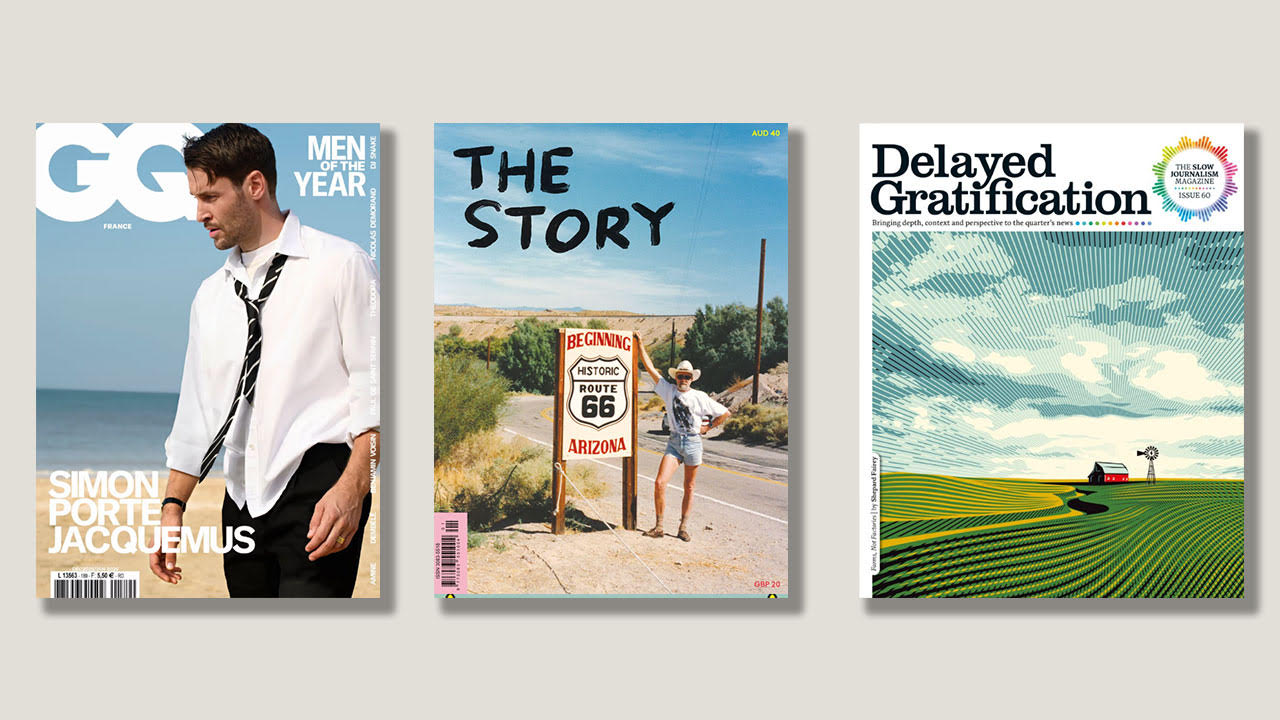
‘GQ France’, 15 years of ‘Delayed Gratification’ and new Australian title ‘The Story’
We celebrate 15 years of Delayed Gratification with Rob Orchard. Plus: Chris Harrigan of new Australian title The Story and a conversation with the head of editorial content for GQ France, Claire Hazan.
| | | | |


