Smart people don't lose money because they make dumb decisions.‌.‌.‌
 ‌ ‌ ‌ ‌ ‌ ‌ ‌ ‌ ‌ ‌ ‌ ‌ ‌ ‌ ‌ ‌ ‌ ‌ ‌ ‌ ‌ ‌ ‌ ‌ ‌ ‌ ‌ ‌ ‌ ‌ ‌ ‌ ‌ ‌ ‌ ‌ ‌ ‌ ‌ ‌ ‌ ‌ ‌ ‌ ‌ ‌ ‌ ‌ ‌ ‌ ‌ ‌ ‌ ‌ ‌ ‌ ‌ ‌ ‌ ‌ ‌ ‌ ‌ ‌ ‌ ‌ ‌ ‌ ‌ ‌ ‌ ‌ ‌ ‌ ‌ ‌ ‌ ‌ ‌ ‌ ‌ ‌ ‌ ‌ ‌ ‌ ‌ ‌ ‌ ‌ ‌ ‌ ‌ ‌ ‌ ‌ ‌ ‌ ‌ ‌ ‌ ‌ ‌ ‌ ‌ ‌ ‌ ‌ ‌ ‌ ‌ ‌ ‌ ‌ ‌ ‌ ‌ ‌ ‌ ‌ ‌ ‌ ‌ ‌ ‌ ‌

Hey Friend,


Last week, we had the WealthOS Live Accelerator event. We sold over 1,500 tickets. It was an incredible experience.


If you were there, hit reply and tell me what the highlight was for you.


And if you weren't there, I want to share some of the highlights with you so you.


Let's dive in...


MAIN FEATURE


The Five Decisions That Derail Portfolios


Smart people don't lose money because they make dumb decisions.


They lose money because they're forced to make decisions.


Almost every wealth failure I've ever seen shows up in one of these five moments.


1. Your income takes a hit


A client leaves. A business slows down. A job change takes longer than planned.


If an income drop forces you to sell investments just to pay bills, you didn't just have a bad month. You permanently damaged compounding.


Because once you sell, that money never gets the chance to keep working for you again. And this almost always happens at the worst possible time.


2. A large, unexpected expense shows up


Medical issues. Family situations. Taxes that come in way higher than expected.


If the only way to handle those moments is touching long-term investments, then your assets were doing the wrong job.


Assets are meant to grow. Not get eaten every time life throws a curveball.


3. Markets drop at the wrong time


Markets going down isn't the problem. They always go down.


The problem is when they go down and you need cash.


That's when selling feels unavoidable. That's when panic creeps in. That's when years of progress get undone by one decision.


Markets didn't force the sale. Cash pressure did.


4. You cross the "retirement line"


Most people are taught that once you retire, you start selling a little every year. Four percent. Five percent. Whatever the model says.


But think about that.


That's the exact moment when compounding is most powerful... and that's when people are told to shut it off.


That's not retirement. That's managed depletion.


5. You're asked to decide while emotions are high


Watching balances swing. Reading headlines. Feeling like you should "do something."


If your plan requires you to stay calm forever, it's not finished.


Nobody stays calm forever.


Real systems don't rely on perfect behavior. They're built so emotions don't matter.


So here's what I actually want you to do.


Take a piece of paper. Write these five things down:

  1. Income drops
  2. Unexpected expense
  3. Markets fall
  4. Reach retirement
  5. Emotional decision

Now go through them one by one and answer a single question:


What is my plan here that does not involve selling my investments?


Not what should happen. Not what you hope happens. What actually happens.

  • If income drops, where does the money come from?
  • If an expense shows up, what gets used?
  • If markets fall, what do you live on?
  • When you retire, how do you get paid without liquidating?
  • When emotions are high, what decision has already been made for you?

If you don't have clear answers for these, my point isn't to freak you out. It's just this: let's start coming up with answers now.


While we're not in panic mode.


Don't wait until one of these things happens to you to figure out what the answers are.


The whole goal is to figure that out right now so that when those things arise, we're already prepared to weather that storm.


TODAY'S VISUAL


Why Selling in Retirement Is Backwards


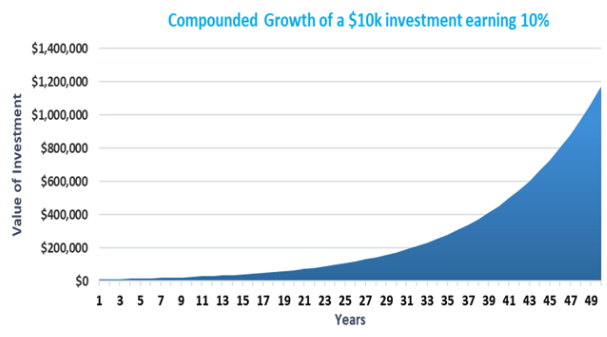
Look at this chart:


A $10k investment at 10% grows to over $1.1 million in 50 years.


That curve is what happens when compounding runs uninterrupted.


But the traditional retirement model tells you to start selling at year 30.


You start killing your compounding right when it's getting the most powerful.


That's why you need a SYSTEM, not a PORTFOLIO.


A portfolio gets sold to fund life.


A system produces cash flow while the curve keeps climbing.


Real estate that produces rent without touching equity. Businesses that generate distributions without diluting ownership. Bitcoin that compounds while you borrow against it.


The goal isn't to die with zero.


The goal is to have something left over that proves you were here.


Is your wealth designed to be consumed, or designed to compound forever?


THOUGHT OF THE DAY


"I'm Done Selling Bitcoin"


At the WealthOS Live Event last week, a retired gentleman told me something that stopped me:


He's living off Bitcoin. Has enough to last many years.


But once he learned about borrowing against it instead of selling, he made a decision.


Never sell again.


Here's why that matters:


When you only see numbers go down, you operate from scarcity. It doesn't matter how big the number is. Watching your balance sheet shrink puts you in constriction mode.


But when your system produces cash flow while assets keep compounding, you shift into abundance. Into creativity. Into expansion.


That's the difference between a portfolio and a system.


One gets consumed. The other compounds forever.


TODAY'S LIST


Some of My Favorite Follows


If you want to stay sharp, here are three people I follow closely:


1. Anthony Pompliano@APomplianoPomp is one of the clearest voices in Bitcoin and macro thinking. He cuts through the noise, focuses on long-term trends, and makes complex ideas accessible. If you want daily insights on where capital is flowing and why, follow him.


2. Jeff Booth@JeffBooth
Jeff is a deflationary economics thinker and author of The Price of Tomorrow. He understands how technology drives deflation and how that changes everything about money, wealth, and power. If you want to understand the future, start here.


3. Nick Bhatia@NickBhatia
Nick is a Bitcoin researcher, author, and deep thinker. He writes about Bitcoin's role in the financial system and how it fits into the bigger macro picture. If you want depth, not hype, Nick delivers.


WRAPPING UP


I just wanted to share some of this with you.


If you weren't able to make it to the live event, the next one's coming up in the first week of February.


Stay tuned. I'll let you know when more details come out.


To your wealth,

P.S. Hit reply and tell me: Which of the five decisions hit closest to home for you?