And, preventing and reversing liver scarring.

Get full access to Reuters.com for just $1/week. Subscribe now.


Health Rounds

Health Rounds

By Nancy Lapid, Health Science Editor

Hello Health Rounds readers! Today we offer some early research with the potential to become game changers. The first could one day greatly improve IVF success rates. We also report on a new approach to addressing fibrosis in fatty liver disease that has shown promise in mouse studies.   

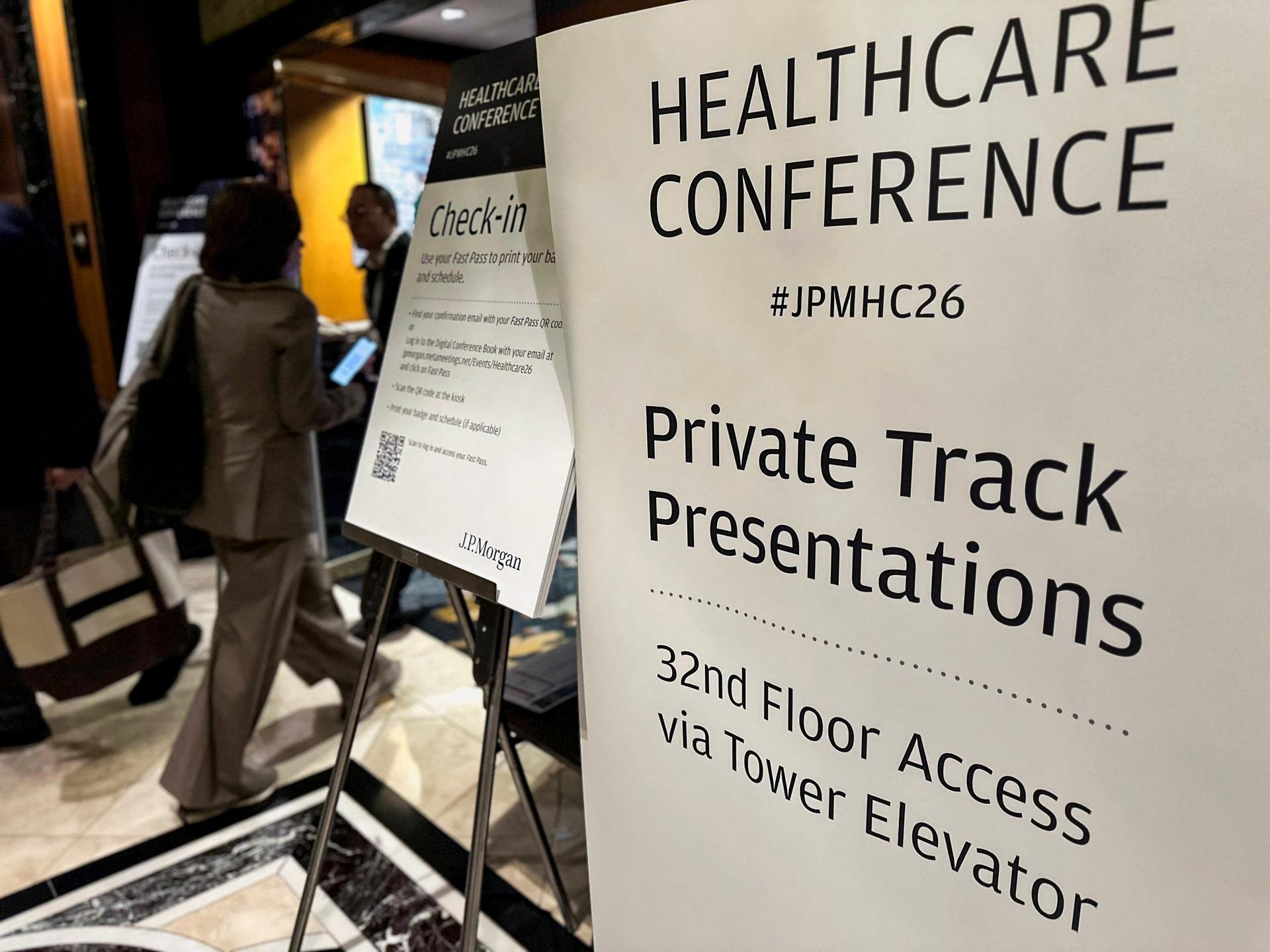
From the JP Morgan Healthcare Conference: Health care investors gear up for transformative legal developments;  Bayer targets return to mid-single-digit pharma growth by 2027; Pharma digs in on changes it wants from Trump administration; Biopharma industry eyes 2025 bounceback, grapples with uncertainty over Trump return; and Biogen CEO sees no burning need for more acquisitions.

Meanwhile: US FDA seeks to remove suicide warnings from weight-loss drug labels; Trump to announce healthcare affordability framework; Health Secretary Kennedy appoints two new members to CDC's vaccine advisory panel; US judge blocks Trump administration canceling of pediatrics group's grants and Democratic-led US states sue over HHS grant conditions targeting transgender people.

Also: Measles cases in South Carolina rise to 434; global drugmakers rush to boost US presence as tariff threat looms; WHO says low taxes are making sugary drinks, alcohol more affordable and severe staffing shortages expected at New York hospitals as 15,000 nurses go on strike.


Industry Updates

  • Gilead's HIV prevention shot added to CVS drug coverage lists.
  • Lilly will have supply of new weight loss pill for many countries.
  • SciNeuro, Novartis sign $1.7 bln deal to develop Alzheimer's drugs.
  • AbbVie partners with China's RemeGen on tumor treatment.
  • Moderna trims 2025 costs forecast; Revvity says it will exceed 2025 profit forecast range; Cardinal Health raises 2026 profit forecast.
  • Nvidia, Eli Lilly to spend $1 bln on joint research lab.
  • AstraZeneca to acquire Modella AI to speed oncology research.
  • Smith & Nephew to buy Integrity Orthopedics for up to $450 mln.
  • Analysts initiate Medline with bullish ratings after blockbuster IPO.
  • FDA OK's Fortress Bio/Zydus' drug for rare pediatric disease; declines to approve Atara's therapy for rare blood cancer; and  extends review of Travere kidney disease drug.
  • Viking CEO says appetite for weight-loss deals broader than visible.
  • Sino Biopharmaceutical buys Hangzhou Hygieia Biomedical.
  • Illumina unveils dataset to speed up AI-powered drug discovery.
  • Thermo Fisher wins contracts as pharma shifts production to US.


At healthcare conference, Novo says 1.5 mln in US use compounded GLP-1 drugs

REUTERS/Sabrina Valle

Novo Nordisk CEO Mike Doustdar said at the J.P. Morgan Healthcare Conference that compounders understood consumer needs better than the pharmaceutical industry initially did, allowing them to attract patients who were unable or unwilling to pay for branded GLP-1 drugs.


Study Rounds

Experimental treatment improves quality of older human eggs


An experimental treatment significantly improves the quality of human eggs and increases the proportion that can be used for in vitro fertilization, researchers reported at the Fertility 2026 conference in the UK.

In lab experiments, the treatment raised the proportion of viable eggs from about 47% to 71%, manufacturer Ovo Labs GmbH in Munich said in a press release.

If the treatment proves effective in actual assisted reproduction procedures, it could lead to an additional million babies being born through IVF each year worldwide, the company said.

For an egg to give rise to a viable embryo at fertilization and ultimately a healthy baby, it must contain the correct amount of genetic material, study leader and OVO Labs co-founder Melina Schuh of Max Planck Institute for Multidisciplinary Sciences in Göttingen, Germany explained.

In humans, this means exactly 23 chromosomes, Schuh said. However, human eggs frequently contain an abnormal number of chromosomes. The condition, known as aneuploidy, occurs in approximately 25% of eggs from women in their late 20s and in more than 65% of eggs from women approaching age 40.

Aneuploidy usually results in failed implantation, miscarriage or infertility.

The researchers say their treatment improves the accuracy of chromosome segregation during egg maturation by restoring levels of a protective protein involved in the process called Shugoshin 1 (Japanese for “guardian spirit”) to levels seen in eggs from younger women.

“Being able to treat eggs to make (chromosome segregation) work better would be a huge advance," Professor Richard Anderson, a reproductive medicine specialist at the University of Edinburgh who was not involved in the research, said.

"While we await further details and confirmatory clinical trials, including addressing safety issues, these results have great potential for improving IVF success rates.”


Read more about IVF research on Reuters.com

  • Three-person IVF technique spared children from inherited diseases, scientists say
  • Health Rounds: Older eggs may be made suitable for IVF
  • Explainer: How freezing embryos plays a crucial role in IVF