Thanks for reading The Briefing, our nightly column where we break down the day’s news. If you like what you see, I encourage you to subscribe to our reporting here.
Greetings!
Maybe Brad Smith should run for office. The Microsoft vice chair and president put his name to a lengthy, detailed document released on Tuesday that demonstrates the tech giant is trying to get ahead of growing grass-roots complaints about the impact of data centers on local communities. Among other things, Microsoft promised to pay enough for electricity it uses in its data centers—including the cost of adding new infrastructure—so that its energy consumption doesn’t cause higher rates for consumers. That’s quite a promise to make.
It’s little wonder President Donald Trump, who faces growing skepticism among voters about his closeness to big tech on AI issues, scooped Microsoft on its announcement in a Truth Social post on Monday evening. “I never want Americans to pay higher electricity bills because of data centers,” Trump said, obviously aware that the rising cost of power is sure to be a potent issue in the midterms. (This story in today’s Wall Street Journal spotlights it.) It’s smart of Microsoft to be proactive. After all, if it doesn’t take action to tamp down complaints, energy regulators and local politicians are likely to take action of their own. Tech companies might find it’s harder to build in particular areas. Microsoft is also surely winning brownie points with Trump, which won’t hurt.
And while cynics might dismiss the promises as typical corporate blather, the commitments are detailed enough that Microsoft can be held to account on them. The real question is whether other companies will follow suit. The promises Microsoft has made are likely to add to the already-high cost of new data center development. That means earning a return on AI investment is only going to get harder. Still, you can imagine the politically savvy OpenAI taking similar steps, as well as Google and Meta Platforms. What about Elon Musk’s xAI?
As we’ve written, xAI has faced a lot of opposition in Memphis, Tenn., to its data center developments. Musk has one data center up and running, a second under construction and plans underway for a third one nearby. As my colleague Theo Wayt wrote on Christmas Eve, xAI’s efforts to persuade Memphians it’s a good neighbor included sponsoring a Christmas light show. Whether that’s going to change anyone’s mind about the company is hard to say. But it’s a good bet that Microsoft was thinking of xAI, among others, when it laid out its commitment to developing new data centers “differently than some others.” XAI’s entire approach is to move very quickly to construct data centers. Winning over local communities and acting with speed probably don’t mesh.
Netflix’s Warner Pursuit
Uh-oh. Netflix is considering revising its offer for Warner Bros. Discovery’s studio and streaming operations, including making its $82 billion offer all-cash, according to Bloomberg. That would presumably mean Netflix would have to borrow more than the $50 billion it is already scheduled to raise.
Assuming Netflix doesn’t raise its price, it would need another $11.7 billion in cash, as that’s the amount of equity it was planning to issue in the offer. The $82 billion value includes debt on WBD’s balance sheet it is taking on: The actual cost of buying WBD is $72 billion. Netflix was planning to use $10 billion it already has in the bank.
Borrowing more money would put more stress on Netflix after the acquisition, as the company would have to cut additional costs. This isn’t good news for Netflix shareholders, who have already shown their ambivalence about the deal by selling the stock down since it was announced.
In Other News
• Meta Platforms and EssilorLuxottica have discussed the possibility of doubling production of their AI-powered smart glasses this year, as demand grows and more competitors enter the market, Bloomberg reported. Meta, meanwhile, began to lay off around 10% of its Reality Labs division, which has around 15,000 employees.
• Salesforce’s Slack unit has officially launched an overhauled version of Slackbot, a digital assistant that has long handled basic tasks like sending alerts to users, in the latest sign of the software provider’s growing focus on using AI to improve products.
• Penske Media, the publisher of Rolling Stone and other entertainment brands, sued Google on Tuesday, alleging that Penske and its subsidiary SheMedia have lost money as a result of what a federal judge ruled last year was Google’s illegal monopoly over the market for advertising technology. Penske also sued Google last September over traffic drops it blamed on AI Overviews.
• Amazon plans to end financial support it began paying last year to some of its suppliers affected by the cost of President Trump’s tariffs, the Financial Times reported.
Today on The Information’s TITV
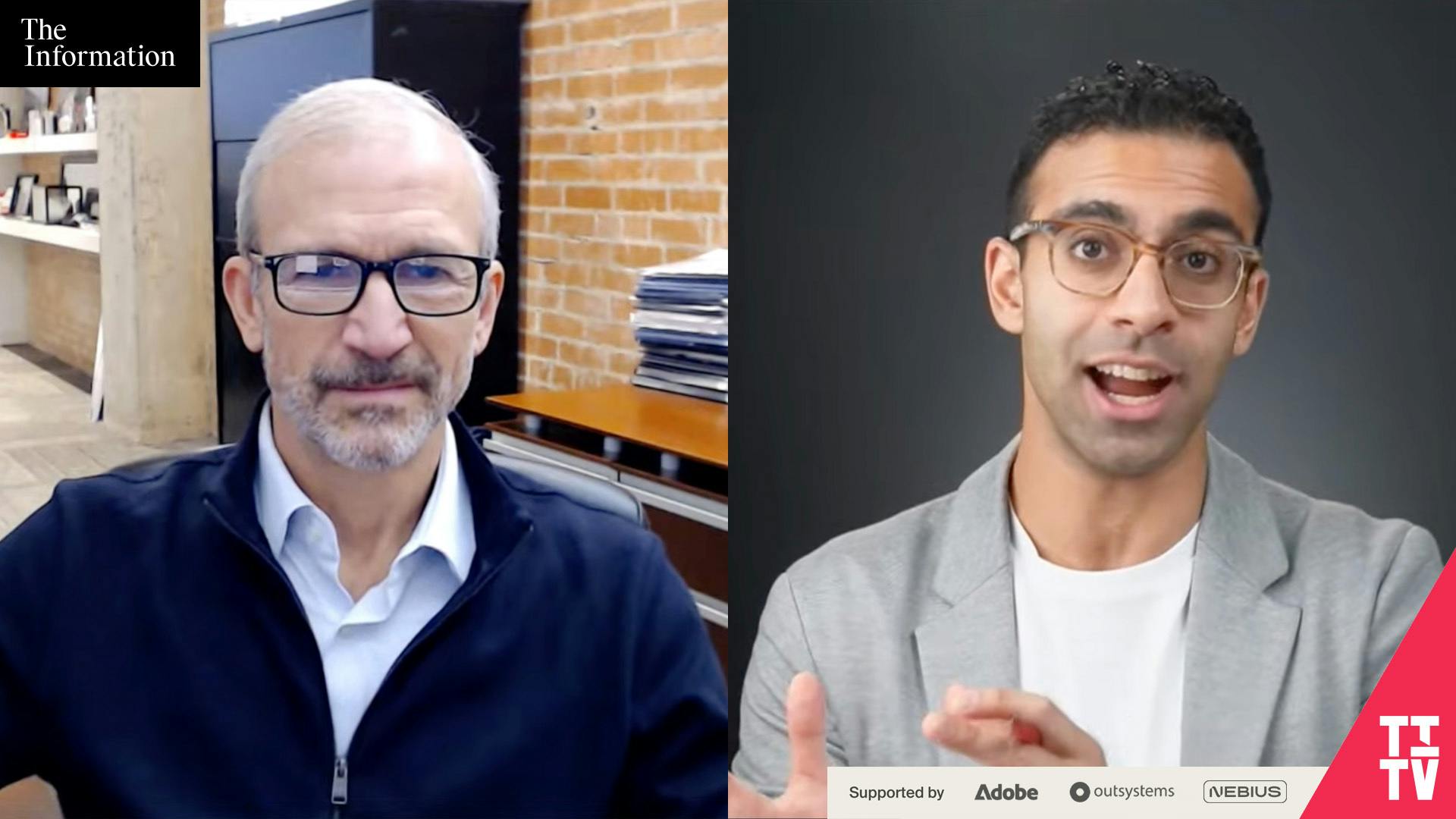
Check out our latest episode of TITV in which we discuss the opportunities (and realities) of the data center boom.
Recommended Newsletter
Start your day with Applied AI, the newsletter from The Information that uncovers how leading businesses are leveraging AI to automate tasks across the board. Subscribe now for free to get it delivered straight to your inbox twice a week.