Gulf braces for impact, the death of credits and Danes don’t care for Greenland
|
Thursday 15/1/26
|

|
|
London
Paris
Zürich
Milan
Bangkok
Tokyo
Toronto
|
|
|
|

Good morning. Interested in the trends, tips and trattorias on everyone’s lips at Florence’s menswear fair, Pitti Immagine Uomo? Look out for a special edition newsletter, heading your way soon. For now, here’s what’s coming up in today’s Monocle Minute:
THE OPINION: The high price of Taiwan’s tech success
AFFAIRS: Danes don’t care about Greenland
DEFENCE: Is the Gulf bracing for impact?
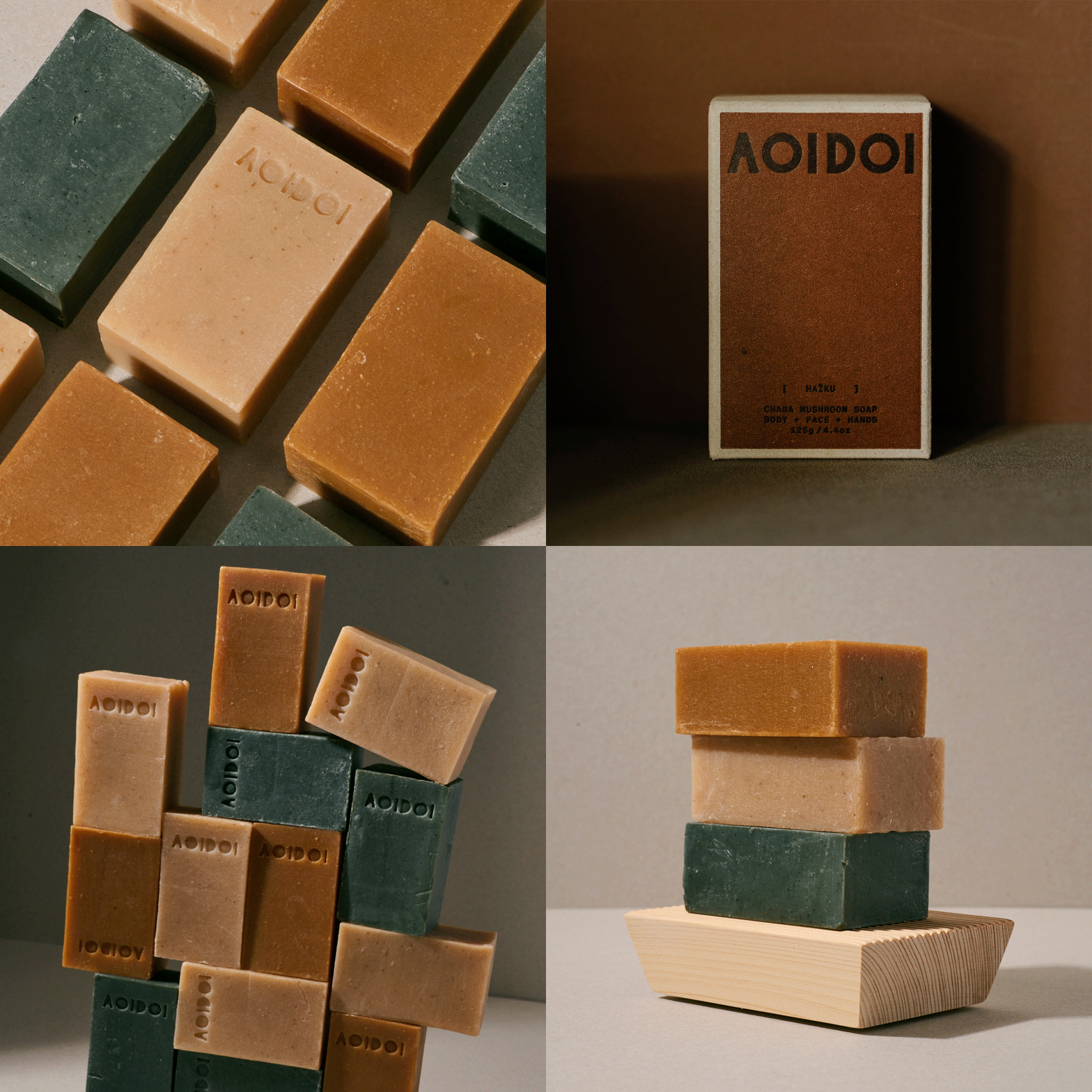
DAILY TREAT: Clean up with Aoidoi soap bars
FROM MONOCLE.COM: The death of end credits
|
|
Taiwan is the world’s tech powerhouse – but it can’t keep the lights on at home
By Clarissa Wei
|
On a weekday morning in Taiwan’s Hsinchu Science Park, delivery trucks queue outside semiconductor foundries. Just a few blocks away, meanwhile, is a hardware shop with many of its lights switched off; its owner sits idly by the counter, staring at his phone. It’s a snapshot of a place that’s experiencing a world-changing boom that doesn’t feel like one at street level. Amid all the geopolitical noise, Taiwan closed 2025 as an indispensable part of the global technology supply chain. As the manufacturer of most of the world’s advanced chips and servers, the island nation’s economic might is on course for further growth as AI continues to evolve. In October exports grew at their fastest pace in almost 16 years, largely driven by US demand for AI-related hardware (a category excluded from Donald Trump’s tariffs). This astonishing run has brought to the fore questions about who benefits from Taiwan’s economic model and its effects on the island’s security.
Success in technology hasn’t lifted all sectors equally. From tool makers to auto-parts factories, traditional manufacturers have been contending with rising costs, labour shortages and the downstream effects of a supply chain that prioritises semiconductors above all else. The stock market surge has rewarded giants such as Taiwan Semiconductor Manufacturing Company (TSMC), the world’s largest chipmaker and the quiet engine behind everything from iPhones to the data centres that the internet relies on. TSMC’s market share exceeds 70 per cent and the company continues to post record profits – a level of dominance that only widens the gap with the island’s other manufacturers.
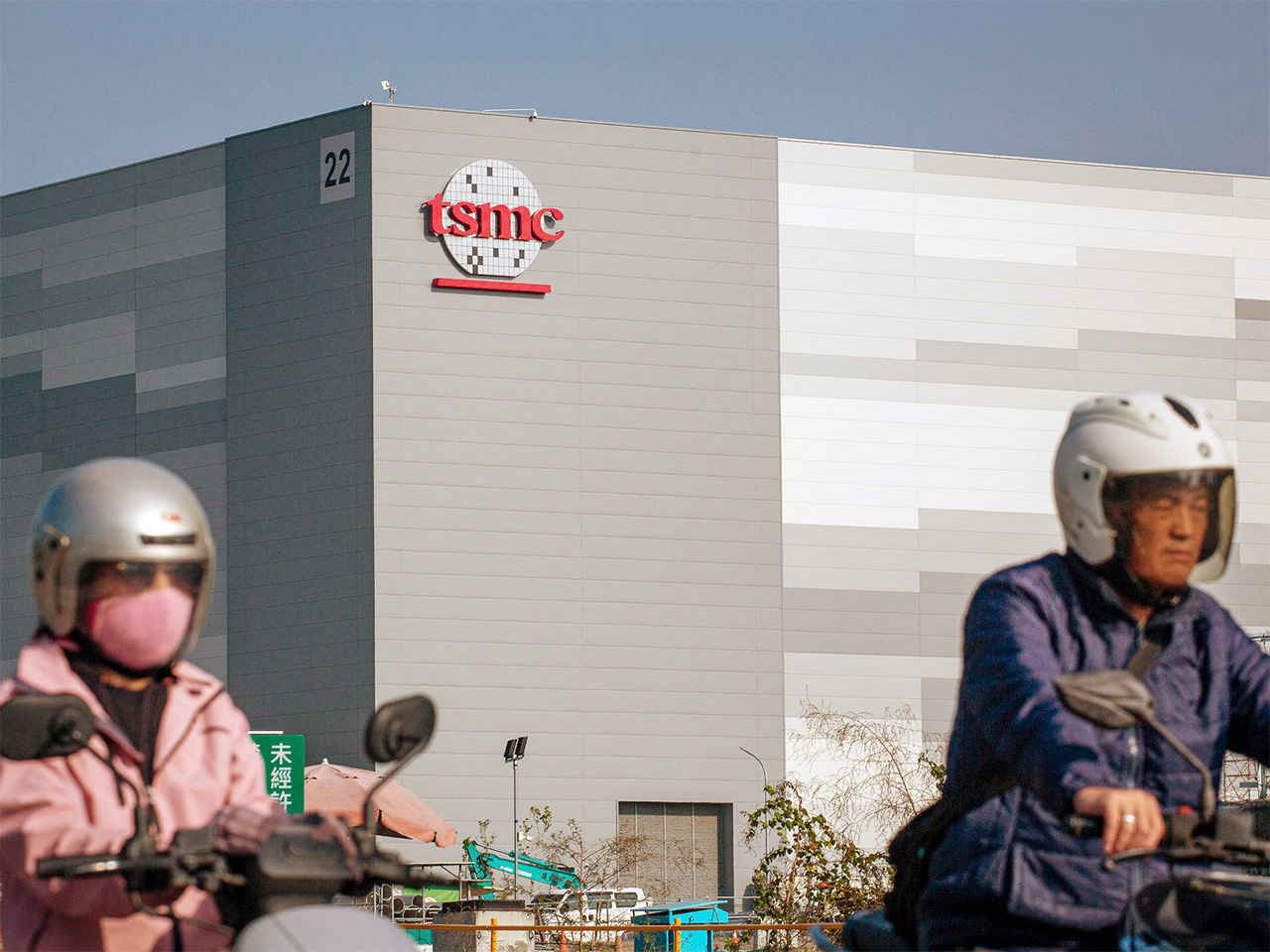
Cashing in the chips: Taiwanese firms such as TSMC race to stay ahead of the curve
Currency policy magnifies the divide. The Taiwan dollar is estimated to be undervalued by 55 per cent against the US dollar – the steepest misalignment in the world. This keeps exporters globally competitive but raises the cost of living for everyone else. The strategy of currency devaluation powered the island’s industrialisation in the early 1990s; today it concentrates the spoils. Wages remain flat: the average monthly salary hovers at about NT$47,750 (€1,142). And the sector driving Taiwan’s global clout is small relative to its influence. TSMC employs some 83,000 people in total, almost 90 per cent of whom are in Taiwan; yet this represents a small fraction of a labour force measured in the millions. Outside a narrow class of engineers, the average worker here is effectively underwriting the country’s export success through lower pay and eroded purchasing power.
Housing turns that pressure into something more visible. Low interest rates have pushed demand well beyond what wage growth can support. Taipei is now one of the world’s most expensive cities to buy a home in, with a house-price-to-income ratio at 15.71 in 2023 – considerably higher than even London or New York. In the capital an average household still needs to devote two-thirds of its income to a mortgage, a burden that keeps younger Taiwanese trapped in a cycle of renting.
All of this is unfolding as the island faces volatile geopolitical pressures. The industry fuelling Taiwan’s economic rise is now at the centre of global security concerns. Beijing has intensified its military pressure, no doubt emboldened by the havoc that Donald Trump is wreaking on geopolitical norms. At the end of December, China held huge military drills around Taiwan, involving fighter planes, naval destroyers, drones and even a simulated blockade; Chinese military aircraft and naval vessels have become a regular presence around the island.
Taiwan’s strategic value cuts both ways. It heightens Beijing’s incentive to pressure the island while strengthening Washington’s belief that it is too crucial to lose. Washington has tightened export controls on advanced chips bound for China while pouring billions into domestic production, including a subsidy of more than $6bn (€5.2bn) for TSMC’s new fabs in Arizona. Europe and Japan have followed suit, courting Taiwanese firms as they race to build their own chip-making capacity.
Translating Taiwan’s technological stature into broader domestic prosperity remains an unresolved challenge. The geopolitical backdrop adds another layer of uncertainty to an economy already struggling to spread its gains.The island is being asked to anchor the world’s AI ambitions while absorbing the political and security risks that come with it. This year will be a test of whether the benefits of this extraordinary boom can finally filter down to the households carrying its weight.
Clarissa Wei is a US journalist based in Taiwan. For more opinion, analysis and insight, subscribe to Monocle today.
Read next: What the West gets wrong about Chinese innovation
|
|
HITACHI ENERGY  MONOCLE MONOCLE
|
|
AFFAIRS: denmark
Taking the temperature of Danish opinion on Greenland
When I have asked a number of Danes how they would feel if they “lost” Greenland, two points have been raised: first, that it’s not theirs to lose and, second, that many of them would not be all that bothered (writes Michael Booth). When I point out that their kingdom would lose the largest island in the world, a crucial territory in what is rapidly becoming the 21st century’s most important geopolitical conflict zone, I have been met with shrugs. “We would only be proud if the Greenlanders took control of their country and if we helped with that in an orderly way,” the director of a Danish technology company told me over lunch last week. A senior civil servant, also at the table, agreed. “I think we’d be very satisfied if they felt they could go it alone,” she said.
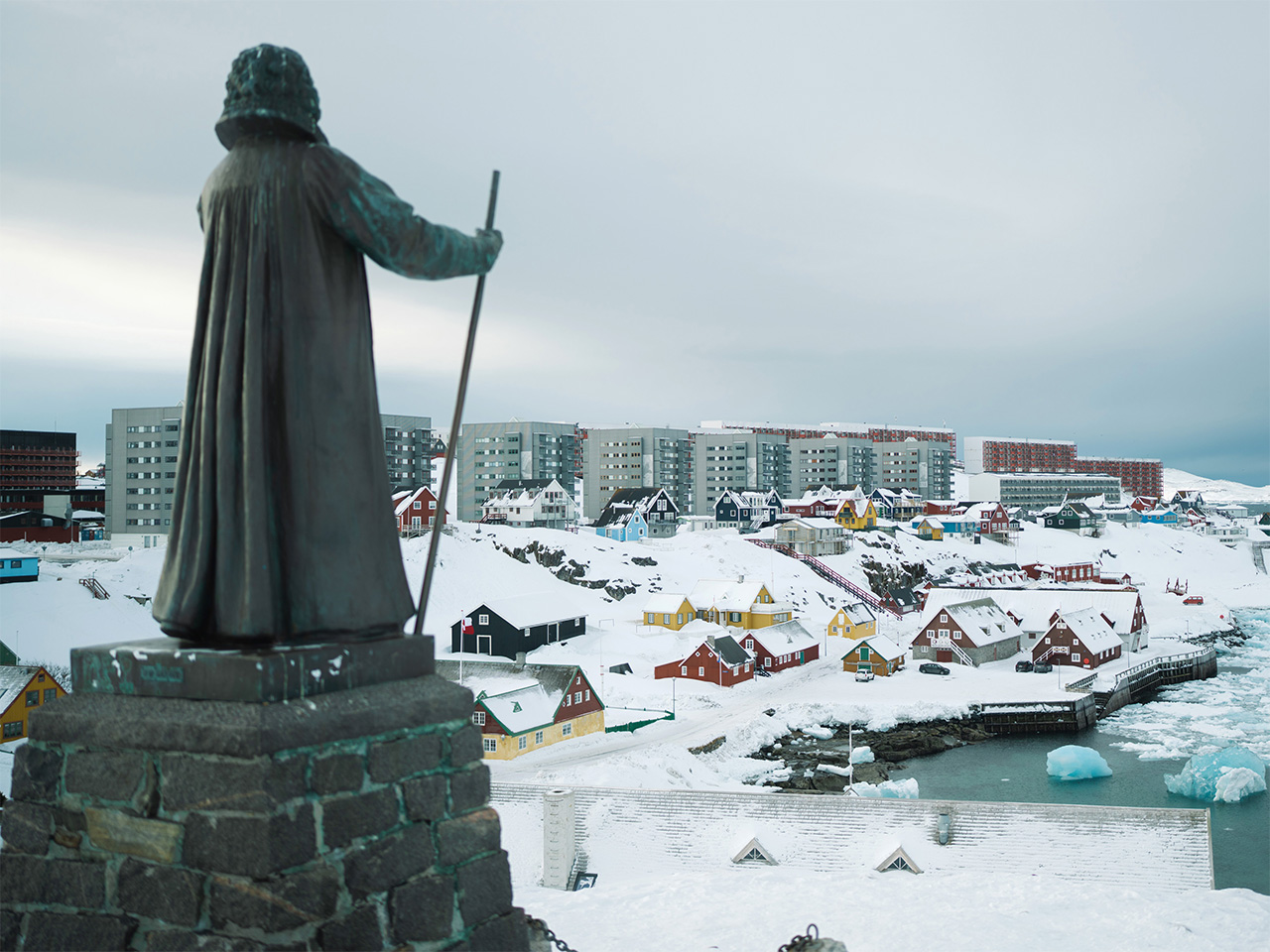
Frosty reception: A statue of Danish missionary Hans Egede over Nuuk
With a population of about 56,500, “going it alone” is not really an option for Greenland, which has always been an economic burden on the Danes. Denmark spends about DKK5bn (€670m) a year on the territory – not just within it but also, for example, on flying hundreds of Greenlanders to Copenhagen every year for often relatively routine medical procedures. But it has also been a long-term moral burden. Denmark’s colonial past is much like that of every other nation with such history: there are incidents of which it is not proud.
Does Greenland give Denmark anything more than hollow boasts about its size and influence? Would Danes miss it? Click here to learn more.
|
|
DEFENCE: USA & the Gulf
Gulf states brace for impact as the US withdraws troops from Qatar
The quiet departure of some US personnel from Al Udeid Air Base in Qatar has sent a loud signal across the Gulf (writes Inzamam Rashid). Officially, the move has been framed as a precautionary response to “current regional tensions”. Unofficially, it points to something more serious – the growing likelihood of a US strike on Iran and the retaliation that would follow.
“A strong sign that a US attack is imminent is that evacuations are happening,” says Mahdi Jasim Ghuloom, a junior fellow in geopolitics at ORF Middle East. Iran, he argues, is unlikely to strike American assets in the region without provocation. But if Washington does act, Tehran’s response is almost inevitable. “It’s not a question of if it wants to attack a US base in the Gulf,” he says. “It’s a question of where.”
Ghuloom sees Iran’s logic as defensive rather than provocative. “It’s not about baiting the US,” he says. “It’s about trying to scare the US – to show what Iran is capable of if it feels its survival is under threat.” So where?
Qatar represents the most contained outcome. Iran has previously targeted Al Udeid in a carefully calibrated strike designed to de-escalate tensions. A repeat, while disruptive, would signal restraint. The more likely scenario, however, lies further west. The UAE and Kuwait host key US military facilities. An Iranian strike in either location would mark a sharper escalation.
The most dangerous option is Bahrain. The US Fifth Fleet is based close to civilian and tourist areas, making any strike far more likely to cause casualties. That, in turn, could draw Gulf states into a wider conflict. For now, Gulf capitals are bracing for uncertainty. Airspace, energy infrastructure and shipping lanes are vulnerable. The evacuation of some personnel at Al Udeid might be measured and discreet but its message is unmistakable: the region is preparing for impact.
|
|
• • • • • DAILY TREAT • • • • •
Clean up with Aoidoi soap bars
Based in Kapselfabrikken – a historic factory that once formed part of the Carlsberg brewery complex – Copenhagen studio Aoidoi handcrafts botanical cleansing bars in small batches, tastefully wrapped in packaging inspired by 20th-century Japanese designer Sanzo Wada.
The cold-processed Cali soap layers nourishing rosehip oil with palo santo, sage and Amazonian cat’s claw – a peppery, woody combination that soothes skin and offers a tasteful object to add to your bathroom counter.
aoidoi.co
|
|
|
Sponsored by Hitachi Energy
|
|
|
|
|
|
FROM MONOCLE.COM: global
The death of end credits: What streaming subtly gained by taking them away
When you have finished reading this piece, I hope that you will pause to mull it over and consider the team that brought it to life (writes Phil Tinline). That might be a lot to ask of people reading a short article but, until quite recently, sitting through end credits was a reasonable expectation for audiences of TV series that had taken hundreds of people months to create. For instance, despite being ab | | | | |