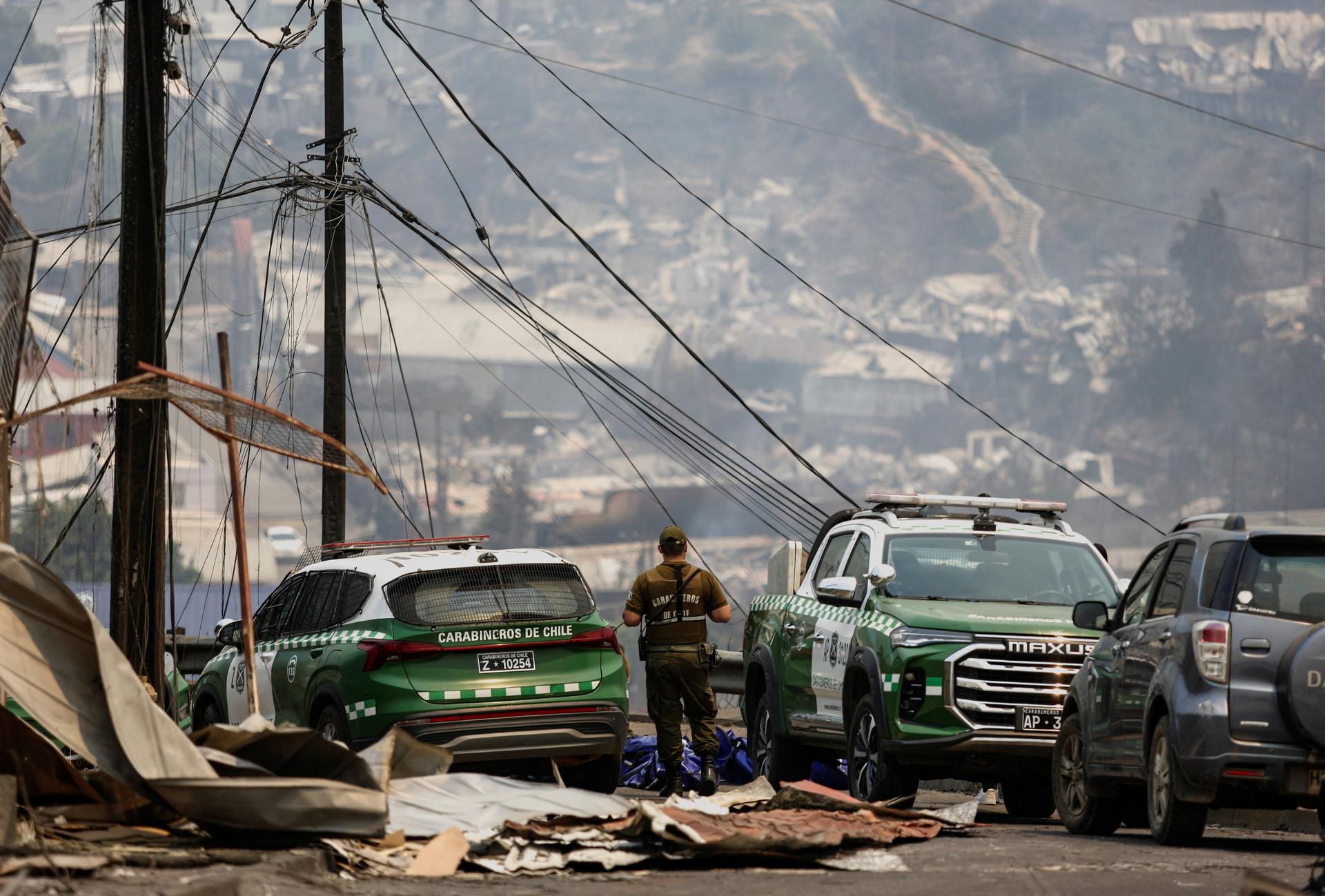
PA member of the Chilean Carabineros stands by bags containing bodies in the aftermath of a forest fire in the Biobío region. Concepcion, Chile. REUTERS/Juan Gonzalez |
Under extreme heat warnings |
Parts of central and southern Chile were under extreme heat warnings, with temperatures expected to reach up to 37 Celsius (99 Fahrenheit). Over the weekend, Chile's CONAF forestry agency reported that firefighters were combating 23 fires across the country, with the largest of these in the regions of Ñuble and Bío Bío, where President Gabriel Boric had declared a state of catastrophe.
Over 20,000 hectares (77 square miles) have been razed so far, an area about the size of Seattle, with the largest fire surpassing 14,000 hectares on the outskirts of the coastal city Concepcion. Both Chile and Argentina rang in the new year with heat waves, which have continued into January. Earlier this month, wildfires broke out in Argentina's Patagonia, burning around 15,000 hectares. Over in Brazil, a report from researchers at Utrecht University in the Netherlands, in collaboration with local partners, revealed how extreme heat is putting a strain on the livelihoods of the 1.3 million people who live in Brazil’s Rio de Janeiro favelas – working-class neighbourhoods built by residents without any urban planning.
The researchers installed thermometers in people's homes in the favelas to measure indoor temperatures and asked residents to keep “heat diaries,” documenting how high temperatures affect their bodies and daily routines.
The goal was to show how climate change affects people unevenly in a city known for its stark inequality, with working‑class homes sprawling across rolling hills above wealthy neighbourhoods. Click here to learn more. |
|
|
Severe floods in southern Africa |
In southern Africa, severe floods from heavy rains have forced thousands to flee homes in Mozambique and left some stranded on roofs as surging waters swamp settlements, according to aid workers and witnesses.
The floods have directly impacted more than 620,000 people, with over 72,000 houses flooded and widespread damage caused to roads, bridges, and health centres, said the International Federation of Red Cross and Red Crescent Societies (IFRC), which is assisting with relief efforts.
Heavy rains have also affected parts of South Africa, including the northeast, where the renowned Kruger National Park reopened on Monday after being closed for several days.
Zimbabwe’s Meteorological Service Department warned citizens about heavy rains throughout this week and advised the public to avoid crossing flooded rivers and seek shelter in a post on the social media platform X. |
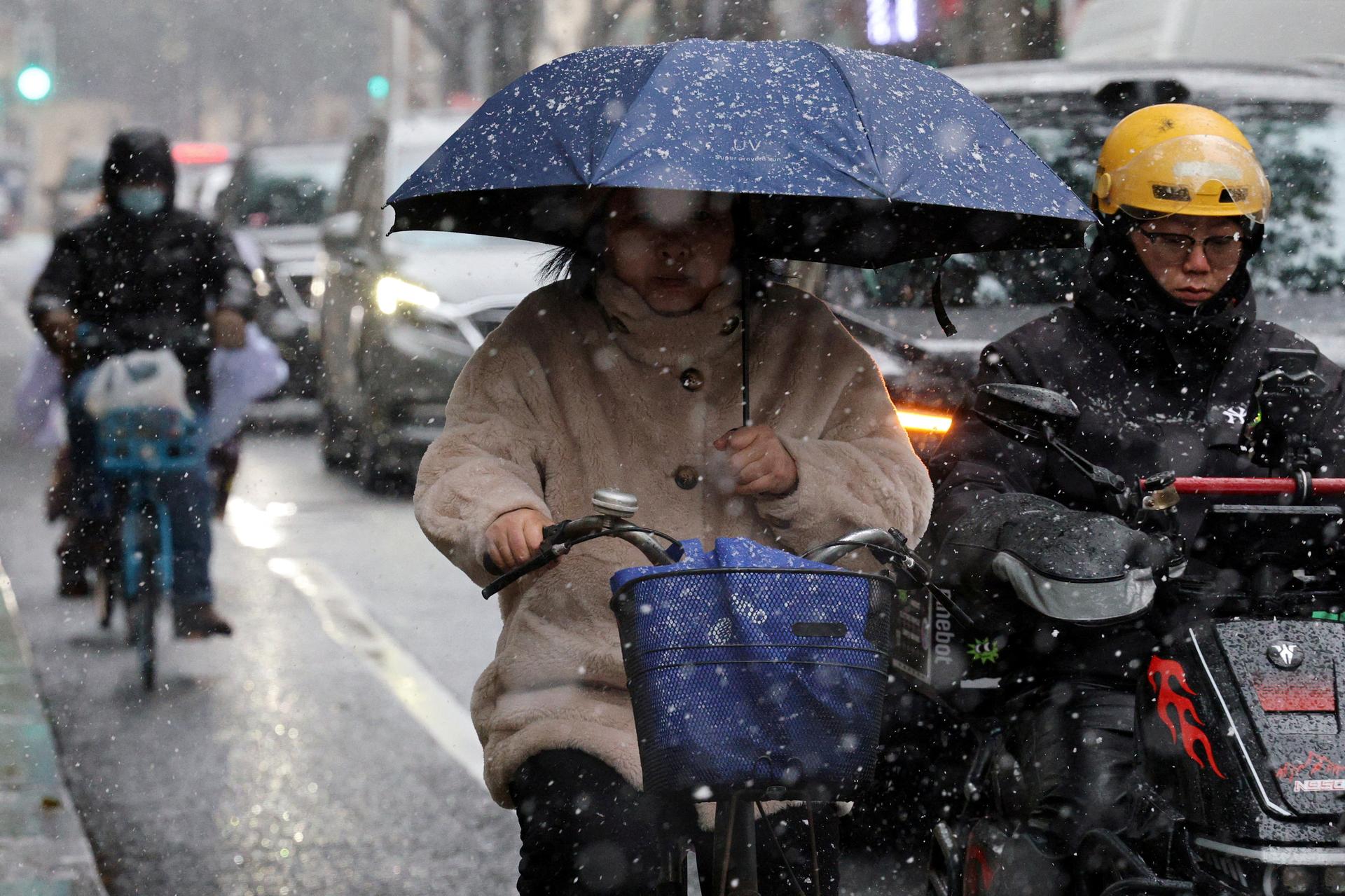
A woman holding an umbrella rides a bicycle amid snowfall in Shanghai, China. REUTERS/Go Nakamura |
-
Rare snow in Shanghai: A wave of low temperatures sweeping southern China brought rare snowfall to Shanghai. The city, on China's east coast, last experienced a heavy snowfall in January 2018. Just last week, Shanghai basked in unusually high temperatures of 20 degrees Celsius (68 degrees Fahrenheit), which local media said had caused some osmanthus trees to bloom.
-
Heavy snowfall in Russia: The biggest snowfall in 60 years on Russia's Far Eastern Kamchatka Peninsula created vast drifts several metres tall that blocked building entrances and buried cars, according to Reuters visuals and weather monitoring stations. Click here for a Reuters video showing cars completely buried in metres of snow.
-
Afghanistan's harsh winter: As winter spreads across Afghanistan, work opportunities have dried up, while the wave of returning Afghans, who used to send remittances, has swelled the population by a tenth, said John Aylieff, the World Food Programme's country director. Cuts to global programs since U.S. President Donald Trump returned to the White House have sapped the resources of organizations such as the WFP, while other donor countries have also scaled back, putting millions at risk worldwide.
-
Oceans treaty: A landmark global treaty, also known as Biodiversity Beyond National Jurisdiction (BBNJ), to safeguard biodiversity in the high seas came into effect this weekend. The Treaty will provide countries with a legally binding framework to tackle threats such as overfishing and meet a target of protecting 30% of the ocean environment by 2030. Click here for an explainer on the BBNJ.
|
|
|
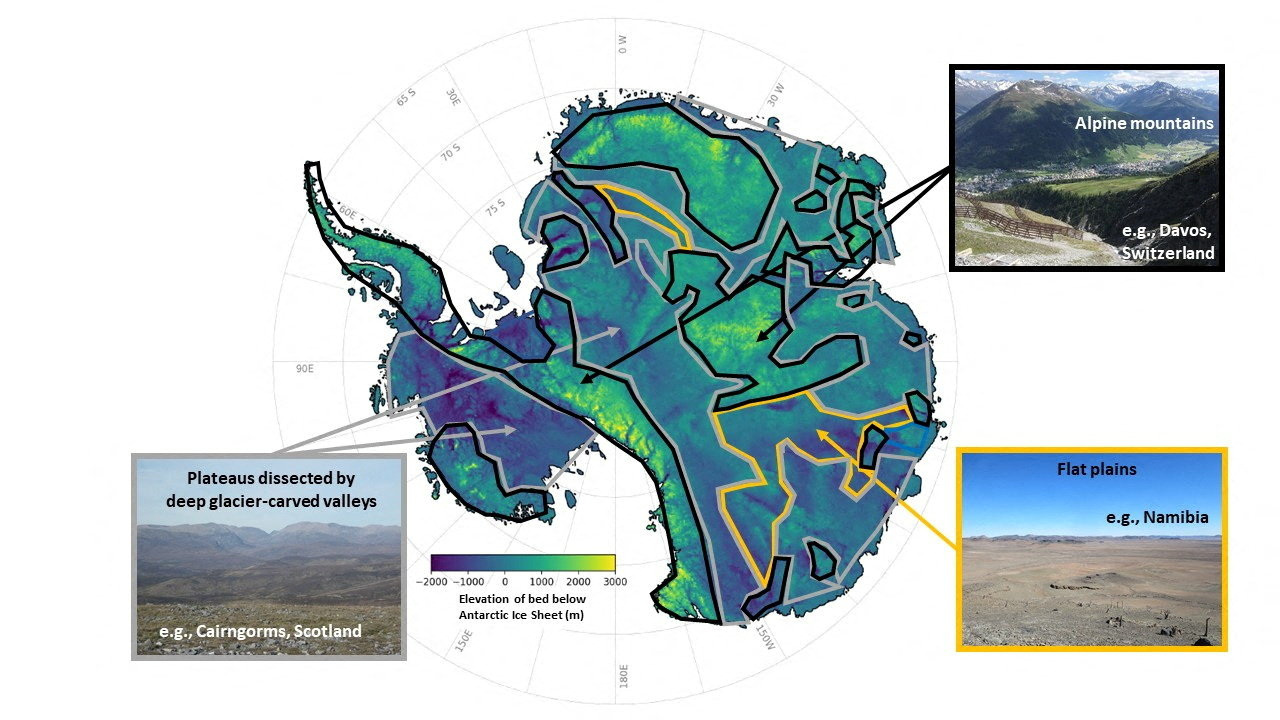
An undated handout image of a map illustrating the subglacial landscape of Antarctica. Robert Bingham, University of Edinburgh/Handout via REUTERS |
In keeping with today’s winter and water ‘Talking Points’ theme, our spotlight focuses on Antarctica where scientists have devised the most detailed map to date of the terrain hidden below the vast ice sheet blanketing the continent.
The researchers used the latest high-resolution satellite observations to produce a map which showed an exuberant landscape of mountains, canyons, valleys and plains while discerning for the first time tens of thousands of hills and other smaller features. Click here for the full Reuters report. |
|
|
Sustainable Switch was edited by Tomasz Janowski. |
|
|
| |
|
|
|
Sustainable Switch is sent three times a week. Think your friend or colleague should know about us? Forward this newsletter to them. They can also sign up here.
Want to stop receiving this email? Unsubscribe here. To manage which newsletters you're signed up for, click here.
This email includes limited tracking for Reuters to understand whether you’ve engaged with its contents. For more information on how we process your personal information and your rights, please see our Privacy Statement.
Terms & Conditions
|
|
| |
|
| | |
|
|
|