|
Dear all,
Please find below your weekly update from the UK Health Security Agency (UKHSA).
If you have any questions please get in touch by emailing externalaffairs@ukhsa.gov.uk
As always, you can also follow UKHSA on X, on Instagram, on BlueSky, and on LinkedIn for all the latest updates. You can also find the latest news from UKHSA on our news page on GOV.UK.
Best wishes,
UKHSA External Affairs Team
New and updated stories
Ongoing issues
- Winter vaccines still available for those eligible
- Communications toolkit: preventing the spread of infection this winter
- Blog: Back to school - 5 things you can do help manage winter illness
- Blog: What are the symptoms of adenovirus and how does it spread?
- January is Cervical Cancer Awareness Month
- Inclusion health data and intelligence resource
- Recording: Communicating vaccines webinar: Vaccines in pregnancy
- Chickenpox vaccine added to routine childhood vaccination programme
- Food Alert from FSA: Nestlé recalls several SMA Infant Formula and Follow-On Formula as a precaution because of the possible presence of cereulide (toxin)
- Avian influenza - updated guidance and new blog
- Report a Notifiable Disease Tool
Events
- UKHSA Conference 2026 – new website now live
- UKHSA & RCGP TARGET Antibiotic webinars
UKHSA communications toolkits
- Information on how to access the range of communication toolkits we produce for stakeholders
UKHSA data, analytics and surveillance:
- Statistics at UKHSA
- UKHSA data dashboard
- Notification of Infectious Diseases report
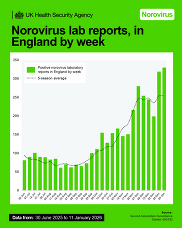
According to the latest UKHSA data, Norovirus cases have increased by 47% in the first 2 weeks of 2026, compared to the previous 2-week period ending 28 December, prompting a reminder about good hygiene measures to halt the spread of the virus.
Reports remain highest among those aged 65 years and over and although activity remains within expected levels, outbreaks in hospital settings are also rising.
To reduce the spread of infection, we are reminding the public that alcohol gels do not kill norovirus, so regularly washing hands with soap and warm-water and using bleach-based products to clean surfaces will also help stop infections from spreading.
|
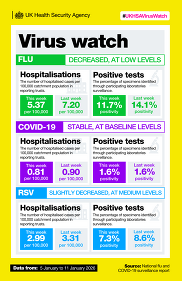
UKHSA’s latest surveillance data also shows that flu, COVID-19 and RSV levels continued to decline in the first week of the year. While cases for all winter viruses remain within expected levels for this time of year, people are urged to continue taking simple steps to ensure this trend continues.
Viruses like flu can be unpredictable and trends can change throughout the season which is why it’s important that people take simple steps to reduce the spread. We are continuing to encourage stakeholders to promote the benefits of vaccination to those who are eligible.
In the week between 5 January and 11 January 2026:
- Influenza activity decreased and is circulating at low levels
- COVID-19 activity remained stable and is circulating at baseline levels
- Respiratory syncytial virus (RSV) activity decreased slightly and is circulating at medium levels
The flu, COVID-19 and RSV surveillance report and the national norovirus and rotavirus surveillance reports: 2025 to 2026 season are published weekly.
|

On 27-30 October 2025, a laboratory training workshop for the diagnosis of diphtheria was held in Jakarta, Indonesia bringing together 18 laboratory professionals from across Indonesia to strengthen national capacity for detection and confirmation of diphtheria cases.
The training was organised by the WHO Collaborating Centre for Diphtheria, UKHSA, supported by the WHO Country Office for Indonesia and the WHO Collaborating Centre for Diphtheria, Bavarian Health and Food Safety Authority, Munich.
In addition to strengthening laboratory skills, the workshop reiterated the key role of vaccination in preventing diphtheria, a disease that has re-emerged in all WHO Regions. Global capacity building is a key UKHSA role to ensure that laboratories and countries in all regions are well-equipped and prepared to diagnose and respond to diphtheria and other vaccine-preventable diseases. Strengthening diagnostic networks and fostering collaboration between international and national institutions is vital for protecting communities and saving lives.
|
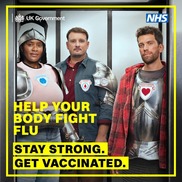
We know that flu is unpredictable and it is always possible that there could still be further increases over the next couple of months. Eligible groups can still get their flu vaccine and those who are eligible include:
- everyone over 65
- those who are pregnant
- children from the age of 2 years (as of 31 Aug) to school year 11
- those with certain long-term health conditions
Flu vaccination appointments are still available on the NHS national booking system and anyone who hasn’t yet had their vaccine should take it up for the remaining winter period to protect themselves.
The RSV vaccine is available to those aged 75 to 79, those who turned 80 years old after 1 September 2024 and is also offered to pregnant women at or beyond the 28-week mark, as the vaccine helps protect the newborn baby.
Vaccination helps provide the best protection against severe illness and hospitalisation for those at higher risk.
|
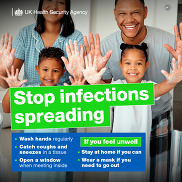
We continue to remind people of the simple steps we can all take to help protect one another through the winter period:
- if you have symptoms of flu or COVID-19 – like a high temperature, cough and feeling tired or achy – you should try to minimise contact with others, especially those more vulnerable.
- washing hands regularly and ensuring indoor spaces are well ventilated both help.
- if you have symptoms and need to go out, you should consider wearing a face covering.
These messaging - alongside other useful resources for sharing on your channels - can be found in our winter illness stakeholder communications toolkit 2025-26. This is currently being hosted on our Google Drive.
If you have any questions about this toolkit, or any difficulties accessing it, please email externalaffairs@ukhsa.gov.uk.
|
Adenovirus might not be a household name like flu or the common cold, but it's one of the most common causes of viral infections. Most people will have had at least one adenovirus infection before they turn 10, and because there are many different types, it's possible to be infected more than once throughout your life.
At UKHSA, we monitor weekly positivity data for common respiratory viruses including adenovirus, human metapneumovirus (hMPV), parainfluenza and rhinovirus, and you can see the latest figures on the Data Dashboard. This happens alongside our surveillance of flu and COVID-19.
Our new blog covers what adenovirus is, its symptoms, how it spreads, how it is treated, how to avoid its spread and when to seek medical advice.
|
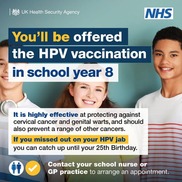
Girls and boys are offered the HPV vaccine in school year 8. It is highly effective at protecting against cervical cancer and can help protect against other cancers including mouth cancer and some types of head and neck cancer. Having this vaccine will also protect you against the 2 types of HPV that cause the majority of cases of genital warts.
Across social media we are encouraging parents and carers to look out for the HPV vaccine permission form and return it to the school.
Girls under 25 and boys born after 1 September 2006 who missed their HPV vaccine at school can also catch up at their GP.
Even if you've had an HPV vaccination it's important that you attend your cervical screening appointment when invited. Cervical screening saves approximately 5,000 lives a year in the UK.
Stakeholders can support NHS England's cervical cancer elimination campaign with their communications toolkit. You can also help promote the benefits of the HPV vaccine on social media with these social media assets.
|
The ‘Inclusion health data and intelligence resource for England: An overview of published data and intelligence’ is a new interactive resource developed by the Department of Health and Social Care, Office for Health Improvement and Disparities, UKHSA, and NHS England to support work on inclusion health at a local level in England.
The populations included are:
- People experiencing homelessness
- Gypsy, Roma and Traveller communities
- Sex workers
- Migrants in vulnerable circumstances
- People subject to modern slavery
- People in contact with the justice system
- People experiencing drug and/or alcohol dependence
This interactive inclusion health resource contains a summary of statistics already in the public domain and provides supporting information for organisations and networks to facilitate informed decision-making.
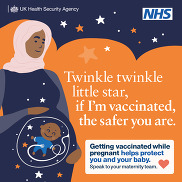
On Monday 12 January we hosted the latest webinar in our Communicating Vaccines series which was on maternal vaccines.
This session focussed on communicating the benefits of the vaccines offered during pregnancy. It included a look at the latest epidemiological data, a refresh of available vaccines and their benefits, a look back on what we have achieved so far and how you can help promote the benefits of getting vaccinated.
The recording from this webinar is now available on YouTube. You can also download the slides from GoogleDrive. If you are having trouble accessing the slides, please email externalaffairs@ukhsa.gov.uk.
|
From 1 January, the NHS will be rolling out the addition of a vaccine to the routine childhood programme to protect against chickenpox. The combined MMRV vaccination means many thousands of children will gain additional protection against chickenpox for the first time in the UK. Just 2 doses of this vaccine will provide long-lasting protection again 4 serious diseases: measles, mumps, rubella and chickenpox (also known as varicella).
UKHSA, NHS England (NHSE) and the Department of Health and Social Care (DHSC) have a range of resources to support with communicating the rollout of this vaccine:
| |