|
 |
Maps and models for Solo Chiefs navigating sole accountability in the age of AI.
Choose Your Tech Migration Strategy
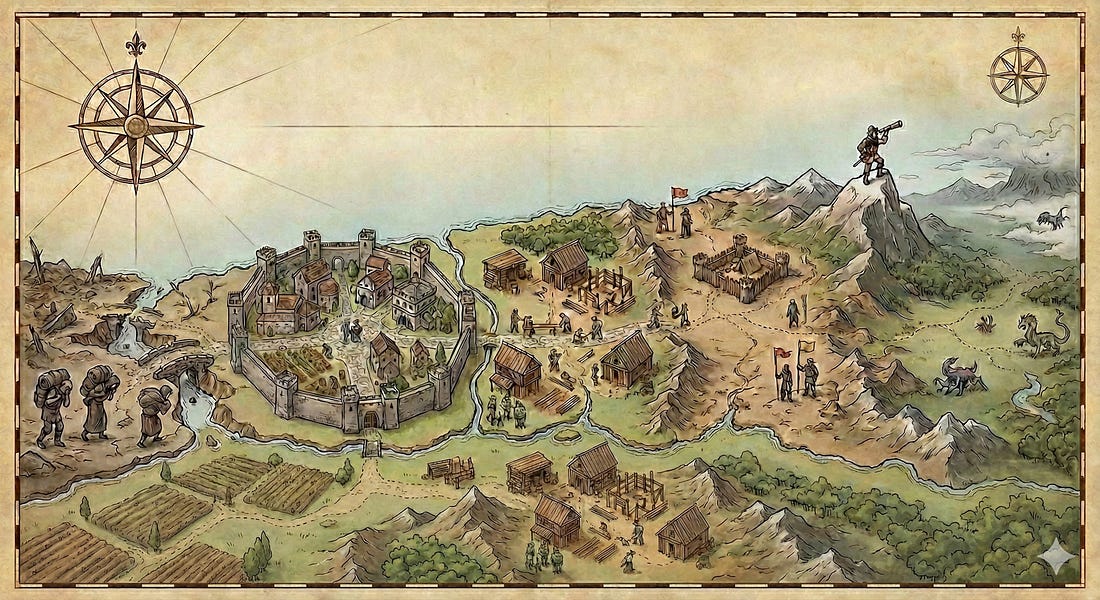
Five migration strategies for technology adoption: from eclectic Explorer to strategic Straggler
|

| |||||||||||||||


 |
Stop chasing every new tool. Stop feeling guilty about waiting. Learn where to sit on the technology migration spectrum.
Five migration strategies reveal when to adopt new technology and when to wait, helping Solo Chiefs choose deliberately instead of reactively.
I’ve wasted an embarrassing amount of time these past few months exploring AI agent technologies.
I’ve tested platforms that no longer exist, learned frameworks that pivoted into something unrecognizable, and built workflows on foundations that crumbled within weeks. I had finally mastered Make, then heard that n8n was better, then Claude Code arrived, then Google Opal and Antigravity dropped, and now I’m wondering if agentic workflow tools are just an elaborate scheme to keep me permanently unproductive.
The pattern is almost beautiful in its cruelty. Just when your muscle memory solidifies and you can finally build instead of learn, the tech ecosystem declares your entire stack obsolete. You spent three hours learning that new integration, only to discover the API changed yesterday and half the endpoints are deprecated.
The newer tool-on-the-block always promises more: better integration, sleeker UX, native support for whatever protocol the tech labs invented last week. Your half-finished workflows become archaeological ruins from a civilization that lasted three months.
The Pain of the Explorer
Welcome to the life of an Explorer. Tech environments evolve so quickly that tutorials expire before you finish watching them. That crucial menu item has moved. The essential setting vanished. The button Gemini told you to click exists only in the collective hallucination we call training data. Meanwhile, OpenAI just deprecated the integrations you finally got working this morning.
But when you’re an Explorer, that’s exactly what you signed up for. We’re all frantically migrating data, connecting tools that weren’t meant to talk to each other, reformatting results because the new version broke backward compatibility. Again. Every video tutorial is a historical artifact. Every LLM response is a confident lie about a UI that has already moved onwards.
The cruel joke is that this perpetual obsolescence gets sold as innovation. Progress. The future. But what we’re actually experiencing is a new kind of technical debt where the asset that depreciates fastest is our own knowledge. We’re not building skills anymore. We’re renting them, and the lease keeps getting shorter.
“What we’re actually experiencing is a new kind of technical debt where the asset that depreciates fastest is our own knowledge.”
Maybe that’s the real skill now: not mastering tools, but mastering the psychological endurance to keep learning things you know will be worthless in six months. The ability to stay curious while everything you touch turns to legacy code overnight.
When you’re an Explorer, the future of work isn’t about what you know. It’s about how fast you can forget. It is the price of exploration. High cognitive load. Countless dead ends. The constant nagging question: Should I have just waited, like a decent Pioneer or Settler?
Maybe. Maybe not. And if you’re reading this, you’re likely facing similar choices, not just with AI agents, but with any significant technology shift. CRM migrations. New product management systems. That new accounting software everyone swears by.
The question isn’t whether to adopt new tools. The question is when and how, and what price you’re willing to pay.
“The question isn’t whether to adopt new tools. The question is when and how, and what price you’re willing to pay.”
The Innovation Adoption Curve, Reframed
You’ve probably seen Everett Rogers’ famous bell curve: Innovators, Early Adopters, Early Majority, Late Majority, Laggards. It’s useful but bloodless. The labels describe timing without capturing the experience of the transition.