| | In this edition: US-China rivalry in Africa grows, AGOA remains uncertain, and why the US is ramping͏ ͏ ͏ ͏ ͏ ͏ |
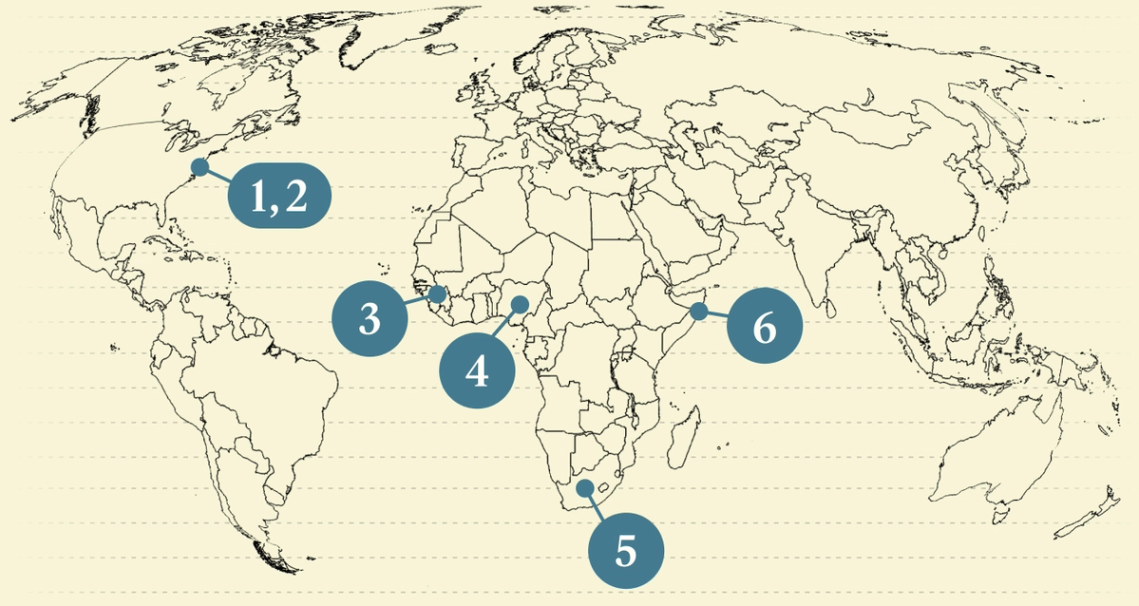
| |  Pretoria Pretoria |  Mogadishu Mogadishu | Maseru |
 | Africa |  |
| |
|
 - US-China rivalry in Africa
- AGOA remains uncertain
- Africa growth to outpace Asia
- Dangote’s new gas deals
- Africa’s used car market
- US ramps up Somalia strikes
 South Africa pulls the Melania documentary. |
|
Trump’s Africa team eyes dislodging China |
| |  | Shelby Talcot and Yinka Adegoke |
| |
 US Secretary of State Marco Rubio and US President Donald Trump. Evelyn Hockstein/Reuters. US Secretary of State Marco Rubio and US President Donald Trump. Evelyn Hockstein/Reuters.The Trump administration is stepping up in its bid to dislodge China from “priority” industry sectors in Africa, the State Department’s top Africa-focused official told Semafor. Nick Checker said the administration didn’t need to match China “dollar to dollar,” but “if it’s a priority sector, or in the mineral space… that’s an area where we’d actually want to be actively competing.” His remarks come ahead of Washington’s inaugural Critical Minerals Ministerial this week, at which US Secretary of State Marco Rubio will host several African officials, including DR Congo President Félix Tshisekedi, as part of efforts to loosen Beijing’s dominance in critical supply chains. The White House has repeatedly emphasized its push for “commercial diplomacy” over aid alongside a push to resolve and prevent conflicts on the continent. However, it has faced criticism over its new global health aid structure, which leans into making bilateral deals and refocuses more around the Western Hemisphere and Asia-Pacific regions than Africa, following significant cuts in foreign assistance since the shuttering of USAID a year ago. Checker was criticized last month over a leaked internal communication where he suggested that Africa was “peripheral” to US interests. “That does not at all mean Africa is irrelevant,” he stressed to Semafor. |
|
| | | Adrian Elimian |
| |
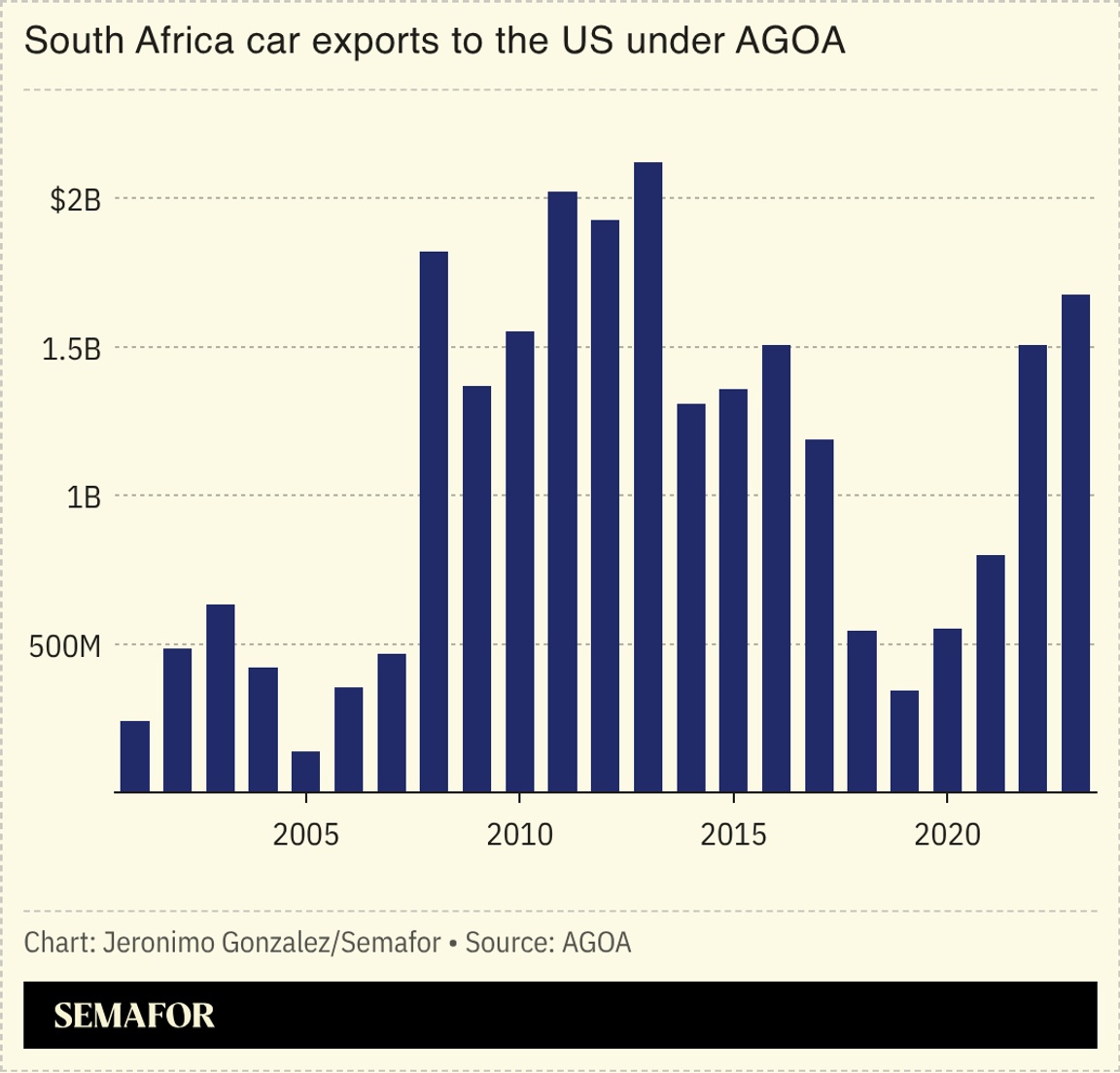 The fate of trade relations between Washington and African capitals is reaching a tipping point despite the US Senate passing a short-term extension to revive the AGOA preferential trade pact. The African Growth and Opportunity Act, which gives eligible sub-Saharan African countries duty-free access to the US market for thousands of products, is due to go before the House of Representatives in the coming days. Yet even if the package passes that chamber, African policymakers, manufacturers, and exporters worry that the US-Africa trade relationship will be fractured for some time. A one-year extension gives time for stakeholders to work on a deal “to modernize and align the program, or any future trade program with African trading partners, with the America First Trade Policy,” a Trump administration official told Semafor. But such an extension — without a long-term renewal — is unlikely to reassure investors or ease concerns in African countries of job losses. |
|
Africa’s growth set to overtake Asia’s |
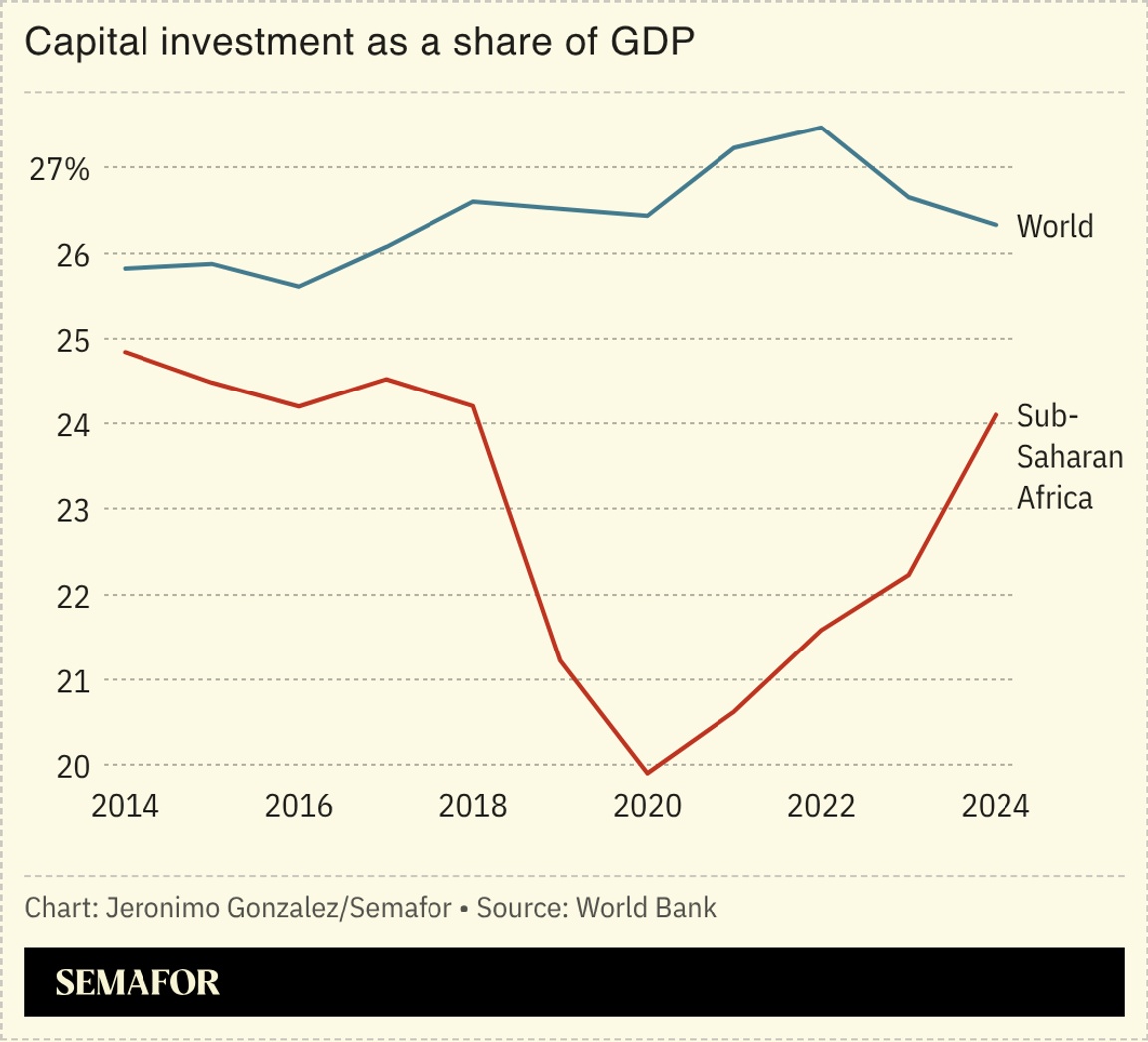 Africa’s economic growth this year is forecast to outpace Asia’s for the first time, according to the International Monetary Fund, though experts warned that Africa needs major investment. Some countries are forecast to grow at double-digit rates, according to the IMF’s latest economic outlook, with average growth in sub-Saharan Africa expected to hit 4.6%, compared to 4.1% across Asia. Africa’s economic prospects have been buoyed by its demographics: It’s home to the planet’s youngest population, and is forecast to account for a quarter of the world’s people by 2050. However, the region will have to invest heavily in education and create hundreds of millions of formal jobs to meet its potential, the head of the French Development Agency told RFI. African policymakers say a mispricing of risk on the continent means they’ll struggle to meet their economies’ capital needs. |
|
Dangote’s latest gas deals |
 Dangote Petroleum Refinery. Sodiq Adelakun/Reuters. Dangote Petroleum Refinery. Sodiq Adelakun/Reuters.Dangote Group, the conglomerate owned by Africa’s richest man, signed a gas supply deal with Nigeria’s state-owned oil company, tapping into the country’s plan to expand gas production as a driver of economic growth. The deal involves supply agreements to Dangote’s refinery, fertilizer, and cement subsidiaries, and comes as the group plans to double the refinery’s 650,000 barrels-per-day capacity by this year. National oil company NNPC launched a gas master plan last week with targets that include a 50% increase in gas output to 12 billion cubic feet per day by 2030, and hopes to attract more investors: The master plan is expected to spur more than $60 billion in oil and gas investments by 2030, officials said. Nigeria’s gas reserves of more than 200 trillion cubic feet are among the largest in the world and the biggest in Africa. But they remain underdeveloped due to the decades-long reliance on oil exploration. — Alexander Onukwue |
|
In focus: Africa’s bumper used car market |
 Sodiq Adelakun/Reuters Sodiq Adelakun/ReutersAfrica’s thriving used car market is expected to grow nearly 7% a year to reach almost $200 billion by 2033, underscoring how older and more affordable vehicles are likely to dominate the region’s automotive sector for years to come. The continent is the biggest importer of used light-duty vehicles in the world, with Japan, the EU, the US, and South Korea the biggest exporters of used cars. Nikkei recently noted that one Japanese auto trader, Be Forward, does not enjoy much name recognition in its home market but has a “solid” presence in Africa, where it operates in over 50 countries. “We’re given VIP treatment,” said the company’s president. Toyota, Nissan, Honda, and Mitsubishi are the brands that dominate on African roads, noted Bizupon. However, used cars have also raised safety and environment concerns over the years, with initiatives such as the UN’s Safer and Cleaner Used Vehicles for Africa spearheading the adoption of minimum safety and environmental performance standards: The continent has the highest road traffic fatality rate in the world despite having only about 2% of the world’s vehicles. |
|
View: US airstrikes on Somalia hit record levels |
 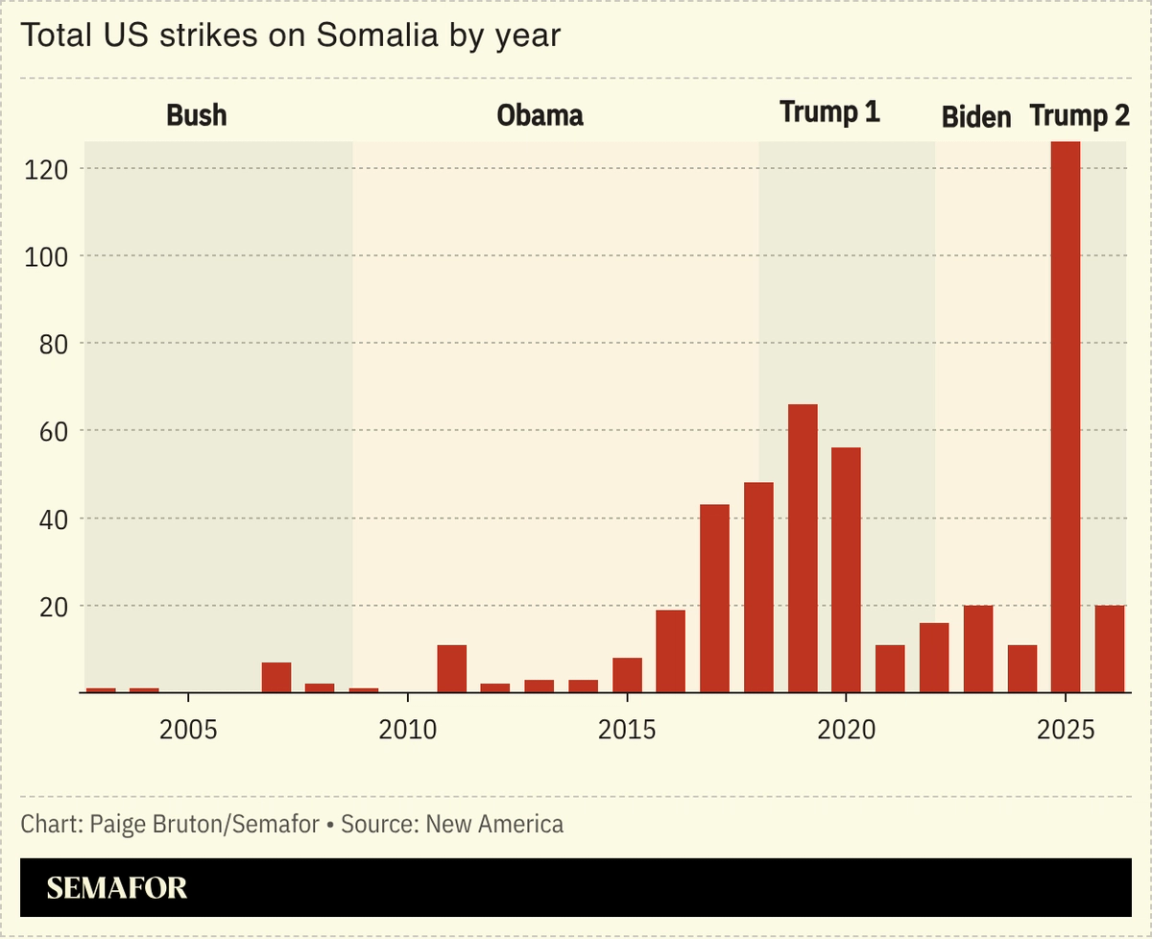 The Trump administration has placed Somalis in the US under heightened scrutiny at the same time as it wages a deadly — albeit quieter — campaign in Somalia, an African security reporter wrote in a column for Semafor. A year into Trump 2.0, the number of strikes carried out by Washington has reached 144, more than half of the record-breaking tally from the US president’s first term. The spike comes as the US announced the termination of the Temporary Protected Status for Somalis, making thousands eligible for deportation by March. “Trump promised to end America’s “forever wars,” yet he’s only expanding them — at least in Somalia’s case — through airpower,” argued Tomi Oladipo. “The growing opacity in US counterterrorism efforts abroad mirrors a broader trend toward reduced transparency in domestic enforcement as activists have pointed out in US cities like Minneapolis.” |
|
 Business & Macro |
|
|