Top News | SpaceX has completed its acquisition of xAI, valuing the combined private company at about $1.25 trillion as Elon Musk moves to pair his rocket business with an AI unit burning roughly $1 billion a month and lays out plans to use SpaceX to build space-based data centers. TechCrunch has more here. | Moltbook, a new social network pitched as a place for AI agents to communicate, exposed private data from more than 6,000 users due to a basic security flaw identified by cybersecurity firm Wiz. Reuters has more here. | Notepad++ said Chinese government-linked hackers hijacked its software update mechanism between June and December 2025 to deliver malicious updates to selectively targeted users. TechCrunch has more here. | | |
Harmonic | "Scout, show me the most exciting climate founders building at seed. Rank their teams by talent density" | Agents built for investing. | See more | | Why Tether’s CEO Is Everywhere Right Now | 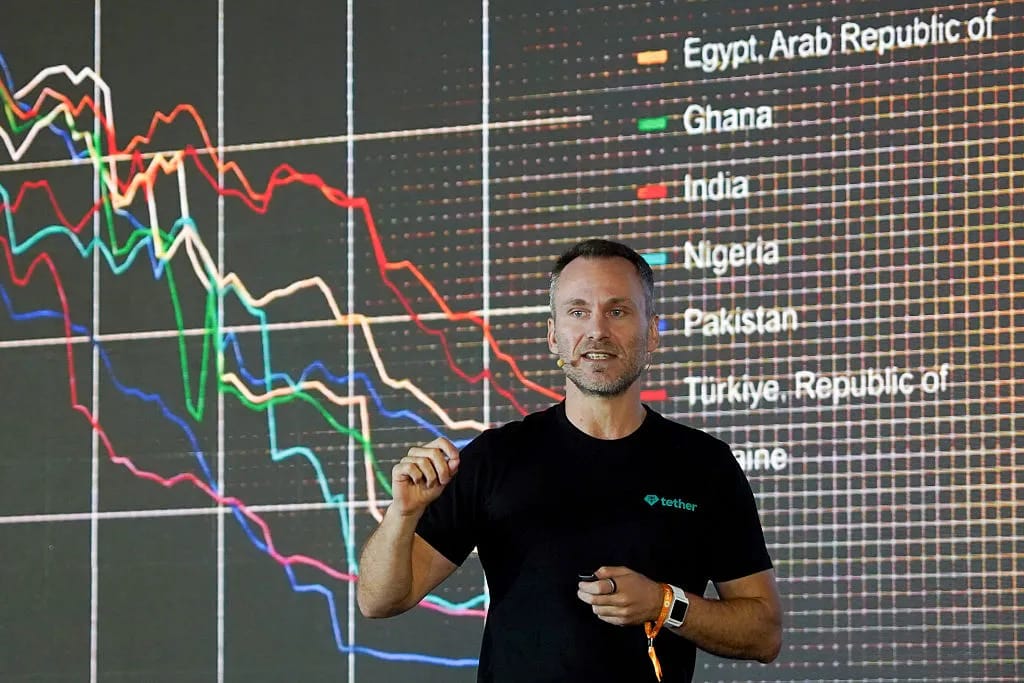 | Image Credits: Camilo Freedman / Bloomberg / Getty Images |
| By Connie Loizos | If you read the news, you might have noticed a trend over the past week. In addition to splashy features in Fortune and Bloomberg, Tether CEO Paolo Ardoino talked with Reuters. He also talked with TechCrunch. Why did the man behind the stablecoin that everyone loves to hate launch a full-scale media blitz? | The timing isn’t arbitrary. Last week, Tether launched USAT, a U.S.-regulated stablecoin issued through Anchorage Digital Bank — its first product designed to comply with new federal rules and compete directly with Circle’s USDC. Fidelity Investments also just launched a competing stablecoin last Wednesday, joining JPMorgan Chase and PayPal in a broadening race. | It’s a big shift from one extreme to the other. For years, Ardoino avoided the United States, watching from offshore as regulators circled and prosecutors investigated. His company was portrayed as opaque, possibly fraudulent, and, according to a piece by The Economist last summer, a “money launderer’s dream.” | But chatting with Ardoino by video call late last week, it was clear those days are over. Tether is meeting with White House officials, collaborating with the FBI and Secret Service, and betting USAT can break Circle’s grip on the U.S. market. (USAT is separate from Tether’s flagship USDT, which has $187 billion in circulation globally but doesn’t meet new U.S. regulatory requirements.) Speaking from Lugano, Switzerland, where Tether maintains an office, the 41-year-old — who joined the company just two months after its 2014 launch — spent over an hour describing Tether’s transformation from a crypto play to mainstream acceptance. | Its momentum is undeniable, certainly. Tether’s USDT — essentially a digital dollar that uses blockchain technology to move across borders without being tied to any single institution — has a market capitalization larger than all of its stablecoin competitors combined. It also has some 536 million users, growing at 30 million per quarter. “It’s growing at a pace more like Facebook rather than any other fintech application,” Ardoino says. | | | Massive Fundings | Alan, a 10-year-old Paris company that offers digital health insurance products, is reportedly in the market to raise $117+ million at a $5.9 billion valuation. Bloomberg has more here. | Biorce, a two-year-old Barcelona startup that is developing an AI platform to help research teams design clinical trial protocols, raised a $52 million Series A round led by DST Global Partners, with additional participation from Mustard Seed Maze, Norrsken VC, and YZR Capital. Tech Funding News has more here. | CesiumAstro, a nine-year-old Austin startup that develops phased-array satellite and communications systems, raised a $270 million Series C round led by Trousdale Ventures, with Woven Capital, Janus Henderson Investors, Airbus Ventures, the Development Bank of Japan, MESH, and NewSpace Capital also participating. The company also raised $200 million in debt. Via Satellite has more here. | Fieldguide, a six-year-old San Francisco startup that provides an accounting and audit platform for CPA firms, raised a $75 million Series C round at a $700 million valuation. Goldman Sachs Alternatives was the deal lead, with Geodesic as well as previous investors Bessemer Venture Partners, 8VC, and Thomson Reuters also contributing. More here. | Varo Bank, a nine-year-old San Francisco startup that operates an all-digital nationally chartered consumer bank, raised a $123.9 million round co-led by previous investor Warburg Pincus and Coliseum Capital Management, with prior backer Northview also participating. More here. | VulcanForms, a 10-year-old company based in Devens, MA, that operates an integrated digital metal manufacturing platform, raised a $220 million Series D round co-led by Eclipse and 1789 Capital, with Washington Harbour, Fontinalis, and IEQ Capital also taking part. More here. | Waymo, the 17-year-old San Francisco company that operates autonomous robotaxi services, raised a $16 billion round at a $126 billion post-money valuation. Dragoneer Investment Group, DST Global, and Sequoia Capital co-led the deal, with parent company Alphabet as well as Andreessen Horowitz, Mubadala Capital, Bessemer Venture Partners, Silver Lake, Tiger Global, T. Rowe Price, BDT & MSD Partners, CapitalG, Fidelity, GV, Kleiner Perkins, Perry Creek Capital, and Temasek also piling on. TechCrunch has more here. | | Big-But-Not-Crazy-Big Fundings | Bits, a four-year-old Stockholm startup that is developing a unified AML and compliance platform for European financial institutions, raised a $14.1 million Series A round led by Alstin Capital, with Cherry Ventures, Unusual Ventures, and Alliance Ventures also stepping up. Tech Funding News has more here. | Day AI, a three-year-old Boston startup that is developing a CRM platform that connects emails, meetings, and deal activity to surface early signs of deal risk and customer churn based on changes in engagement patterns, raised a $20 million Series A round led by Sequoia Capital, with Sound Ventures, Permanent Capital, Conviction, and Greenoaks also investing. More here. | Incard, a five-year-old London startup that is offering a financial management platform for digital businesses, raised a $13.6 million Series A round led by Smartfin, with Founders Capital and MountFund also investing. UKTN has more here. | Linq, a seven-year-old startup based in Birmingham, AL, that is developing messaging infrastructure that lets AI assistants operate inside iMessage, RCS, and SMS, raised a $20 million Series A round led by TQ Ventures, with Mucker Capital also participating. TechCrunch has more here. | Loop AI, a four-year-old San Francisco startup that is developing an AI platform for restaurant and retail back-office operations, raised a $14 million Series A round led by Nyca Partners and including Gokul Rajaram, Base10, Afore Capital, Converge, Alumni Ventures, Data Tech Fund, 9Yards Capital, and Operators Studio. More here. | Plug, a three-year-old startup based in Santa Monica, CA, that is building an electric vehicle marketplace for wholesale and retail transactions, raised a $20 million Series A round led by Lightspeed, with Galvanize as well as previous investors Autotech Ventures, Leap Forward Ventures, and Renn Global also pitching in. Automotive World has more here. | | |
Standard Metrics | 140+ VCs don’t let end-of-year reporting consume them. They leverage Standard Metrics to automate the time-consuming data collection work and our new AI Analyst to breeze through reporting to-dos. Because pulling insights for audits, valuations, LP reporting, and other rituals should be as simple as asking an AI grounded in portfolio truth. Zero data bottlenecks. Quicker closes. No more reporting nightmares. Learn more. | | New Funds | Constructor Capital, a one-year-old Zurich VC firm that backs early-stage deep tech, software, and edtech startups, raised $110 million for its inaugural fund. EU-Startups has more here. | Santé Ventures, a 20-year-old Austin VC firm that invests in early-stage biotech, medtech, and digitally enabled healthcare companies, closed a fifth fund with $330 million in capital commitments. Fierce Biotech has more here. | Yonder, a four-year-old Austin VC firm that focuses on backing early-stage marketplace founders building new economies, raised a $4.6 million first fund. More here. | | Exits | Aura, a 12-year-old Boston-based company that provides AI-powered online safety tools for individuals and families, has agreed to acquire Qoria, a 17-year-old Australian company that provides digital safety and student well-being software to schools and families, for approximately $675 million. If the transaction is completed, it will result in Aura listing on the Australian Securities Exchange under the ticker AXQ once the deal closes. Aura, which is private, has raised over $660 million from investors like General Catalyst, Accel, Warburg Pincus, WndrCo, Ten Eleven Ventures, and Madrone Capital Partners. Reuters has more here. | | < |
|