As a young adult, Isamu Noguchi called himself a citizen of the world. He was born in Los Angeles, reared part time in several Japanese cities, and educated in Indiana, and he voluntarily lived in an Arizona internment camp during the war. Much of his adulthood was spent in New York and Paris and Japan and traveling to the site of some new project, whether in Seattle or Bologna or Mexico City. As an old man, though, he decided otherwise.
“I’m really a New Yorker,” he said. “Not Japanese, not a citizen of the world, just a New Yorker who goes wandering around, like many New Yorkers.” And really, what other city’s culture could contain his range and eclecticism? He carved Pentelic marble, same as Praxiteles, but also created sculptures from aluminum plate and play structures from concrete and lamps from mulberry paper. He made ceramics, landscapes, sets for dance performances, Bakelite shells for electronics, the famous biomorphic table, even hats. You can sit and contemplate in his public spaces all over the world: the UNESCO garden in Paris, the Billy Rose Sculpture Garden in Jerusalem, a public fountain in Detroit.
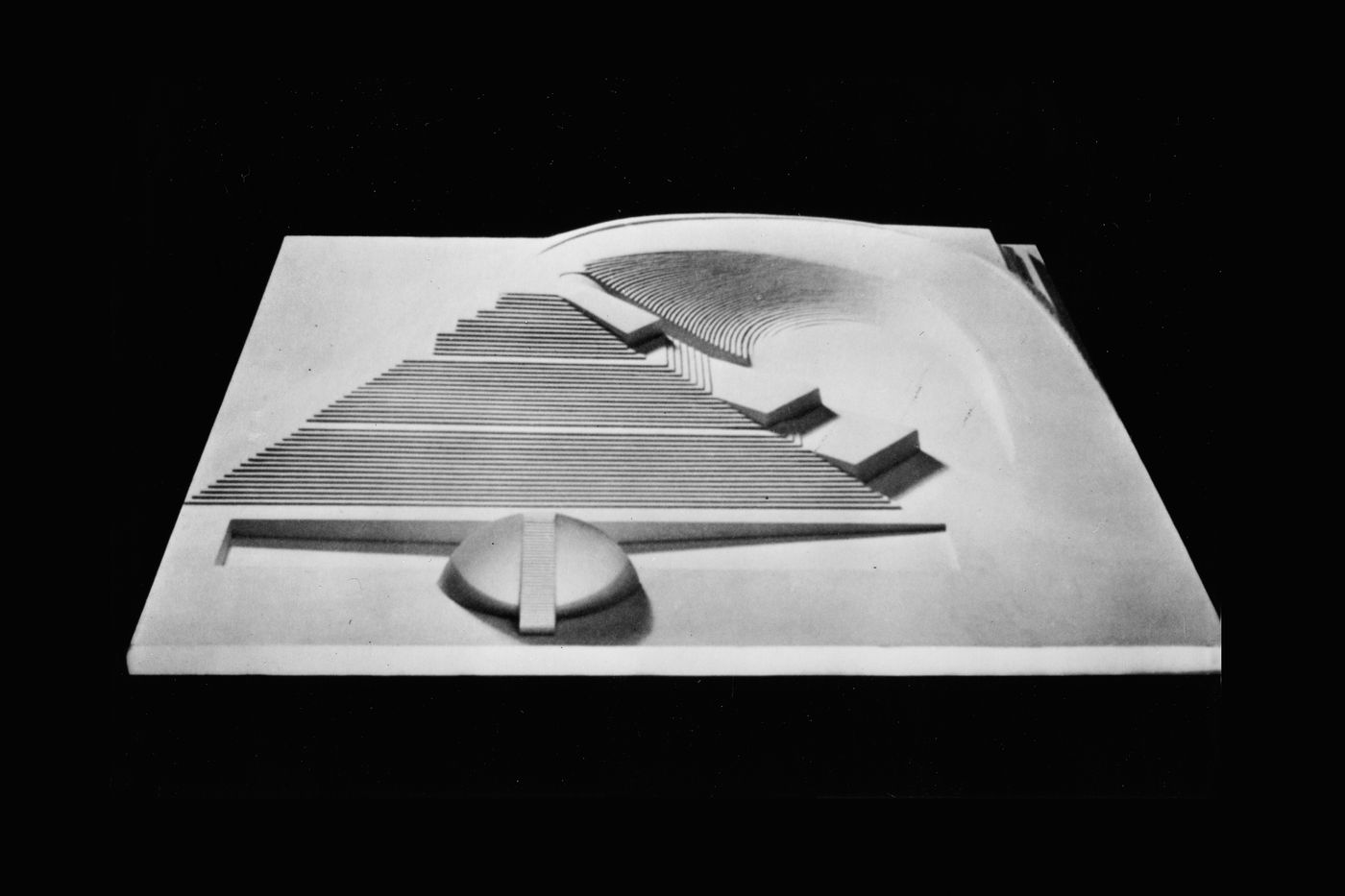
But hardly any are in New York City. Over and over, his city of choice turned him down. An array of unbuilt works constitutes a big portion of “Noguchi’s New York,” the exhibition just opened at his namesake museum in Queens.