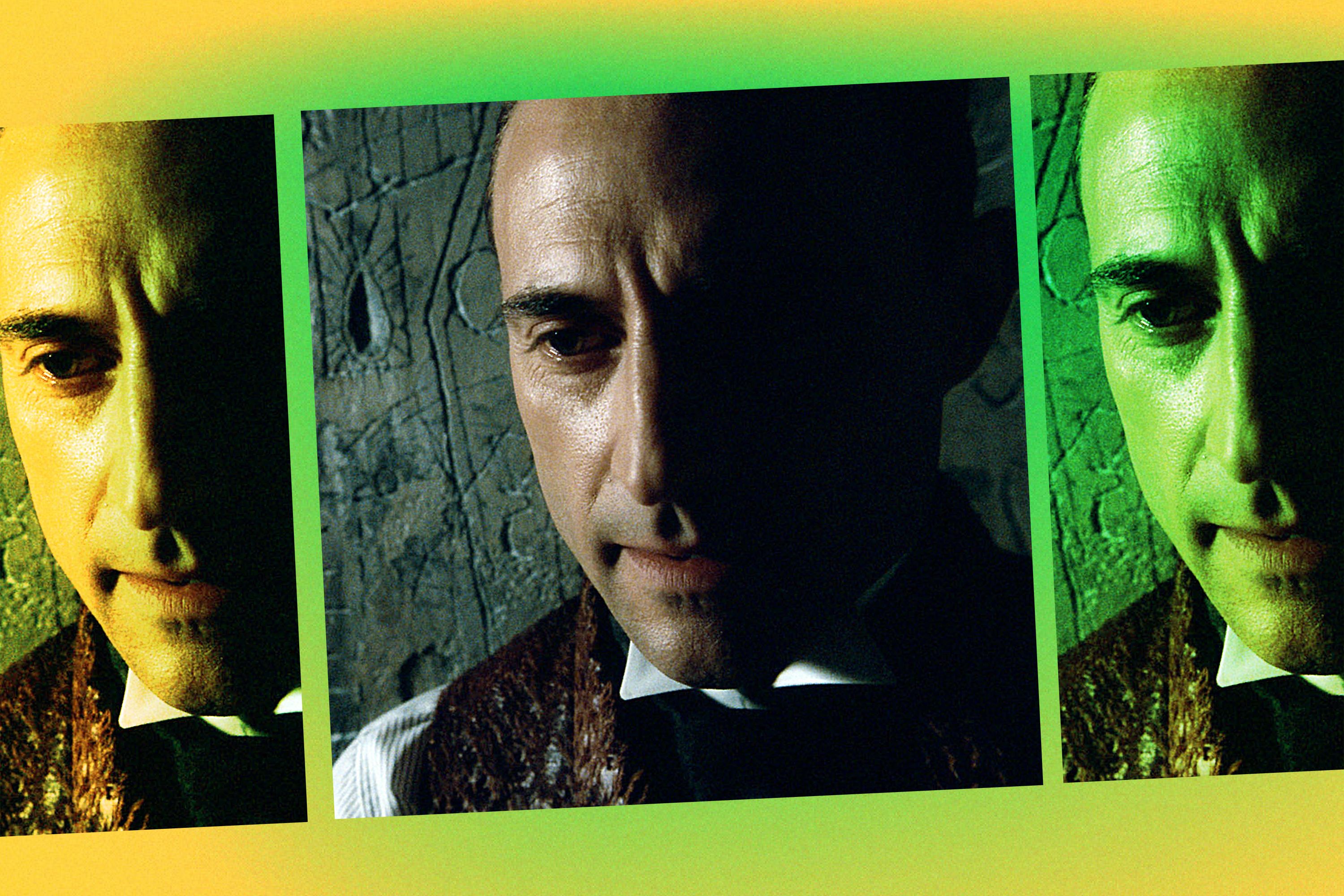
"That’s part of the joy of playing a character like that. You know there’s going to be some fight at the end, and you know the morality tale dictates that the bad guy has to lose.” Photo-Illustration: Vulture; Photo: Warner Bros./Everett Collection |
There’s a long tradition in American filmmaking of having a sneering, classically trained British actor step in to play the villain in a big-budget production, whether that’s Claude Rains, Anthony Hopkins, Jeremy Irons, or, in the case of Guy Ritchie’s 2009 adaptation of Sherlock Holmes, a leather-clad and deeply intense Mark Strong. “It’s an honorable profession, Brits going over to Hollywood and playing villains,” Strong says over a video call. The call to become vile when he wants is one Strong has embraced throughout his career, whether as a gangster in Kick-Ass, a mad supervillain in Shazam!, or an intelligence agent in Body of Lies. (Right now, Strong is channeling extreme darkness in Oedipus on Broadway as a man who isn’t necessarily a villain, but does discover he’s his own worst enemy.)
Strong’s career as British villain for hire was majorly catapulted with his appearance in Sherlock Holmes as that version’s antagonist, an occult-obsessed aristocrat named Lord Henry Blackwood who doesn’t appear in the Arthur Conan Doyle novels and was invented for the film. Blackwood dies early in the movie, only to mysteriously resurrect himself. This, like all his “magic,” turns out to be a trick that Robert Downey Jr.’s Sherlock has to solve. Then Lord Blackwood tries to enact a plan that involves poisoning much of Parliament, and he’s finally thwarted in a third-act fight sequence that plays out on top of London’s Tower Bridge, then in construction. The movie was Strong’s highest-profile project to date, and it gave him the chance to enjoy the thrill of being on a big, well-financed American set, alongside Downey, who had just released the first Iron Man in 2008. Here, Strong runs through his memories of playing Lord Blackwood and muses about why Brits are so good at going bad.
|
|
|
Subscribe now to get unlimited access to everything New York, including subscriber-only newsletters, exclusive perks, the New York app, and more. |
|
|
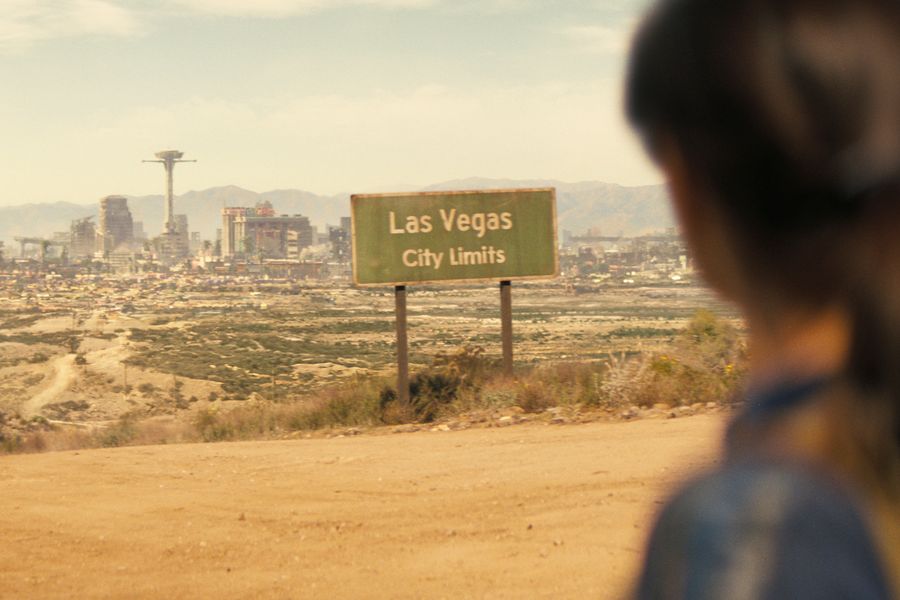
The whole point of delayed gratification is that, at some point, theoretically, potentially, probably, said gratification arrives. No such luck with the second season of Fallout, which after starting somewhat promisingly morphed into Westworld 2.0 with its frustrating season finale “The Strip” on February 3. The transition of Graham Wagner and Geneva Robertson-Dworet's video-game-franchise adaptation into executive producers' Jonathan Nolan and Lisa Joy's previous tedious sci-fi series had already begun at the end of season one, when the Ghoul (Walton Goggins) asked vaultie Lucy (Ella Purnell) if she wanted to travel to New Vegas and "meet your maker." Westworld was obsessed with where we come from and why we are the way we are, and that framing has smothered Fallout into yet another puzzle-box show that ends each season with a tease that actually, next season, we'll understand what the series is really about. Goggins, Purnell, and Kyle MacLachlan are doing solid work, but the series mimicking how video games are always pushing forward to the next level doesn’t quite work as long-form storytelling.
|
|
|
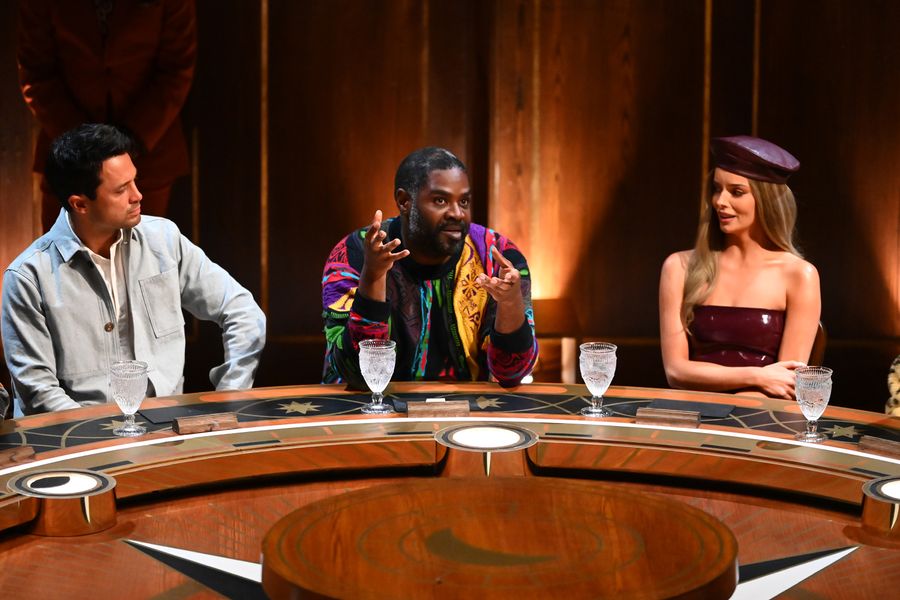
The Traitors’s most misunderstood Faithful believes he played the game right, even when he was wrong. |
| |
|
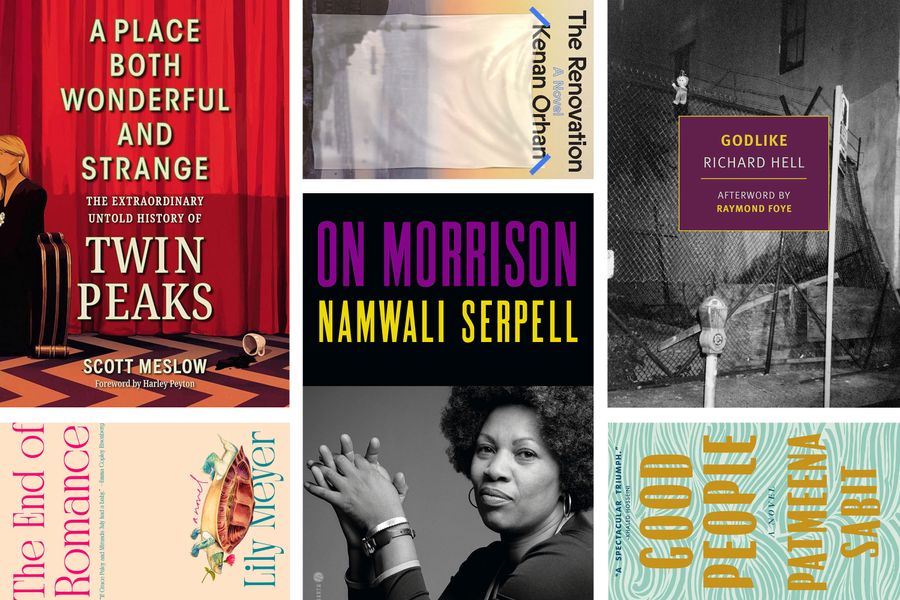
A close study of Toni Morrison, a Richard Hell reissue, and a novel about a woman trying to live without love. |
| |
|
Ahead of Bad Bunny’s halftime-show performance, audiences can hear Charlie Puth, Coco Jones, and Green Day. |
| |
|
TMZ reports it received an unverified ransom note asking for “millions” in bitcoin. |
| |
|
Pictures from the movie’s Paris premiere went viral for introducing a new word into the lexicon. |
| |
|
A year and a half after Joaquin Phoenix dropped out of the lead role, his Eddington co-star and onscreen rival will step into the part. |
| |
|
|