Are we on the verge of a new nuclear-arms race? Georgia’s prime minister is walking a geopolitical tightrope, Sharply tailored shirts at Rubirosa’s and Stevenson Savart, Haiti’s Winter Olympics hopeful.
|
Thursday 5/2/26
|

|
|
London
Paris
Zürich
Milan
Bangkok
Tokyo
Toronto
|
|
|
|

Good morning. Today the Monocle Radio team is packing its bobsleighs, bound for Milan to cover the Winter Olympics. Stay tuned over the next two weeks to hear more from Milano Cortina. Here’s what’s coming up in today’s Monocle Minute:
THE OPINION: Europe is learning to live with its authoritarian allies
AFFAIRS: Georgia’s prime minister is walking a geopolitical tightrope
DAILY TREAT: Sharply tailored shirts at Rubirosa’s
DEFENCE: Are we on the verge of a new nuclear-arms race?
FROM MONOCLE.COM: Meet Stevenson Savart, Haiti’s Winter Olympics hopeful
|
|
In the age of the untouchable strongman, Europe is forced to indulge its autocrats
By Hannah Lucinda Smith
|

|
There has never been a better time to be an autocrat. Just ask Turkey’s president, Recep Tayyip Erdoğan. His slide away from democracy first attracted opprobrium from Western allies about a decade ago. This shift accelerated following the jailing of journalists and political opponents, the manipulation of elections and wars against Kurdish groups – actions that were criticised by leaders such as former German chancellor Angela Merkel. When his ministers tried to hold political rallies in European countries, they were blocked. The US imposed sanctions over his purchase of a Russian missile defence system and the EU did so over his naval aggressions against Greece and Cyprus in the Eastern Mediterranean.
No more. Erdogan’s authoritarianism has continued to grow – but he now faces little criticism. When the elected mayor of Istanbul and Erdogan’s biggest political rival, Ekrem İmamoğlu, was arrested in March on falsified corruption charges, the EU’s response was limited to statements expressing “deep concern” – hardly a stinging rebuke. As the Turkish government accused İmamoğlu of spying for the British state, UK prime minister Keir Starmer met Erdoğan in Ankara, hoping to secure new trade deals. And, when prosecutors announced that they were seeking a 2,352-year prison sentence for İmamoğlu, the response from the West was silence.
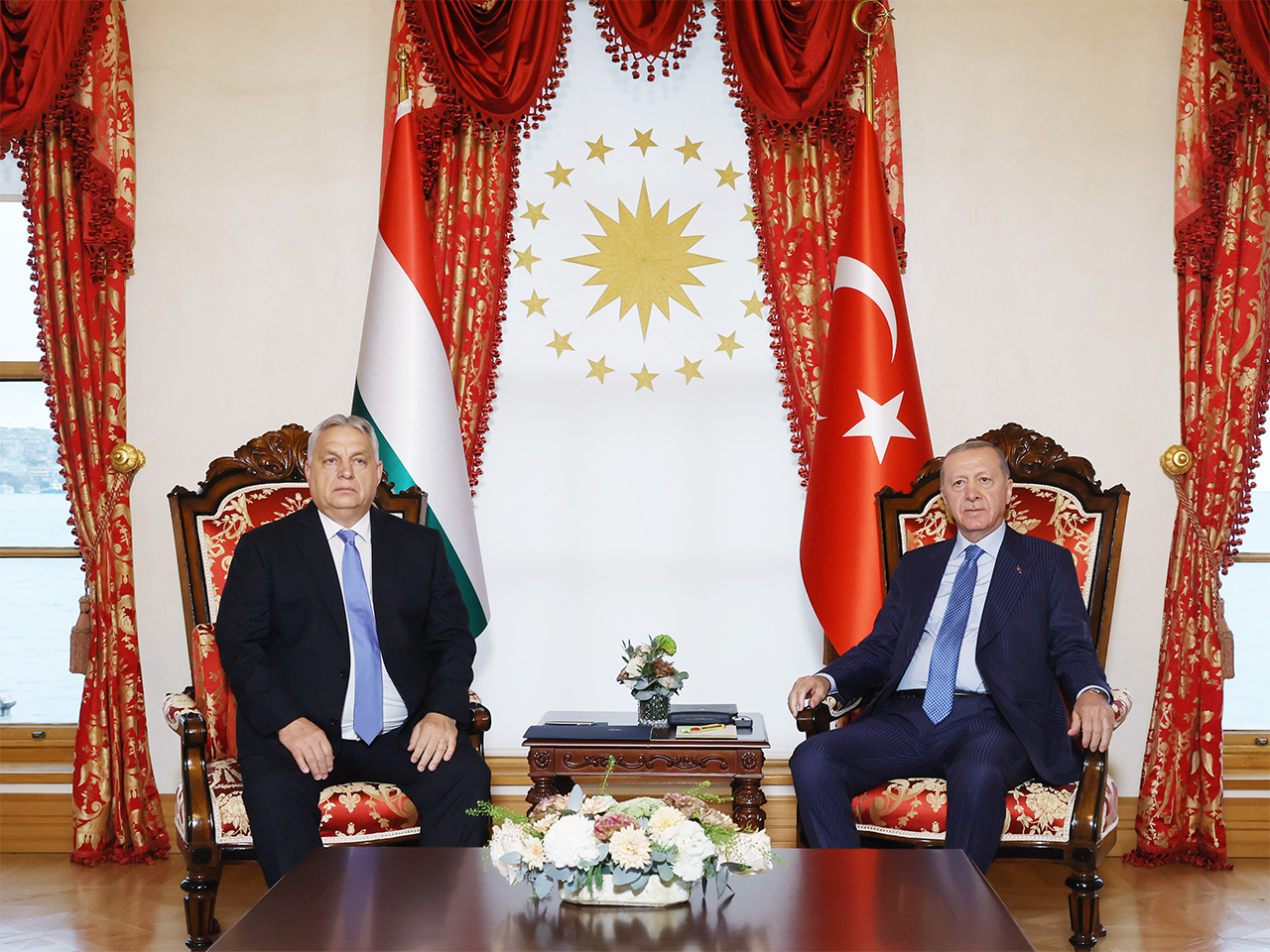
Sitting pretty: Orbán (on left) and Erdoğan have received little pushback to their authoritarian tendencies
Then there is Viktor Orbán, Hungary’s prime minister, who is now approaching his 16th year in power. Like Erdoğan, he has disrupted Hungary’s independent media, taken over state institutions and cracked down on Pride marches and refugee rights. Orbán, like Erdoğan, is trying to criminalise the mayor of Budapest, Gergely Karácsony, who has become a leading opposition figure. And he also maintains friendly relations with Vladimir Putin’s Russia, despite Hungary being an EU and Nato member. Brussels condemns and occasionally threatens action against Orbán – but after years of doing so with no action taken, it is no wonder that he takes little notice.
Part of the reason that autocrats such as Erdoğan and Orbán now operate with near impunity is that Putin’s threats against the West have elevated their status. Turkey, in particular, occupies a bulwark position for Nato and Erdoğan has established himself as one of only a handful of leaders who can bring Russia and Ukraine together at the negotiating table. Turkey’s defence industry and army, the second largest in Nato, are vital to the alliance as it seeks to rearm. Hungary, though far smaller and less strategically important, occupies an important geopolitical space as one of the former Soviet satellite countries that turned westward after Moscow’s rule collapsed. The loss of either nation would represent a major blow for the West and a major victory for Putin.
Just as important is the US’s own democratic backsliding and the president’s appreciation for strongmen counterparts. Under Barack Obama or even Joe Biden, the US was at the forefront of upholding democratic values, even if only on paper. Now the pretence is up. Trump has signalled that he will lift the sanctions blocking Turkey from receiving Nato’s new-generation fighter jets, however the Russian S400 system that led to the sanctions in the first place currently remains on Turkish soil. Trump has repeatedly praised both Erdoğan and Orbán, even mirroring the latter’s immigration policies. As the US president’s commitment to European security wanes, the EU and Nato become even more reliant on the autocrats in their midst. In the short term, that is pragmatic. The threat that Putin poses to Europe requires unity among the members of its two key alliances. In the long term, however, the continent’s ever-faltering democracies will pay the price.
Hannah Lucinda Smith is Monocle’s Istanbul correspondent. For more insight and analysis, subscribe to Monocle today.
Further reading?
Turkic states are investing in soft power but it’s Ankara that seeks to steal the show
How big is your entourage? And what does it say about you?
Istanbul’s secret village: Why Kuzguncuk is the city’s coolest historic quarter
|
|
HITACHI ENERGY  MONOCLE MONOCLE
|
|
AFFAIRS: GEORGIA
Georgia’s prime minister is sticking to his line – on Russia, Europe and his hairstyle
For a country navigating war next door, protests at home and a stalled European future, Georgia’s prime minister insists that the record speaks for itself (writes Inzamam Rashid). Speaking to The Monocle Minute in Dubai at the World Governments Summit, Irakli Kobakhidze rejected the notion that, under his rule, Tbilisi has adopted a deliberately ambiguous stance on Russia’s war in Ukraine. “From the very beginning, we supported all the relevant decisions and resolutions supporting Ukraine’s sovereignty and territorial integrity, and condemning Russia’s military aggression,” he said. “This position has never changed.”
Kobakhidze framed Georgia’s approach as one shaped by experience rather than diplomacy by abstraction. “Twenty per cent of our territory is occupied by the Russian Federation,” he noted. “We understand very well what war means. That’s why peace is crucial – for the region and for development.” Still, that emphasis on pragmatism has done little to soften scepticism in Brussels, where Georgia’s domestic politics are under increasing scrutiny.
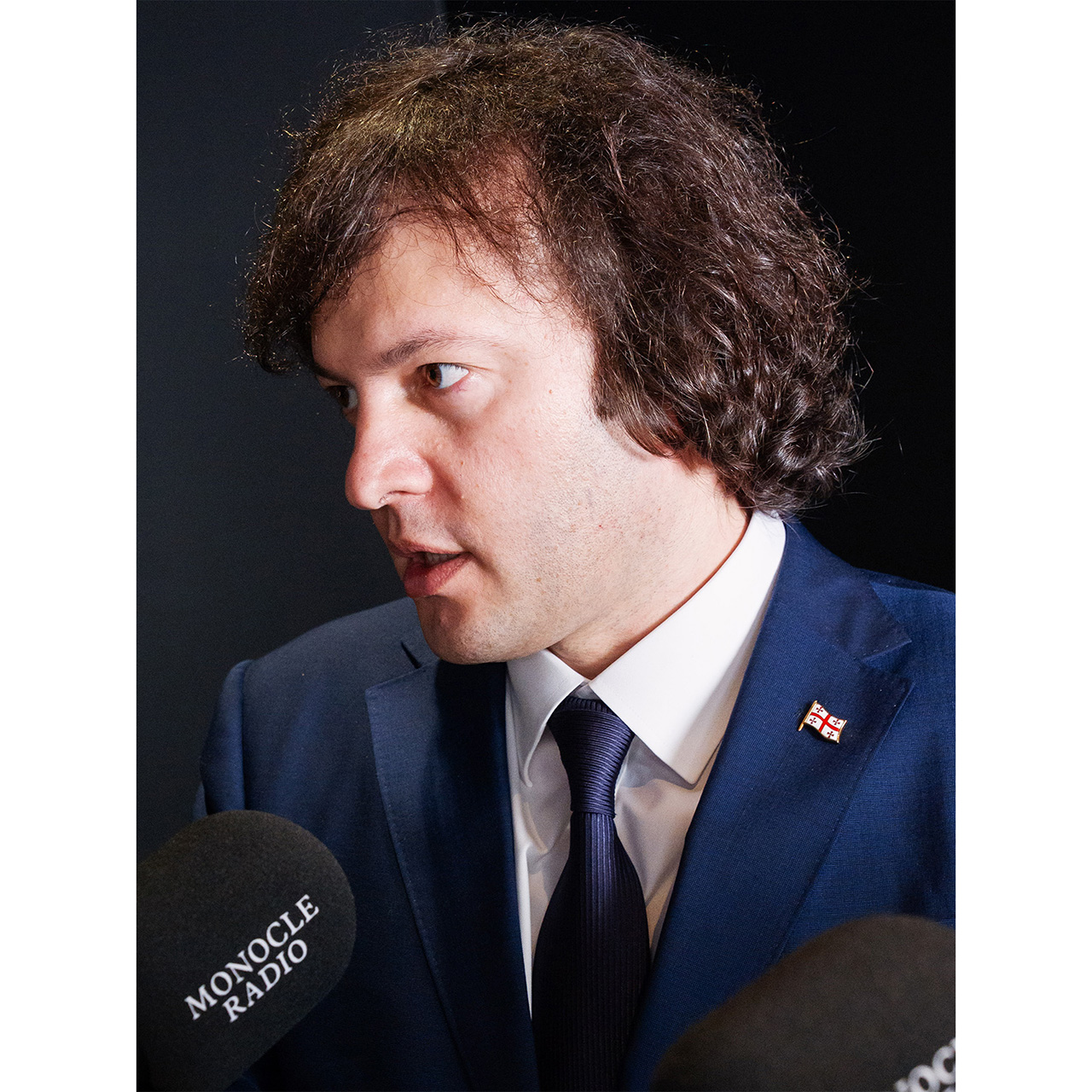
Hairy situation: Irakli Kobakhidze is performing a tricky balancing act
On allegations of electoral malpractice following last year’s parliamentary vote, the prime minister was blunt. “There was no technical possibility to manipulate anything in this election,” he said, pointing to the introduction of electronic registration and vote-counting. International observers, he added, “were not able to provide any evidence – not systemic, not even essential – of manipulation.” The claim contrasts with continued protests at home and unresolved concerns among European officials.
EU accession remains Georgia’s stated objective, though momentum appears frozen. Kobakhidze accused what he called the EU’s “bureaucracy” of avoiding open engagement. “When one side chooses not to talk, it demonstrates weakness,” he said, calling for “transparent, public discussions” on governance, corruption and democratic standards.
As the conversation drew to a close, the tone briefly softened. Asked about his unmistakable hairstyle – among the more recognisable in global politics – the prime minister offered a rare aside. “It’s really crucial for me,” he said. “I cannot imagine myself with a different haircut.” Some positions, it seems, are non-negotiable.
|
|
• • • • • DAILY TREAT • • • • •
Pick up a sharply tailored shirt at Rubirosa’s
The name Lauren Rubinski is synonymous with chunky chain necklaces and diamond signet rings sold in prestigious shops from Bergdorf Goodman in New York to Ileana Makri in Athens and Muse in Tokyo. Paris-based designer Rubinski launched her eponymous fine-jewellery label more than a decade ago and built a reputation among discerning collectors. But there was always another dream in the background: owning a neighbourhood shirt shop.

When the right space became available last year on Rue de Grenelle – one of the most elegant shopping streets in Saint-Germain-des-Prés – she snapped it up on a whim. Less than a year later, Rubirosa’s has become popular with everyone from creative directors and actors to design enthusiasts. It is now almost impossible to attend a fashion-industry dinner in Paris, London or elsewhere without spotting at least one guest in a sharp button-up shirt in Rubirosa’s distinctive hues (sorbet pink and bold red are favourites), finished with contrast piping.
37 Rue de Grenelle, Paris, France 75007
|
|
|
Sponsored by Hitachi Energy
|
|
|
|
|
|
defence: USA & Russia
The dawn of a new nuclear age?
The New Start treaty, which checked and capped the size of Russia and the US’s arsenals of nuclear weapons has, of today, expired (writes Jack Simpson). It ends more than 50 years of efforts between Moscow and Washington to limit stocks of the world’s deadliest weapons. An arms race could now viably take place but it’s the Russians urging caution. The Kremlin has offered to abide by the confines of the treaty for another year – that’s 1,550 warheads each, down from more than 20,000 in the 1980s. But Donald Trump’s White House appears reluctant to strike a new deal. After all, treaties – indeed checks and balances of any kind – are anathema to his administration.
“Without New Start, both sides could rapidly expand the number of warheads,” says Gorana Grgić, Monocle’s security correspondent. “Some estimates suggest a capacity for 60 per cent more Russian warheads and 110 per cent more for the US.” Both parties already own enough nuclear arms to destroy one another. Last year, the US president told the Pentagon to renew testing to match the efforts of both Russia and China. It’s the latter superpower that seems to be the biggest hurdle to a renewal of a proper nuclear proliferation deterrent: the US wants China, whose nuclear arsenal has more than doubled in recent years, to be involved in any new agreement with Moscow. “For now, the immediate imperative is for Washington and Moscow to publicly commit to honouring New Start’s numerical limits and revive verification talks,” says Grgić. “Longer term, a multilateral including the Chinese is required to prevent further destabilisation.”
To hear more from Gorana Grgić and what’s next for nuclear, tune in to today’s edition of ‘The Globalist’.
|
|
| | |


