Taking advantage of ‘fomo’, Tokyo’s Park Hyatt reopens and global election results.
|
Tuesday 10/2/26
|

|
|
London
Paris
Zürich
Milan
Bangkok
Tokyo
Toronto
|
|
|
|

Good morning. Today, the host of ‘The Foreign Desk’ Andrew Mueller is packing his best leather shorts and favourite felt hat for the Munich Security Conference, which kicks off on Friday. We will be on the ground throughout the event. For more news and views, tune in to Monocle Radio. Here’s what’s coming up in today’s Monocle Minute:
THE OPINION: Why hotels need to set the minibar high again
POLITICS: Up-to-the-minute Japanese, Portuguese and Thai politics with Monocle Radio
DAILY TREAT: Tokyo’s beloved Park Hyatt reopens after revamp
FROM MONOCLE.COM: How to use the fear of missing out to your advantage
|
|
In an age of delivery apps and convenience, hotels shouldn’t overlook the minibar
By Inzamam Rashid
|

|
The hotel minibar is dead. And even if it is not lost forever, that little fridge has not been metaphorically plugged in for some time and the nuts could do with a rearrange. I say this as someone who travels often, stays in good hotels and possesses only a modest amount of willpower when it comes to snacks. I should, in theory, be the minibar’s core demographic. And yet, like the long-neglected hotel trouser press, the minibar has become something that I acknowledge only in passing, often before swiftly ignoring. It shouldn’t be this way.
There was a time when the minibar mattered. Not because it was cheap or abundant but because it felt intentional. It was an extension of warmth and hospitality. A late-night glass of something civilised, a chocolate chosen with care, a small indulgence that said, “We thought about you, even after room service closed.” There are some exceptions, of course, (think Rosewood or Château Voltaire), which boast a bountiful, mini-mall of offerings. But there’s no middle ground. The solid and competent type has evaporated – it’s now all or nothing.
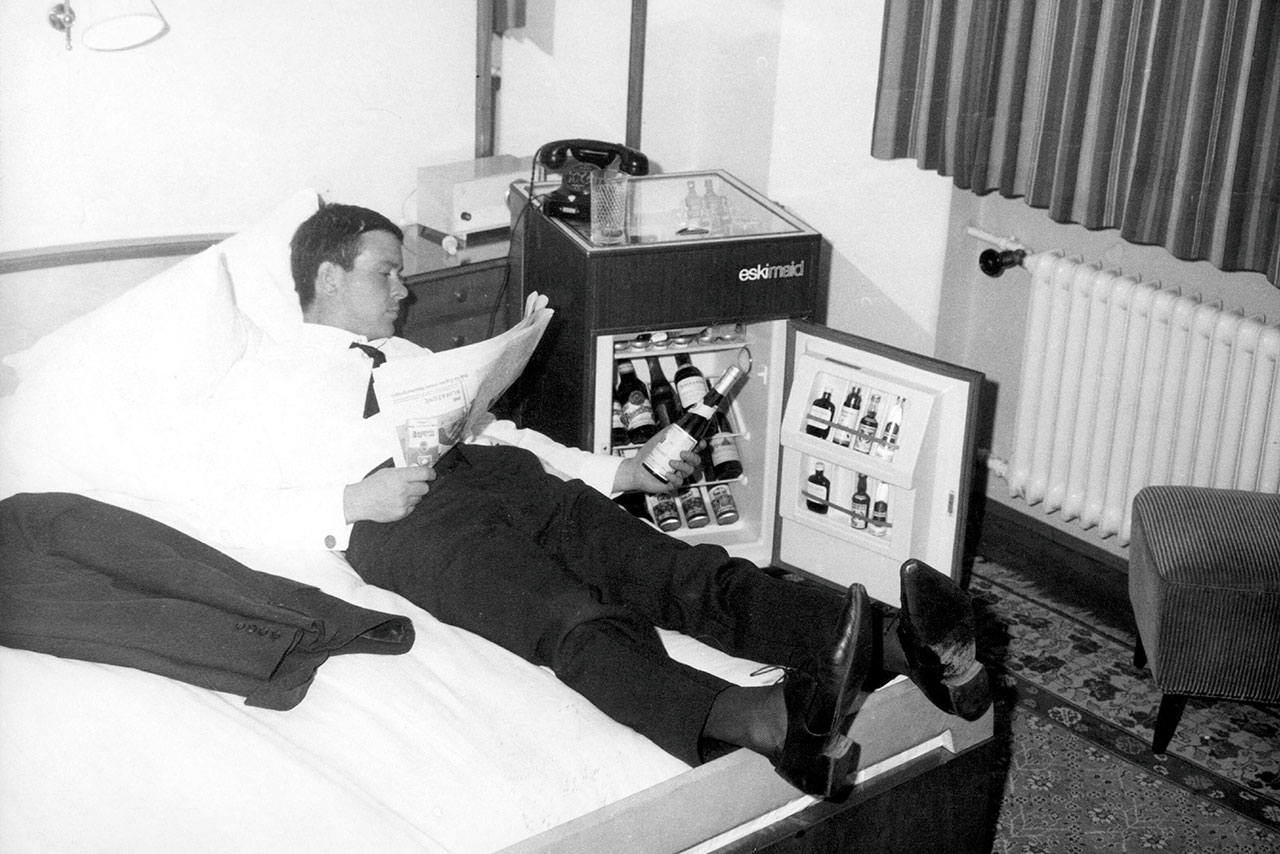
Water under the fridge: Have hotels moved on from the minibar?
It became particularly obvious on recent trips to Doha, Riyadh and back home in the UAE. In city hotels across the Gulf, the minibar now feels less of a temptation and more like a museum display, a relic from a time when convenience had limits and when a lukewarm can of cola at AED35 (€8) was a necessary indulgence rather than a mild insult.
The problem isn’t just price, though that certainly doesn’t help; rather, it’s relevance. In the UAE especially, the minibar is no longer competing with the bar downstairs or the shop across the road. It’s competing with your phone. And your phone, frankly, wins every time. With a few taps, I can have a cold soft drink, a bag of pistachios, a decent hot meal and, if the night has taken a turn, electrolyte sachets delivered to my hotel room in 15 minutes. Nowadays, the UAE is built for such convenience. Not only is it faster than rummaging through the minibar price list but it’s also cheaper, fresher and gives you far more choice than the familiar trio of cashews, peanuts and something masquerading as premium.
But this raises an uncomfortable question for hotels: should this be allowed? When a guest has to rely on a delivery rider to meet basic needs, does it not signal a failure of hospitality? By outsourcing feeding, hydrating and comforting guests to apps, hotels aren’t just losing revenue – they’re also surrendering a chance to connect. Convenience might be king but hospitality is supposed to be about care.
In this context, the minibar’s traditional selling point – immediacy – collapses entirely. Why would I pay a small fortune for a miniature bottle of something that I didn’t ask for, when the city outside my window can deliver almost anything I want at speed?
Around the world, the story isn’t much different. In London, New York, Singapore or Tokyo, the minibar has been quietly sidelined by 24-hour convenience shops, room-service apps and hotels that now stock communal pantries instead. Some have removed minibars entirely, citing sustainability concerns or guest preferences. Others keep them but padlock the fridge with such moral force that you half-expect whatever is inside to come with a warning label.
That said, I’m not immune to the small, borderline illicit pleasures of a hotel stay. I will still, without shame, pocket a particularly good soap or conditioner. I have also developed a wandering eye for a well-made laundry bag, ostensibly for delicates but in reality, it could be repurposed as an excellent shoe bag for the flight home. These things feel personal, considered and generous. And they don’t ask you to do mental arithmetic before enjoying them.
This is where hotels can raise the minibar. Not by competing on convenience – it will lose – but by vying for meaning. A minibar that tells you something about where you are: local snacks, fresh fruit, a drink from a nearby producer, replenished properly and priced with some humility. Fewer items, chosen better. The minibar doesn’t need to be bigger or faster. It just needs to feel like a gift again.
Inzamam Rashid is Monocle’s Gulf correspondent. Discover Dubai beyond the hotel minibar with our hot-off-the-press City Guide.
|
|
HITACHI ENERGY
 MONOCLE MONOCLE
|
|
Politics: japan, portugal & thailand
A global electoral round-up from the airwaves of Monocle Radio
Across
Monocle Radio’s live shows, staffers and experts have been on air covering a swath of elections this past weekend. Here are some of their thoughts.
Japan
Less than a year ago, Japan’s ruling party was at breaking point. However, the Liberal Democratic Party and prime minister Sanae Takaichi enjoyed a landslide victory on Sunday.
“It’s her personal success and she has hauled the Liberal Democratic Party along with her,” says Fiona Wilson, Monocle’s Tokyo bureau chief and senior Asia editor. “You cannot underestimate her popular touch and knack for relating with people. She speaks plainly and appears decisive. On Sunday night, while the country discussed the results, she was busy sending a message to Kira Kimura, who had just won a snowboarding gold medal at Milano Cortina. Takaichi connects with people beyond the typical political circles.”
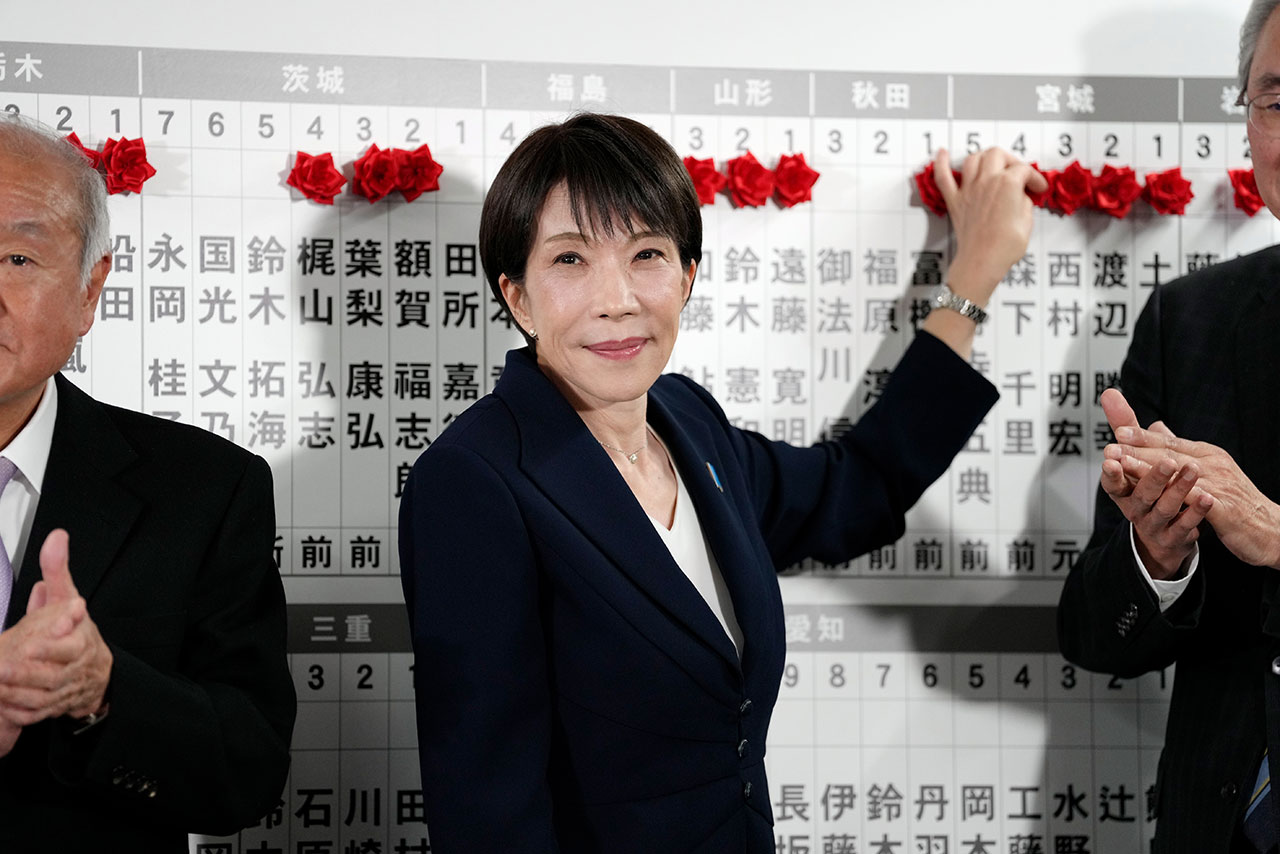
A bed of roses: Takaichi secures a landslide victory
Portugal
The second round of presidential elections this weekend, as in so many nations these days, was billed as a battle of pro-democracy forces against the populist far right. Centre-left candidate António José Seguroclaimed a remarkable two-thirds victory.
“The Portuguese president might be more of a symbolic figure but the role includes two crucial powers: vetoing laws and the ability to dissolve parliament,” says Monocle’s senior foreign correspondent, Carlota Rebelo. “But generally speaking the president is more of a statesman and a vehicle for soft power. The importance of this election was who – the far-right or the establishment – would represent the nation and hold the power to bring down its government [if needed]. Former presidents and prime ministers from the centre-right appealed to voters to cast their ballot for Seguro, a socialist, urging them to evade the far-right Chega party. It was a moving spectacle but the absence of the traditional right is deeply concerning for the future of the country.”
Listen to Rebelo discuss the Portuguese elections here.
Thailand
Following Sunday’s vote, Thailand’s political future is far less clear-cut than that of Japan but caretaker prime minister Anutin Charnvirakul’s conservative Bhumjaithai Party is still celebrating following its first election win this century.
“It looked like a tight three-way race,” says James Chambers, Monocle’s Bangkok-based Asia editor. “But following a surprise win, Bhumjaithai will be by far the largest party in the new parliament. When it gets down to the business of forming a coalition, Bhumjaithai could achieve a majority without the help of rival parties that came second and third.”
|
|
• • • • • DAILY TREAT • • • • •
Spend a night at the revamped Park Hyatt Tokyo
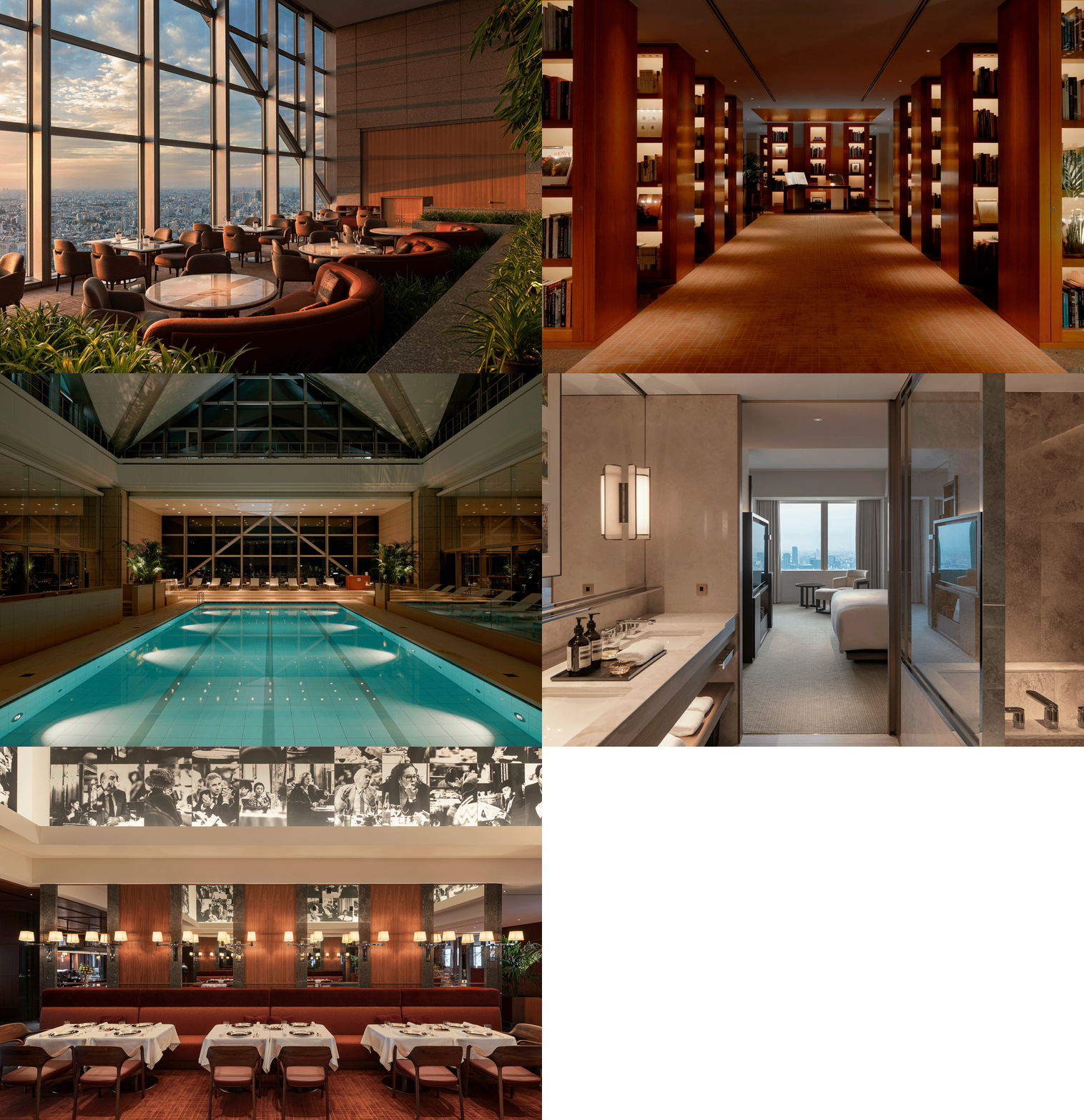
There was an air of anticipation after Tokyo’s Park Hyatt hotel closed for a refresh in 2024. Now, it’s finally back. There are familiar faces among the long-standing staff awaiting visitors on the 41st floor, home to the reworked lounge and bar The Peak and Girandole, which is now in the hands of French-born Monégasque chef Alain Ducasse.
The guest rooms have received a modern update in the form of custom furnishings and a more open layout. And while numbers have been reduced to 171 rooms, there are some new additions too. The Park Suite category offers separate sleeping and living rooms, walk-in closets and sweeping views towards Meiji Shrine’s lush surrounds. They’re part of a new chapter for a landmark hotel that, despite the changing times, proves that the value of heritage never grows old.
hyatt.com
|
|
SPONSORED BY HITACHI ENERGY
|
|
from monocle.com: Patrick J McGinniss
The creator of ‘fomo’ on how to make better decisions
We’ve all felt it: the pressure to go somewhere despite being tired. The fear of missing out or “fomo” is as big a part of modern life and can lead to burnout or rash decisions being made without fully examining the options. The phrase can be attributed to Patrick J McGinniss, who coined it at Harvard Business School in 2004. At the time, McGinniss used the uncertainty of the years after September 11 to take full advantage of Harvard’s social, academic and career-building offerings but realised that attending everything wasn’t a fulfilling pastime.
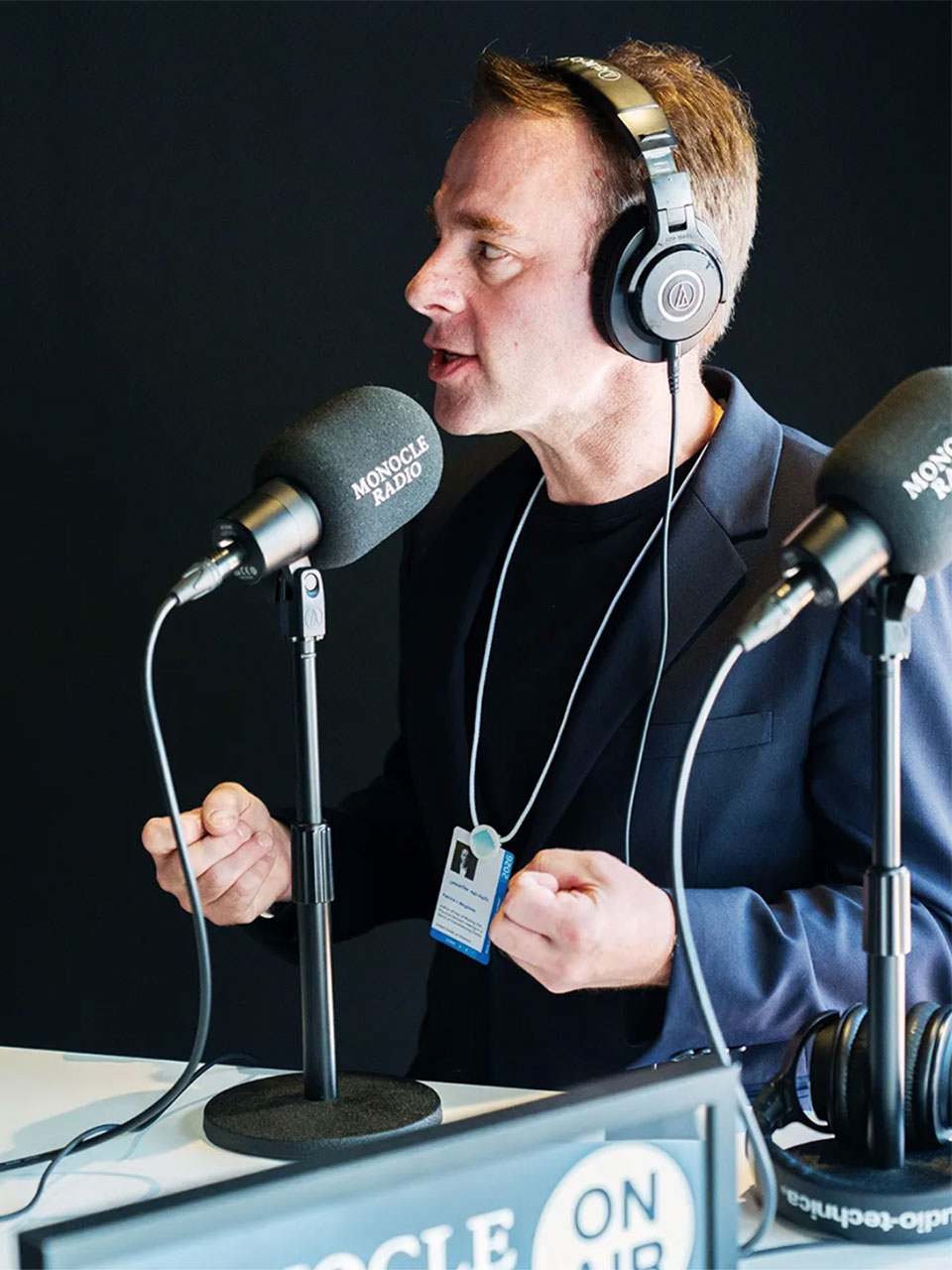
Figure of speech: Fomo creator Patrick J McGinniss
< | | | | |