| | Iran partially closes the Strait of Hormuz, France’s president bolsters ties with India, and the EU ͏ ͏ ͏ ͏ ͏ ͏ |
| |  | Flagship |  |
| |
|
The World Today | 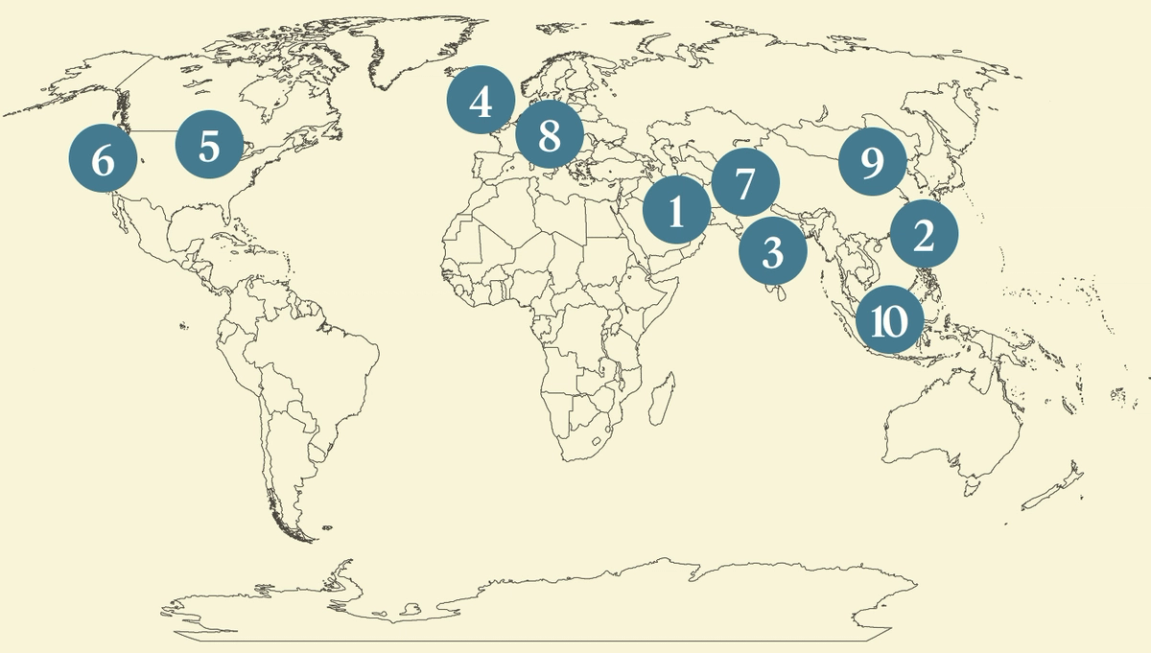 - Iran closes Strait of Hormuz
- Trump talks Taiwan deal
- Macron deepens India ties
- The simplest computer ever
- From toilets to AI chips
- US utility’s new price plan
- Al-Qaeda threat grows
- EU investigates Shein
- Pressure on Chinese youth
- ASEAN lures digital nomads
 A look into the “lethal but sexy” world of samurai. |
|
Iran partially closes Strait of Hormuz |
 Stringer/Reuters Stringer/ReutersIran on Tuesday partially closed the Strait of Hormuz, a crucial chokepoint in global oil flows, as Tehran held another round of nuclear talks with the US in Geneva. The closure, the result of military drills Tehran conducted in the waterway, marked the first shutdown since US President Donald Trump threatened to strike Iran in January. The countries made progress in Tuesday’s negotiations — pushing oil prices down — though they resulted in no breakthroughs. Brent crude, which fell substantially in 2025, is up nearly 13% this year because of the tensions and the prospect of war. Still, a complete closure of the Strait of Hormuz, the “mother of all disruptions,” remains a low-probability scenario, OilPrice.com wrote. |
|
Trump to decide on Taiwan arms sale |
|
India, France deepen ties |
 Francis Mascarenhas/Reuters Francis Mascarenhas/ReutersIndia and France vowed to deepen economic, defense, and tech ties as their leaders sought to project stability and cooperation in a time of global uncertainty. French President Emmanuel Macron is hoping to convince New Delhi to finalize its purchase of 114 French fighter jets during his trip to India. The visit comes as Europe looks to bolster its defense industry and reduce US reliance, while New Delhi seeks to diversify away from Russia. Macron will also attend India’s AI summit Wednesday, as he and India’s leader promote shared regulatory frameworks as an alternative to the US- and China-led paradigm. Washington and Beijing “appear increasingly detached” from discussions around AI guardrails, and middle powers should be on notice, a tech expert argued. |
|
AI agents drive buzz for simple computers |
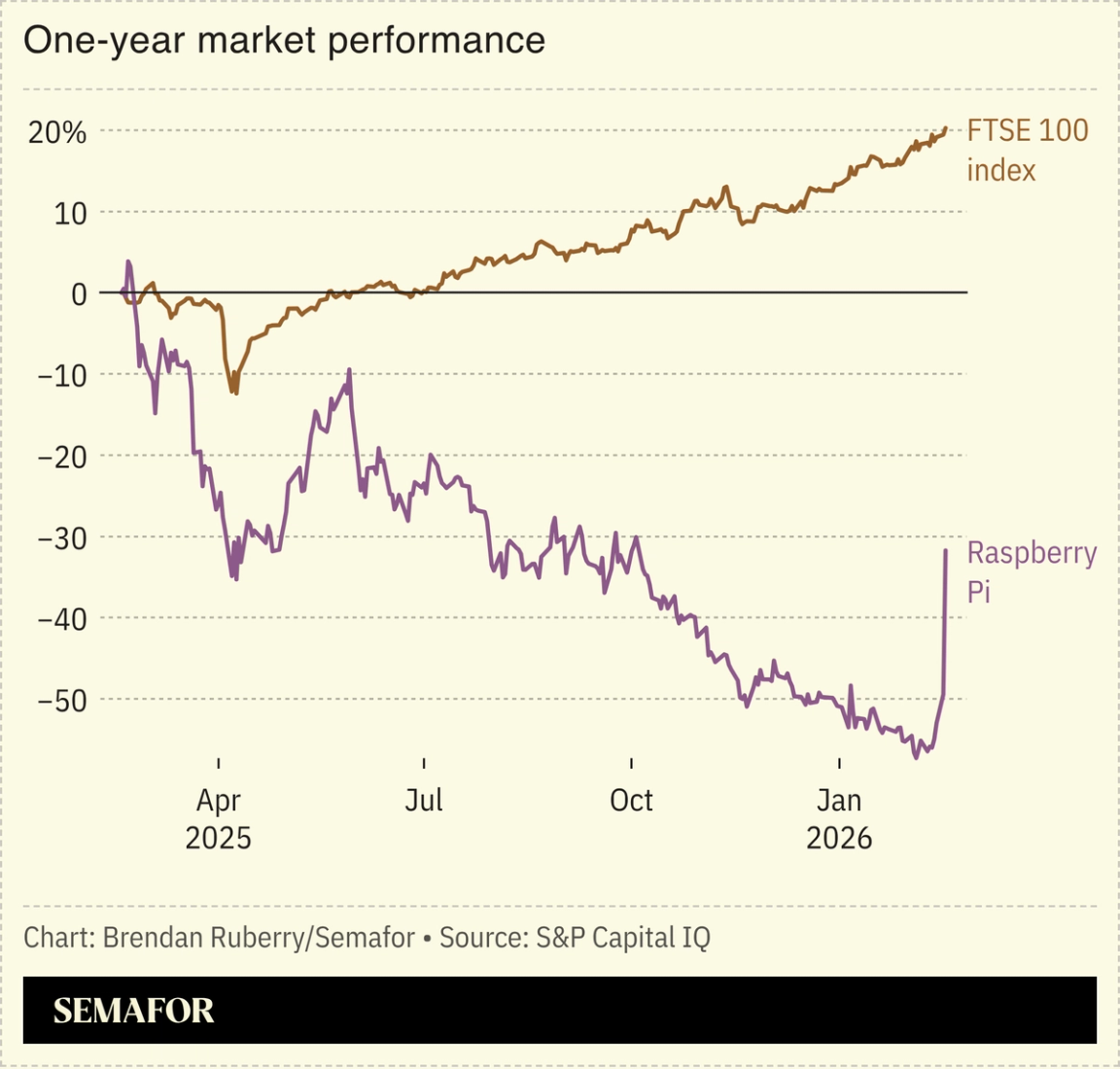 Shares in a British PC maker soared Tuesday after a social media post suggested that AI agents could drive demand for the simplest commercially available computer. A Raspberry Pi is like a normal PC, except packed onto a single, credit card-sized circuit board. Popular with educators and computer hobbyists, the low-cost machines are now being sought for running AI agents like OpenClaw, as a safer alternative to a user’s main device, or the cloud, where agents could wreak havoc by, say, mistakenly wiping your entire drive. Raspberry Pi has raised prices as the cost of memory increases globally, Bloomberg noted, but the 1GB model still costs as much as a cheap bottle of wine. |
|
Unlikely impacts of AI chip crunch |
 Yuya Shino/Reuters Yuya Shino/ReutersAI-driven demand for chips is hitting even seemingly unrelated industries. Ford’s CFO said that the carmaker was seeing “pressure” on chip supply, while an analyst told Bloomberg there are “signs of panic buying [memory chips] within the auto sector” as production capacity is increasingly redirected toward data centers. On the other hand, Japanese toilet-maker Toto is “a rising powerhouse… for semiconductor manufacturing,” an investment group argued: Using its knowledge of ceramics, Toto started making electrostatic chucks that hold chips in place during production in the 1980s, and is now among the world’s leading suppliers. Similarly, a soup company has started using products derived from its umami flavorings to make chip-insulation materials, the Financial Times reported. |
|
Utility’s new plan to lower energy costs |
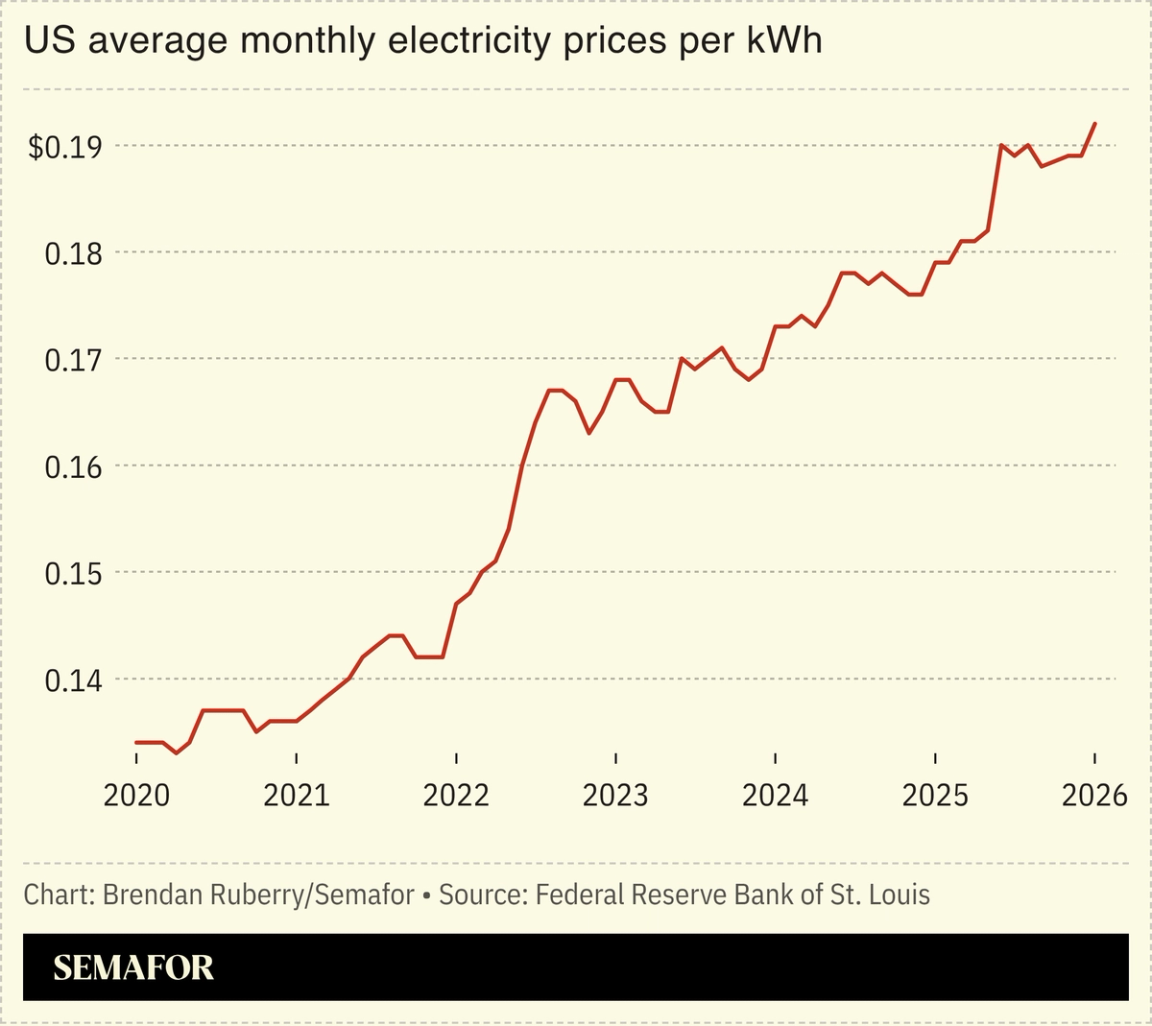 One of the largest US electric utilities has a new plan to tamp down spiraling power prices, though some experts warn it could have the opposite effect. Exelon is hoping to get back into the business of generating its own electricity, something it hasn’t done since 2022, CEO Calvin Butler told Semafor. The surge in AI data centers has created a gaping supply shortfall across Exelon’s territory and left customers facing record-high prices — and utilities across the country are under pressure to bring those costs down. The trouble with Exelon’s strategy, though, is that it hinges on a bullish forecast for data center demand: If demand is too light, households could be left paying for infrastructure they don’t need. |
|
Al-Qaeda threat grows again |
 Taliban patrol Afghan border. Stringer/Reuters Taliban patrol Afghan border. Stringer/ReutersThe threat of Al-Qaeda is growing again, both Pakistan and the UN warned. After a suicide bombing in Islamabad killed 31 earlier this month, the Pakistani president said that the Taliban government in Afghanistan has created conditions “similar to or worse than” those before the Sept. 11, 2001, attacks. The Taliban ruled Afghanistan and sheltered Al-Qaeda leaders until the US invasion in 2001; it returned after the US’ retreat in 2021. A UN monitoring group said Al-Qaeda and its affiliates have 25,000 recruits, 50 times as many as in 2001 — now spread out across several regions, including the Middle East and Africa, rather than solely concentrated in Afghanistan. |
|
 Semafor will host its annual Trust in Media Summit in Washington, DC on Feb. 25, convening the industry’s most influential leaders for timely conversations on media credibility and the shifting dynamics of media power. Semafor editors and reporters will be joined by leading voices in media, including: Brendan Carr, Chairman, FCC; Matt Murray, Executive Editor, Washington Post; Kristen Welker, Moderator, Meet the Press and Anchor, Meet the Press NOW; Mathias Döpfner, CEO, Axel Springer; Jacqui Heinrich, Senior White House Correspondent and Anchor of The Sunday Briefing on FOX News Channel; Maribel Pérez Wadsworth, President & CEO, Knight Foundation; Deborah Turness, Former CEO, BBC News; and Hamish McKenzie, Co-Founder & Chief Writing Officer, Substack. Request an invitation to join the conversation as it happens live. |
|
 Abdul Saboor/Reuters Abdul Saboor/ReutersThe EU on Tuesday launched an investigation into Chinese fast-fashion platform Shein, alleging its site has an “addictive design” and markets sexually inappropriate content. Shein, along with other Chinese e-commerce companies, has made inroads in Europe in recent years, drawing scrutiny. French authorities sought to suspend Shein in November hours after it opened its first physical store in Paris; the site was accused of selling “childlike” sex dolls. Exactly two years after Brussels’ landmark regulation for online services went into effect, Europe is ramping up pressure on large platforms. Spain on Tuesday ordered an investigation into Meta, X, and TikTok over allegations that AI-generated sexual images are proliferating, and Ireland opened a probe into X’s chatbot. |
|
Childless Chinese face new years’ nagging |
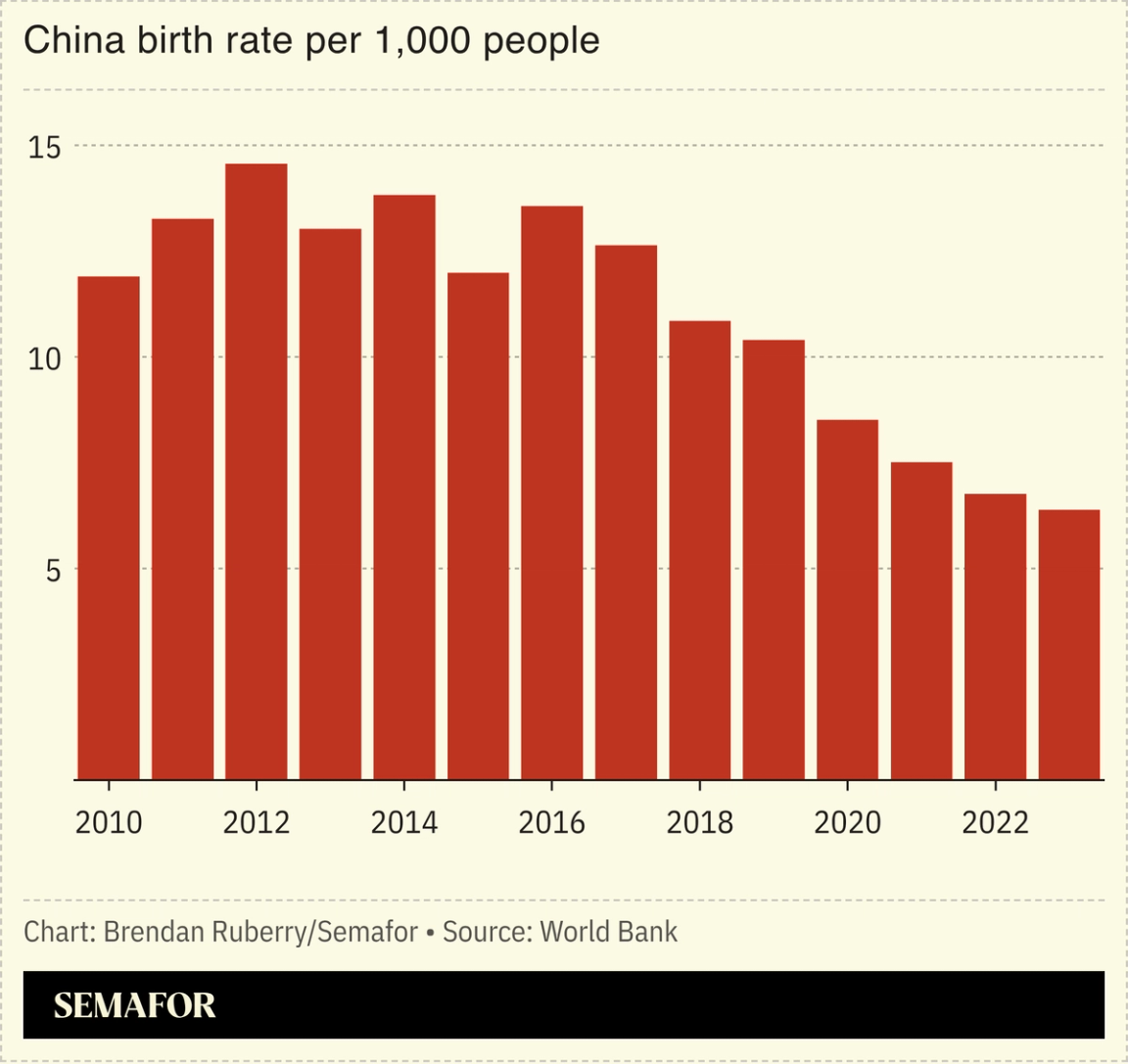 Thousands of childless Chinese adults returning home for Lunar New Year this week are dreading the same fate: nagging from their parents about when they’re having kids. Parental pressure to marry and procreate is age-old, but it’s taking on greater urgency as China stares down the barrel of a demographic crisis thanks to a cratering birth rate. “Every year, I hear of at least one blind date engineered by parents that collapses almost immediately,” a Financial Times China correspondent wrote. Policymakers in Beijing may soon echo the country’s parents in pushing for more children. Incentives aimed at encouraging marriages and births haven’t triggered a turnaround, and the state may soon apply more coercive measures, T |
|
|


