| | Christine Lagarde is reportedly set to leave the ECB early to stave off a threat from the European f͏ ͏ ͏ ͏ ͏ ͏ |
| |  | Flagship |  |
| |
|
The World Today | 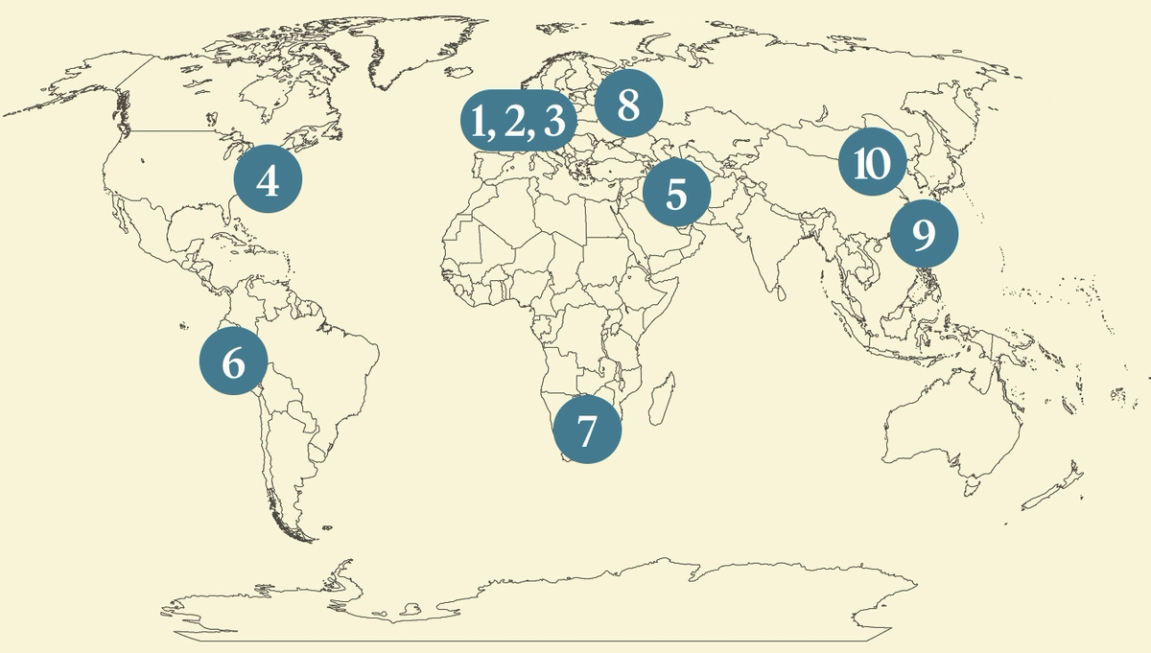 - Lagarde to leave ECB early
- EU looks to boost euro
- Europe’s AI ambitions
- Japan’s US spending
- US, Iran split on talks
- More Peru political chaos
- S. Africa employment up
- Russians in Paralympics
- China tourists quit Japan
- China’s experience economy
 An exhibition from a Danish painter whose work offers an ‘uneasy sense of quiet.’ |
|
Lagarde reportedly to leave ECB early |
 Heiko Becker/File Photo/Reuters Heiko Becker/File Photo/ReutersThe European Central Bank’s chief will reportedly leave her role early, part of what analysts characterized as efforts to “future-proof” against the anticipated rise of the far right in upcoming French elections. The ECB did not confirm a Financial Times report that Christine Lagarde would depart ahead of French presidential elections in April 2027. Her leaving, combined with the surprise early exit of the head of the Bank of France, offers European leaders a chance to select a replacement ahead of the French vote. The anti-immigration National Rally — which has previously called for an exit from the euro, a position it has since reversed — is expected to perform well in those polls. |
|
EU finance leaders seek stronger euro |
 Dado Ruvic/Illustration/File Photo/Reuters Dado Ruvic/Illustration/File Photo/ReutersThe EU’s finance chiefs want the euro to take on a larger global role. The European Central Bank is offering liquidity to other central banks, reinforcing euro diplomacy as trust in the US financial system wavers. It’s one of several proposals to boost the euro’s use as an international reserve currency, despite fears of a strengthening euro hurting the bloc’s exports. Growing European unity in the face of US isolationism is also driving interest in joining the eurozone: Sweden, one of six EU members yet to adopt the single currency, has seen public support for accession grow. Such a move would boost the euro’s credibility, although is unlikely at least in the next couple of years, the country’s finance minister said. |
|
Europe looks to catch up on AI |
 France’s president with the CEOs of DeepMind and Mistral AI. Ludovic Marin/Reuters France’s president with the CEOs of DeepMind and Mistral AI. Ludovic Marin/ReutersTwo big industry moves showcased European ambitions to make ground in the AI race. French startup Mistral AI made its first acquisition, buying a Parisian AI infrastructure company, as it tries to move from simply developing models to becoming a one-stop shop. And a top British AI researcher is looking to raise $1 billion for a new company building “superhuman intelligence,” in what would be the largest-ever European seed round. David Silver, formerly of Google DeepMind, sparked a flurry of excitement as investors raced to find competitors to US and Chinese AI giants. Europe remains way behind Silicon Valley, though: Mistral’s $14 billion valuation, which makes it Europe’s largest AI firm, is barely 2% of the estimated worth of OpenAI. |
|
Japan rolls out new US investments |
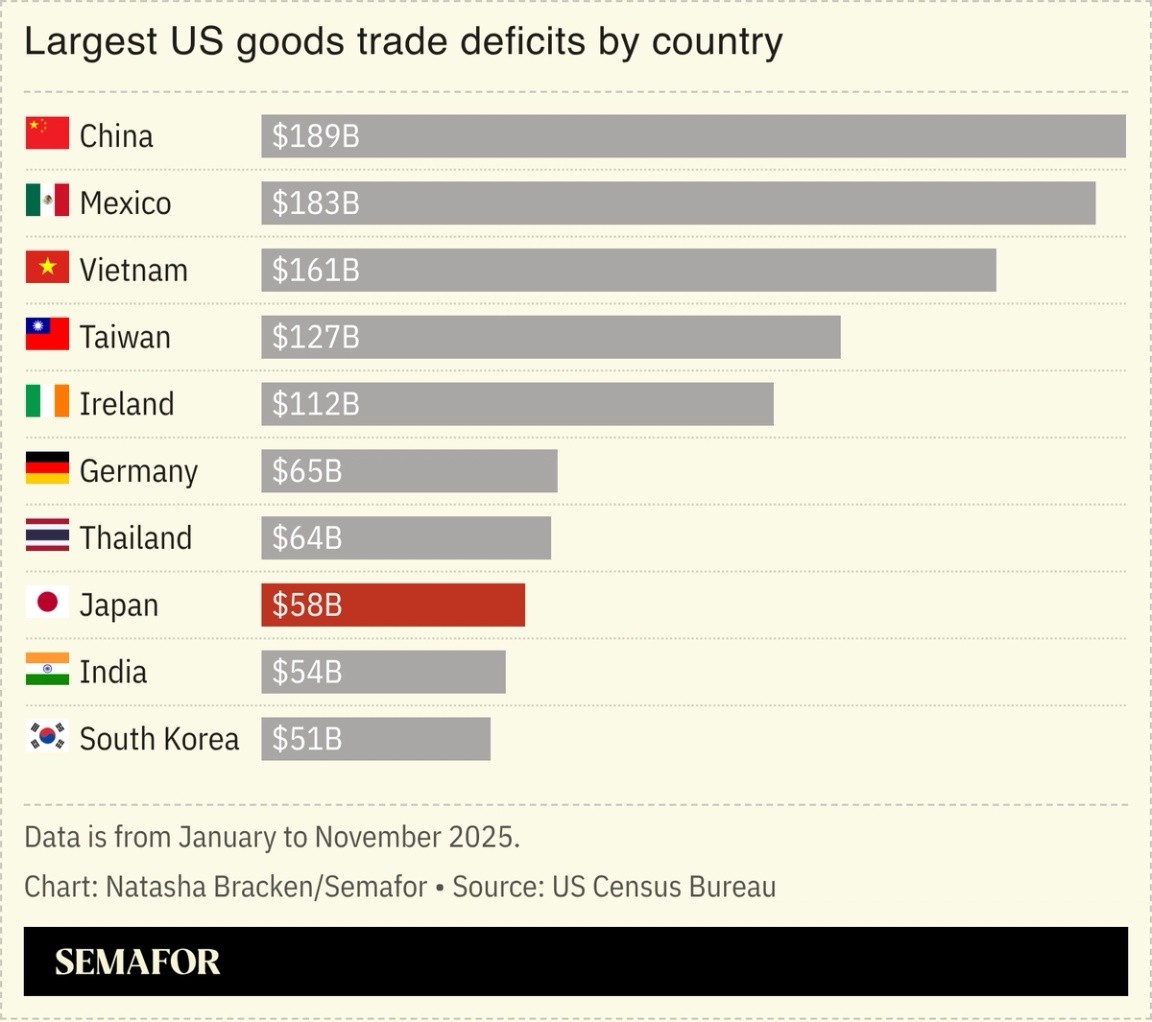 Japan unveiled $36 billion in investments in US fossil fuel and mineral projects, part of a $550 billion trade agreement struck with President Donald Trump. The first projects include a huge natural-gas power plant in Ohio, “the largest in history” according to Trump, and an oil platform in the Gulf of Mexico. As part of last year’s deal, Washington agreed to reduce tariffs on Japanese exports, namely cars, although it could reinstate them if Tokyo fails to meet its commitments. China faces similar risks: Beijing pledged to boost its purchases of agricultural goods from the US, with American soybean farmers particularly struggling as Chinese sales dropped 80% year-on-year in 2025. But port data showed that sales have not picked up. |
|
US, Iran split on talks progress |
 Majid Asgaripour/WANA/Reuters Majid Asgaripour/WANA/ReutersThe US and Iran gave conflicting accounts of the results of their ongoing nuclear talks. Tehran said the latest negotiations were “more constructive,” but US Vice President JD Vance said there had been no breakthrough, and that Tehran had failed to acknowledge core US demands, such as ending its enrichment of uranium. Iran’s stockpile is believed to be nearly pure enough to build a nuclear weapon. The negotiations are taking place against a tense backdrop: Two US carrier groups are in the Gulf; Iran conducted live-fire military exercises as a show of force and temporarily closed the Strait of Hormuz. Oil prices ticked higher on investor caution over whether a deal could ultimately be reached. |
|
Peru removes another president |
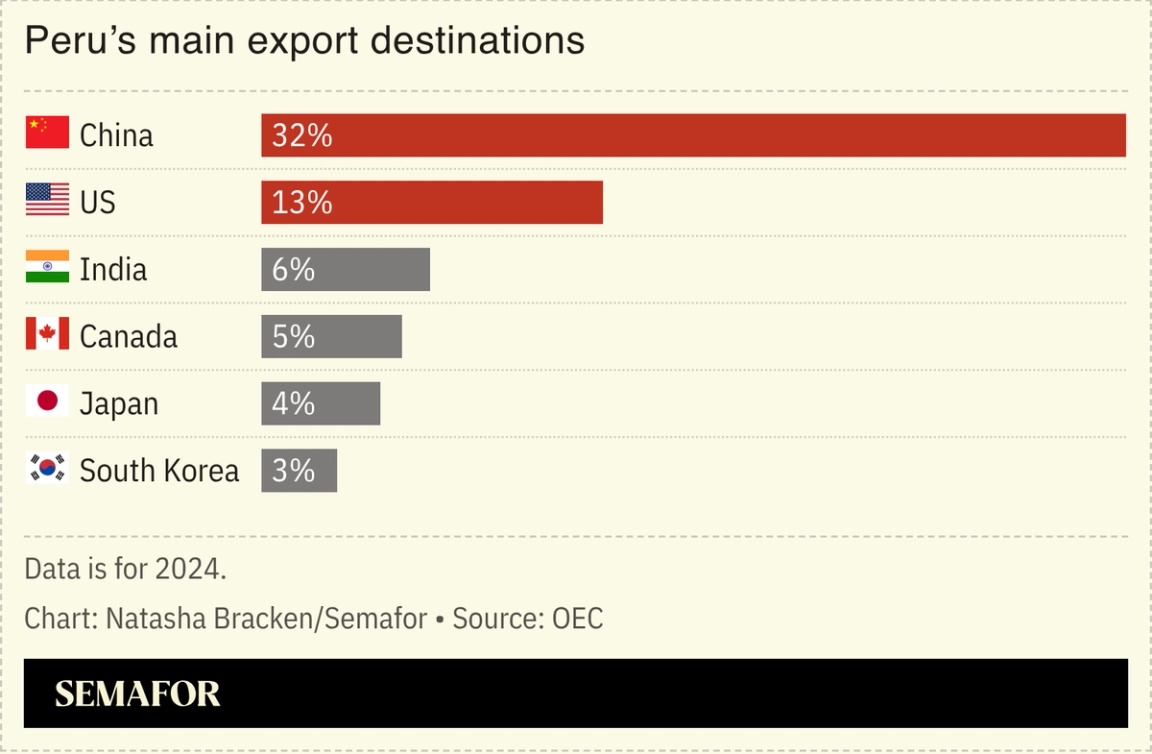 Peruvian lawmakers removed the country’s interim president from office over a scandal involving undeclared meetings with Chinese businesspeople. The ouster cemented Peru’s status as among the least stable countries in Latin America — José Jerí was the country’s eighth president in less than a decade — and comes just two months ahead of scheduled general elections. It also points to the country’s emergence as a battleground for influence between the US and China. Washington warned last week that Lima was surrendering its sovereignty by giving Beijing too much control over a Pacific deep-water port built by a Chinese company in Peru, a mammoth infrastructure project that has sparked concern that China is wielding power in the US’ backyard. |
|
S. Africa’s good economic news |
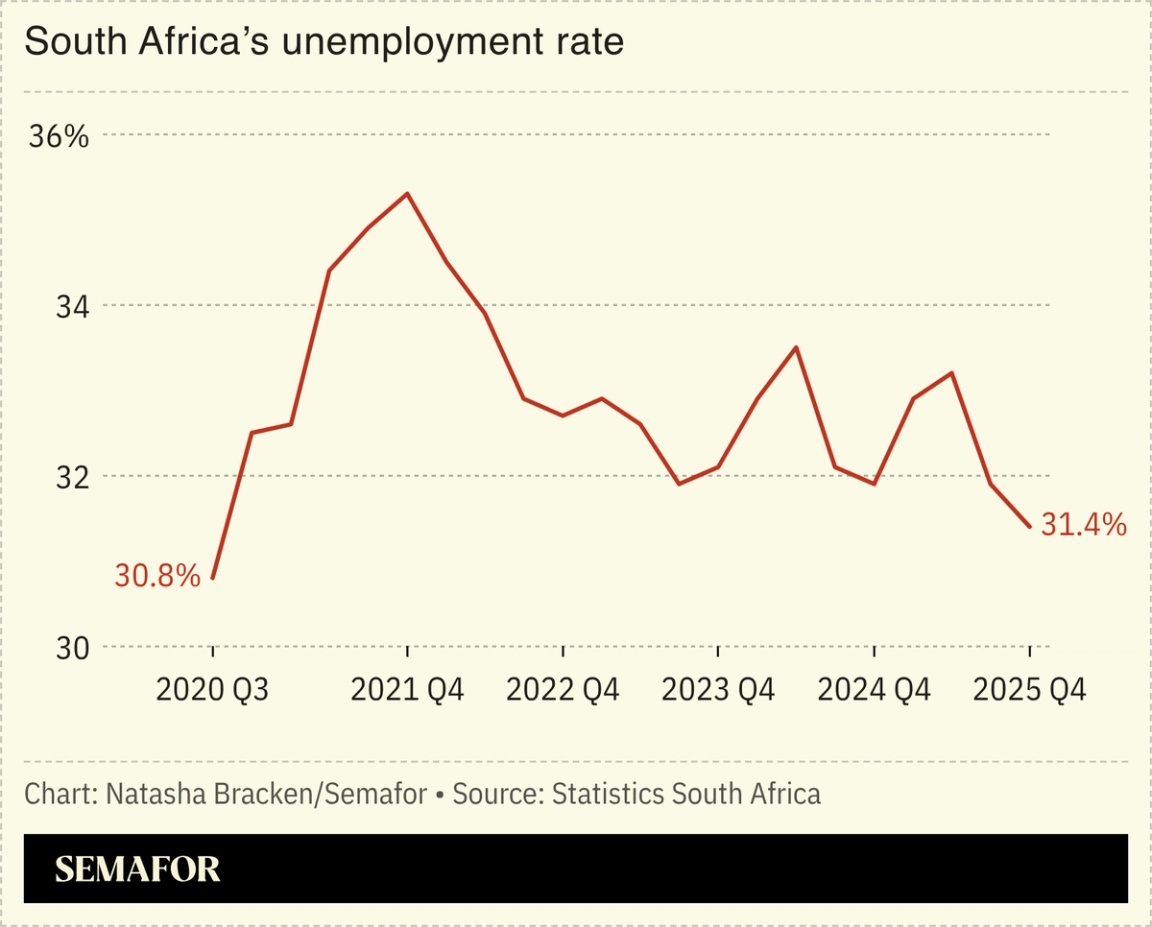 South Africa’s unemployment rate fell to its lowest level in more than five years, the latest sign that the continent’s biggest economy is finally gathering momentum. Though more than 30% of South Africans remain jobless despite broad-ranging government efforts, the figures nevertheless offered a boost to authorities ahead of the unveiling of the country’s budget next week. Improving electricity supply and easing logistics bottlenecks have also helped bolster the economy, while analysts expect inflation to ease over the course of this year and next. Morgan Stanley economists project a series of interest rate cuts beginning next month as a result, and forecast that “growth in 2026 is set to improve.” |
|
 Semafor will host its annual Trust in Media Summit in Washington, DC on Feb. 25, convening the industry’s most influential leaders for conversations on media credibility and the shifting dynamics of media power. Semafor editors and reporters will be joined by leading voices in media, including: Brendan Carr, Chairman, FCC; Matt Murray, Executive Editor, The Washington Post; Kristen Welker, Moderator, Meet the Press, and Anchor, Meet the Press NOW; Mathias Döpfner, CEO, Axel Springer; Jacqui Heinrich, Senior White House Correspondent and Anchor of The Sunday Briefing on FOX News; Maribel Pérez Wadsworth, President and CEO, Knight Foundation; Deborah Turness, former CEO, BBC News; and Hamish McKenzie, cofounder and Chief Writing Officer, Substack. Request an invitation to join the conversation as it happens live. Feb. 25, 2025 | Washington, DC | Request Invite |
|
Russia to join Paralympics |
 Jennifer Lorenzini/Reuters Jennifer Lorenzini/ReutersRussia and its ally Belarus will compete under their own flags at next month’s Paralympics following a yearslong ban. Both were barred from Olympic and Paralympic competitions after Moscow’s 2022 invasion of Ukraine, though some athletes were permitted to participate under a neutral flag. The international Paralympic federations had said they would maintain the ban, but the two countries won an appeal with the Court of Arbitration for Sport: 10 of their athletes will compete in ski and snowboard events. The decision may suggest a wider weakening of global sporting bodies’ stance: Soccer’s governing body banned Russia from the 2022 men’s World Cup, but FIFA President Gianni Infantino recently said he favored lifting the restriction because it “has achieved nothing.” |
|
Chinese tourism to Japan drops further |
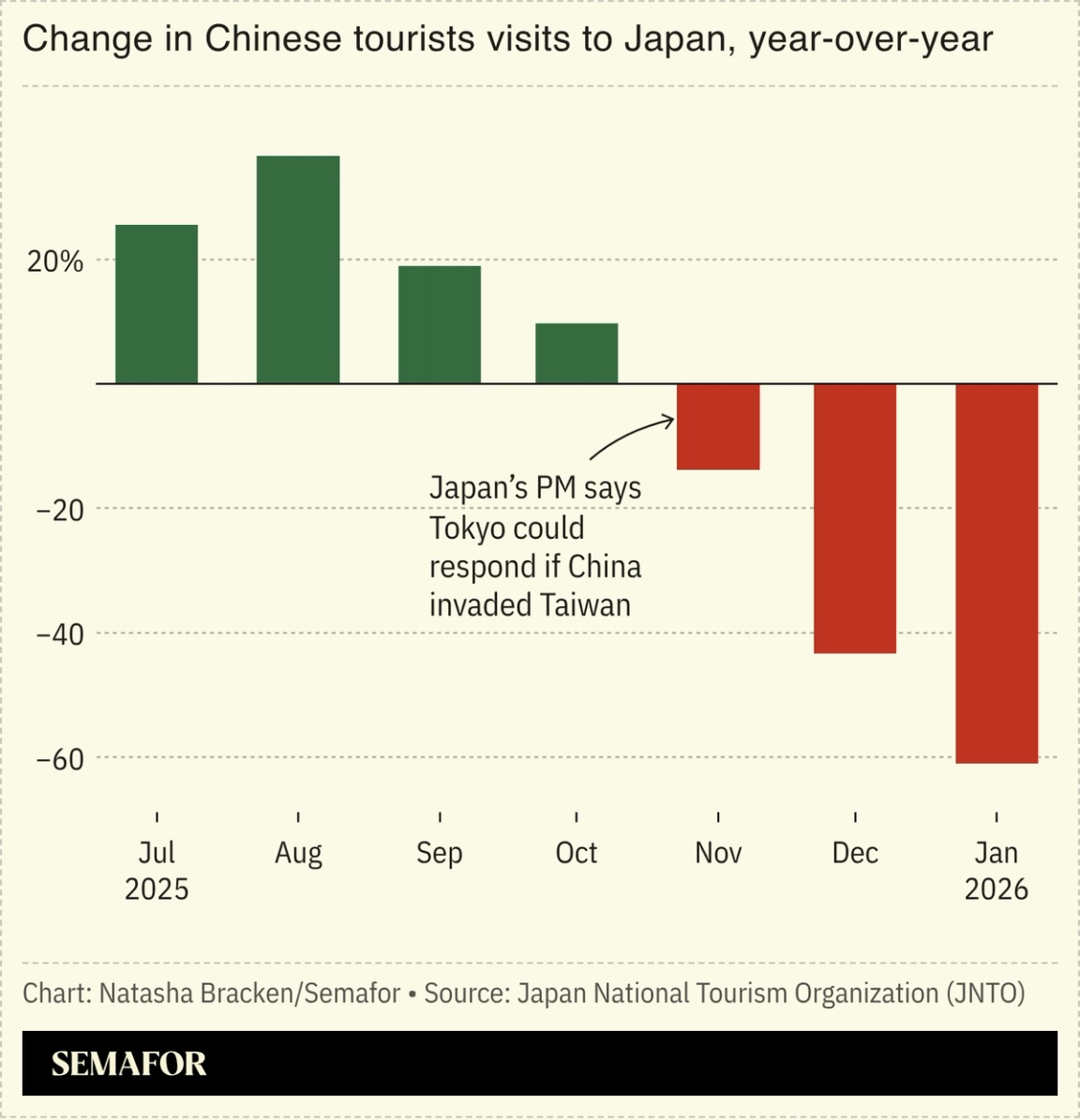 Chinese tourism to Japan plummeted on persistent tensions between the two countries. Arrivals from China were down 61% in January year-on-year, after a 45% drop in December, Japan’s tourist board said. The different timing of this year’s Lunar New Year holiday was a factor, but a larger one has been Beijing’s warning against travel in the wake of the Japanese prime minister’s comments saying Tokyo could get involved should China invade Taiwan. Chinese tourists have flocked to Thailand and Vietnam instead, Nikkei reported. The economic impact could be significant: Income from Chinese travelers accounts for a fifth of Japan’s tourism revenue, and overall tourism fell, despite growing numbers from the US and elsewhere. |
|
|


