|
|
|
|
Good morning. Food inflation is driving a nation of bargain-hunters, even as the pace of price growth steadies across the board. In focus today, we look at why the big grocers are just fine with that – for now. |
|
|
|
|
|
|
|
|
|
|
|
|
|
|
|
|
Tumbler Ridge: Ottawa has summoned safety chiefs from OpenAI for a deeper explanation of why the shooter’s concerning comments on ChatGPT were not reported to police. |
|
|
|
|
Travel: After putting a damper on visits to the United States, the Trump administration’s policies are now also upending Canadians’ winter travel to favourite sun destinations. |
|
|
|
|
Tech: A renewed slump in technology companies’ shares underscores continued concern about potential market disruptions caused by the expanding use of artificial intelligence. |
|
|
|
|
|
|
|
|
|
|
|
|
|
|
|
A No Frills in Toronto. Chris Young/The Canadian Press
|
|
|
|
|
|
|
|
|
|
|
Putting our money where our mouths are |
|
|
|
|
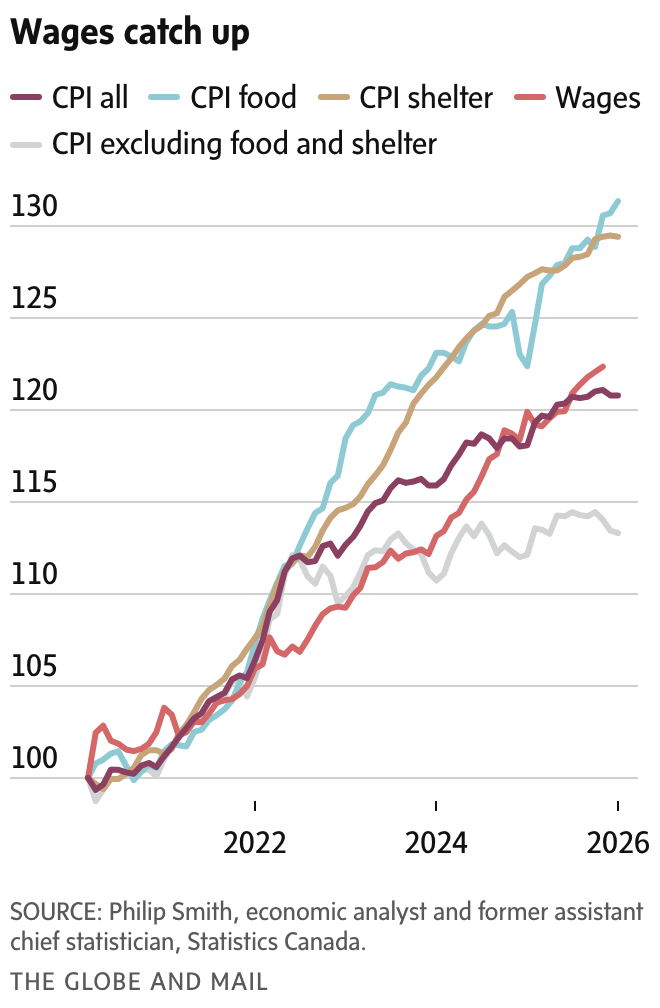
Talking about food prices is becoming more popular than talking about the weather. And it’s no wonder: The price of food in grocery stores was more than 7 per cent higher than a year ago in January, double the food inflation rate six months ago. |
|
|
|
|
It doesn’t help that Canada has the highest rate of food inflation in the G7 countries. Not the podium we want to own. |
|
|
|
|
|
|
|
|
|
|
|
|
|
|
You might expect those stubbornly high prices to act as a deterrent to price-conscious consumers – and for companies such as Loblaw Cos. Ltd., which reports quarterly earnings tomorrow, to be weighed down by slower foot traffic. |
|
|
|
|
But while consumer sentiment is low, shoppers haven’t stopped spending – they’ve simply changed how and where they do it. Many are shifting more of their budgets toward private‑label products and lower‑priced retailers. Loblaw’s discount banners – No Frills, Maxi and Real Canadian Superstore – outperformed
its traditional supermarkets last quarter, and the company has continued its push into the discount space in the months since. |
|
|
|
|
The disconnect between sentiment and spending can largely be chalked up to the COVID-19-spurred “once-in-a-generation inflation,” Bank of Nova Scotia analysts wrote in a client note last month. Consumers in Canada and the U.S. are still feeling the sting of that spike, and “the mantra of affordability” among politicians looks likely to continue to influence consumers. |
|
|
|
|
And hey, have you tried to make a coffee-rub for your steak recently? The price of beef (up 18.8 per cent in January from the year before) and java (up 29.8 per cent) are both bananas. (Don’t get me started.) |
|
|
|
|
There are signs of daylight: Outside of food and shelter, the prices of items such as clothing and household goods have generally risen more slowly than wages. That slower rise offers little comfort at the grocery store, but it does help offset the squeeze. |
|
|
|
|
Wages and disposable income, meanwhile, are steady. And the unemployment rate has been shrinking, the analysts noted. “The net result is the same: Worried consumers keep spending, and we don’t see that changing in 2026.” |
|
|
|
|
|
|
In fact, shoppers might be finding even more places to source their produce. |
|
|
|
|
Value-seeking, eco-conscious consumers are driving the rise of liquidation-style surplus stores, which sell near-expiry date, mislabeled or cosmetically imperfect products. Dozens of independent stores across the country are predicting more openings this year. |
|
|
|
|
Loblaw, along with grocery providers Metro Inc. and Empire Co. Ltd., are all attempting to channel this new model through “food-rescue” partnerships – Loblaw with “Flashfood,” Metro with “Too Good to Go,” and Empire’s “FoodHero” – but they aren’t designed in the same way as liquidators, which can offer lower prices and don’t need to carry a consistent stock of products. |
|
|
|
|
Marie-Ève Breton, owner of Quebec-based Liquidation Marie, told Canadian Grocer this month that her customer base has shifted dramatically in recent years – from budget-conscious shoppers to “everybody.” Breton plans to open 10 more stores in Quebec this year. |
|
|
|
|
“They come because they see it’s the same thing.” |
|
|
|
|
And they come because they can’t find bargains in their monthly shelter payments. Dr. Yu Ma, a marketing professor at McGill University, told the CBC that food is the easiest thing to cut for families living paycheque to paycheque. |
|
|
|
|
“You cannot cut power, you cannot cut rent or mortgage payments.” |
|
|
|
|
These stores aren’t a threat to the big chains – in fact, they might complement each other – but they show just how active shoppers are becoming in stretching their money. |
|
|
|
|
Yesterday, Loblaw announced plans to spend $2.4-billion this year to expand its presence across Canada, renovating 191 stores and opening 70 new ones. Of those, 31 will be No Frills and Maxi stores – a big bet on consumers who are bent on spending less. |
|
|
|
|
|
|
|
|
|
|
|
|
|
|
|
|
|
|