|



Unblocked: Context that saves you time and tokens (Sponsored)
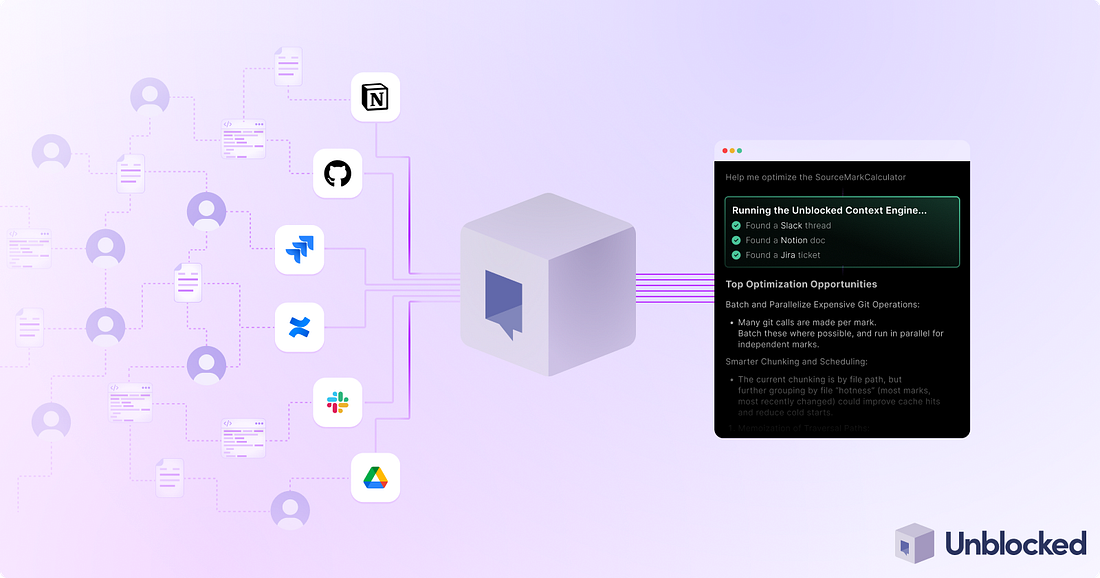 |
AI coding tools are fast, capable, and completely context-blind. Even with rules, skills, and MCP connections, they generate code that misses your conventions, ignores past decisions, and breaks patterns. You end up paying for that gap in rework and tokens.
Unblocked changes the economics.
It builds organizational context from your code, PR history, conversations, docs, and runtime signals. It maps relationships across systems, reconciles conflicting information, respects permissions, and surfaces what matters for the task at hand. Instead of guessing, agents operate with the same understanding as experienced engineers.
You can:
Generate plans, code, and reviews that reflect how your system actually works
Reduce costly retrieval loops and tool calls by providing better context up front
Spend less time correcting outputs for code that should have been right in the first place
This week’s system design refresher:
11 Ways To Use AI To Increase Your Productivity
Al Topics to Learn before Taking Al/ML Interviews
PostgreSQL versus MySQL
Why AI Needs GPUs and TPUs?
Network Protocols Explained
11 Ways To Use AI To Increase Your Productivity
AI is changing how we work. People who use AI get more done in less time. You do not need to code. You need to know which tool to use and when.
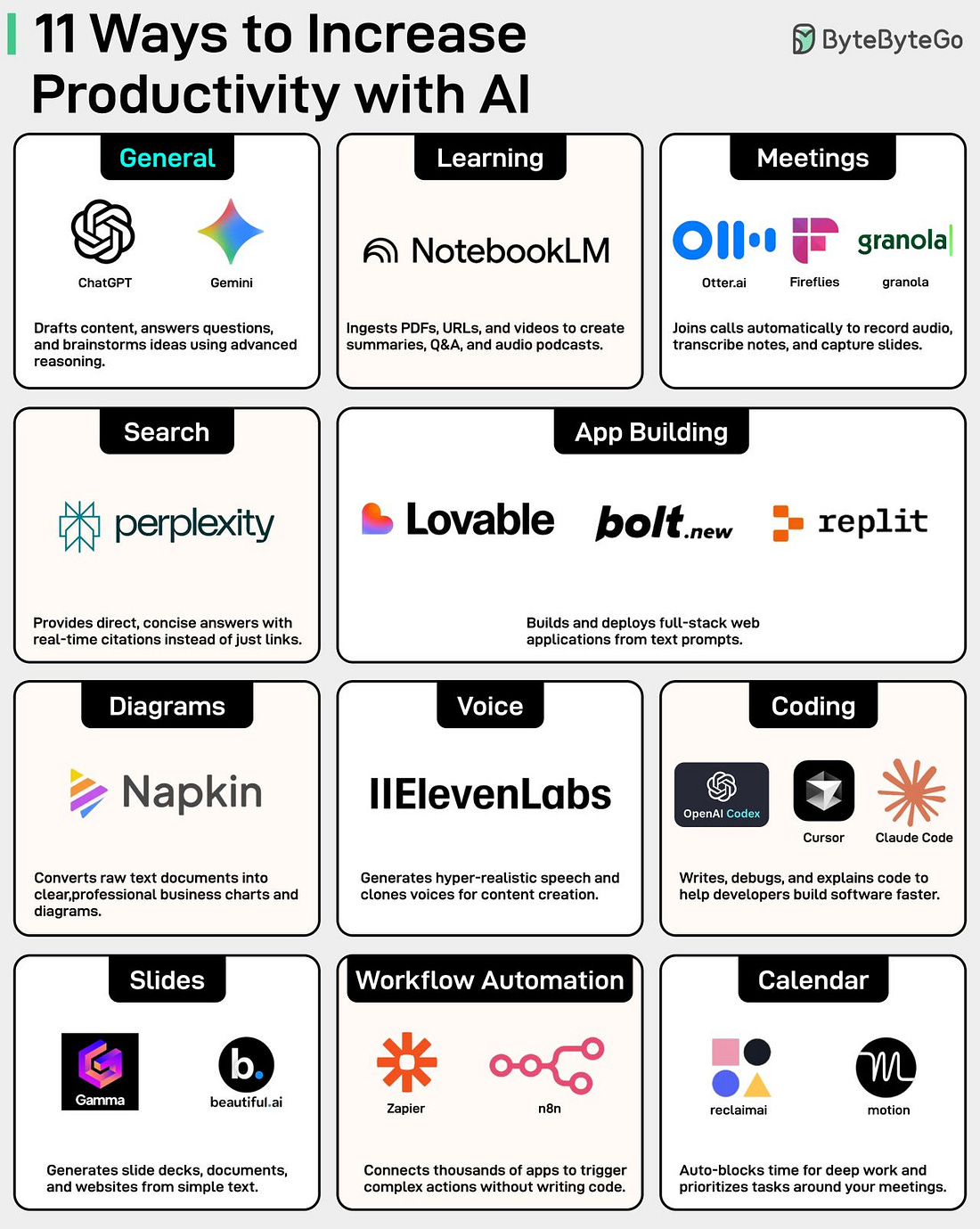 |
For example, instead of reading long technical blogs, you can upload them to Google’s NotebookLM and ask it to summarize the key points.
Or you can use Otter.ai to turn meeting transcripts into action items, decisions, and highlights.
Here is a list of 19 tools that can speed up your daily workflow across different areas. Save this for the next time you feel stuck getting started.
Over to you: What’s the underrated AI tool that others might not know about?
Al Topics to Learn before Taking Al/ML Interviews
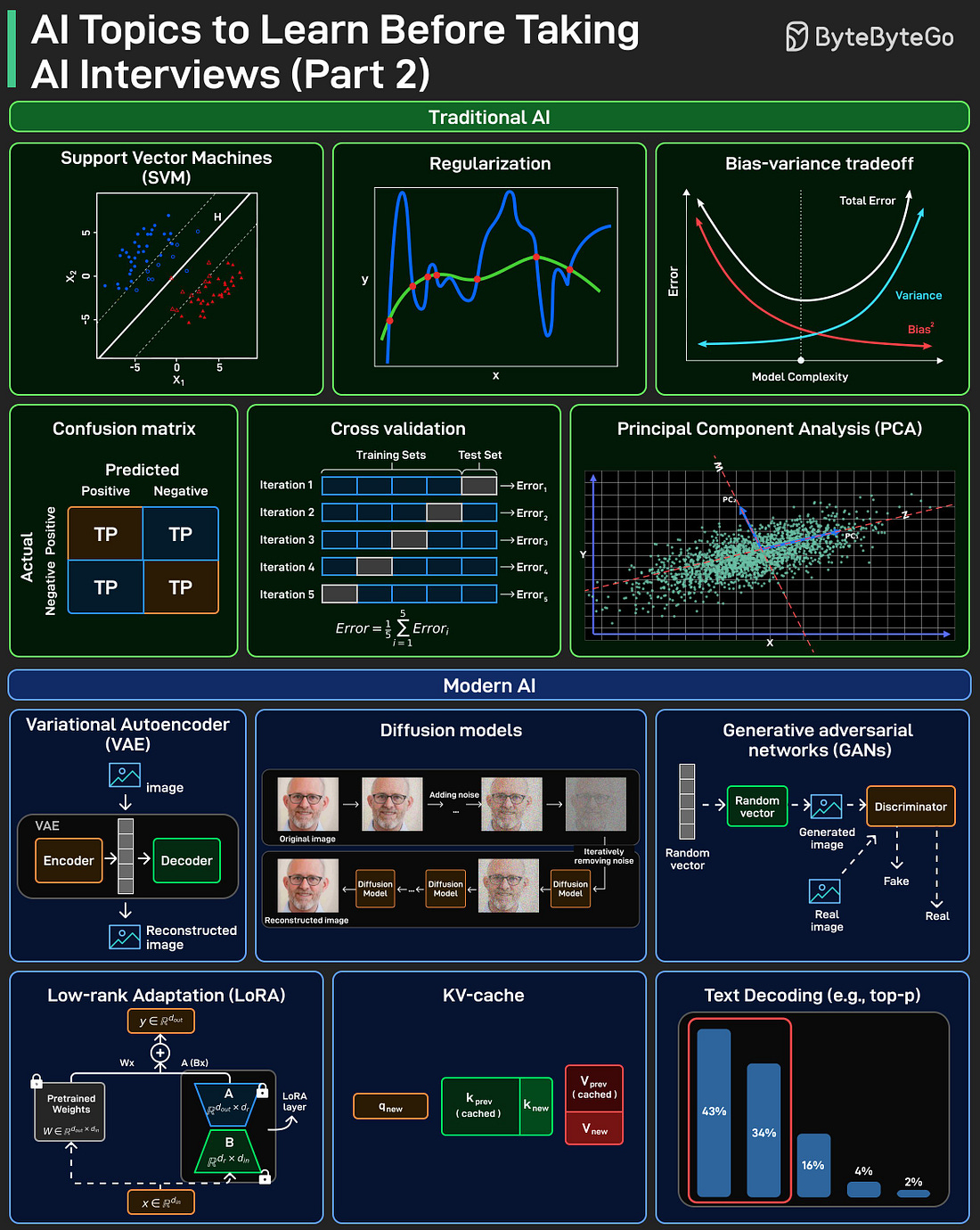
AI interviews often test fundamentals, not tools. This visual splits them into two buckets that show up repeatedly: Traditional AI and Modern AI.
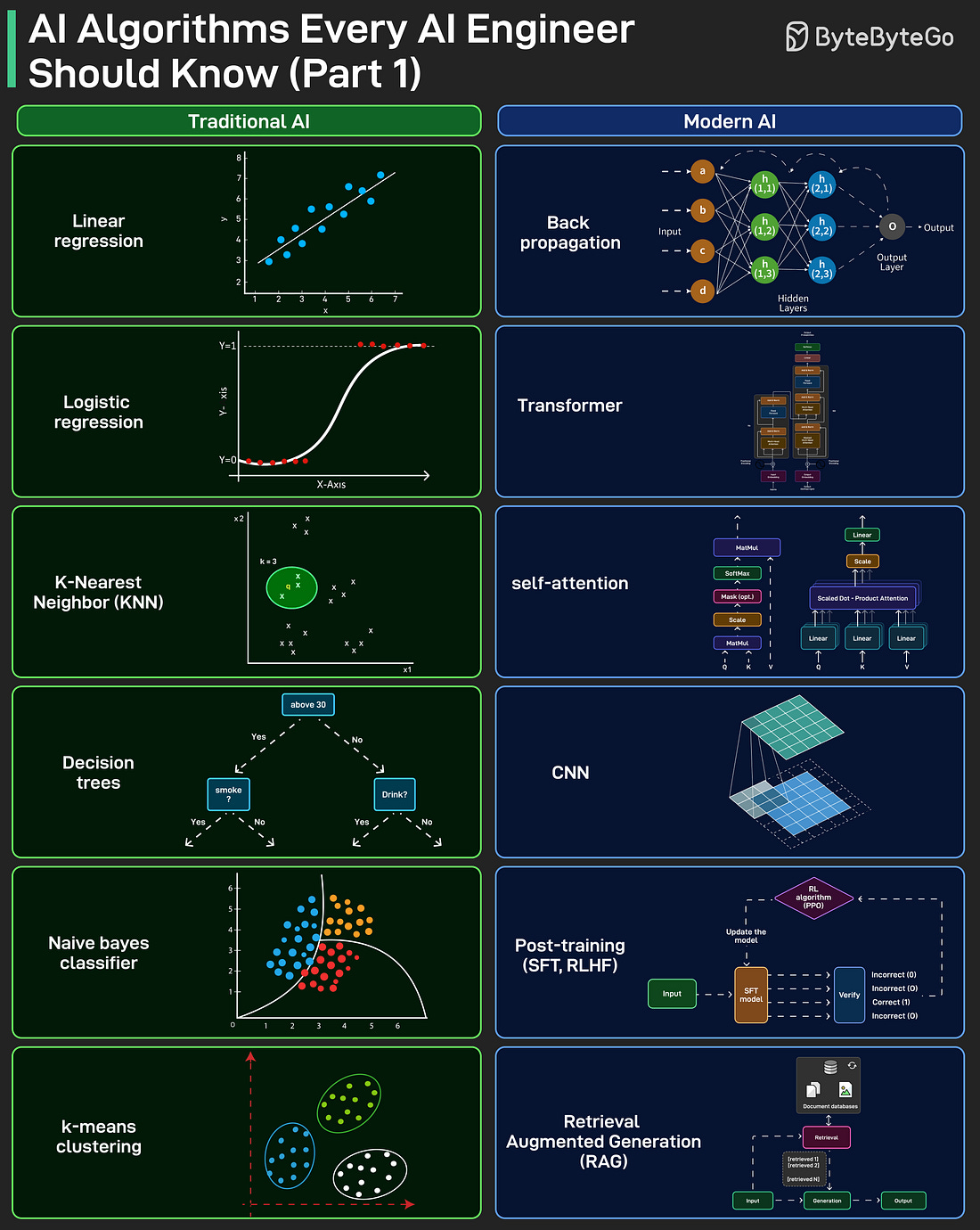 |
Traditional AI focuses on fundamental ML topics, mostly from before neural networks became dominant.
Modern AI focuses on neural network foundations and newer concepts like transformers, RAG, and post-training.
Interviewers generally expect you to know both. They expect you to explain how they work, when they break, and the trade-offs.
Use this as a checklist, and make sure you can explain each topic clearly before your next AI interview.
 |
Over to you: which topic here do you find hardest to explain under interview pressure? What else is missing?