- Front-month West Texas Intermediate crude oil futures spiked around 7%, gold gained over 1%, and the Dollar Spot Index was up roughly 0.9% as of market close Monday. Early modest gains in longer-term US government bonds swung to mild losses.
-
A Goldman Sachs basket of nonprofitable tech stocks reversed early losses of more than 2% to finish nearly 3% higher.
-
A number of defense stocks, including Lockheed Martin, RTX, and Northrop Grumman all traded higher, gaining 3% to 6%.
-
Traders seem to be settling on satellite stocks as a smart place to stash cash: Planet Labs, AST SpaceMobile, and Firefly Aerospace posted strong gains, as did related space plays like Intuitive Machines.
-
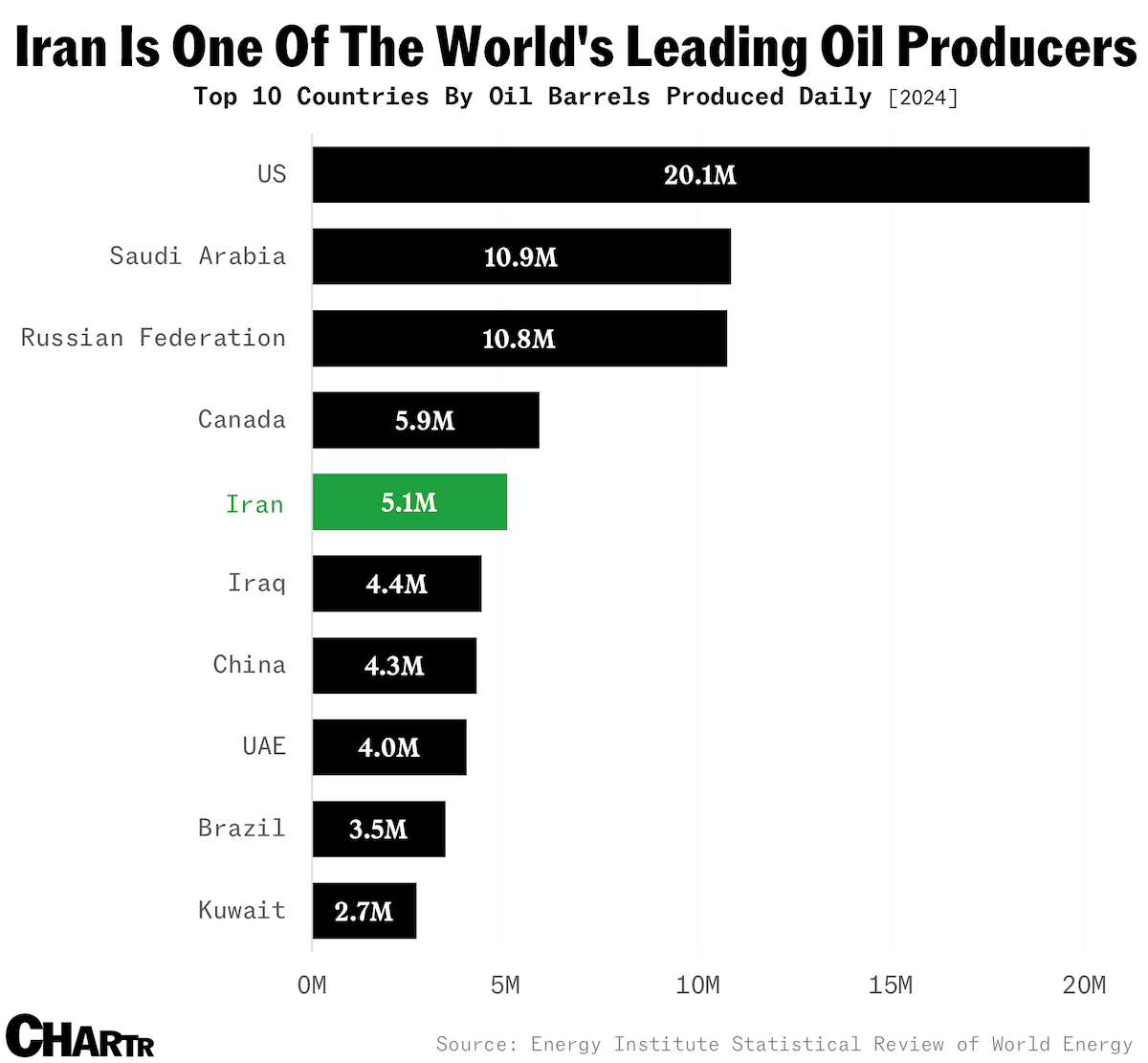
Iran is the fifth-largest oil-producing nation in the world, 2024 Energy Institute data shows, pumping out just over 5 million barrels per day. Incidentally, energy giant Exxon and AI software and defense firm Palantir each finished up.
- Airline stocks also came under pressure, reflecting higher oil prices and flight disruption in the region.
-
Cruise operators Norwegian Cruise Line, Carnival, and Royal Caribbean are also deep in the red amid this upward pressure on fuel costs, with Norwegian’s underwhelming full-year earnings forecast adding to the stock and industry’s woes.
|
“A prolonged conflict stemming from a US desire for regime change could ensure the current episode looks different to what we’ve seen since 2023,” Viresh Kanabar, an investment strategist at Macro Hive, wrote in a note on Saturday afternoon. “Namely, that prices rise further for longer rather than falling after the fact.” |
|
|
Perhaps more important, however, is that Iran borders the Strait of Hormuz — an important choke point for global energy flows, with around 20% of global petroleum liquids consumption flowing through it in any given year. Hence, oil is likely to be the asset most sensitive to news regarding this conflict. The Islamic Revolutionary Guard Corps has said that the Strait of Hormuz is closed, and threatened to set ships that attempt to pass ablaze.
|
|
|
When Snapchat’s “stories” concept became wildly popular, it wasn’t long before Instagram had the same feature... with the same name. After Elon Musk bought Twitter, Meta was quick to push out Threads, its text-based alternative. And when a new challenge emerged from the then Chinese-owned TikTok, Instagram replied with Reels, its own vertical feed, in August 2020. Now, more than five years later, it’s fair to say that Meta seems to have pulled it off again.
|
|
|
|