Lumina Foundation is working to increase the share of adults in the U.S. labor force with college degrees or other credentials of value leading to economic prosperity.
For 30 years, colleges have relied on the Learning Management System as a key portal for professors and students to teach and learn. It's a tool that has helped colleges adapt to online learning and bring digital tools to classroom teaching. But generative artificial intelligence seems poised to disrupt the LMS. And it’s unclear whether the LMS will change—or be replaced altogether.
In this interview, Matthew Pittinsky, an education technology pioneer and co-founder of Blackboard, talks about whether AI will finally force the LMS to evolve.
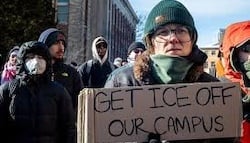
"Cho" hasn’t had the freshman year she expected at the University of Minnesota-Twin Cities. Afraid to leave home during the federal immigration crackdown, the Somali American student spent weeks mostly attending classes online. When she did go to campus, the environment felt emptier. Cho said she noticed far fewer Hispanic and Somali students in particular. Meanwhile, college leaders say they witnessed decreased attendance and enrollment because of the disruptions.
What happened in Minnesota this semester demonstrates how President Donald Trump’s immigration-enforcement surge can ripple far beyond detention centers and border crossings and onto college campuses.
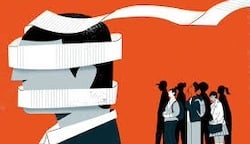
In an escalation of higher education’s culture wars, several public universities in Texas are now restricting what professors can teach about hot-button topics. At Texas A&M University, a system-wide crackdown on courses related to “race and gender ideology” is well underway. Courses on religion, culture, and even readings from Plato have even been singled out for scrutiny or elimination.
All of this action is happening at the behest of Texas A&M’s politically appointed Board of Regents, whose members say they’re concerned about professors indoctrinating students with liberal ideas. But what really happens at a university when censorship becomes policy?
Just over a year ago, the U.S. Department of Education abandoned key oversight of the companies that run the federal student loan program, according to a new report from the U.S. Government Accountability Office.
GAO investigators found that, in February 2025, the Office of Federal Student Aid stopped reviewing the accuracy of loan servicers' records. The FSA also ceased reviewing call recordings with borrowers to ensure they were receiving accurate information. Without this oversight, the report warns, borrowers could be placed in the wrong loan repayment status, billed for incorrect amounts, and more.
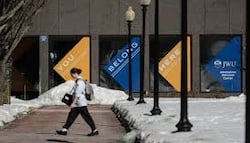
Quinn McDonald planned to spend the typical four years working toward a bachelor’s degree in criminal justice. Then he heard about a program at Johnson & Wales University where he could get the same degree in three.
Experts say that trimming down four-year bachelor’s degrees to fit within three years has prompted a complete rethinking of the purpose of a college education. Now, more universities and colleges are asking themselves, “What are we doing, why are we doing it, and what do students really need?”
By joining the "Student Voices Informing Practice in Noncredit Workforce Education" initiative, 15 community colleges have come together to close the gap between classroom instruction and national policy. Under the direction of the National Council for Workforce Education and Rutgers University's Education and Employment Research Center, the project seeks to better understand the viewpoints and experiences of community college students enrolled in noncredit workforce programs and to enhance the knowledge of the faculty and staff who carry out these initiatives.
Project leaders say that by "opening the black box" of noncredit student data, they hope to build a future where short-term vocational training is no longer siloed but treated as a core pillar of the American higher education system.