|
|
|
|
Good morning. We’ve talked about how artificial intelligence is changing the hiring process, but what about the job candidates? In a tough job market, learning how to effectively use AI might give you a leg up. That upskilling is in focus today, along with Canada’s second chance in LNG. |
|
|
|
|
|
|
|
|
|
|
|
|
|
|
|
|
Energy: Oil markets surged again yesterday after Iran’s new leader vowed that the Strait of Hormuz, a key global shipping route in the Persian Gulf, will remain closed |
|
|
|
|
Telecom: Telus is investigating a cybersecurity incident related to its recently reacquired technology business line, involving unauthorized access by a criminal hacking and extortion group |
|
|
|
|
|
|
|
|
|
|
|
|
|
|
|
|
|
|
|
|
|
Employers are increasingly using artificial intelligence to help screen candidates, a shift that is changing how Canadians apply for jobs. GETTY IMAGES
|
|
|
|
|
|
|
|
|
|
|
|
|
|
|
|
|
Hi, it’s Meera Raman, The Globe’s retirement and financial planning reporter. And if you’re feeling a little uneasy about what artificial intelligence might mean for your career, you are very much not alone. |
|
|
|
|
I started thinking about this while reporting a story on young Canadians trying to get ahead in one of the toughest job markets in decades. Again and again, I heard the same thing: AI isn’t some far-off concept they can afford to ignore. It’s already shaping who gets hired, what skills matter and what it now takes to stand out. |
|
|
|
|
|
|
|
|
Take Zayan Sheikh, a 21-year-old UBC student who decided that if employers were starting to expect AI skills, he’d better build them now. He got hands-on experience helping create generative AI tools through a university program, and told me that many job postings already favour candidates with cloud computing and generative AI experience. What struck me most about our conversation was how practical his approach was. He wasn’t trying to become the next AI founder. He was trying to become employable. |
|
|
|
|
|
|
|
|
|
University of British Columbia student Zayan Sheikh on campus in Vancouver, March 5. Jennifer Gauthier/The Globe and Mail
|
|
|
|
|
And that seems to be where the labour market is heading. My colleague Vanmala Subramaniam recently reported that major employers in tech and finance increasingly expect new hires to be AI literate,
with banks such as BMO and CIBC and companies such as Wealthsimple rapidly integrating these tools into day-to-day work. In another story, she found that some major Canadian companies are already using AI to boost sales and productivity without adding headcount, and in some cases, while reducing it. |
|
|
|
|
That’s part of what makes this moment so unsettling, especially for younger workers. It’s not just that AI may change jobs someday. It’s that it may already be shifting what entry-level work looks like, with tasks that once helped people get their foot in the door increasingly being handled by AI tools. |
|
|
|
|
Unions are already preparing for what this could mean for hiring, monitoring and protecting job security in Canadian workplaces, including codifying language around AI and layoffs into collective agreements. |
|
|
|
|
The upshot is not that everyone needs to panic and go get a master’s degree in artificial intelligence. |
|
|
|
|
In fact, because of how fast the technology changes, experts caution young job seekers against taking endless AI courses. It can be helpful to choose a few courses that offer certifications, since they provide a recognizable credential that employers can evaluate. |
|
|
|
|
In my reporting, experts made a much more grounded point: For most people, the real goal is to understand the basics, get comfortable using the tools and learn how to apply them alongside whatever field they’re already in. |
|
|
|
|
That may be the new career insurance policy: Becoming someone who knows how to work with AI. Because if you don’t, you may fall behind. |
|
|
|
|
Callout
Are you a recent grad whose job has been affected by AI? A student wondering what to study? If you have AI job worries, we want to hear them. Click here to leave your comments, which could be included in our Stress Test podcast. |
|
|
|
|
|
|
|
|
|
|
|
Is it different this time? |
|
|
|
|
|
|
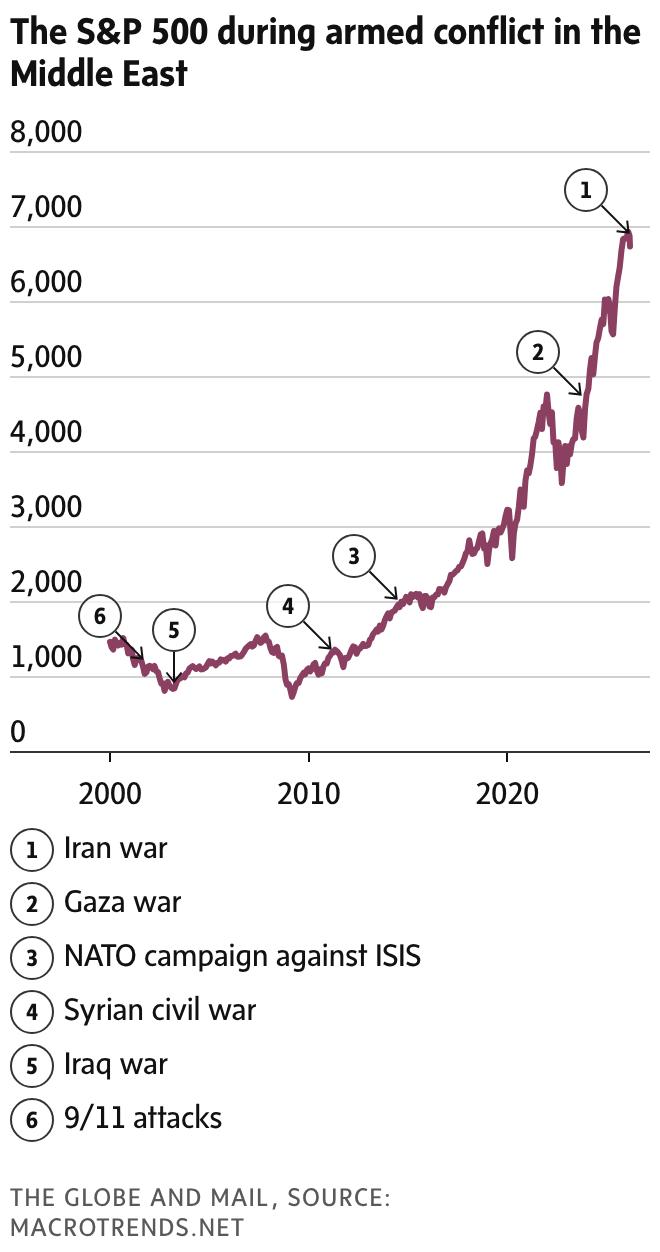
Sadly war is the norm in the world, not the exception, write Kristy Shen and Bryce Leung, authors of Quit Like a Millionaire. But what should investors do right now
? Rather than rush into cash, Shen and Leung say to make sure equity allocations are spread around the world, including the United States, Canada and international stock markets, and if you can afford it, buying more as stocks dip. |
|
|
|
|
|
|