|
|
|
|
|
|
|
|
|
The Home of the Week is a country retreat not too far afield. MOHR Media
|
|
|
|
|
This week: Canada’s baby recession could transform our communities, and Ottawa-Musqueam deal ignites concerns for private property rights in B.C. Plus, a surprising sign of resilience in the housing market – for now – and one property worth a look. |
|
|
|
|
|
|
|
|
|
|
|
|
|
|
|
|
|
|
|
|
|
|
|
|
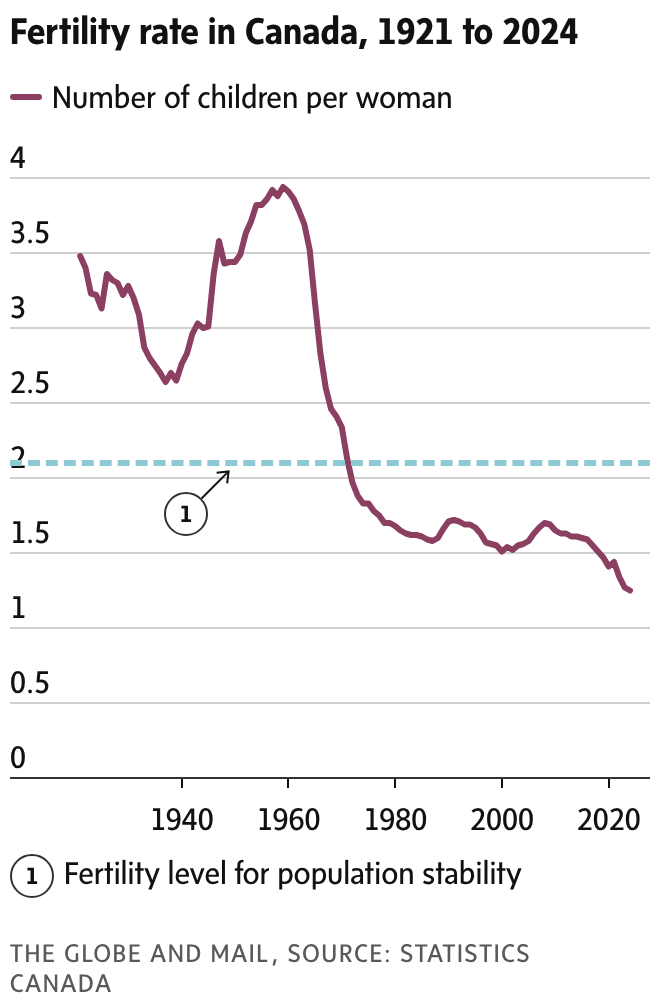
A sharp decline in fertility rates is already changing the face and fabric of Canada’s cities. Every major city has seen a decline in fertility rates over the past five years, with many falling to record new lows, according to data obtained by The Globe and Mail. |
|
|
|
|
|
|
The national average’s drop from 1.60 in 2015 to 1.25 in 2025 – well below the 2.1 demographers say is needed to sustain Canada’s population – is “astounding,” Don Kerr, a demographer at King’s University College at Western University, told Ann Hui and Yang Sun. “We’re losing out on something, losing the vitality of our cities as they continue to age.” |
|
|
|
|
And Kerr says that while there’s no population crisis as immigration helps sustain overall numbers, an older population will have a “rather fundamental and profound” impact. Aging cities could result in fewer schools and parks and community centres, smaller families that create smaller family networks and fewer young people for older adults to rely on, he said. Ann and Yang break down the data
and what a declining fertility rate means for the health of Canada’s people, cities and economy. |
|
|
|
|
|
|
|
|
|
|
|
|
|
|
|
|
|
|
|
|
|
|
|
|
|
Musqueam traditional territory affirmed in a recent deal with Ottawa covers much of what is now Vancouver and the Lower Mainland. DARRYL DYCK/The Canadian Press
|
|
|
|
|
Private property isn’t on the table in a recent deal between the federal government and Musqueam First Nation, Crown-Indigenous Relations Minister Rebecca Alty told Emily Haws and other media on Thursday, as the agreement ignites further concerns about how property rights intersect with Indigenous land claims in B.C. |
|
|
|
|
The deal,
announced in a little-noticed news release on Feb. 20, acknowledges the existence of constitutionally protected Aboriginal title and creates a framework to implement rights and title in Musqueam traditional territory. As Justine Hunter reports, that spans half of the Lower Mainland and much of what is now Vancouver. |
|
|
|
|
Where title will be recognized and which rights will be affirmed still needs to be negotiated, but the agreement has already sparked criticism
and introduced additional confusion on what has been an issue of acute public interest since the B.C. Supreme Court’s explosive Cowichan decision in August. The ruling in a separate case stated that Aboriginal title is a “prior and senior right” to land, over and above the “fee simple” title that private landholders have. Read more about the Musqueam deal, the Cowichan decision, and what they could mean for cities and property owners in B.C. |
|
|
|
|
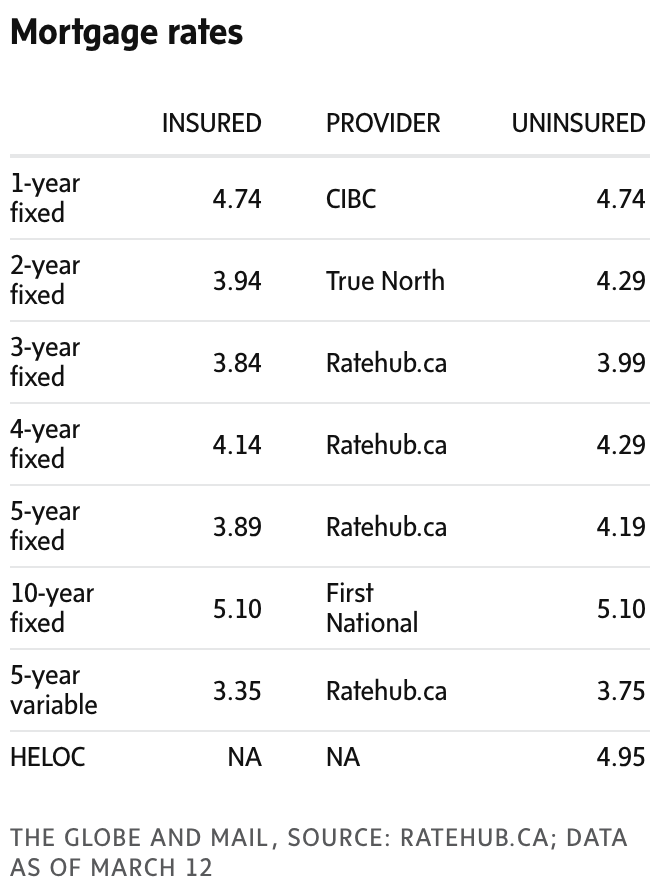
This week’s lowest fixed and variable mortgage rates in Canada |
|
|
|
|
|
|
|
|
|
|
|
|
|
|
|
|
|
|
|
|
|
|
|
|
|
|
|
|
The number of homeowners who miss mortgage payments is one of the clearest indicators of housing market stress – and one that, surprisingly, hasn’t increased in Canada lately. The metric is watched closely because a rising mortgage arrears rate – one of the earliest warning signs of the 2008 financial crisis – often signals broader financial strain. |
|
|
|
|
|
|
|
|
|
|
|
|
However, while the latest data suggests
no signs of |