A fresh take on culture, fashion, cities and the way we live – from the desks of Monocle’s editors and bureaux chiefs.
|
Saturday 14/3/26
|

|
|
London
Paris
Zürich
Milan
Bangkok
Tokyo
Toronto
|
|
|
|

Getting the show on the road
We’re prepping for the Academy Awards this weekend by taking in three Oscar-nominated shorts. Then we pick up some craft souvenirs at Narita International Airport, take umbrage at iPad menus and run wild in Nike x Jacquemus Moon shoes. Taking up the prime real estate is Monocle’s editor in chief, Andrew Tuck.
|
|
We take the mood at Mipim as interviewees vie for real estate on Monocle Radio
By Andrew Tuck
|

|
This week Monocle has been at Mipim, the world’s largest real-estate fair and urban festival, which takes place in Cannes. Inside the Palais des Festivals, the main exhibition space, we built a Monocle Radio studio, hosted a party and drank a lot of coffee. The interviews that we gathered are destined for our podcasts and the magazine. But here are a few other takes on a week in the south of France.
Don’t get too smug
Monocle will be 20 years old next year. We’ve come a long way over that time and at Mipim numerous readers and partners sought us out at the Monocle Radio pavilion to share their appreciation. But sometimes, even after all this time and even when you are standing under a large “Monocle” sign, there can still be some explaining to do. “How long have you worked at Monaco Magazine,” one nice man asks. “It’s not Monaco Magazine, it’s Monocle,” I say, carefully emphasising every syllable to avoid any more confusion. I point at our lovely signage to stress the difference. He computes the new information. “But do you live in Monte Carlo?” he asks, refusing to believe that he’s got this totally wrong. I give him a copy of the magazine. At least he didn’t ask if I worked at Manacle Magazine, the trade title for those employed in the incarceration industry.
|
Some people have it figured out
In 1987, Kjetil Thorsen co-founded Snøhetta in Oslo. Today this multi-disciplinary design and architecture practice has more than 300 staff, allowing it to take on big projects around the world but still hold on to a studio ethos. Thorsen came in for an interview to talk about his work on a project in Turkey where, as always, he is being sensitive about sustainability. He’s a mountain of a man, gives a fantastic handshake and talks in a considered tone that would make him ordering toast sound enthralling and important. I could have spoken to him all day because he’s also figured out what he enjoys about his work, where the red lines are and what society needs from architecture. He’s a walking wisdom machine. I have added a note to my to-do list: “Find inner sage, practice handshake”.
Guest guessing
Honestly, I do listen to what they are saying with intent but when you are stood at the mics, your guest just a couple of feet in front of you, you do find yourself scanning their outfits, noting their body language (you can tell in seconds who will immediately engage with you, who is nervous or fears saying a single word that might play out badly with their electorate). It usually works out. The man who undoubtedly rocked the sharpest look was Manfredi Catella, CEO and chairman of real-estate company Coima. It was a wide-shouldered affair that had an air of a 1980s Armani number. The tie, the shirt, the slick grey hair – all so right. You’d buy anything from him. So that’s another one for the to-do list: “Buy an adventurous suit.”
Guest booking is an art form
And that’s why, at Mipim, I leave running the interview schedule to Carlota Rebelo, Monocle Radio’s executive producer. Everyone knows that she’s the gatekeeper and is not to be messed with. And anyway, the only person to corner me about getting someone on the schedule was a gentleman who wanted to know whether we’d like an interview with Miss Poland, who was in town to promote her nation’s real-estate offering. Fearing muddling Carlota’s planning, I declined. In the end, Carlota managed to secure 42 interviews with city leaders, famous architects and powerful developers. But she did come up short on the beauty queens.
That’s a wrap
By the time it came to pack up our stand (to be honest, that’s also not me but our wonderful engineer David Stevens), we had met players in the industry from Saudi Arabia and Florida, and been briefed on projects, politics and the players to watch. And I had also set one man right about my lack of Monaco media connections.
To read more columns by Andrew Tuck, click here. And to hear from just some of the people that we met at Mipim, listen to this week’s episode of ‘The Urbanist’ – the first of a two-part special from Cannes.
|
|
Edo Tokyo Kirari  MONOCLE MONOCLE
|
|
culture cuts: film
Three Oscar-nominated shorts to watch before the 2026 Academy Awards
With the 98th Academy Awards taking place tomorrow, you’re now up against the clock to catch up on watching the nominated films (writes Sophie Monaghan-Coombs). It might be time to pivot to the short-films list to tick off a few before the ceremony. These titles are often overlooked during awards season but they are complex with something to say. Here’s our pick of three of the best.
‘Two People Exchanging Saliva’
Natalie Musteata and Alexandre Singh
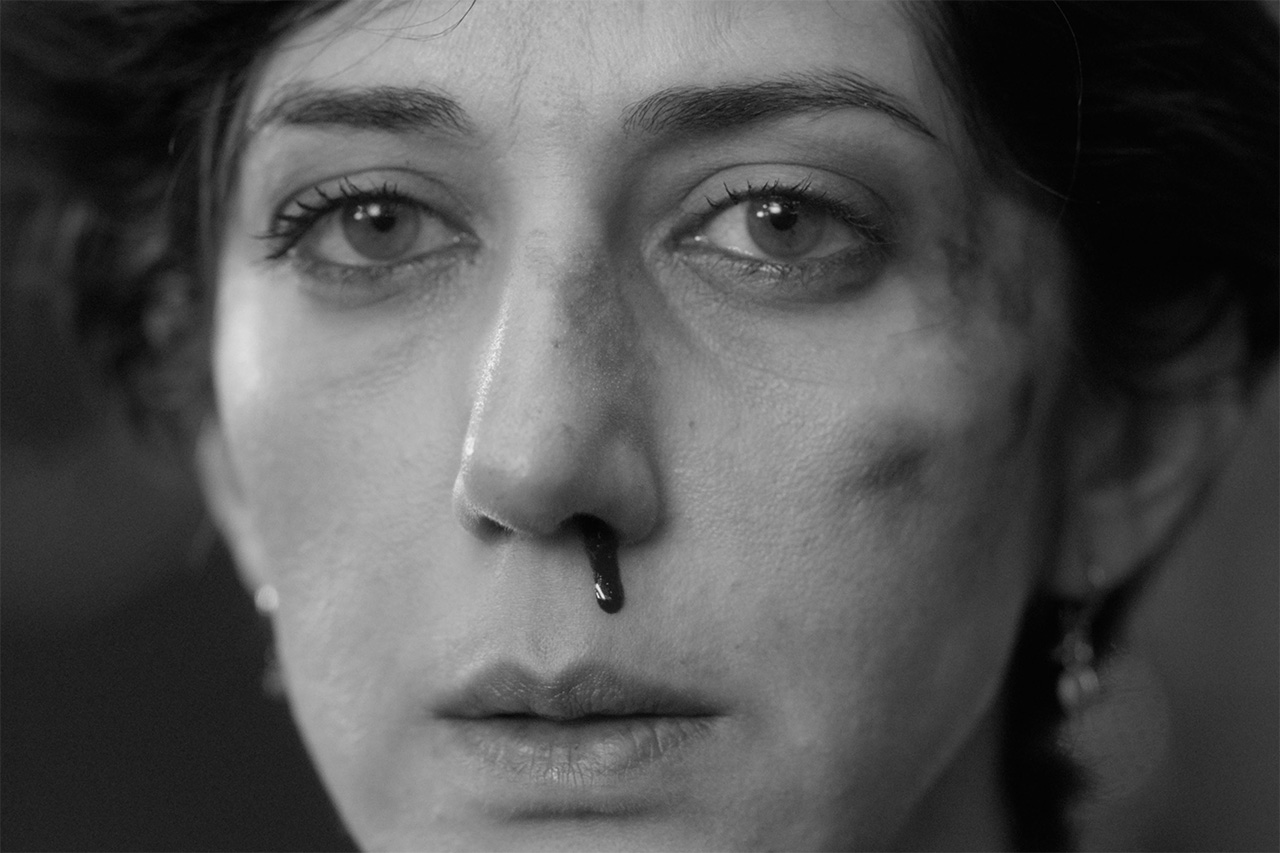
In a dystopian future, kissing has been banned and all currencies replaced by slaps – a nice dress will cost you multiple strikes to the face. Set in a department store, Two People Exchanging Saliva follows the encounter between a wealthy shopper and sales assistant. This black and white film is decidedly strange – but one you won’t be able to look away from.
‘Two People Exchanging Saliva’ is available to watch on Youtube.
|
‘Forevergreen’
Nathan Engelhardt and Jeremy Spears
Nominated for Best Animated Short Film, Forevergreen tells the story of an orphaned bear cub and its relationship with an anthropomorphic, avuncular tree. Gentle with just the right amount of peril, this beautiful handcrafted animation is a poignant meditation on our impact on the environment.
‘Forevergreen’ is available to watch on Youtube.
‘All the Empty Rooms’
Joshua Seftel
Journalist Steve Hartman made his name covering uplifting human interest stories on CBS. This documentary takes a different direction as it follows Hartman and photographer Lou Bopp as they travel across the US to meet the parents of children killed in school shootings and to photograph their now empty bedrooms. SpongeBob Squarepants toys, outfits left out for school dances and detritus under the bed are transformed into symbols of the country’s gun violence in this difficult, important watch.
‘All the Empty Rooms’ is available to watch on Netflix.
Further reading?
– The Academy Award for Achievement in Casting is a brand new category this year. Read our interview with nominee Nina Gold here
– We sit down with Joachim Trier, director of ‘Sentimental Value’, to discuss the importance of taking art seriously
|
|
retail update: Airport souvenirs
Going home empty-handed? Visit Narita airport’s one-stop-shop for craft souvenirs
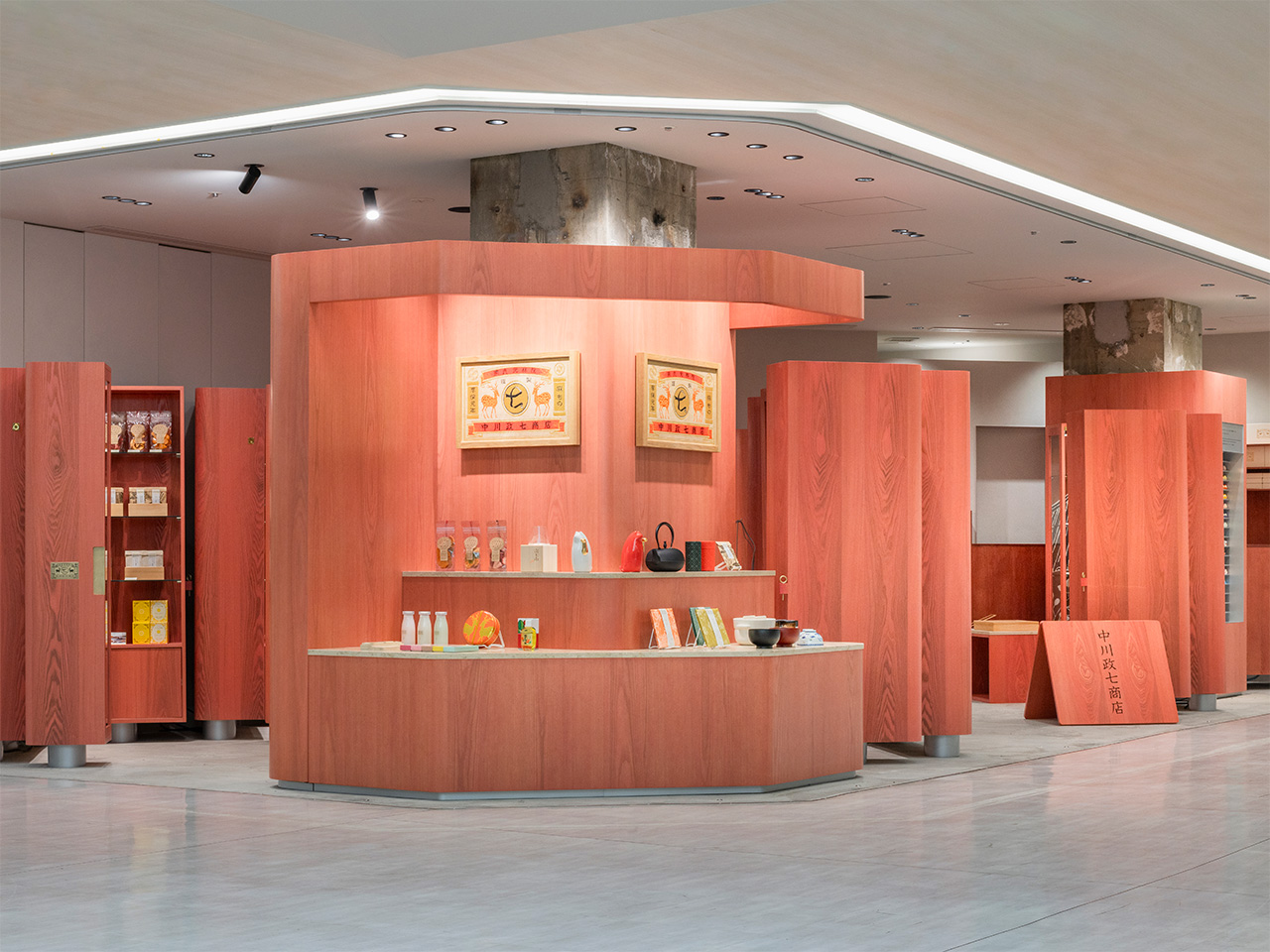
Airport retail can easily overwhelm the senses (writes Ben Davis). Yet Nakagawa Masashichi Shoten’s space at Narita International cuts through the noise with a considered presentation of regional crafts. “Unlike a tourist area where people explicitly shop for souvenirs, most visitors to this part of the terminal are simply passing time before check-in,” says project lead Kiyotaka Yoshioka. “Our challenge was to catch their eye.”
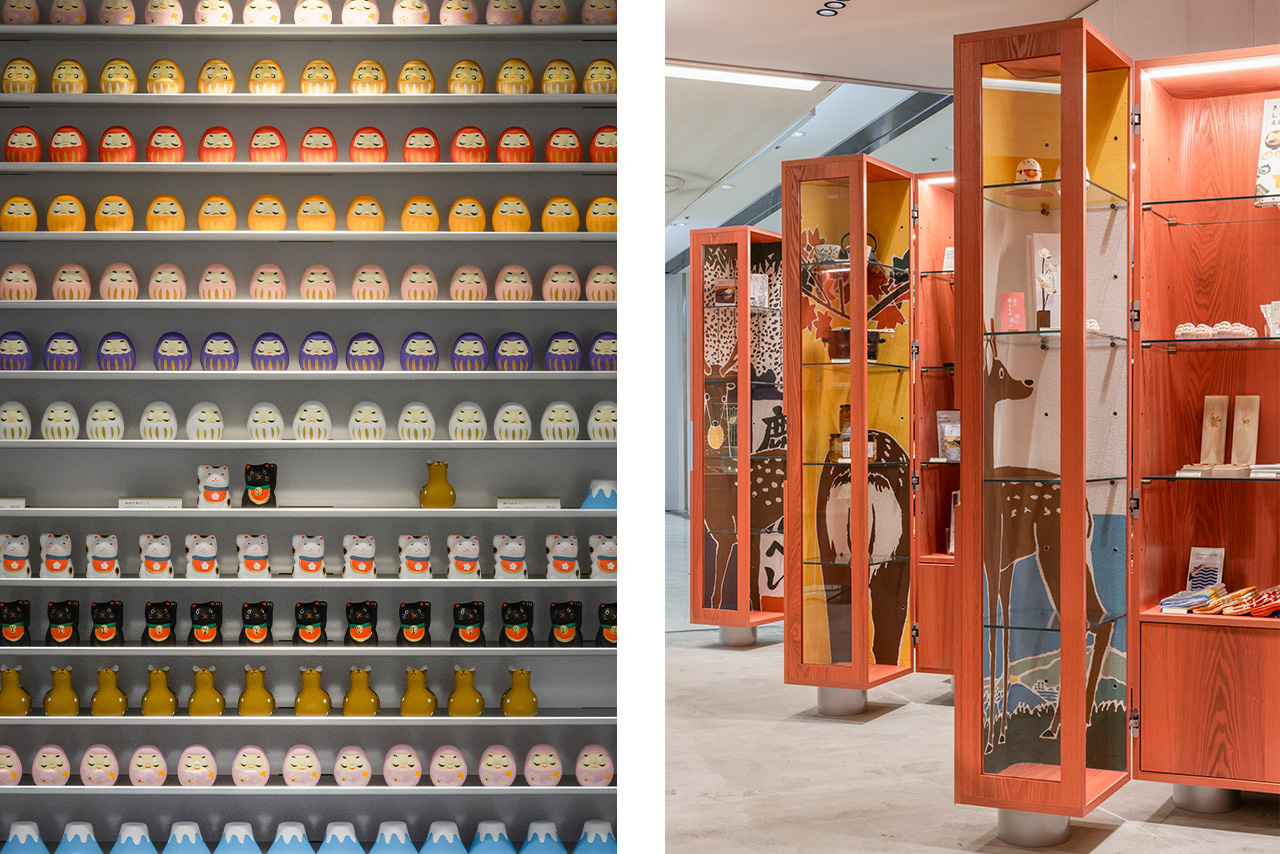
Two key segments were identified: souvenirs for visitors heading home and souvenirs for Japanese jet-setters venturing abroad. Drawing on its network of 800-plus factories and workshops throughout the country, Yoshioka and his team built a line-up of original pieces, beloved favourites and Japan-exclusive releases. Among the 600-strong items on offer are Echizen washi stickers inspired by Edo-period travellers and a showcase filled with daruma dolls and other auspicious items.
The space was inspired by travelling trunk shows and designed by Yosuke Hayashi of Tokyo-based studio 14SD. Spread throughout the 48 sq m space are movable units, made from Japanese ash finished in a rich red hue, while artist Keigo Kamide’s textile works depict the wild deer of Nara – a nod to the longstanding retailer’s roots in the ancient capital. “Through these encounters, we hope to inspire people to visit the local places.”
nakagawa-masashichi.jp
|
|
|
SPONSORED BY Edo Tokyo Kirari
|
|
|
|
|
|
how we live: iPad menus
If it isn’t broken, why fix it? It’s time to back analogue hospitality
There are contesting claims for the title of first restaurant to write its offerings on paper and slapping it on tables so that diners could take their pick (writes Andrew Mueller). What we do know is that cafés and restaurants have operated like this for ages and it works fine.
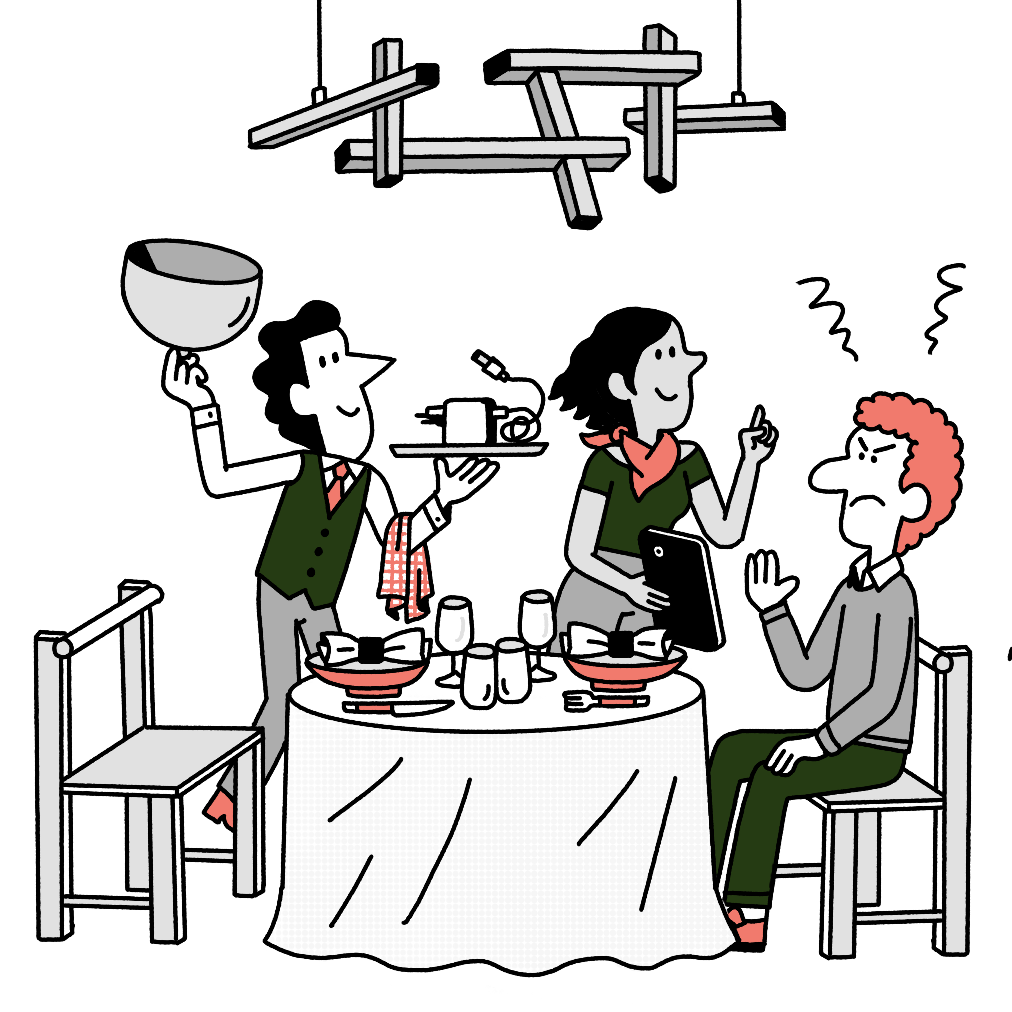
In a Milan restaurant recently, I was bemused to be presented not with a printed menu, as centuries of prospective diners might have expected, but an iPad. I was given to understand that I should scroll through pictures of the available dishes and point to the ones I wanted. Not enticed by the greasy, fingerprint-smeared screen and annoyed by the pointless obstacle I bid them good evening.
|
Advances in technology are, by and large, good. It is, for example, preferable to write reactionary complaints about irritating modern fripperies on a laptop and file them by email than to pound them out on a typewriter and send a copy by fax or post (I’ve been at this long enough to know). But hospitality, as a field, struggles more than most in knowing when to stop. The bill of fare on a digital tablet is another step along a continuum embracing QR codes instead of room-service menus; chatbots instead of living, breathing concierges; and lighting control panels in hotel rooms that are more complicated than the flight deck of a Concorde instead of a goddamn switch.
Not one of these enhancements improves the experience of the customer – they instead increase the likelihood that they won’t return. After I left the restaurant, I stepped into a pizzeria around the corner. They brought me a menu, I chose what I wanted and they brought me what I ordered. Dining out is not complicated and shouldn’t be made so.
|
|
| | |