The United States' war with Iran is entering its third week, but Congress has yet to publicly test the Trump administration’s case for the conflict. Plus, missing immigration data and Tuesday's Illinois elections. |
|
|
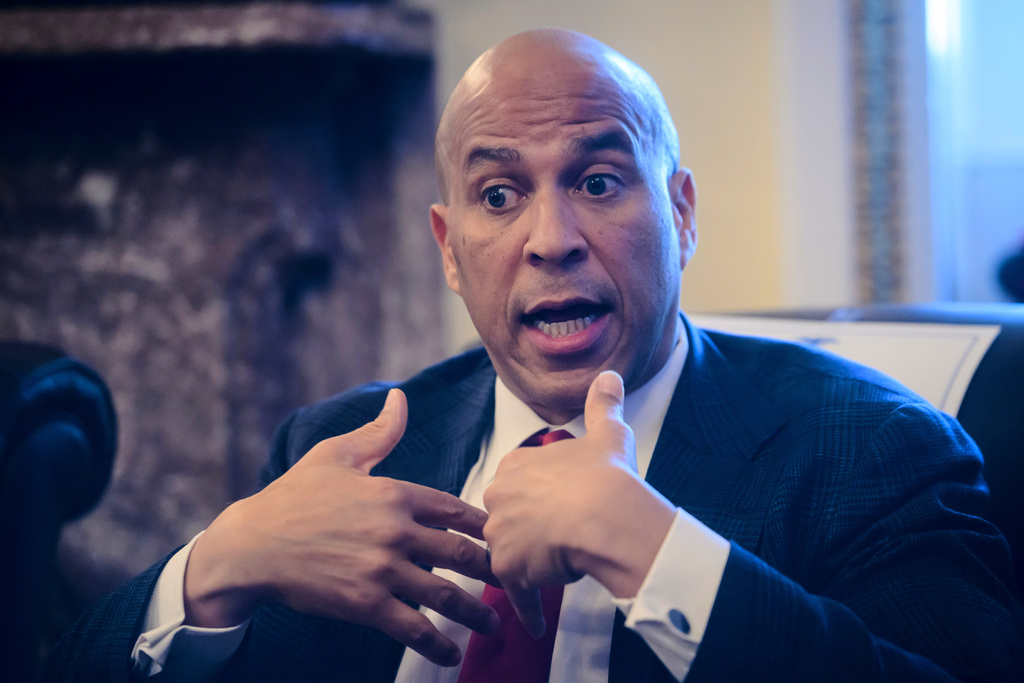
Sen. Cory Booker, D-N.J., speaks during a press briefing on the Iran war powers resolution at the Capitol, Monday, March 9, 2026, in Washington. (AP Photo/Rod Lamkey, Jr.) |
Republicans resist calls for Iran war hearings, creating a new standoff with Democrats — By Stephen Groves
Republicans in Congress have so far side-stepped public debate over the war, even as Senate Democrats reach for every tool at their disposal to demand hearings with Trump administration officials. Increasingly frustrated, Democrats are threatening this week to force a series of votes on the war, hoping that the effort to gum up the Senate's voting schedule will prod Republicans to action.
The role of Congress in the deliberations is an unsettled question with enormous stakes, given that lawmakers have the power to shape the trajectory of the conflict as it grows in cost and casualties. So far, 13 military members have been killed and billions of dollars have been spent, but President Donald Trump has not sought congressional approval for attacking Iran. As the 17th day of the conflict dawned Monday, Republican lawmakers remained mostly resistant to the idea of quickly forcing public testimony before Congress.
Read more of Groves' reporting on Congress' partisan divide on Iran. |
|
|
From the bureau: Immigration data gap with Rebecca Santana |
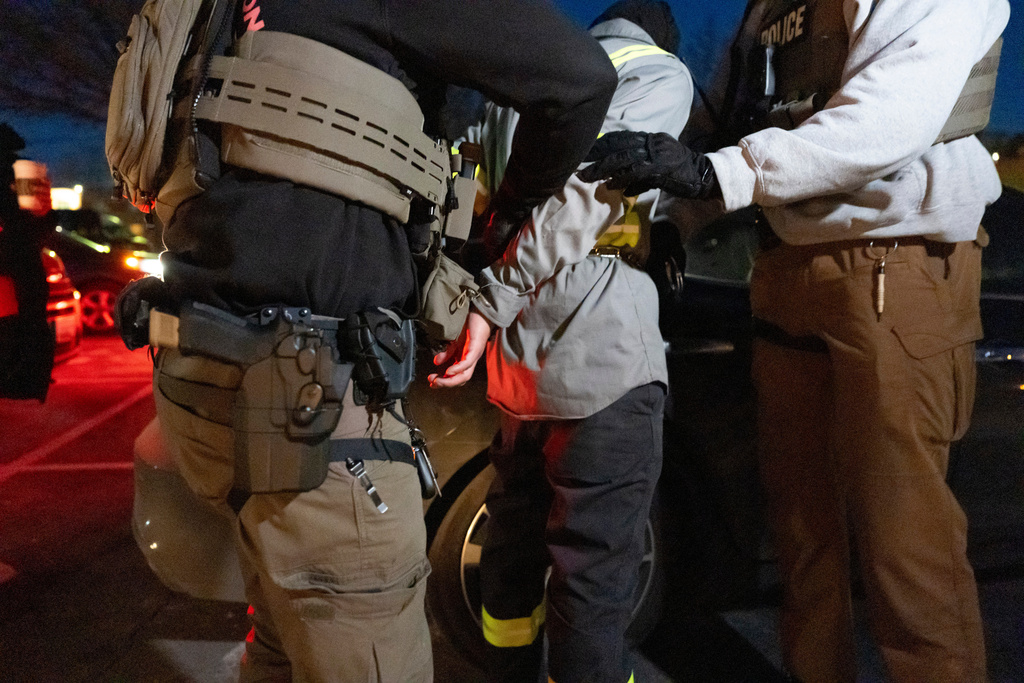
U.S. Immigration and Customs Enforcement officers detain a person, Jan. 27, 2025, in Silver Spring, Md. (AP Photo/Alex Brandon, File) |
The Trump administration often describes itself as the most transparent in history, but immigration experts and analysts say it’s actually gotten harder to find some data than it used to be. Here’s what AP Washington reporter REBECCA SANTANA thinks you should know about what's going on with immigration data: |
Here's what Santana thinks you should know |
- The Office of Homeland Security Statistics pulls in data from across agencies in DHS to give a complete picture of what’s going with immigration enforcement across the whole department. That includes deep dive reports but also a monthly report that looks at immigration removals, arrests and detentions. But key enforcement metrics on its website, including those monthly reports, have not been updated since early last year.
- ICE used to have a dashboard with data about immigration arrests, detention, the use of ankle monitors and other data points. That hasn’t been updated since January of last year, and the department’s end-of-year fiscal report still hasn’t been published.
-
With those data points halted, reporters, researchers, advocates, lawyers and the general public have turned to other sources of information. One of them is the Deportation Data Project which used the Freedom of Information Act to get information about ICE.
|
|
|
AP Elections Spotlight: Illinois state primaries |
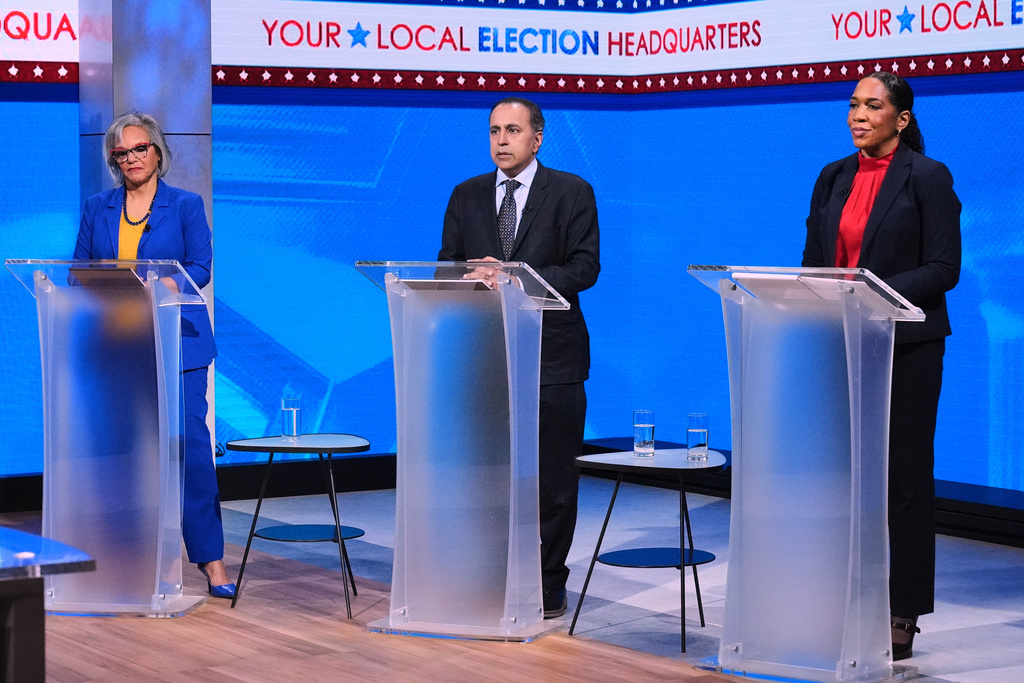
Candidates for the U.S. Senate, U.S. Rep. Robin Kelly, D-Ill., left, U.S. Rep. Raja Krishnamoorthi, D-Ill., center, and Democratic Illinois Lt. Gov. Juliana Stratton participate in a Democratic primary debate in Chicago, Feb. 19, 2026. (AP Photo/Nam Y. Huh, File) |
The big picture: Multiple political storylines converge in Illinois on Tuesday when the state holds primaries shaped by attempted comebacks, the retirement of longtime incumbents and the looming 2028 presidential campaign. Voters will choose nominees for a full slate of offices, including governor, U.S. Senate, U.S. House, the state Legislature and local offices.
Filling Durbin's Senate seat: Topping the ballot is the race to succeed Democratic U.S. Sen. Dick Durbin, who is retiring after five terms. Democratic Rep. Raja Krishnamoorthi dwarfed both fields in fundraising at the end of February, with about $6.6 million in the bank after transferring more than $19 million from his U.S. House campaign account. Former state Republican Party chair Don Tracy was the top fundraiser among Republicans, with about $1.8 million in the bank.
Pritzker's reelect campaign: Democratic Gov. JB Pritzker is unopposed in his bid for renomination. Trump’s return to office in 2025 has heightened Pritzker’s national profile, and the two-term incumbent governor is now among a handful of Democrats dominating speculation about the 2028 Democratic presidential race. In the Republican primary, four candidates look to thwart Pritzker’s reelection, including former state Sen. Darren Bailey, who lost to Pritzker in 2022. The bottom line: The winners of statewide Democratic primaries in Illinois typically have an advantage heading into November, considering Democrats have won recent key statewide general elections with more than 55% of the vote. Read more on Illinois' primaries by Robert Yoon. |
|
|
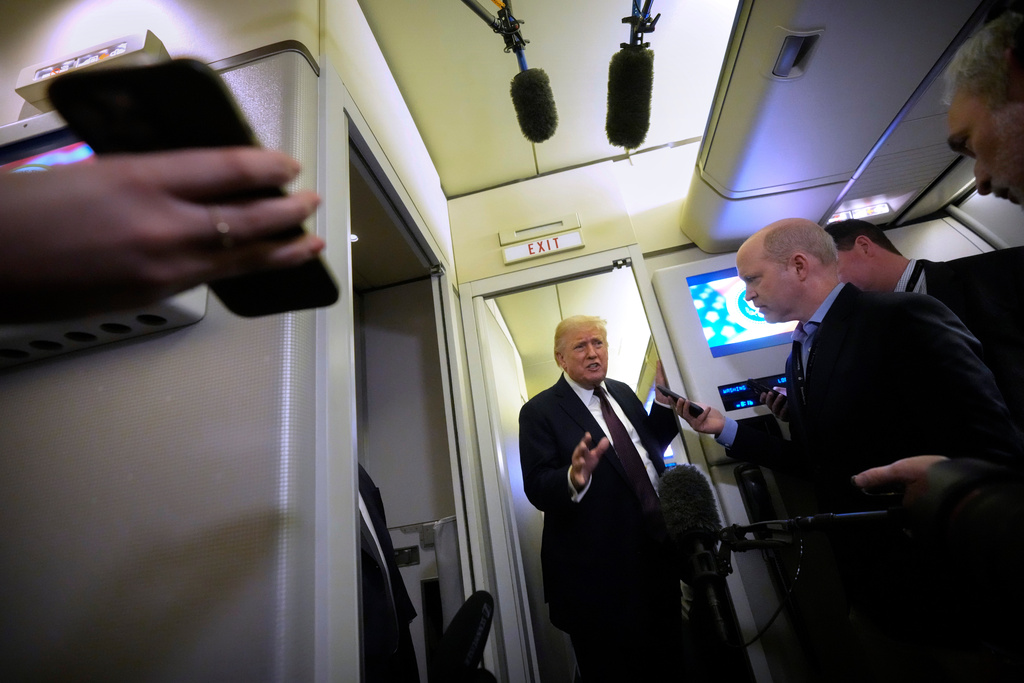
President Donald Trump speaks to reporters aboard Air Force One, Sunday, March 15, 2026, en route from West Palm Beach, Fla. to Joint Base Andrews, Md. (AP Photo/Mark Schiefelbein) |
This weekend, Washington-based photo journalist MARK SCHIEFELBEIN was aboard Air Force One, where Trump held a lengthy gaggle with journalists traveling with him. This is what Schiefelbein had to say about capturing that moment:
"When the President comes back to speak to the press on Air Force One, it is controlled chaos. Often on just a few moments' notice, more than a dozen reporters, photographers, and video crew scramble to cram themselves into the space of a narrow aisle and the adjacent seats. Journalists end up shoulder to shoulder, leaning over seatbacks or even climbing onto seats for a view of the President. It is like a press conference conducted in a closet, but the press corps usually stays professional despite the very tight quarters."
Explore more of Schiefelbein's work here. |
|
|
|