Image

Daily News Brief

April 2, 2026

Welcome to CFR’s Daily News Brief. Today we’re covering Trump’s prime-time speech about the Iran war, as well as...

  • A NASA mission to the moon
  • India’s first nationwide census in more than fifteen years
  • U.S.-Denmark negotiations over Greenland


Top of the Agenda

Trump said the United States plans to attack Iran “extremely hard” over the next two to three weeks in a speech last night that made little mention of diplomacy. It was his first formal address about the Iran war since its start more than a month ago. Yet Trump made no major announcements, instead reiterating recent talking points: core U.S. goals are “nearing completion,” Trump said, giving no assurances about the reopening of the Strait of Hormuz and saying that other countries should “take the lead” on the matter. Iran’s military command responded by vowing to carry out “more crushing, broader, and more destructive” attacks, according to state media. 


Further details from the speech. The president voiced plans to bomb Iran—a nation of more than 90 million—“back to the stone ages.” Trump threatened to strike Iran’s power plants and possibly its oil infrastructure if a deal to end the war is not reached. He also said the United States was surveilling Iran’s nuclear materials and would attack if Iran were to “make a move” toward them, while praising the degradation of Iran’s navy and air force as a result of the war. Global oil prices rose and stocks tumbled in the wake of Trump’s address.


The status of U.S.-Iran diplomacy. Unnamed U.S. and Iranian officials told the New York Times the two countries are exchanging messages, but have not entered formal negotiations over a truce or peace deal. While Trump wrote on social media yesterday that Tehran had requested a ceasefire, Iran denied it. Iranian officials have said they instead seek a broad deal to end the conflict. Iran believes the United States is not serious about diplomacy, according to comments from its foreign ministry spokesperson published on state media.


The status of talks on Hormuz. The United Kingdom is hosting a virtual meeting of some thirty-five countries today to discuss reopening the Strait of Hormuz. For now, ships passing through the strait have done so via negotiations with Tehran; the Philippines said today it had gained permission to transit. Some ships have been required to make payments in Chinese yuan or cryptocurrency in order to get through, Bloomberg reported. 


“In abandoning both military restraint and the strategy of great-power competition, the current Trump administration has pivoted to what it calls ‘flexible realism.’ Anchored in the principle that might makes right, this new approach seems designed to justify the president’s expansive use of coercion…But a penchant for power, unmoored from strategy or a clear definition of the national interest, does not qualify a leader as realist.”

—CFR expert Rebecca Lissner and the Brookings Institution’s Mira Rapp-Hooper, Foreign Affairs


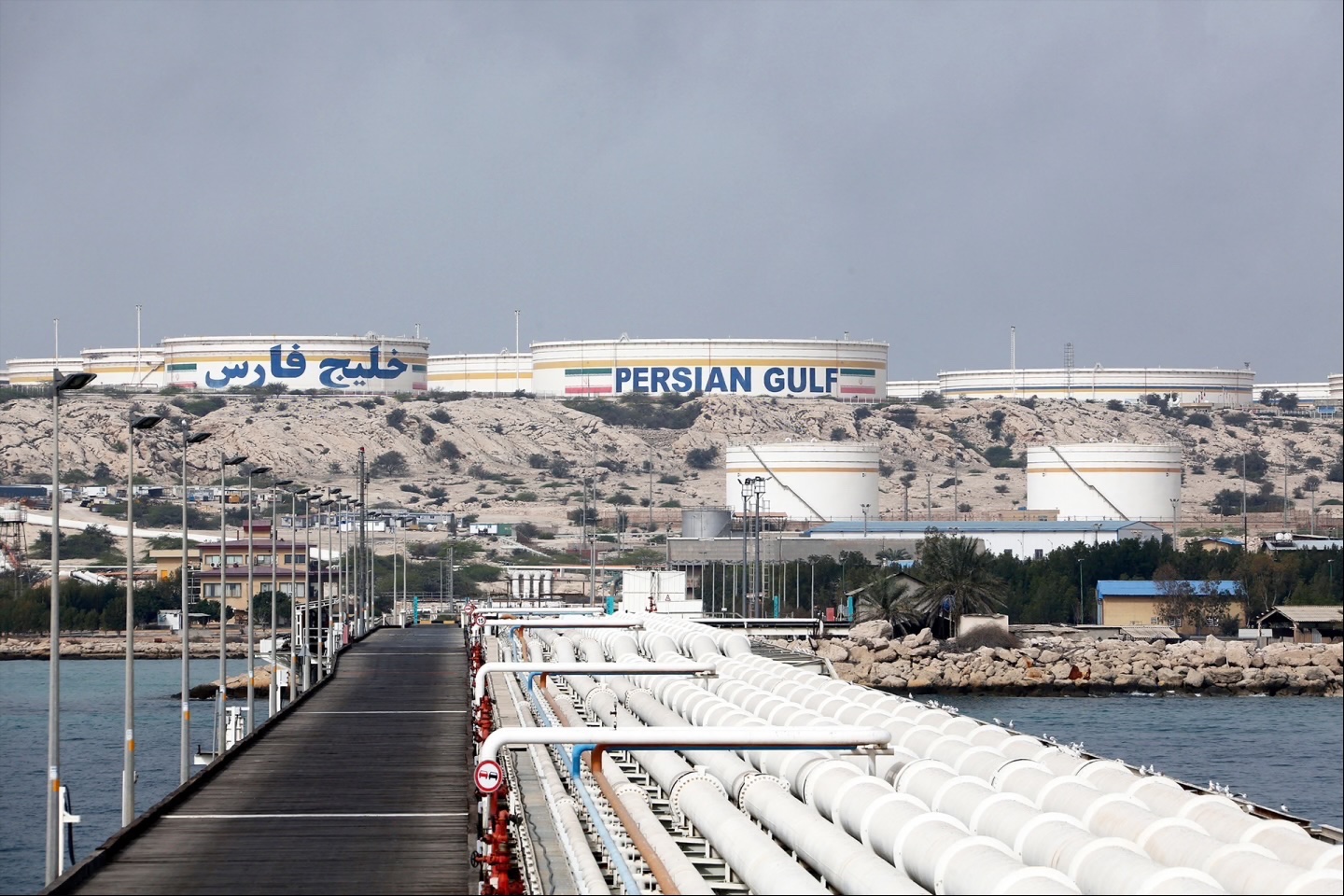
Kharg Island: Iran’s Oil Lifeline and a Tempting U.S. Target

A view of an oil facility on Iran’s Kharg Island, on March 12, 2017.

Atta Kenare/AFP/Getty Images

The small island in the Persian Gulf serves as Iran’s primary oil terminal, handling roughly 90 percent of the country’s crude oil exports, CFR’s Mariel Ferragamo, Will Merrow, and Diana Roy write in this article.


Across the Globe

Around the moon... Three American and one Canadian astronaut lifted off from Florida yesterday on NASA’s Artemis II mission to orbit the moon. It marks the first time in more than fifty years that humans will be in the moon’s vicinity. They are due to orbit the earth twice before heading to the far side of the moon. NASA aims to put humans back on the moon by 2028.


...and under the sun. Indian firm Adani Green Energy announced plans to complete the world’s largest renewable power plant by 2029. The solar plant, located in the western Indian state of Gujarat, will span more than two hundred square miles, equivalent to nearly ten times the size of Manhattan.


Global economic taskforce on war. The International Energy Agency, the International Monetary Fund, and the World Bank said yesterday they will create a group to jointly monitor and recommend responses to the economic shocks related to the Iran war. They noted that the “highly asymmetric” economic fallout of the war was disproportionately affecting energy-importing and low-income countries.


U.S.-Ukraine talks. Kyiv and Washington agreed to fortify an outline for U.S. postwar security guarantees for Ukraine at virtual talks yesterday, Ukrainian President Volodymyr Zelenskyy said. NATO Secretary General Mark Rutte also joined the call. Separately, Zelenskyy proposed an Easter ceasefire, which Russia rejected yesterday.


U.S.-Denmark talks. The United States and Denmark are in talks over U.S. access to three more military bases in Greenland, two of which U.S. forces previously abandoned, the New York Times reported. The director of U.S. Northern Command told lawmakers last month that the talks were progressing well, though the U.S. State Department, Denmark’s foreign ministry, and Greenland’s prime minister’s office did not comment.


Sanctions relief in Venezuela. The United States lifted sanctions on Venezuela’s acting President Delcy Rodríguez yesterday that were imposed in 2018 when the United States accused her of undermining democracy in the country. Trump praised Venezuela’s interim government in his speech last night, calling its leaders “joint-venture partners” of the United States.


India’s census kicks off. Indian authorities began a yearlong process yesterday of collecting data about the size of its population and its socioeconomic status. It is India’s first census in more than fifteen years and will record caste data for the first time in almost a century. Prime Minister Narendra Modi’s party had opposed caste-counting, saying it could increase social divisions, but other political groups advocated for it as a way to track social inequality.


Cook Islands-New Zealand pact. The Cook Islands and New Zealand signed a security declaration today pledging to consult each other on defense matters, reaffirming ties that were strained by the Cook Islands’ partnership deal with China last year. The Polynesian nation is a former New Zealand colony that now self-governs under a free association pact with Wellington. 


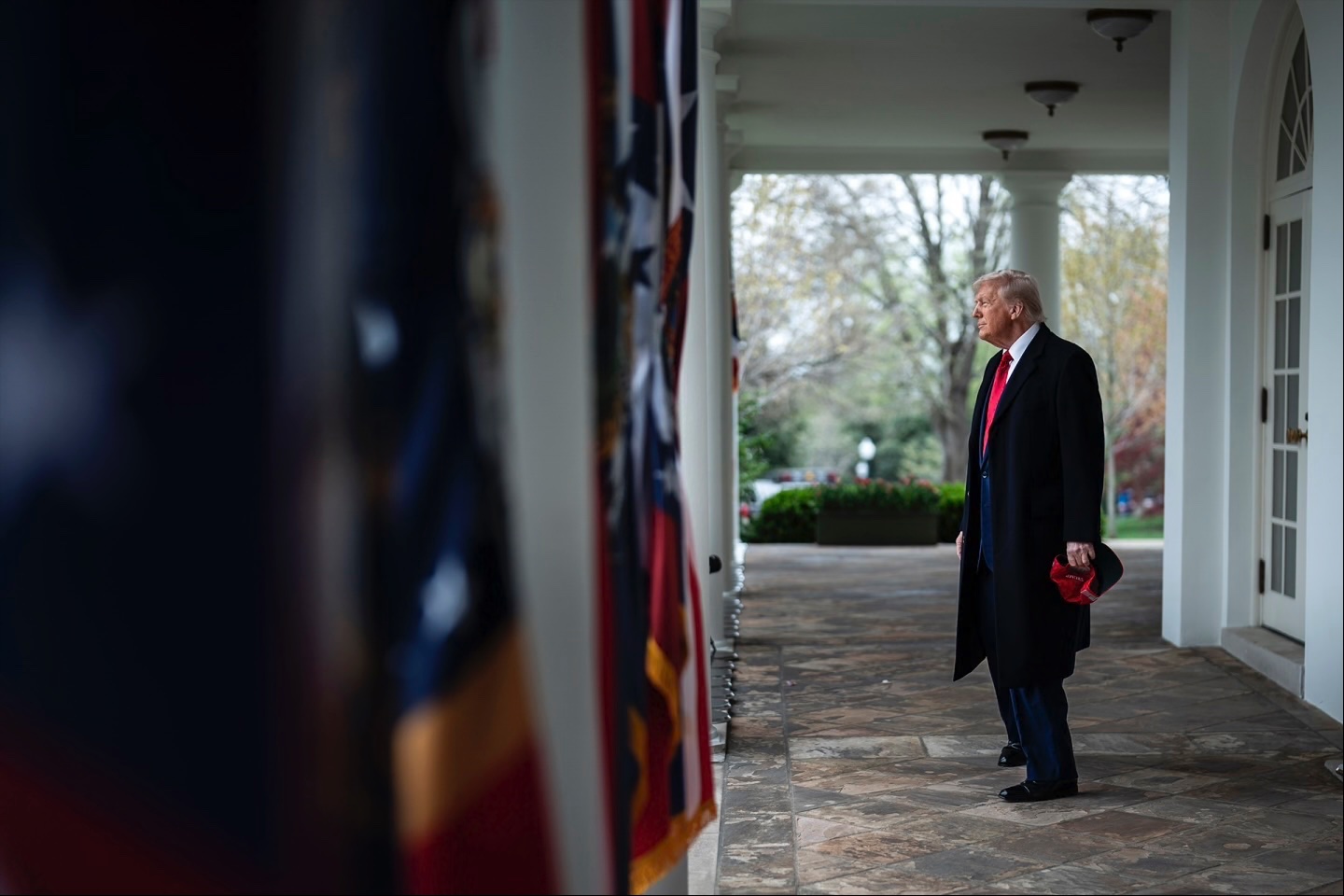
A Year After ‘Liberation Day,’ Counting the Costs 

President Donald Trump walks out to speak in the Rose Garden at the White House on April 02, 2025, Washington, DC.

Jabin Botsford/Washington Post/Getty Images

Five CFR experts weigh the effects of Trump’s sweeping tariffs on U.S. consumers, businesses, and credibility, and analyze the uncertainty ahead for the global economy and supply chains in this article.


What’s Next

  • Today, Macron begins a visit to South Korea.

  • Today, the UN Security Council holds consultations with Gulf Cooperation Council and League of Arab States members in New York.

  • Tomorrow, Russia hosts an economic forum with officials from post-Soviet states in Moscow.


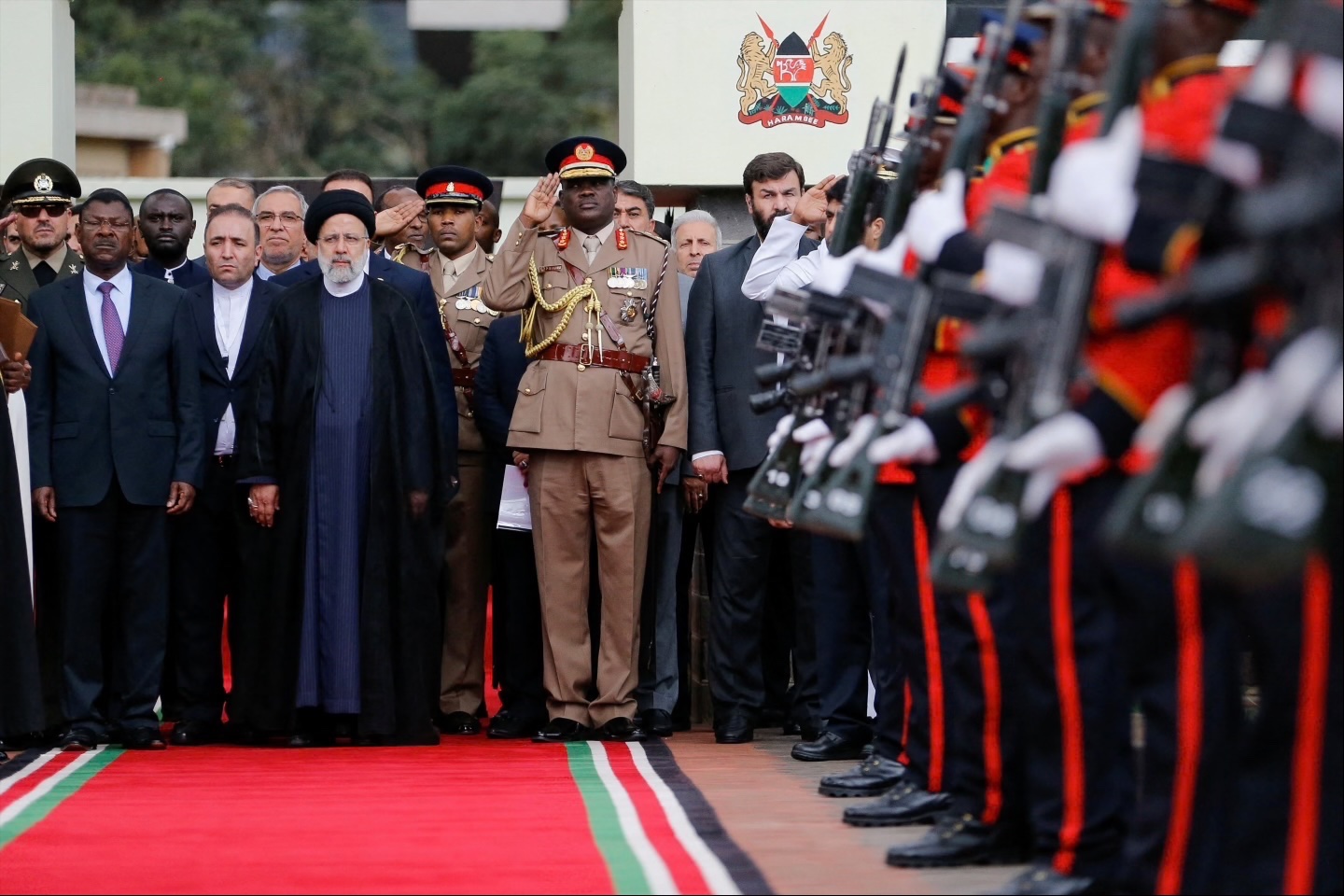
Is Iran Losing Influence in Africa? 

Iran‘s President Ebrahim Raisi leaves after laying a wreath at the Mzee Jomo Kenyatta’s mausoleum during his three-country African tour, as part of efforts to reduce the Islamic Republic’s economic isolation, in Nairobi, Kenya on July 12, 2023.

Thomas Mukoya/Reuters

Despite decades of Iranian diplomatic and economic initiatives on the continent, African countries are resisting involvement in the Iran war, CFR expert Ebenezer Obadare says in this YouTube Short.


Council on Foreign Relations

58 East 68th Street, New York, NY 10065

1777 F Street, NW, Washington, DC 20006

Was this forwarded to you? Subscribe to the Daily News Brief

FacebookTwitterInstagramLinkedInYouTube

Manage Your Email Preferences