Plus China exploits LNG squeeze
 

Power Up

Power Up


A Reuters Open Interest newsletter

By Gavin Maguire, ROI Energy Transition Columnist


Data refreshes every time you open this email. For more energy news, click here. Please send any feedback to powerup@thomsonreuters.com.

Hello Power Up readers,

Oil markets were not at all impressed by U.S. President Trump's primetime speech on Wednesday. Instead of laying out  about plans for peace, he talked of even more aggressive attacks on Iran - pretty much dashing all hopes for a quick end to the conflict that has already been raging for over a month.

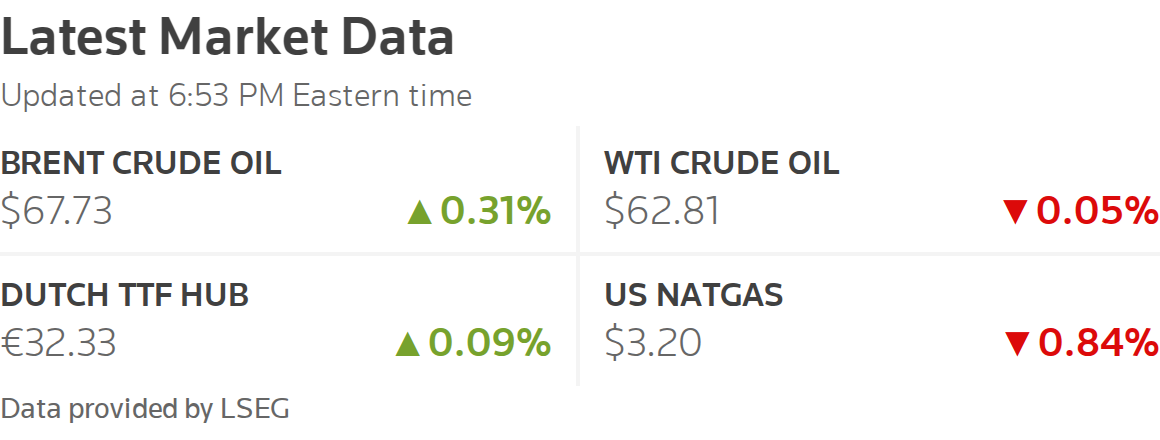
U.S. crude futures have surged back above $100 a barrel and analysts said could hit new highs if maritime conditions around the Strait of Hormuz deteriorate again. The Reuters energy team keeps this page updated around the clock with the latest. 

To try to keep a lid on things, OPEC+ is likely to weigh a further oil output increase when eight members meet on Sunday, according to the Reuters oil team's sources. (Link below).

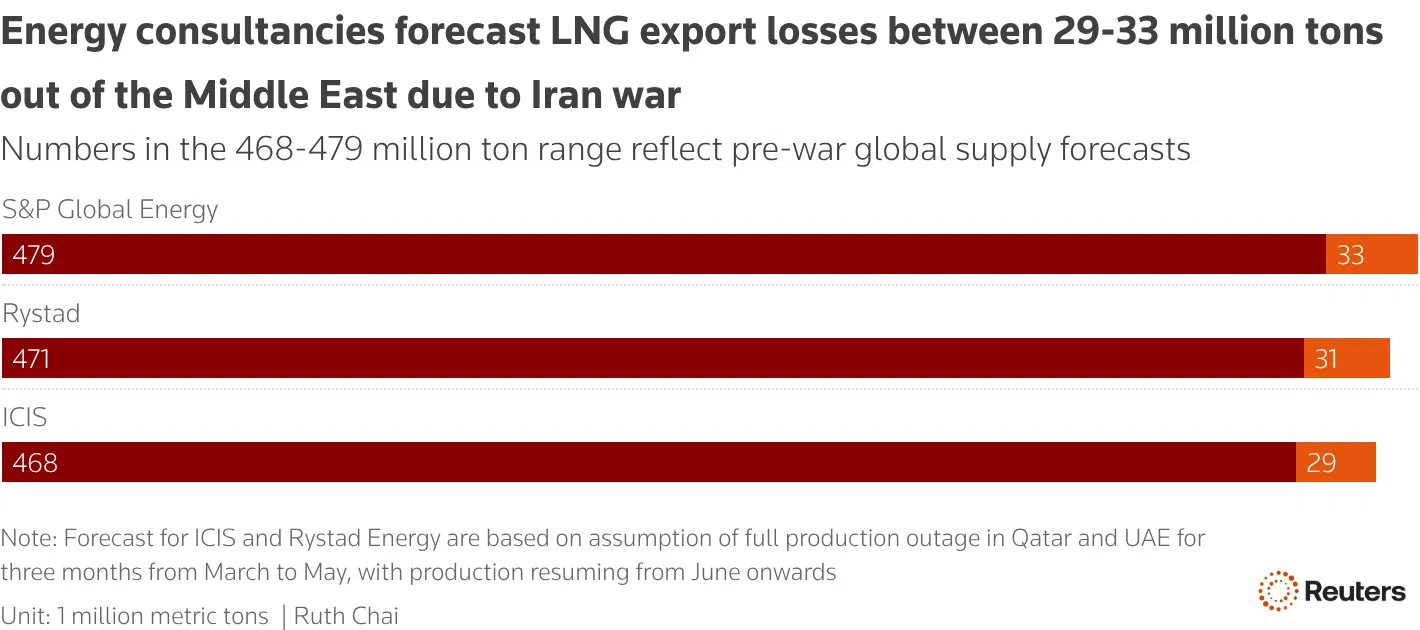
LNG markets are also reeling, with the surge in prices since Qatar cut exports causing demand destruction in key Asian markets. China has also stepped up the re-selling of LNG cargoes the country doesn't need right now, creating turbulent LNG conditions throughout Asia. More in the LNG Watch section.

First up, here are some other must-read analyses and columns:

If President Donald Trump ends the Iran war without a deal, he risks leaving Tehran with a stranglehold over Middle East energy supplies and Gulf Arab oil and gas producers grappling with the fallout of a conflict they did not start or shape.

The halting of oil exports through the Strait of Hormuz has left the Dubai Middle East benchmark, the price used to value nearly a fifth of global crude supply, in a perilous position.

Natural gas touches every corner of the U.S. economy, fueling power plants, homes, factories and the booming LNG export sector. But the supply needed to meet all those uses is coming from an ever-narrower slice of America's shale patch.

China's readiness for an energy shock has helped its financial markets to turn in a world-beating month and has global investors looking to boost their exposure as the Iran war drags on.

Record output from UK wind farms has helped boost total clean power supplies to new highs so far in 2026, and allowed power firms to pare use of fossil fuels to multi-year lows, shielding the UK power system from the worst effects of the Iran war.

As always, don’t hesitate to contact me at gavin.maguire@reuters.com or follow me on LinkedIn with any questions or thoughts.


Top energy headlines

  • Oil prices jump to around $110/bbl after Trump says attacks on Iran will continue
  • Russia's Primorsk oil terminal lost 40% of storage to drone attacks, satellite images show
  • Russian oil output cuts are unavoidable as drone attacks shrink exports, sources say
  • OPEC+ likely to weigh further oil output hike on Sunday, sources say
  • TotalEnergies, Abu Dhabi's Masdar form $2.2 billion renewables joint venture


LNG watch

Chinese firms are reselling record volumes of LNG, cashing in on soaring spot prices as China has enough domestic and pipeline gas to meet its own weakened demand, in stark contrast to other Asian buyers scrambling to replace supplies cut off by the Iran war.

The world's top importer of liquefied natural gas, China reloaded 8 to 10 cargoes in March, its highest monthly total on record, according to analytics firms ICIS, Kpler and Vortexa.

So far this year, China has reloaded a record 1.31 million metric tons of LNG, or 19 cargoes, with 10 delivered to South Korea, five to Thailand and the remainder to Japan, India and the Philippines, Kpler data showed.

By comparison, China resold 0.82 million tons in all of 2025 and 0.98 million tons in 2023, the second-highest annual total on record.

The country has been able to resell bigger volumes as its own need for LNG has plateaued, with weaker economic activity sapping industrial demand while domestic gas production and pipelined Russian supply is growing.

"Against a backdrop of weak domestic demand, it made more sense for buyers to resell LNG cargoes overseas," said Wang Yuanda, an analyst at ICIS, adding that the Iran crisis has also pushed up spot LNG prices. Click here for more reporting from Emily Chow. 

While China has been making hay, ROI's Clyde Russell explains that Australian LNG exporters are in a less clear position, with the Iran war posing both a boost and a threat to the sector.

On the one hand, the higher resulting prices from the drop in Qatar's LNG exports bode well for the export sector, and present a clear profit making opportunity. 

On the other, the prospect of higher LNG export volumes stands to stoke fresh tensions with domestic gas consumers, who have blamed the LNG sector for tightening gas supplies and driving up costs. 

East Coast LNG plants take up around 75% of the available gas in the region, which has put the government under pressure to tax the sector and limit further growth. But a mindset shift may now be underway.

Read the full column
 

Sponsors are not involved in the creation of newsletters or other Reuters news content. Advertise in this newsletter or on Reuters' website

LiveIntent Logo
AdChoices Logo
 

Power Up is sent twice weekly. Think your friend or colleague should know about us? Forward this newsletter to them. They can also sign up here.

Want to stop receiving this email? Unsubscribe here. To manage which newsletters you're signed up for, click here.

This email includes limited tracking for Reuters to understand whether you’ve engaged with its contents. For more information on how we process your personal information and your rights, please see our Privacy Statement.

Terms & Conditions


© 2026 Thomson Reuters. All rights reserved.
3 Times Square, New York, NY 10036

fb ig x