| | In this edition: DR Congo to accept US deportees, democracy backslides, and a new Nollywood movie ab͏ ͏ ͏ ͏ ͏ ͏ |
| |  | Africa |  |
| |
|
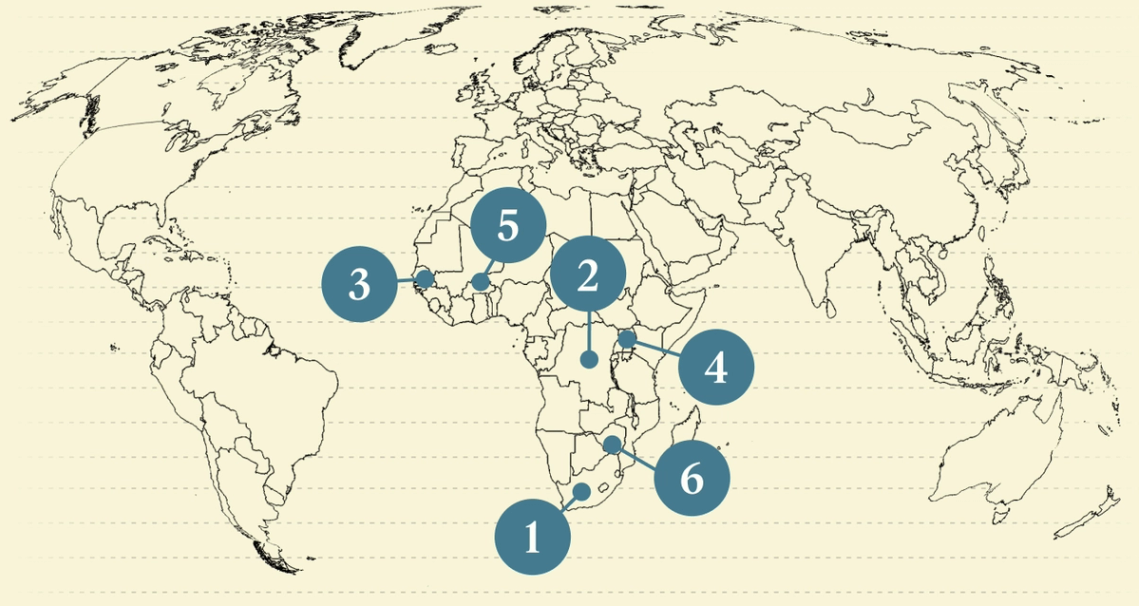 - S. Africa’s migration plans
- DRC to accept US deportees
- Senegal’s oil fallout
- Uganda’s urban funding
- Democracy backslides
- Chinese boom in Zimbabwe
 The Week Ahead, and a new Nollywood movie about AI. |
|
South Africa mulls migration overhaul |
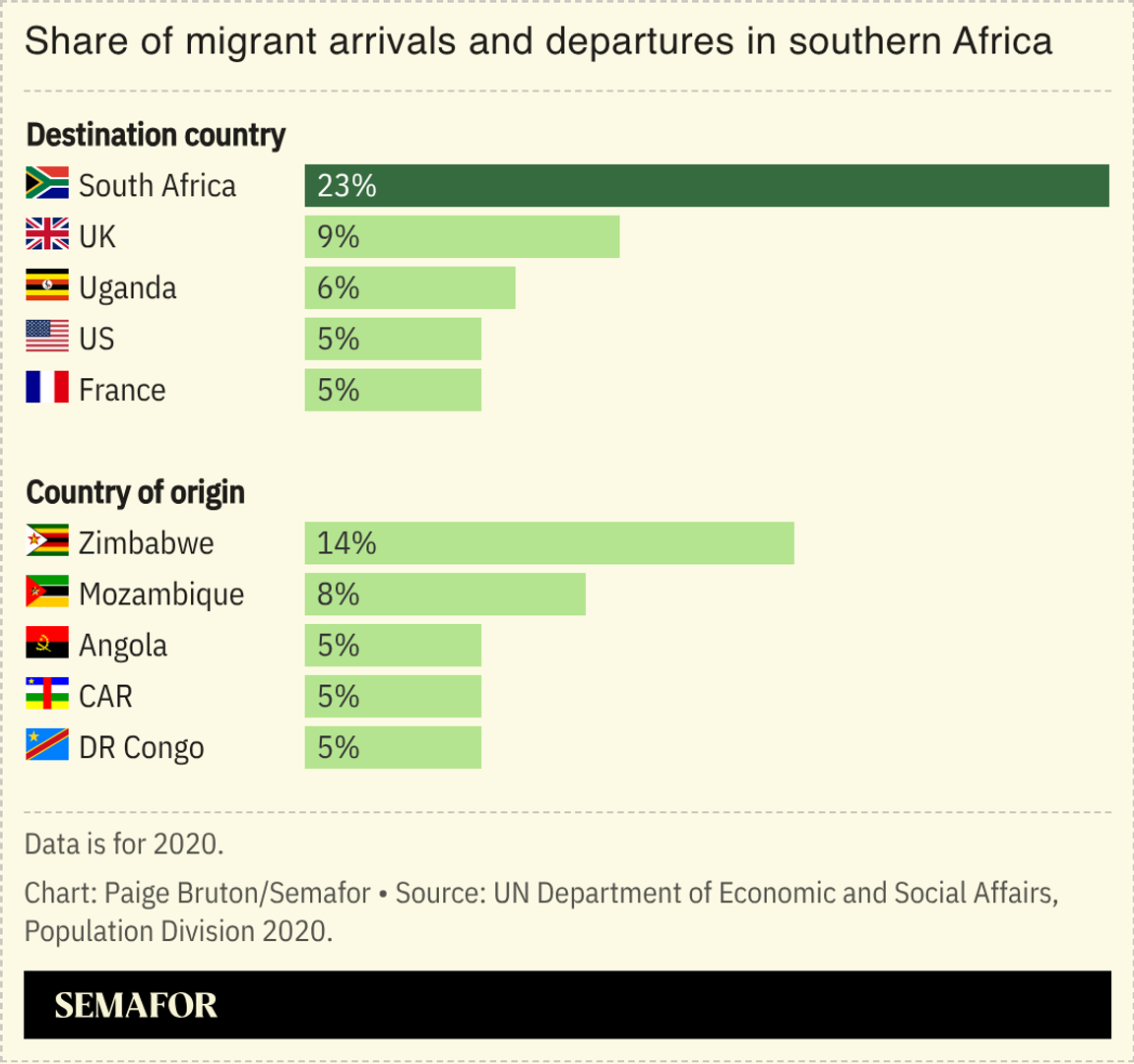 South Africa is preparing the most sweeping overhaul of its migration laws in three decades in a bid to attract skilled migrants as part of efforts to boost moribund growth in Africa’s biggest economy. The country’s cabinet endorsed folding three separate laws into a single statute, a move officials say will make it easier to attract skills, speed up visa processing, and reduce long-standing administrative backlogs. The rewrite, which seeks to attract so-called “designer migrants,” reflects growing pressure to address labor shortages in sectors such as health care, engineering, and technology, which persist despite an official unemployment rate of around 30% — one of the highest in the world. Government officials say targeted migration can support investment and tax revenues in an economy grappling with years of weak growth. South Africa remains a major destination for migrants and asylum seekers, mainly from Zimbabwe, Malawi, and DR Congo, drawn by its relatively large economy and access to jobs and services. That role has fueled periodic outbreaks of xenophobia and violence over the last decade and driven political pressure to tighten controls. — Tiisetso Motsoeneng |
|
DR Congo to accept US deportees |
 US Dept. of Defense photo by Senior Airman Devlin Bishop/Getty Images US Dept. of Defense photo by Senior Airman Devlin Bishop/Getty ImagesDR Congo struck a deal with the US to receive “third-country” deportees, days after Uganda received eight people under a similar deal. The agreements are part of the Trump administration’s crackdown on immigration, though rights groups and legal scholars have criticized the deals, questioning whether Washington can send individuals to countries they are not nationals of — and have sometimes never even been to — against their will. Several African countries, including Cameroon, Equatorial Guinea, Eswatini, and Ghana have accepted deportees from the US in recent months. It remains unclear what, if anything, DR Congo would receive in exchange for the deportation agreement in deals whose terms have typically been opaque. |
|
Senegal’s oil price fallout |
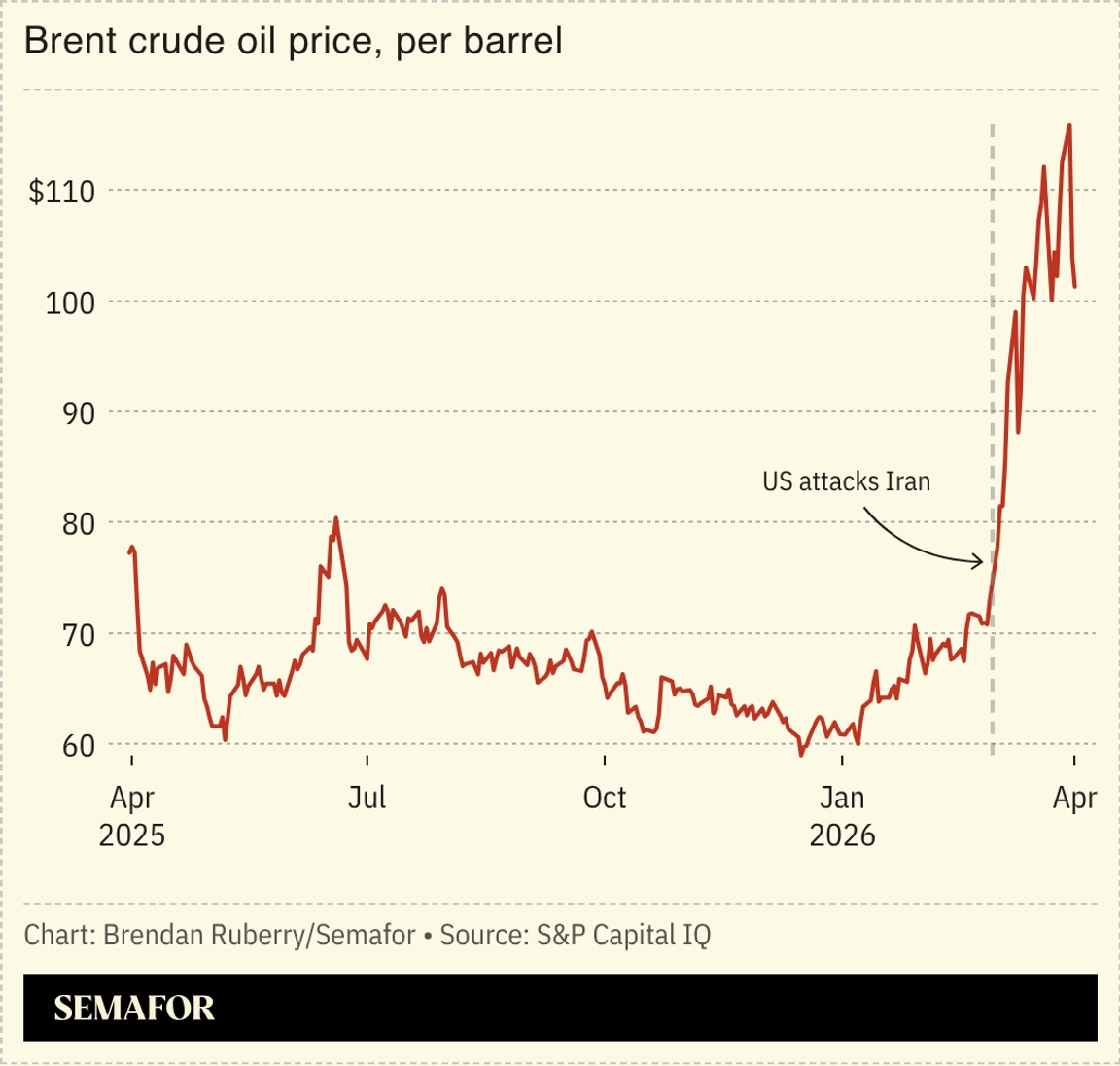 Senegal banned government ministers from all non-essential foreign travel, part of efforts across Africa to grapple with surging fuel prices because of the Iran war. The West African country, which depends heavily on imported energy, has been hit by the growing cost of oil — crude prices are up around 50% compared to when the war started. And though oil producers have benefited, several countries across the continent have been forced to respond to the rising prices: South Africa has temporarily reduced its fuel levy, while South Sudan is rationing electricity due to fuel shortages. Senegal’s Prime Minister Ousmane Sonko said oil costs were nearing double the budget the government had allocated and further measures to reduce spending would be announced this week. Markets have been rocked globally by uncertainty as US President Donald Trump threatened strikes on Iranian infrastructure unless Tehran reopens the Strait of Hormuz, a critical shipping route for the world’s oil and gas supplies. |
|
World Bank backs Uganda urbanization |
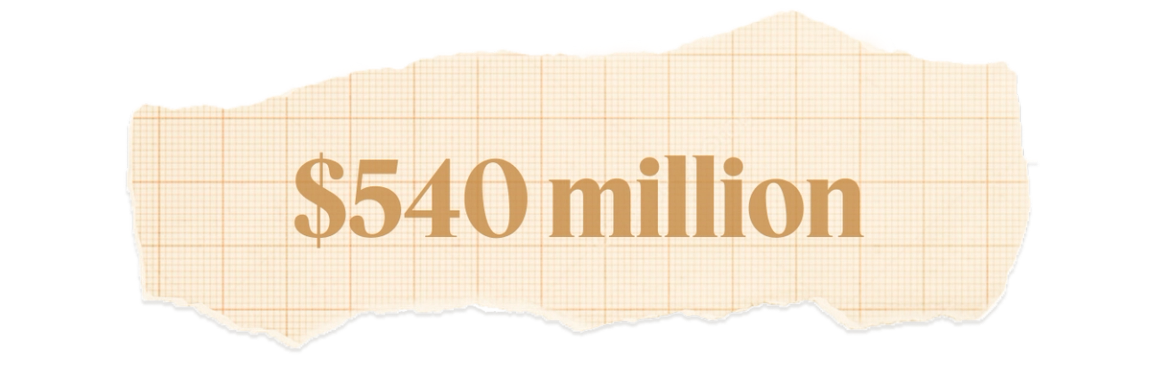 The value of a six-year World Bank finance package to support Uganda’s urban development. The funding aims to enhance all-weather roads, stormwater drainage, street lighting, and public markets to improve transport connections, reduce flooding, and boost public safety, while also stimulating the local economy. The package targets 10 cities and is projected to create around 40,000 jobs. Around 27% of the country’s population has already moved into urban areas, according to the 2024 census, a figure expected to double in the next two decades, but infrastructure has failed to keep pace. “Rapid urbanisation has fuelled slum growth,” according to the government-produced 2025 State of Uganda Population Report, resulting in around 60% of urban dwellers living in informal settlements, which often lack proper sanitation, access to social services, and face regular flooding. |
|
West Africa’s democratic decline |
 Issouf Sanogo/AFP via Getty Images Issouf Sanogo/AFP via Getty ImagesAfrica accounted for a third of global democratic declines between 2019 and 2024, while also producing nearly a quarter of global improvements, a new report by an intergovernmental watchdog found. The sharpest setbacks were linked to a wave of military takeovers in the Sahel and parts of central Africa, the Stockholm-based International IDEA said in its Global State of Democracy report. Just last week in Burkina Faso — which saw two coups in 2022, and which remains under military rule — junta leader Ibrahim Traoré told reporters that “people need to forget about democracy.” Mali and Guinea are also governed by military regimes following putsches in recent years. International IDEA said these disruptions weakened electoral credibility, dissolved parliaments, and curtailed judicial independence. At the same time, the organization noted that Botswana, Mauritius, and South Africa saw gains in electoral administration, and civic participation remained comparatively strong across the continent. — Tiisetso Motsoeneng |
|
Wealthy Chinese flock to Zimbabwe |
 Tafara Mugwara/Xinhua via Getty Images Tafara Mugwara/Xinhua via Getty ImagesChinese buyers are transforming Zimbabwe’s luxury housing market. An influx of wealthy Chinese immigrants has prompted real estate agencies to hire Mandarin speakers as demand for high-end homes drives double-digit price increases in Harare, Bloomberg reported. Many buyers pay in cash, skirting exchange controls and limiting government tax revenue. China’s economic footprint in Zimbabwe has surged over the past five years: Beijing dominates lithium mining and has invested in farming, local banks, and infrastructure. As Chinese investors increasingly move to nontraditional destinations, they are reshaping local economies, and at times stirring tension with locals. Regardless, as one Zimbabwean real estate manager described, “They are investing in the country when everyone else is trying to get money out.” A version of this item first appeared in Flagship, Semafor’s daily global affairs briefing. Subscribe here. → |
|
|
 - April 7-9: GITEX AFRICA, Africa’s flagship technology and innovation summit, takes place in Marrakech.
- April 8: Kenya’s central bank announces its latest interest rate decision.
- April 9: The WiT Africa conference, which is focused on the Asian travel industry in Africa, kicks off in Cape Town.
- April 10: Djibouti holds its presidential election.
- April 10: Mozambique, Rwanda, and Senegal report inflation data.
- April 12: Presidential elections take place in Benin.
|
|
 Ken Griffin, founder and CEO of Citadel; Jean Hynes, managing partner and CEO of Wellington Management; Sim Tshabalala, CEO of Standard Bank Group; Andrea Orcel, CEO of UniCredit; Gabriel Makhlouf, governor of the Central Bank of Ireland; and more will join The Future of Global Finance session at Semafor World Economy. The discussion will focus on how markets balance openness with resilience, and which regions will cultivate the transparency, scale, and confidence global capital demands. April 14, 2026 | Washington, DC | Apply to attend |
|
 Business & Macro |
|
|


