Image

Daily News Brief

April 6, 2026

Welcome to CFR’s Daily News Brief. Today we’re covering U.S. President Donald Trump’s ultimatum regarding the Strait of Hormuz, as well as...

  • Ukrainian President Volodymyr Zelenskyy’s visit to Syria
  • China-mediated talks between Afghanistan and Pakistan
  • A U.S. satellite company’s move to restrict images of the Middle East


Top of the Agenda

Trump threatened yesterday to attack Iranian power plants and bridges Tuesday if Iran did not agree to reopen the Strait of Hormuz. In an expletive-laden social media post, the president warned Iranians would be “living in Hell” if the waterway was not swiftly reopened. The threats came after a dramatic few days in which the United States rescued two airmen whose plane was shot down in Iran Friday. Meanwhile, both countries received a proposal from mediators for a forty-five-day ceasefire, Axios reported, citing unnamed sources. Iran’s foreign ministry spokesperson said Tehran would respond formally to the proposal but that negotiations were “incompatible with ultimatums and threats to commit war crimes.”


The latest on the Strait of Hormuz. After originally setting a Monday deadline for a deal to reopen the Strait of Hormuz, Trump yesterday on social media appeared to extend the deadline to Tuesday evening. His demand came after he suggested in a prime-time speech last week that he would leave the issue of the strait for other countries to resolve. Iran has continued negotiating with countries individually over their access to the strait, clearing Iraqi ships for passage over the weekend.


The rescue of the U.S. crew. After Iran shot down an F-15 jet on Friday, U.S. forces quickly rescued its pilot but soon commenced an intense search for the weapons systems officer who also went down with the plane. The airman spent more than twenty-four hours evading Iranian forces while he signaled to U.S. rescuers. Trump confirmed yesterday that the man was rescued after a search effort involving dozens of U.S. planes.   


Weekend strikes. Attacks across Iran, Israel, Lebanon, and the Gulf continued over the weekend. The intelligence chief of Iran’s Islamic Revolutionary Guard Corps was killed in a strike, Iranian state media reported today. Airstrikes hit the vicinity of an Iranian nuclear power plant Saturday, prompting a worker evacuation and a warning from the UN nuclear watchdog against targeting the site. A leading Iranian university was also bombed. Israel claimed responsibility for striking Iran’s largest petrochemical complex Saturday, while an Iranian strike on the Israeli city of Haifa killed four people. Fires from air interceptions near a United Arab Emirates petrochemical plant temporarily closed the facility Sunday; Iran has previously targeted energy infrastructure in the country. 


“Trump's post on Truth Social raises fundamental questions of temperament, legality, and policy. Attacking power plants won’t lead to capitulation or regime change or an open Strait, but it would trigger Iranian attacks against water and energy infrastructure throughout the region.”

—CFR President Emeritus Richard Haass on X


Will Trump’s Gamble of Easing Oil Sanctions on Iran and Russia Pay Off?  

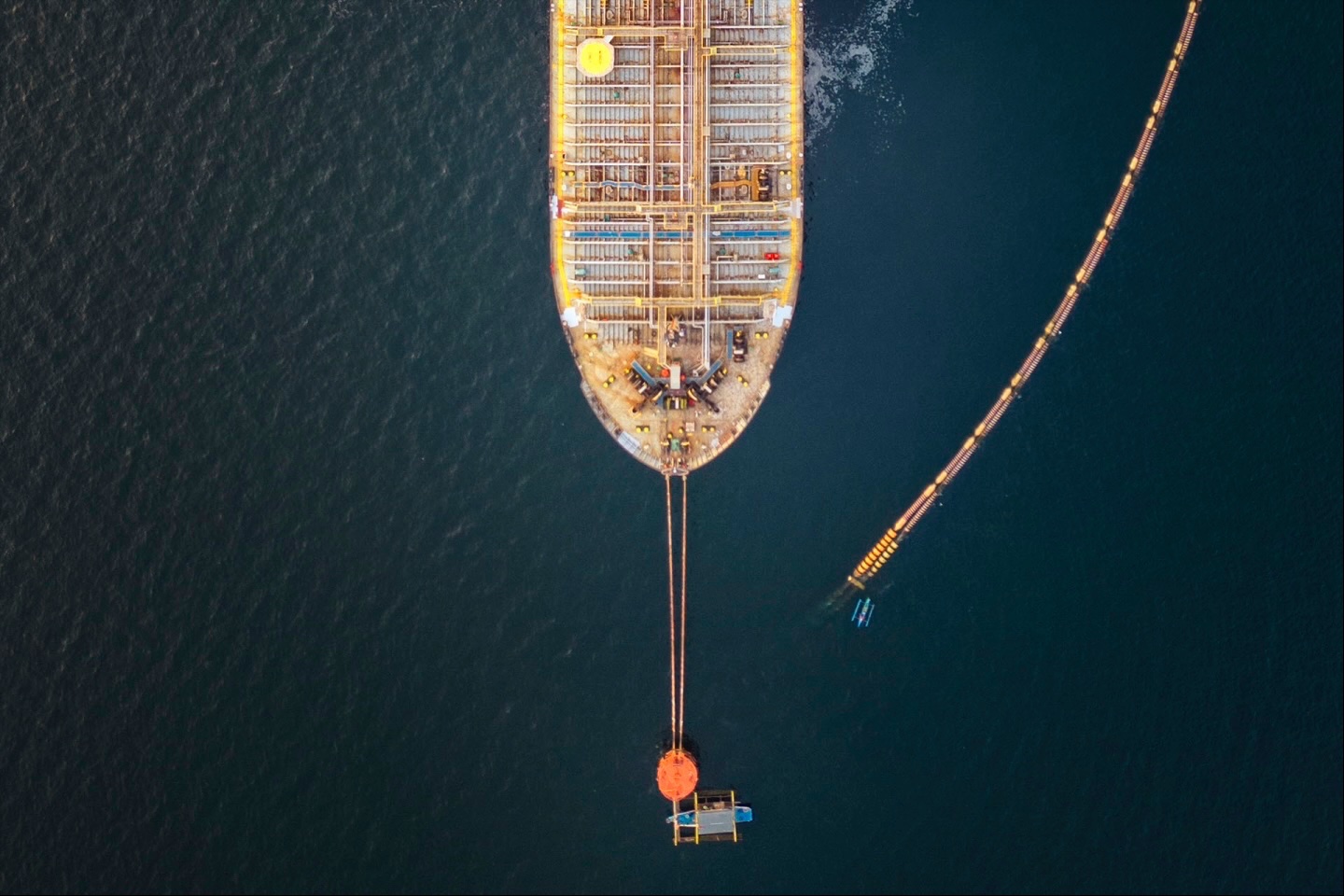
In an aerial view, the Panamanian-flagged Tiger Wings, carrying crude oil from Russia, is moored off the Petron oil refinery on April 1, 2026 in Limay, Bataan province, Philippines.

Ezra Acayan/Getty Images

Trump’s decision has benefited two U.S. adversaries and done little to bring prices down, International Affairs Fellow Roxanna Vigil writes in this Expert Take.


Across the Globe

Trump’s military spending request. The White House asked Congress Friday to greenlight roughly $1.5 trillion in defense spending for the 2027 fiscal year, around 40 percent more than the current level. The request was part of a broader budget that offset the spending increase with proposed $73 billion in cuts to areas such as health, housing, and education.


Shifting satellite availability. Planet Labs, a California-based satellite imaging firm, said Saturday it would stop publishing images of Iran or the regional conflict zone following a U.S. government request. Satellite images are often used by reporters and researchers to track battlefield developments. Chinese open-source data firms have continued to share images of the conflict.


War’s latest energy fallout. Senegal announced Friday it is banning government ministers from nonessential foreign travel due to rising fuel costs. The same day, France announced it would offer loans of up to nearly $58,000 to small businesses hit hardest by the price increases. Oil alliance OPEC+ agreed yesterday to modestly raise oil output for May, though many members’ ability to do so is hampered by the war.


Zelenskyy in Syria. Ukraine and Syria agreed to cooperate on security and economic issues during Zelenskyy’s trip to Damascus yesterday. Turkey’s foreign minister also attended a portion of the talks. It was Zelenskyy’s first visit to Syria since the two countries restored diplomatic ties; Syria’s former Assad regime was a close ally of Russia.


U.S.-Congo deportation deal. The Democratic Republic of Congo will start receiving third-country migrants deported from the United States this month, the Congolese communications ministry said yesterday. The United States is paying for the program and has reached similar deportation deals with at least seven other African countries. 


Afghanistan-Pakistan talks. Chinese-mediated peace talks between the two countries are advancing, Beijing said Friday. Envoys from the countries began meeting last Wednesday in western China. The talks come after fighting between them killed hundreds of people earlier this year. An Afghan government spokesperson accused Pakistan last week of carrying out cross-border attacks even as the negotiations moved forward.


Afghanistan-Central Asia trade. Envoys from Kazakhstan, Kyrgyzstan, Tajikistan, Turkmenistan, and Uzbekistan attended a trade meeting in Kabul yesterday. Afghanistan aims to increase trade with Central Asian countries from $2.7 billion in 2025 to $10 billion within the next three to four years, Foreign Minister Amir Khan Muttaqi said.


North Korean succession. North Korean leader Kim Jong Un’s teenage daughter is being positioned as his successor, South Korea’s intelligence chief told lawmakers today. North Korea has only had male leaders since its establishment in 1948. Recent photos of Kim’s daughter driving a tank and firing a pistol appear designed to reduce wariness about a female leader, Seoul’s intelligence service said.


What to Know About Rising Private Credit Risk

Wall Street near the New York Stock Exchange.

Brendan McDermid/Reuters

Private creditors offer loans that banks generally do not want to make, and in recent months some have sought their money back, CFR Senior Fellows Sebastian Mallaby and Rebecca Patterson say in this CFR YouTube Short.  


What’s Next

  • Today, Chilean President José Antonio Kast is visiting Argentina.

  • Today, the Artemis II mission is expected to break the record for the farthest distance humans have ever traveled from Earth during its lunar flyby.

  • Tomorrow, U.S. Vice President JD Vance begins a visit to Hungary.


Will Operation Epic Fury Affect the Midterms?

President Donald Trump, House Speaker Mike Johnson (R-LA), and Rep. Richard Hudson (R-NC), the chair of the National Republican Congressional Committee, at a fundraising dinner, March 25, 2026.

Ken Cedeno/Reuters

An unpopular war with Iran will put more political pressure on Republican congressional candidates the longer it persists, CFR Senior Fellow James M. Lindsay writes in this article.


Council on Foreign Relations

58 East 68th Street, New York, NY 10065