Image

Daily News Brief

April 9, 2026

Welcome to CFR’s Daily News Brief. Today we’re covering disputes during the first day of the Iran ceasefire, as well as...

  • NATO Secretary-General Mark Rutte’s White House visit
  • Greece’s plan for a youth social media ban 
  • The U.S. Army’s chatbot prototype


Top of the Agenda

The first day of Israel, Iran, and the United States’ truce was marked by disputes over its terms. Large-scale Israeli strikes in Lebanon are a key point of contention: Iran and mediator Pakistan said that an end to fighting in Lebanon was part of the ceasefire deal, while Israel and the United States said it was not. Iran’s parliament speaker accused Washington yesterday of violating three tenets of the deal, while U.S. President Donald Trump and Vice President JD Vance said a version of Iran’s ten-point proposal—which asserts Iran’s control over the Strait of Hormuz and right to nuclear enrichment—reported in state media was not the one they agreed to. 


The Strait of Hormuz remains mostly closed, though Gulf countries did not report being attacked overnight for the first time since the war began. White House Press Secretary Karoline Leavitt said yesterday Washington would send a negotiating team to Islamabad for talks Saturday, while Trump threatened today to resume military force if Iran does not comply with the ceasefire.


On Lebanon. The first day of the truce was the deadliest day in Lebanon since the Iran war escalated regional fighting. Israeli strikes across the country yesterday killed at least 203 people and wounded 1,000 others, Lebanon’s health ministry said. Hezbollah said today it had fired retaliatory strikes at northern Israel over ceasefire violations. The European Union, France, and the United Kingdom have issued calls for the truce to include Lebanon, while Israeli Prime Minister Benjamin Netanyahu said this morning that Israel’s attacks in the country would continue. Iran’s Deputy Foreign Minister Saeed Khatibzadeh told ITV News in an interview published today that Iran hoped the United States could honor its commitments and “control its ally” Israel in Lebanon.


On the Strait of Hormuz. Iran’s Islamic Revolutionary Guard Corps said yesterday that shipping in the strait had halted following ceasefire violations in Lebanon. Asked about Iran’s plan to charge tolls for passage through the strait, Trump told an ABC News journalist yesterday the strait could be managed “as a joint venture” between the United States and Iran, though Leavitt later said Washington would push for a full reopening with no tolls. Khatibzadeh said that the strait was open to anyone who coordinated with Iran in order to avoid mines. 


“There has been no regime change in Iran, the current leadership is not any less radical than their predecessors, the Iranians still have the ability to menace their neighbors, and Iran has leverage over the Strait of Hormuz when it did not before the war began…I don’t see how negotiations will change this reality.”

—Senior Fellow Steven A. Cook tells CFR


Will Trump’s Ceasefire Last?

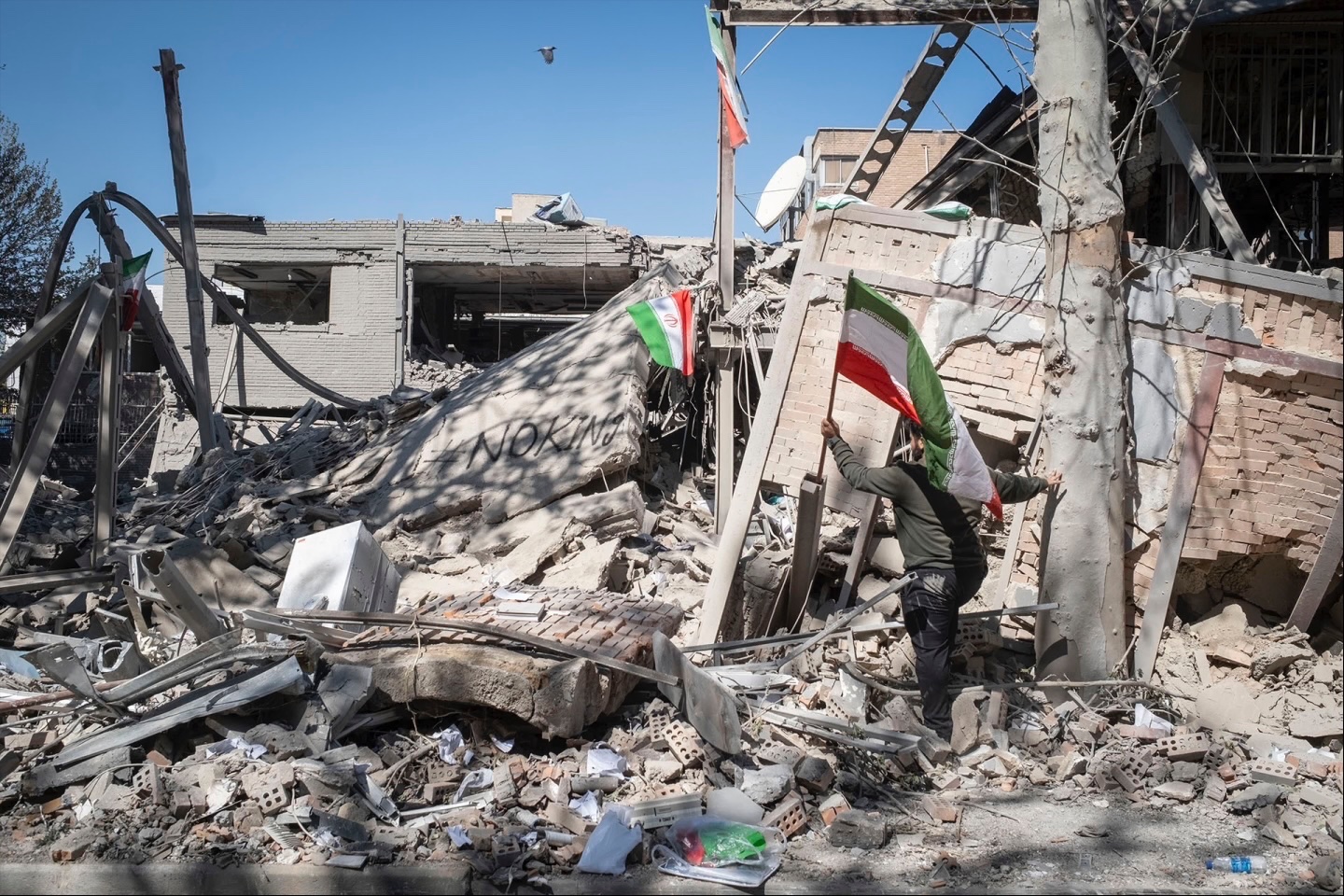
An unidentified man places a national flag on the ruins of the Sharif University of Technology’s data center, which was struck on April 6 during ongoing military operations in Tehran, Iran, on April 7, 2026.

Morteza Nikoubazl/Getty Images

The odds are stacked against a quick and easy negotiation between the United States and Iran, but talking is better than war, Senior Fellow James M. Lindsay writes in an Expert Take. 


Across the Globe

Trump-Rutte meeting. Trump voiced his frustration with NATO countries over Iran in a meeting with Rutte at the White House yesterday, Rutte told CNN. He declined to answer whether Trump discussed a potential U.S. withdrawal or scaledown from NATO, though Leavitt had earlier said Trump would likely raise the matter. Trump criticized NATO in a social media post after the meeting but did not announce a reduction in U.S. participation.


Madagascar’s energy emergency. The Indian Ocean country declared a two-week state of emergency due to a fuel crunch caused by the Iran war. Last year, power shortages in Madagascar triggered mass protests, resulting in military takeover. The government said the emergency declaration gave it the authority to manage energy consumption; local media reported fuel rationing at some gas stations.


North Korean missile tests. Pyongyang test-fired one missile Tuesday and multiple missiles yesterday, South Korea’s military said. Though South Korea has said it seeks to dialogue with North Korea on security matters, a senior North Korean foreign ministry official said Tuesday that Seoul would always be Pyongyang’s “most hostile enemy state.” 


Greece social media restrictions. Greece will introduce legislation banning Facebook, Instagram, TikTok, and Snapchat for people under the age of fifteen, Prime Minister Kyriakos Mitsotakis said yesterday. His party controls the legislature, which is expected to vote on the measure in the coming months. If passed, the ban would take effect January 1. Government officials cited social media’s effects on anxiety, sleep, and addictive behavior as the basis for their support of the measure.


U.S. Army chatbot. The army is building its own chatbot that aims to help soldiers with tasks like configuring weapons systems, its chief technology officer told WIRED. The chatbot has been trained on information gleaned from previous military missions. A prototype includes a forum similar to Reddit and a chatbot called VictorBot.


Report on falling aid. Rich countries’ development assistance in 2025 likely fell to lows last seen during the economic shock of the COVID-19 pandemic, the European Network on Debt and Development said yesterday. It estimated that only three of the thirty-four members and associates of an Organization for Economic Cooperation and Development (OECD) group of donors met their 0.7 percent of GDP development aid target.  


Crossing Canada’s aisle. Marilyn Gladu yesterday became the fifth lawmaker in Canada’s Conservative Party in recent months to defect to the ruling Liberal Party. The move increased the possibility that Prime Minister Mark Carney’s Liberals could soon have a parliamentary majority, with the party leading polls for two special elections Monday. Gladu said she believes Carney can address the “uncertainty” caused by U.S. tariffs.


Classifying Cuba’s prisoner release. Cuban authorities did not appear to include any political prisoners in their release of more than two thousand inmates last week, Human Rights Watch said yesterday. The release, which Havana described as a “humanitarian gesture,” came against the backdrop of ongoing talks with Washington over political liberalization. Cuban human rights groups say more than seven hundred political prisoners remain jailed in the country.


Untangling Financial Markets’ Unusual Behavior

The Spillover podcast

Bond yields have been rising and traditional safe-haven assets have been weakening. Senior Fellows Sebastian Mallaby and Rebecca Patterson unpack why on this episode of The Spillover.

Listen


What’s Next

  • Today, Canada’s ruling Liberal Party begins its first national convention since 2023.
  • Today, China’s foreign minister begins a visit to North Korea.
  • Tomorrow, Djibouti holds a presidential election.
  • Tomorrow, the Artemis II mission is due to splash down on Earth.


A Career at the Frontier of U.S. Cybersecurity

Vinh Nguyen

Photo collage by Lucky Benson

Decades working on cybersecurity, data science, and artificial intelligence (AI) issues underscored the importance of the United States having a distinct approach to securing AI, Senior Fellow Vinh Nguyen told CFR’s Ivana Saric in this article. 


Council on Foreign Relations

58 East 68th Street, New York, NY 10065