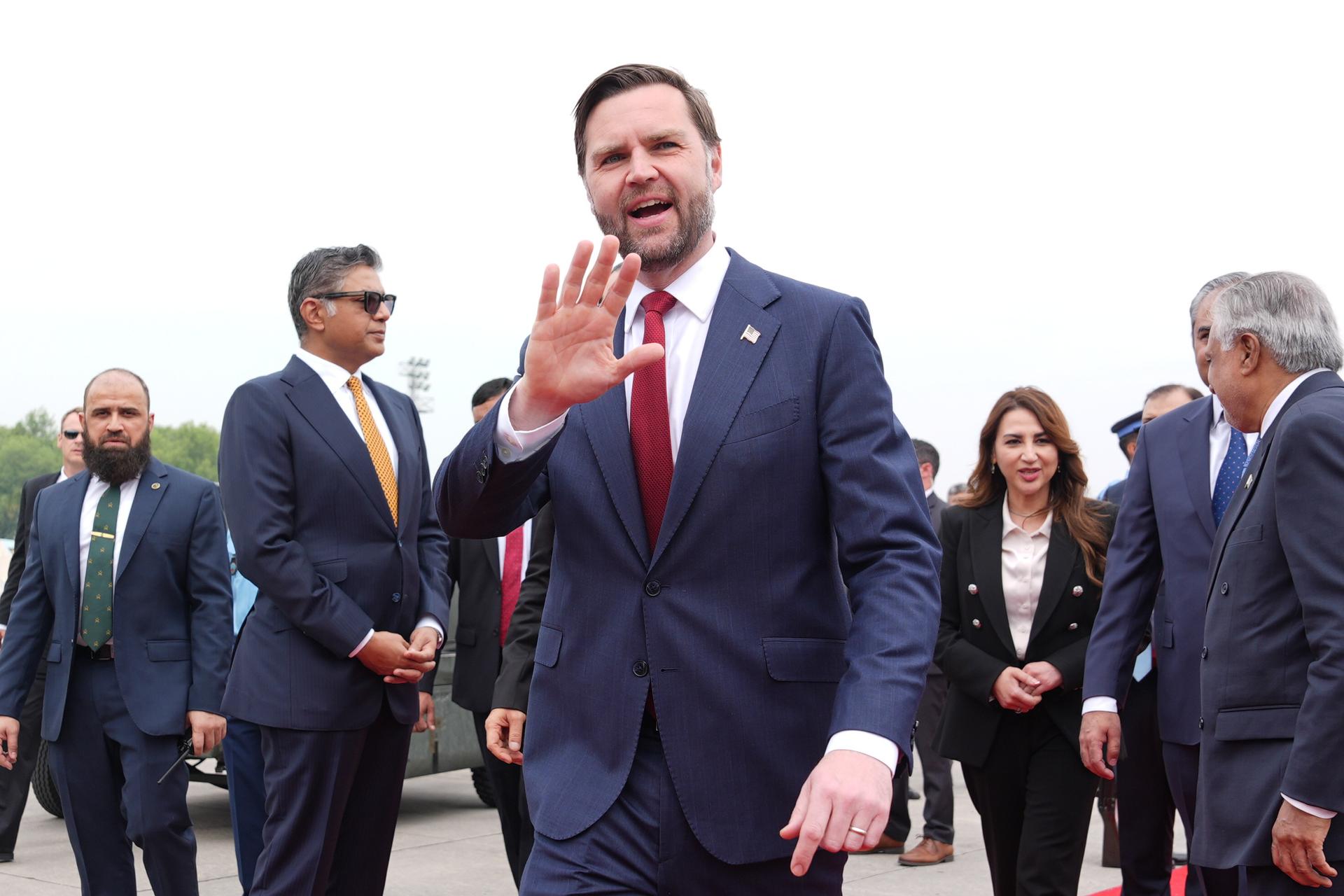
When U.S. negotiators arrive in Islamabad, Pakistan, on Saturday for talks to end the war with Iran, they will be led by a new face: JD Vance. The vice president was reportedly Iran’s preferred negotiating partner, but his elevation looks less like a boon to his standing as a diplomatic force in the administration and more like a poisoned chalice.
In the nearly six weeks after the United States and Israel first attacked Iran, Vance has sought to balance his fealty to President Donald Trump with his image as a skeptic of interventions. At times, the appeals to both sides have been almost comical: The New York Times’ Maggie Haberman and Jonathan Swan recently reported, for example, that Vance “thought a regime-change war with Iran would be a disaster” — but “when it seemed certain that the president was set on a large-scale campaign, Mr. Vance argued that he should do so with overwhelming force, in the hope of achieving his objectives quickly.”
Others in the executive branch have not been fooled — at least not entirely.
This is a preview of James Downie’s latest column. Read the full column here.
|