News you can use from the National Ocean Service
April 14, 2026
 A NOAA Ocean Guardian School makes a commitment to the protection and conservation of its local watersheds, ocean, and special ocean areas, like national marine sanctuaries, through implementing a school- or community-based conservation project.
Participation without funding: Any school (PreK-12) in the United States may apply to participate without funding.
Participation with funding: Grant amounts range from $1,000 - $4,000 per school depending on the program region and funding year.
Any school (PreK-12) from the following locations may apply for an Ocean Guardian School grant.
- California counties: Del Norte, Humboldt, Trinity, Mendocino, Lake, Sonoma, Napa, Marin, Solano, San Francisco, Contra Costa, Sacramento, San Mateo, Alameda, San Joaquin, Santa Cruz, Santa Clara, Stanislaus, Monterey, San Benito, Merced, Madera, Fresno, San Luis Obispo, Kern, Kings, Tulare, Santa Barbara, and Ventura
- Washington counties: Clallam, Jefferson, Grays Harbor, and Pacific
- Oregon counties: Clatsop, Tillamook, Lincoln, Lane, Douglas, Coos, and Curry
- Hawaiʻi
Tuesday, April 14, 2026 | 4 p.m. ET
Tuesday, April 21, 2026 | 6 p.m. ET
Thursday, April 23, 2026 | 1 p.m. ET
Monday, April 27, 2026 | 4 p.m. ET
Tuesday, April 28, 2026 | 8 p.m. ET
Wednesday, April 29, 2026 | 2 p.m. ET

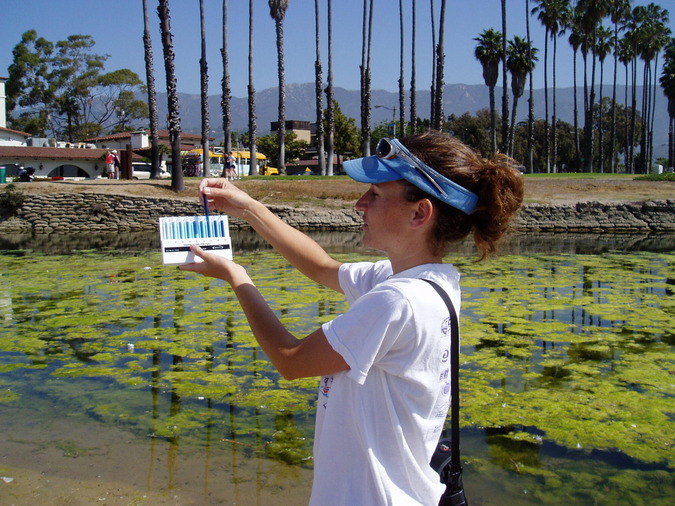 NOAA is collaborating with SciStarter for their annual citizen science campaign, aiming for 2.5 million acts of science. We're encouraging all of our projects to report as part of this campaign as well as encouraging anyone who does any citizen science on their own time. We welcome you to also spotlight the project on social media by using the hashtag #actsofscience and #citizensciencemonth
Dates: Saturday April 18 and April 25, 2026 |
8:30 a.m. – 4 p.m.
Dates vary by location.
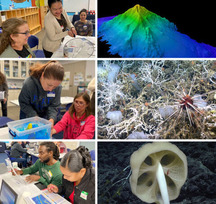
Join NOAA Ocean Exploration and fellow educators at a full-day, in-person professional development workshop to learn about the dynamic geologic and physical processes associated with seamounts and the complex coral and sponge communities that inhabit them. Participants will dive into phenomena-based student investigations and hands-on activities, and discuss implementation strategies to bring the excitement of ocean science and exploration into your classroom.
|

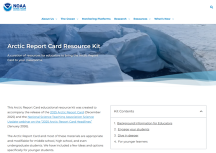
The Arctic Report Card (ARC) educational resource kit was created to help bring this important annual report on the current state of the Arctic to K-16 audiences. The kit helps build understanding of the ARC and helps ensure educators have the tools they need to introduce it to their students.
The kit is organized into "Background for Educators," "Engage your Students," and "Dive in Deeper." We also have ideas and options specifically for younger students. This kit accompanied the release of the 2025 Arctic Report Card (December 2025) and the National Science Teaching Association Science Update webinar on the “2025 Arctic Report Card Headlines” (January 2026).
|
Student Presenter at the National Marine Educators Association Conference (NMEA)
 |
|
Applications Due: Friday, May 1, 2026
Student Day at the NMEA Conference will be on Tuesday, July 14, 2026 at the Hyatt Regency Chesapeake Bay Golf Resort, Spa and Marina, Cambridge, Maryland. Students, ages 13+ are welcome to submit a proposal to present.
Ways that students can participate:
- In-Person Lightning Sessions: A fast-paced, 7-minute live presentation, at the Hyatt Regency Chesapeake Bay. (Perfect for building public speaking skills!)
- Asynchronous Presentations: A 15- to 30-minute pre-recorded video featured on the conference platform for students who cannot travel to Maryland.
|
Do you have an item you'd like to share
in future issues of The Watch?
|
|