| |
| |
| Issue 01 |
Your Brain is
Not Broken |
| |
|
|
|
|

|
|
| Hello From the Editor |
All too often, it seems like we’re being told that our artistic brains are under attack from outside forces: too much social media, too little time to contemplate. Too much passive consumption, not enough making stuff. I’m not saying we should all abandon the endless scroll entirely, but I do know that it feels like more people are talking about how to optimize creativity than actually creating.
That’s why I’m proud to share the inaugural edition of The Good Hour, the Skillshare newsletter about creativity. We started this because we wanted to carve out a space for you to get inspired, get yourself out of a rut, learn some new skills, or fine-tune some established ones. There’s so much information competing for your attention every day, but that’s not what we’re about. Consider this newsletter as a place where you can give your brain a little artistic boost or reset, where you can get answers to the creativity questions you never realized you’d be asking. If you finish reading this newsletter and feel ready to make something, we’ve done our jobs. So let me know what you think, and what you’d like to see more of—I’ll be reading your replies as we plan our upcoming issues. Your brain isn’t broken, I promise.
– SAM HOCKLEY-SMITH, GUEST EDITOR
|
|
|
|
|
|
| 1 |
|
| We Tried It |
| Pens and notebooks meant to travel with you |
|
|
 |
| 2 |
|
| New/Now/Next |
| The classic trick that can fix your creative brain |
|
|
|
| 3 |
|
| Q&A |
| Simon Ip and Derek Pante try illustration prompts |
|
|
|
| 4 |
|
| One Small Practice |
| Take ten minutes to make something with us |
|
|
|
| 5 |
|
| Some Thoughts on AI |
| Is there a middle ground approach? |
|
|
|
|
| Pens and notebooks meant to travel with you, so you can jot something down whenever and wherever inspiration strikes.
|
The Skillshare team independently selects everything we recommend. When you buy through our links, we may earn a commission.
|
|
|
 |
|
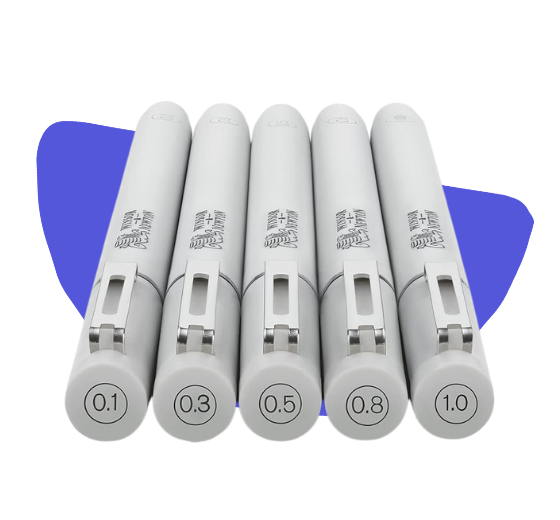
| Winsor & Newton Fineliner Pens |
| Why we like it: Comes in multiple pen weights, works just as great for sketching as they do journaling. |
| Why it might not be the right fit: Depending on your goals, you may want a pure writing or pure illustration pen. |
| Verdict: If you have yet to dive into the world of luxury pens, these are a high-quality but affordable way to start. |
|
|
|
| |
 |
|
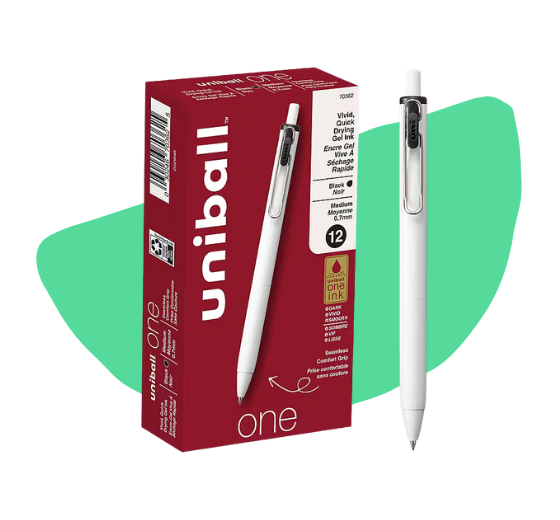
| Uniball One Retractable Pen |
| Why we like it: Portable and storable, an ergonomic design and soft body means your hand won’t cramp while writing. |
| Why it might not be the right fit: Slightly more expensive than your average Uni pen.
|
| Verdict: Not the best pen for the price, but its smaller size makes it the most portable, and that’s what we’re after here. |
|
|
|
| |
 |
|
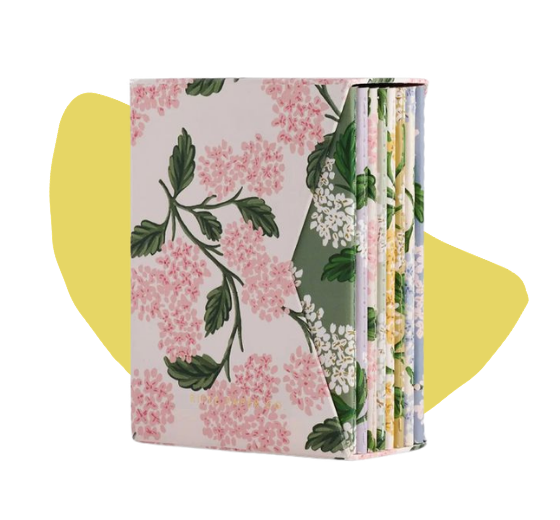
| Swank Pocket Notebooks |
| Why we like it: Florals for spring (groundbreaking), and small enough to fit in some pockets. Not the fanciest notebook on the market, but easy to toss in your tote for when on-the-go inspiration strikes.
|
| Why it might not be the right fit: Some margin space is lost in the middle when writing. If this is bothersome, we recommend getting a spiral notebook instead. |
| Verdict: A great choice for writing and notetaking when you’re out in the world.
|
|
|
|
| |
 |
|
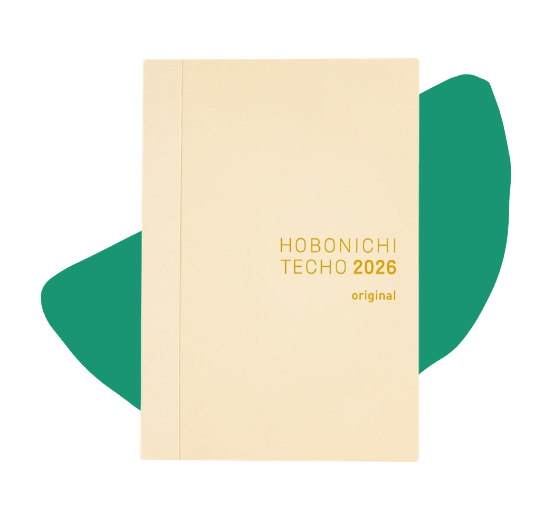
| Hobonichi Techo Notebook/Planner |
| Why we like it: It’s not often that a notebook with a bunch of blank or almost blank pages gets to be part of a “craze,” but here we are. The brand’s yearly planner journal has a cult following, and with good reason: the paper feels amazing to write on, and the thing itself is a wonder of design. |
| Why it might not be the right fit: It’s a bit pricey for a notebook. For some, the page layouts might still be too prescriptive.
|
| Verdict:Sometimes it makes sense to go with the best of the best. If you’re the kind of person who needs to invest in quality in order to commit to your practice, or you’re in a position to splurge, you can’t go wrong here.
|
|
|
|
|
|
|
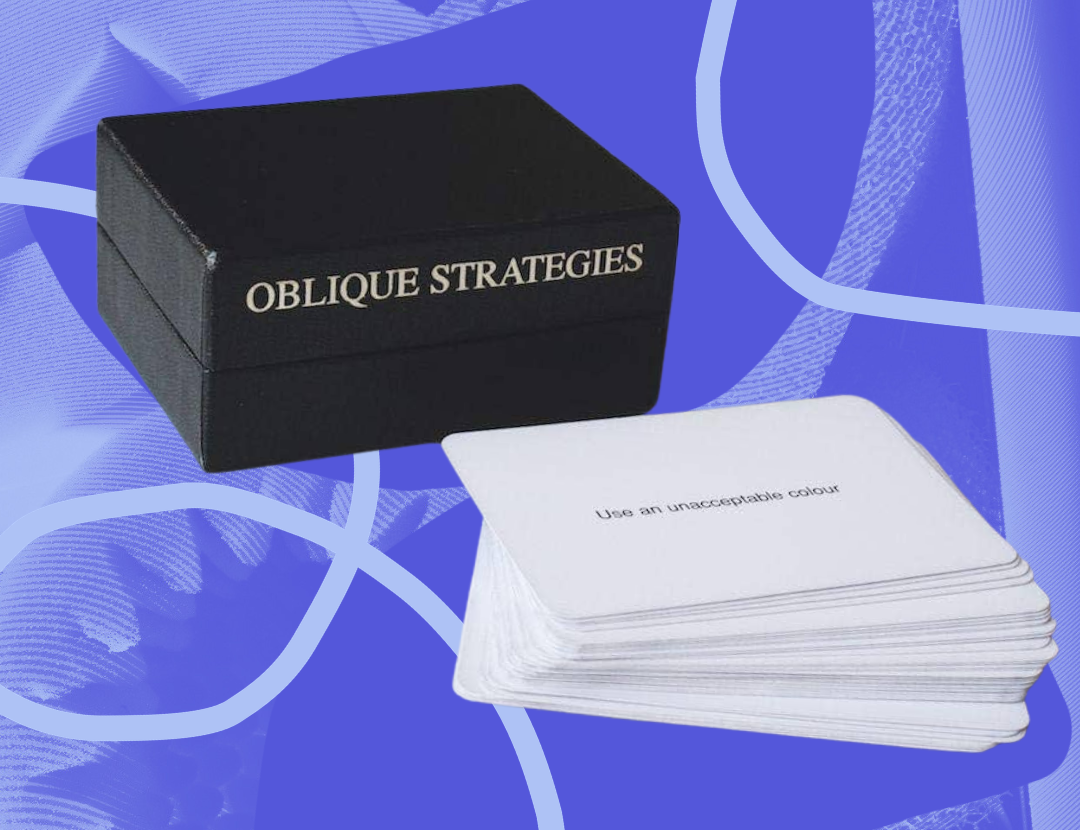 |
Back in 1975 the musician and producer Brian Eno made a special deck of cards that he called his “Oblique Strategies.” Each card contained a creative prompt designed to spark new ideas or get you out of a creative rut. He used them for his own practice, and then when he realized how well they worked, made them available to the world. Since then, they’ve become a near-universal tool that appears in multiple formats: from fancy official card decks to Open Source, printable sets you can access online for free.
If you can get your hands on a deck or click around a virtual one, we recommend it: whether you pull a card that asks you to impose a specific constraint on your practice, or get one that inspires you to dive deeper into what you’re already doing, you’ll feel like you’re quite literally fixing your creative brain. |
|
|
|
 |
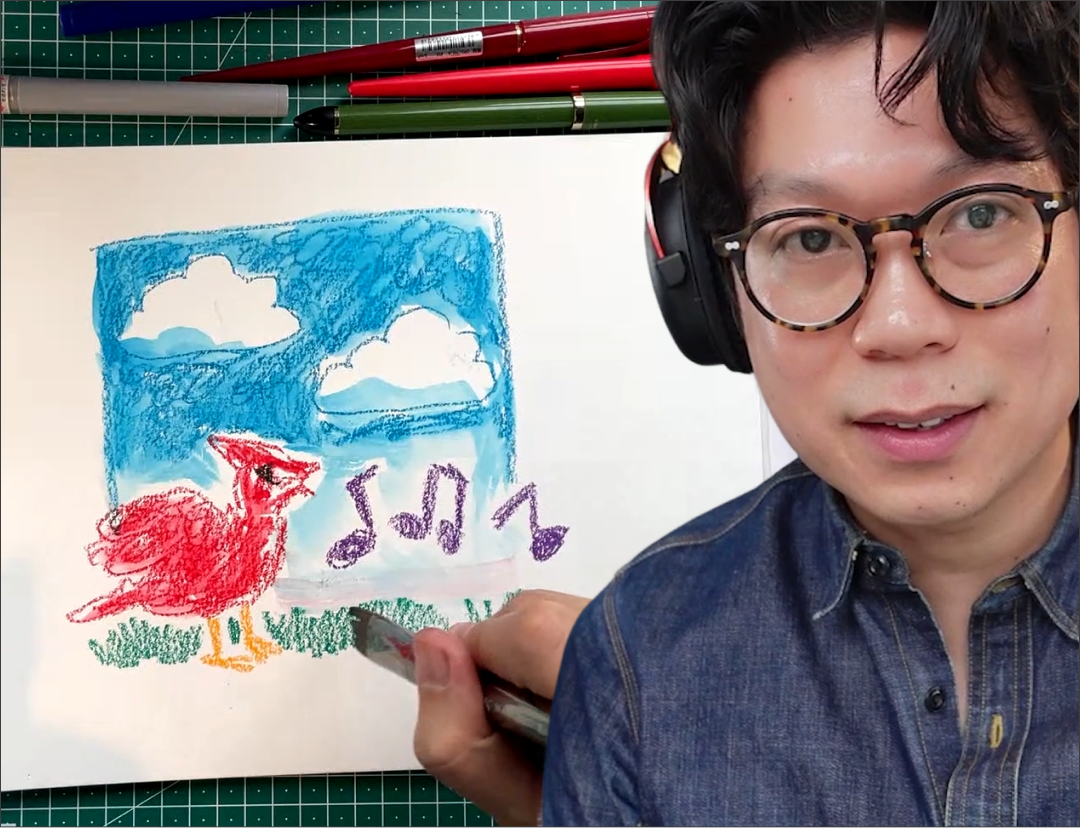
For the first installment of Creative Recess, the video series where we challenge Skillshare creators to talk to each other about getting down to the nitty gritty of making stuff, we brought Canadian illustrator Simon Ip and Skillshare animator/designer Derek Pante together to complete a few creative prompts and talk about how they get into the groove. Watch the full video here, and read an excerpt below.
Do you use prompts in your practice?
Simon: There’s two prompts I like to use when I create fun characters. I like to focus on a noun and an action, and that allows me to create as an exercise.
Derek: Can I say no? Not really.
Unprompted, what are you likely to start doodling?
Simon: I love to draw from observation. One of my favorite things is going to cafes, for example to sketch people very quickly before they notice I’m sketching them. It’s a good excuse to go out and bring your art materials and be in real life spaces.
Derek: Whenever I doodle it’s during meetings, or if I’m sitting on a train or sitting in a cafe and I’ll have a pen on me and I’ll draw something on the side of a piece of paper. A lot of the time, I’ll draw something I drew when I was a kid, so it’ll be Mario or the Batman logo, or you know that cool S? I make the cool S all the time. Random stuff from my childhood usually.
Simon: You forget that when you start doodling, you start improvising. This is really when you start pushing your imagination.
Derek: It’s interesting how random prompts will get you thinking about your childhood or your environment or things outside of where you are and what you’re doing right now. It helps you break out of what you’re doing.
|
|
|
 |
|
| Creative Recess: Simon & Derek face off with human-generated prompts |
|
|
|
|
|
|
 |
|
Before you go on your way, we want to leave you with a prompt to get your creative engines running for the day. Whatever your medium of choice—drawing, writing, collage, watercolor, being a Procreate master, you get the idea—you can apply this prompt to your practice. You have ten uninterrupted minutes. Ready? Here it goes.
|
|
|
| If your practice is illustrative, you must draw something using one specific shape, and that shape is a square. If your practice involves words or sounds, please incorporate the word “square” into your work however you see fit. |
|
|
|
|
|
|