And, cancers linked with wildfire smoke.
 

Health Rounds

Health Rounds

By Nancy Lapid, Health Science Editor

Hello Health Rounds readers! Today we highlight an experimental drug that is showing promise against one of the most difficult-to-treat malignancies: metastatic pancreas cancer. We also report on a study that found artificial intelligence is not quite ready to replace human clinicians for documenting patient visits, and another study on the serious health risks of wildfire smoke exposure.

Don't miss these breaking news stories: COVID shots, newer vaccines in limbo after US court halts Kennedy’s advisory panel; US military no longer requires flu vaccination; Kennedy says he has no White House instructions to avoid talking about vaccines; psychedelic drug developers rally as Trump orders FDA to expedite reviews and what you need to know about psychedelic therapies cited by Trump. 

Also: GLP-1 boom nudges cannabis dispensaries to rethink offerings; U.S. to ask states to revalidate "high-risk" Medicaid providers; and U.S. Supreme Court rejects Massachusetts school gender-identity policy challenge and plans to scrutinize Colorado preschool program's protections for LGBT parents.


Industry Updates

  • Profit forecasts from Danaher, Quest Diagnostics, UnitedHealth, Getinge and Diagnostyka.
  • AstraZeneca's tozorakimab reduces chronic lung disease flares; the company's ultomiris cuts urine protein in late-stage kidney disease trial; and its CEO says Germany risks missing out on new drugs.
  • EU approves Moderna flu, COVID combo shot for older adults.
  • US FDA approves Merck's pill combo to treat HIV.
  • Merck-Eisai's kidney cancer drug combo fails in late-stage trial.
  • Eli Lilly to buy Boston's Kelonia for up to $7 billion in cancer push.
  • Biogen buys China rights to TJ Biopharma immune disease drug in up to $850 million deal.
  • India seizes suspected fake Lilly Mounjaro pens.
  • UnitedHealth flags challenges in Medicare obesity drug pilot.
  • McKesson sells minority stake to Apollo Funds for $1.25 billion.
  • Boehringer Ingelheim launches AI center in London.
  • Boots owners hire consultants before possible 2027 London IPO.


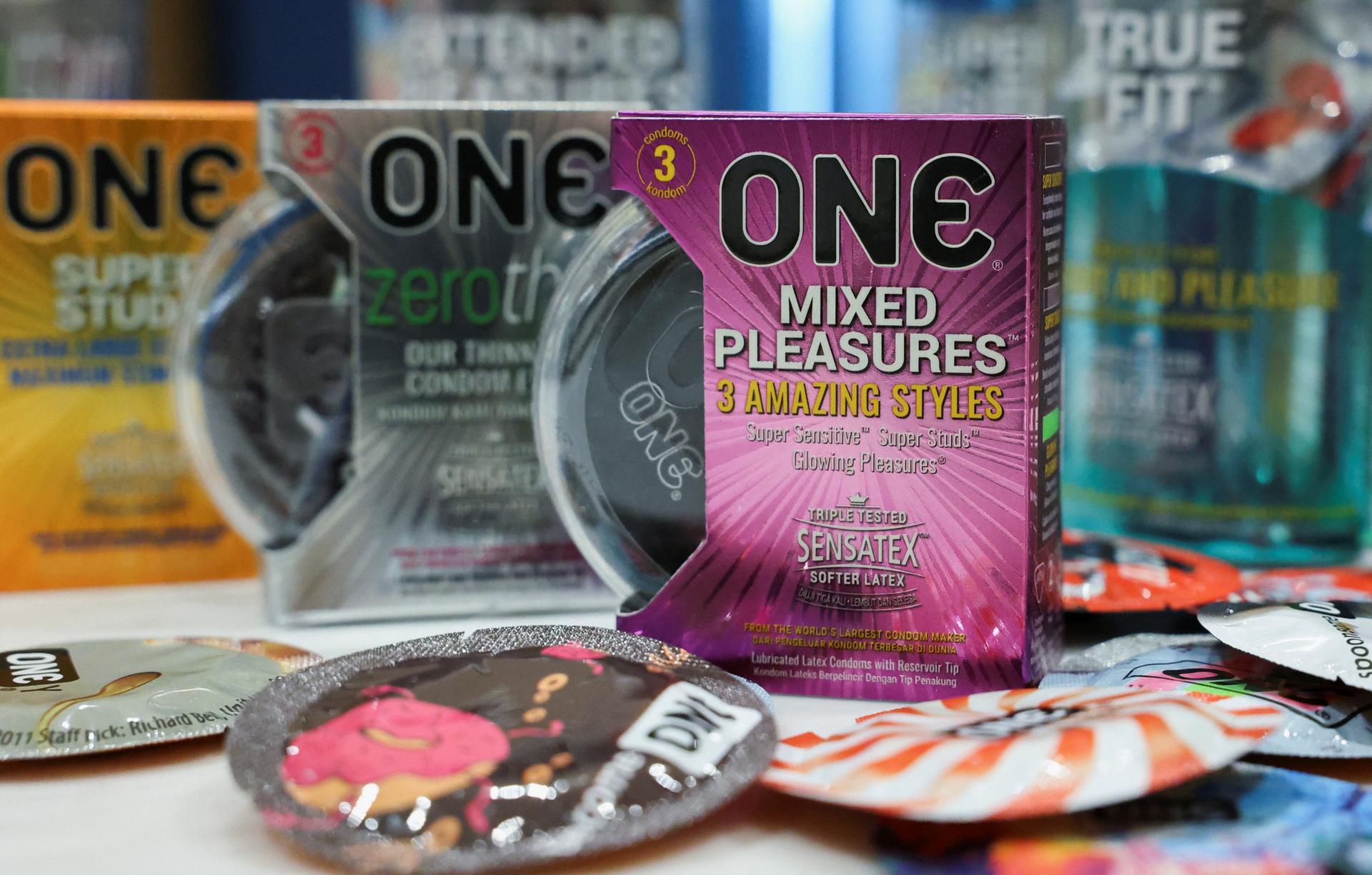
Top condom maker to raise prices sharply as Iran war strains supply chain 

REUTERS/Hasnoor Hussain

Malaysia's Karex Bhd, the world's top condom producer, plans to raise prices by 20% to 30% and possibly further if supply chain disruptions drag on due to the Iran war, its chief executive says.


Study Rounds

New drug improves advanced pancreatic cancer survival


Twice as many advanced pancreas cancer patients who received an experimental drug developed by Actuate Therapeutics with chemotherapy were alive after one year as those treated with chemo alone, according to results of a mid-stage trial.

At one year, 44% of patients who received Actuate's elraglusib were alive compared with 22% who received only chemotherapy, researchers reported in Nature Medicine.

In the 233-patient trial conducted in North America and Europe, about 13% of patients in the drug group were alive at two years. No one who received the standard chemotherapy treatment survived that long.

The drug reduced the risk of death during the study period by 38%, with those who received elraglusib living a median of 10.1 months, compared to 7.2 months for those who only received chemotherapy.

“Pancreatic cancer remains one of the most challenging solid tumors to treat, but these findings provide cautious optimism for patients,” study leader Dr. Devalingam Mahalingam of Northwestern University in Illinois said in a statement.

Elraglusib works by inhibiting a protein called GSK-3 beta that promotes cancer cell survival, tumor growth, and immune evasion.

“While these results will need to be confirmed in Phase 3 trials, observing survival benefit in such a difficult-to-treat cancer is encouraging,” Mahalingam said.

“Given the novel mechanism of this drug, these findings raise the possibility that it could have broader application across other tumor types.”


Read more about pancreas cancer drugs on Reuters.com

  • Revolution Medicines' experimental cancer pill boosts survival in late-stage study
  • Health Rounds: Roche/BioNTech experimental vaccine shows early promise in pancreatic cancer
  • Novocure's pancreatic cancer treatment meets main goal in late-stage study
 

Humans still write better clinical notes than AI scribes

While artificial intelligence tools that generate clinical notes are changing how doctors document patient visits, humans still do it better, researchers reported in San Francisco during the American College of Physicians annual meeting.

“Ambient AI scribes” work quietly in the background, “listening” to doctor-patient conversations and summarizing the encounter in clinical notes. The primary goal is to cut down on paperwork and give doctors more time to focus on patient care.

In practice, the technology has shown potential. Studies have found that AI scribes can cut down on documentation time, reduce after-hours work, and even help doctors feel more engaged during appointments, the researchers noted.

But the study published in Annals of Internal Medicine found advantages for humans over AI, especially in areas like thoroughness, organization, and clinical usefulness.

The researchers had 11 different AI scribe systems and 18 human doctors generate patient notes from recordings of five simulated clinical visits that included background noise, masked speakers, and non-native accents.

Thirty reviewers assessed the results without knowing who wrote them. Across the board, human-written notes came out on top, with significant differences in scenarios involving back pain, chest pain, and heart failure, the researchers found.

Challenging conditions, such as noisy environments or muffled speech, made it harder for the AI systems to keep up, the researchers also found.

“AI scribes should be regarded as tools for generating draft documentation that requires review and editing, rather than as a substitute for clinician-authored notes,” the authors wrote.


Read more about AI scribes on Reuters.com