1. Install Wazuh Agents Across Endpoints
The first step in using Wazuh is deploying Wazuh agents on all important endpoints, including staff laptops, servers, domain controllers, cloud systems, and databases. These lightweight agents continuously collect security logs and monitor system activity such as logins, file access, software installations, and system changes.
For example, in a school or healthcare environment, agents would be installed on systems containing safeguarding records or patient information. This ensures all activity involving sensitive data is monitored in real time.
The main benefit of Wazuh here is visibility. Many organisations only monitor firewalls or antivirus alerts, leaving endpoints largely unprotected. Wazuh closes this gap by providing direct insight into what is happening on every critical device, making hidden threats much easier to detect.
2. Configure Log Collection and Centralised Monitoring
Once agents are installed, Wazuh collects logs from across the environment and sends them to the central Wazuh manager. This includes Windows Event Logs, Linux authentication logs, cloud service logs, VPN access records, and third-party platform activity.
Instead of security teams checking multiple systems separately, everything is centralised into one dashboard. For example, if a user logs into Microsoft 365, accesses a local server, and downloads files from a cloud database, Wazuh can correlate these events together.
The benefit is efficiency and context. Attackers often move across multiple systems, and isolated logs may not appear suspicious on their own. Wazuh improves detection by connecting those events into a single security story.
3. Create Detection Rules for Suspicious Behaviour
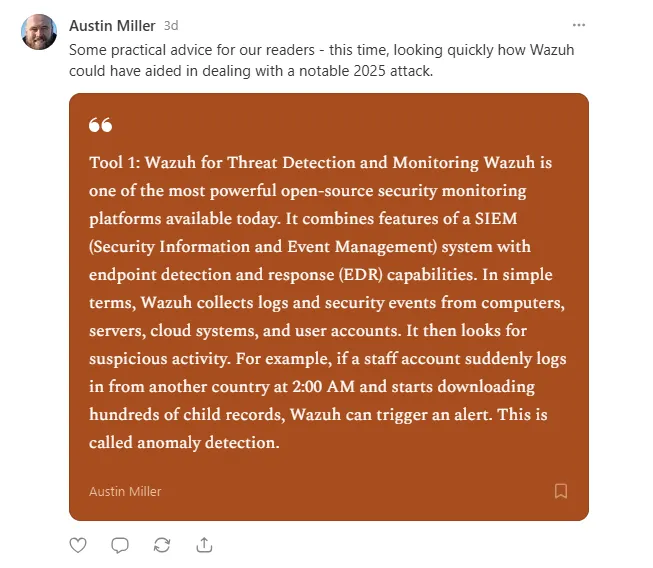
Wazuh becomes most effective when custom detection rules are configured. These rules identify behaviours that suggest compromise, such as repeated failed login attempts, logins from unusual countries, privilege escalation, or mass file downloads.
For example, if a staff account logs in from another country at 2:00 AM and starts exporting hundreds of child protection records, Wazuh can immediately generate an alert. This is known as anomaly detection.
The benefit is early warning. Rather than discovering a breach after data is stolen, security teams can investigate while the attack is still in progress. This can prevent a minor incident from becoming a major public breach.
4. Monitor Privileged Accounts and Administrative Actions
One of the most important uses of Wazuh is monitoring administrator accounts and privileged users. Attackers frequently target these accounts because they provide access to the most sensitive systems.
Wazuh can detect suspicious administrative activity such as new account creation, privilege escalation, unauthorised password resets, disabling security tools, or attempts to delete audit logs.
In the Kido attack scenario, if attackers gained access through stolen credentials from a third-party supplier, Wazuh could have flagged unusual administrator behaviour long before large-scale data theft occurred.
The major benefit here is containment. Privileged account misuse causes the most damage during breaches, and Wazuh helps organisations identify abuse before attackers gain full control.
5. Use File Integrity Monitoring for Sensitive Data
Wazuh also includes File Integrity Monitoring (FIM), which tracks changes to important files, folders, and configurations. This is especially useful for organisations storing highly sensitive records such as safeguarding reports, HR files, or financial data.
For example, if confidential child records are copied, deleted, or altered unexpectedly, Wazuh can alert security staff immediately. It can also detect ransomware behaviour by identifying large numbers of file changes happening rapidly.
The benefit is direct protection of critical data. Instead of simply monitoring user behaviour, Wazuh watches the files themselves, helping prevent both insider threats and external attacks.
6. Investigate Alerts and Respond Quickly
The final step is using Wazuh dashboards and reports to investigate alerts and respond quickly. Alerts are prioritised by severity, allowing security teams to focus on the highest-risk activity first.
For example, repeated failed logins followed by a successful login from an unusual location may indicate credential theft. Security teams can then disable the account, isolate the affected system, and begin incident response before records are stolen.
This solves one of the biggest cybersecurity problems: delayed breach discovery. Many organisations only realise they were attacked after data appears online or regulators become involved.
The greatest benefit of Wazuh is proactive defence. It shifts security from reactive investigation to real-time prevention, reducing financial loss, reputational damage, and regulatory consequences.