American Express CEO Stephen Squeri has a successful strategy.
 ͏  ͏  ͏  ͏  ͏  ͏  ͏  ͏  ͏  ͏  ͏  ͏  ͏  ͏  ͏  ͏  ͏  ͏  ͏  ͏  ͏  ͏  ͏  ͏  ͏  ͏  ͏  ͏  ͏  ͏  ͏  ͏  ͏  ͏  ͏  ͏  ͏  ͏  ͏  ͏  ͏  ͏  ͏  ͏  ͏  ͏  ͏  ͏  ͏  ͏  ͏  ͏  ͏  ͏  ͏  ͏  ͏  ͏  ͏  ͏  ͏  ͏  ͏  ͏  ͏  ͏  ͏  ͏  ͏  ͏  ͏  ͏  ͏  ͏  ͏  ͏  ͏  ͏  ͏  ͏  ͏  ͏  ͏  ͏  ͏  ͏  ͏  ͏  ͏  ͏  ͏  ͏  ͏  ͏  ͏  ͏  ͏  ͏  ͏  ͏  ͏  ͏  ͏  ͏  ͏  ͏  ͏  ͏  ͏  ͏  ͏  ͏  ͏  ͏  ͏  ͏  ͏  ͏  ͏  ͏  ͏  ͏  ͏  ͏  ͏  ͏  ͏  ͏  ͏  ͏  ͏  ͏  ͏  ͏  ͏  ͏  ͏  ͏ ­ ­ ­ ­ ­ ­ ­ ­ ­ ­ ­ ­ ­ ­ ­ ­ ­ ­ ­ ­ ­ ­ ­ ­ ­ ­ ­ ­ ­ ­ ­ ­ ­ ­ ­ ­ ­ ­ ­ ­ ­ ­ ­ ­ ­ ­ ­ ­ ­ ­ ­ ­ ­ ­ ­ ­ ­ ­ ­ ­ ­ ­ ­ ­ ­ ­ ­ ­ ­ ­ ­ ­ ­ ­ ­ ­ ­ ­ ­ ­ ­ ­ ­ ­ ­ ­ ­ ­ ­ ­ ­ ­ ­ ­ ­ ­ ­ ­ ­ ­ ­ ­ ­ ­ ­ ­ ­ ­ ­ ­ ­ ­ ­ ­ ­ ­ ­ ­ ­ ­ ­ ­ ­ ­ ­ ­ ­ ­ ­ ­ ­ ­ ­ ­ ­ ­ ­ ­  
Wednesday, May 6, 2026
How Amex CEO Stephen Squeri is winning over younger customers

Good morning. For the past eight years, Stephen Squeri has served as CEO of American Express, but he built his entire career, more than 40 years, inside the company.

In a new Fortune feature, my colleague Shawn Tully provides an in-depth and deeply entertaining profile of Squeri. The Bronx outsider—who was told he’d never be CEO—managed to make Amex cool again in part by betting young people wouldn’t blink at paying $900 per year for a premium card. His performance for shareholders now bests JPMorgan, Visa, and the S&P 500.

Tully writes: “Squeri has forged one of the top growth engines in financial services by luring lovers of luxe as never before, and trending exclusive and young in a big way. The success of Squeri’s highly original, against-the-tide strategy is something of a revelation. Though he heads the eighth largest U.S. player in financial services by market cap ($200 billion), and a fabled institution that ranks as Warren Buffett’s second largest holding at Berkshire Hathaway behind Apple, the Amex chief is little known to the public and keeps a far lower profile than, say, JPMorgan Chase’s Jamie Dimon or Goldman Sachs’ David Solomon.”

Since Squeri became CEO in early 2018, Amex has generated the highest returns among the largest U.S. commercial banks and payment providers. During that time, its stock has produced total yearly returns of 16.6%, Tully reported.

Squeri moved Amex away from the long-standing industry playbook which entailed bringing customers in with low-cost cards, then graduating them to premium products. He saw an opening with affluent young consumers who were willing to pay upfront for premium cards if the rewards and benefits were compelling.

To find out more about Squeri’s winning strategy and his journey to the top seat, you can read the complete article here.

Amex reported strong Q1 2026 results on April 23, with EPS of $4.28, beating estimates of $4.03 and marking a 6.2% positive surprise. The company also announced an increased quarterly dividend of $0.95 per share, payable on May 8. It would be no surprise to Squeri that younger cohorts led year-over-year spending growth: Gen Z surged 38%, millennials grew 13%, Gen X increased 8%, and baby boomers rose 4%.
 
Sheryl Estrada
sheryl.estrada@fortune.com
Leaderboard
Kari Wimmer was appointed CFO of Couchbase, Inc., an operational data platform for AI. Wimmer brings more than two decades of experience in corporate finance, M&A, and strategic development. She joins the company from Intellistack, where she also served as CFO. Previously, Wimmer served in senior executive roles at Businessolver, P2 Energy Solutions, and Arrow Electronics. 

Michael Mioska was appointed CFO of Birchtech Corp. (NYSE American: BCHT), an activated carbon technology provider. Mioska has over 20 years of accounting, audit, and financial reporting experience. Mioska has been an independent consultant providing finance, financial reporting, and M&A advisory-related services to a range of public companies since 2021, including Birchtech since 2023. Before that, Mioska worked at a public accounting firm in Vancouver, BC providing similar finance services since 2005.
Big Deal
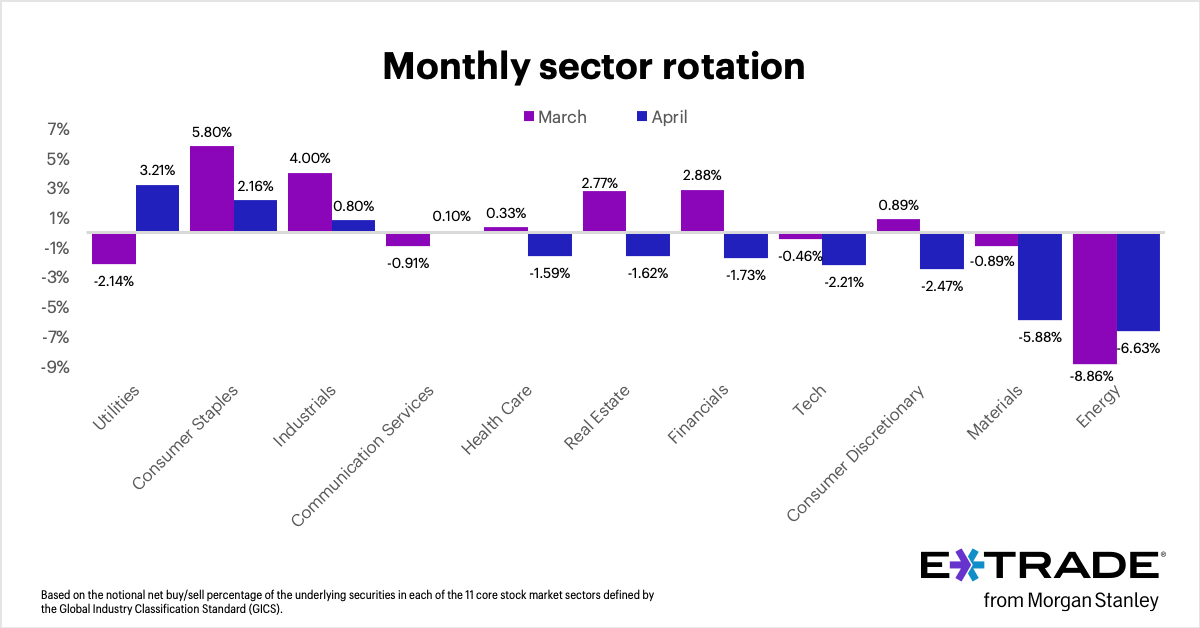
Just as E*TRADE from Morgan Stanley clients appeared to be buying weakness when the stock market sold off in March, they were net sellers in seven of 11 sectors in April as the S&P 500 posted its strongest month since November 2022.

—The sectors with the most net buying activity were utilities, up 3.21%; consumer staples, up 2.16%; and industrials, up 0.8%.

—The sectors with the highest net selling were energy, down 6.63%; materials, down 5.88%; and consumer discretionary, down 2.47%.

"April marked the second month in a row that clients were strong net sellers of energy stocks, which declined in April even though crude oil prices extended their rally," Chris Larkin, managing director of trading and investing, said in a statement. "While client buying in utilities and consumer staples highlighted a possible defensive bias, that wasn’t necessarily the case for industrials, with airlines, aerospace, and defense stocks attracting a good deal of attention."

Courtesy of E*TRADE
Going deeper
ISACA’s 2026 AI Pulse Poll, released on Tuesday at the ISACA North America Conference, examines trends in AI use, policies and standards, workforce impact, and security across the digital trust profession. While 90% of respondents believe employees are using AI in their organization, just 22% indicate that AI ROI has met or exceeded their expectations. Meanwhile, 23% say they believe it is too early to tell the ROI.

Another key finding is while AI policies are becoming more commonplace, just 38% of organizations have a formal, comprehensive AI policy—up from 28% in 2025. Thirty percent say they have a limited policy in place, and a quarter have no active policy. The findings are based on a poll of more than 3,400 digital trust professionals across IT audit, governance, cybersecurity, privacy and emerging technology roles. 
Overheard
“Stablecoins are intrinsically subversive. Most people in the world live under capital controls and don’t have the freedom to own whatever financial assets they want.”

—Haseeb Qureshi of the venture capital firm Dragonfly, speaking Tuesday at the Milken Institute conference in Beverly Hills. Qureshi noted that stablecoins are loosening the iron grip that governments have long wielded over their populations’ money supply, Fortune reported.