Image

Daily News Brief

May 12, 2026


Dear readers,


The Daily News Brief is taking a hiatus after this Friday, May 15, and will return in a refreshed form after Labor Day.


With global events unfolding in unprecedented ways, the Council on Foreign Relations is committed to helping our members and community make sense of a rapidly changing world. Our flagship newsletter will be reimagined to bring you the same global news you expect, alongside analysis from our experts and glimpses from inside the Council—a weekday afternoon dispatch you won't find anywhere else.


It has been our honor to land in your inbox each morning. Reply to this email to share feedback or sign up for updates as we test new formats this summer. (We read every email.)


Warm regards,


The Daily News Brief team


Welcome to CFR’s Daily News Brief. Today we’re covering the economic fallout of the Iran war, as well as...

  • U.S. President Donald Trump’s agenda for his upcoming Beijing trip
  • Haiti’s election uncertainty
  • An anti-corruption probe in Ukraine


Top of the Agenda

Trump declared the ceasefire with Iran was on “life support” yesterday—suggesting a potential return to fighting—while his administration announced plans to address the war’s costs for U.S households. Trump said he would support legislation to suspend the federal gas tax due to surging prices. The White House also plans to suspend tariffs on beef imports to assuage high prices, unnamed administration officials told multiple news outlets. The costs of the war are also taking a toll inside Iran, with layoffs across the private sector from tech to manufacturing, the New York Times reported. 


Where the war stands. Neither side announced a return to large-scale combat following Trump’s rejection this weekend of Iran’s latest peace proposal. Yet both Trump and Iranian Parliament Speaker Mohammad Bagher Ghalibaf suggested that economic pain would lead the other side to make concessions. Amid the diplomatic impasse, new reporting emerged about additional countries’ roles on the battlefield: the United Arab Emirates (UAE) struck Iran in early April, unnamed sources told the Wall Street Journal, while Pakistan allowed Iranian planes to park on its airfield in a move that could shield them from attacks, unnamed U.S. officials told CBS News. The Emirati foreign ministry declined to specifically comment, while the Pakistani foreign ministry called the CBS report “misleading” and said the aircraft arrived during the ceasefire.


The respective domestic costs. U.S. consumers have paid about $35 billion extra in gas and diesel costs since the start of the war, equivalent to a week’s worth of additional grocery bills for every household, according to an estimate from Brown University. In Iran, government official Gholamhossein Mohammadi said the war has eliminated an estimated one million jobs, according to semi-official news agency Tasnim. Iran’s ongoing internet shutdown—one of the longest and strictest in world history—has deepened the economic fallout. It is costing Iran as much as around $80 million per day in direct and indirect costs, the head of a tech industry lobbying group said.


“Trump’s number-one objective right now is to get out of this war, but while saving face. And so that’s why he’s not just ending the war right now, because that would leave Iran in control of 20 percent of the world’s oil. But he doesn’t know how to end the Iranian blockade, and so he’s replied with a U.S. blockade…It’s essentially now a question of which side is more susceptible to economic pain. Is it going to be Iran, which is facing this blockade, or is it going to be the U.S.?” 

—Senior Fellow Max Boot at a CFR Meeting


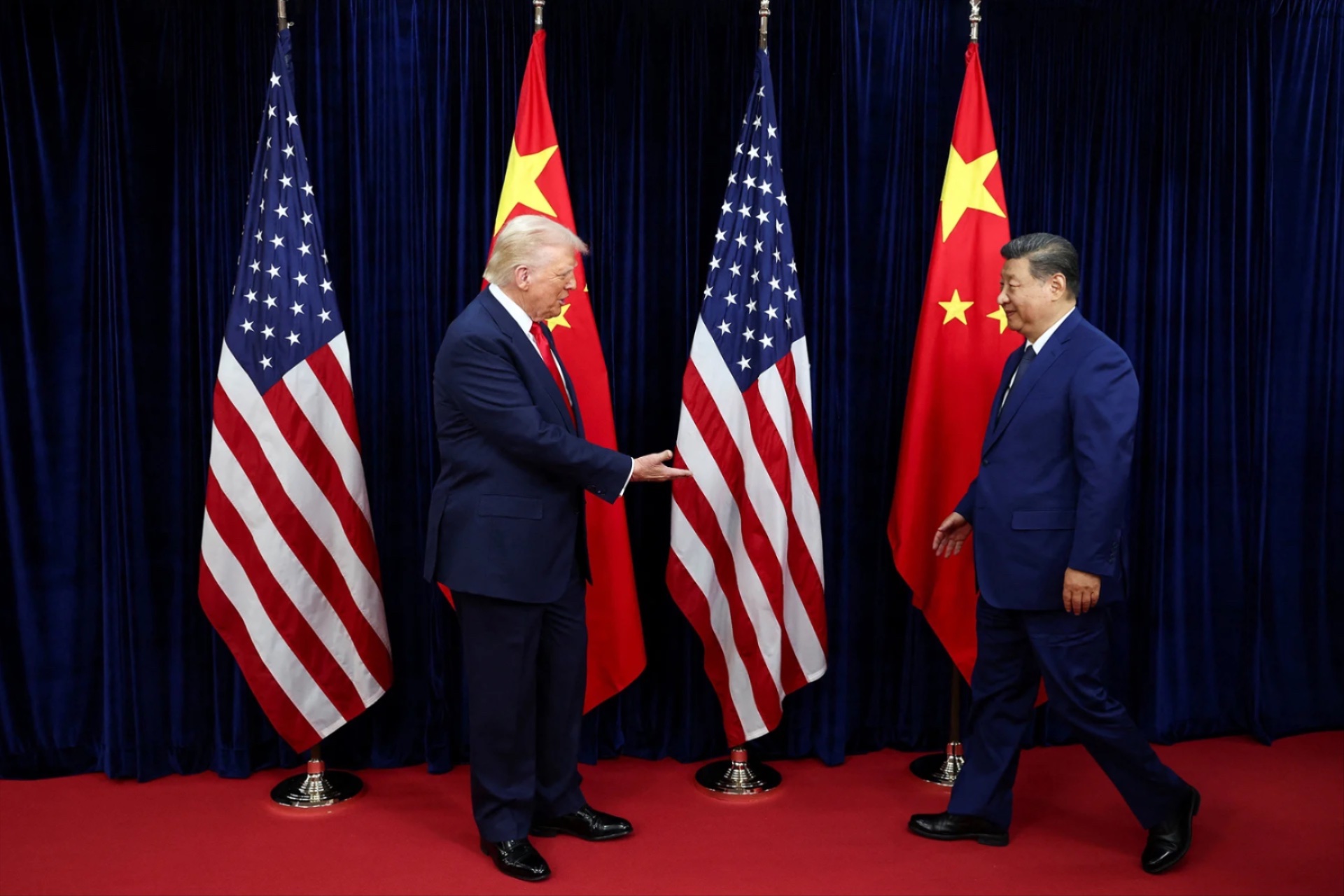
At the Trump-Xi Summit, China Will Have the Upper Hand

U.S. President Donald Trump extends his hand to greet Chinese President Xi Jinping on the sidelines of the Asia-Pacific Economic Cooperation (APEC) summit in Busan, South Korea, on October 30, 2025.

Evelyn Hockstein/Reuters

The meeting between the two leaders comes as the U.S.-led war against Iran generates further global instability and China continues to secure its critical minerals dominance and credibility as a global energy supplier. Five CFR experts break down what to expect in this article.


Across the Globe

Trump’s agenda in Beijing. Trump plans to discuss U.S. arms sales to Taiwan and call for the release of jailed Hong Kong pro-democracy media mogul Jimmy Lai when he meets with Chinese President Xi Jinping later this week, he said yesterday. The Iran war is also likely to feature prominently in the talks. The United States announced sanctions yesterday on twelve individuals and entities accused of helping Iran ship oil to China.  


France’s Africa investments. French and African investors are planning $27 billion worth of projects across African countries, French President Emmanuel Macron said today at a France-Africa summit in Nairobi. More than $16 billion will come from French firms and more than $10 billion from African entities. Kenyan President William Ruto said Africa’s new partnerships with France should be built on “win-win engagements” rather than “dependency.”


Haiti’s uncertain election calendar. Prime Minister Alix Didier Fils-Aimé said in a radio interview yesterday that Haiti was not secure enough to hold elections in August as planned. He suggested narrowing the candidate field before a vote is held. The country has been led by a series of interim officials since the 2021 assassination of President Jovenel Moïse; the August elections would have been the first since 2016. 


EU sanctions on Israeli settlers. European Union (EU) foreign ministers approved sanctions yesterday on Israeli settlers accused of committing violence against Palestinians, EU foreign policy chief Kaja Kallas wrote on social media. For months, former Hungarian Prime Minister Viktor Orbán had blocked the sanctions package. His successor Péter Magyar, who was sworn into office over the weekend, signaled he would support it.


Ukraine corruption probe. The country’s national anti-corruption agency announced yesterday it had charged former presidential chief of staff Andriy Yermak with involvement in a more than $10 million money laundering scheme. Yermak resigned from his position in November after anti-corruption officials searched his home. He told journalists in Kyiv yesterday he would comment when the investigation is complete.


Spain’s call for an EU military. Spain’s Foreign Minister José Manuel Albares called for the establishment of an EU military to keep the continent “free from coercion.” Albares, who made the remarks in an interview with Politico published yesterday, added that Europeans should be less dependent on U.S. choices in order not to be coerced via tariffs or military threats. He argued the move would not weaken NATO.


Impeachment probe into Ramaphosa. South Africa’s lower house of parliament said yesterday it will create a committee to reinvestigate whether allegations that President Cyril Ramaphosa concealed foreign currency at a private property warrant impeachment. South Africa’s top court recommended further investigation of the charges last week. Ramaphosa vowed yesterday to challenge a parliamentary report on the allegations and said he would not resign. 


Draft U.S.-Ukraine defense deal. The countries are in talks about a potential defense deal under which Kyiv would export military technology to the United States and partner with U.S. firms to manufacture drones, three unnamed sources told CBS News. Zelenskyy wrote on Telegram this week that twenty countries were working on potential drone agreements with Kyiv.


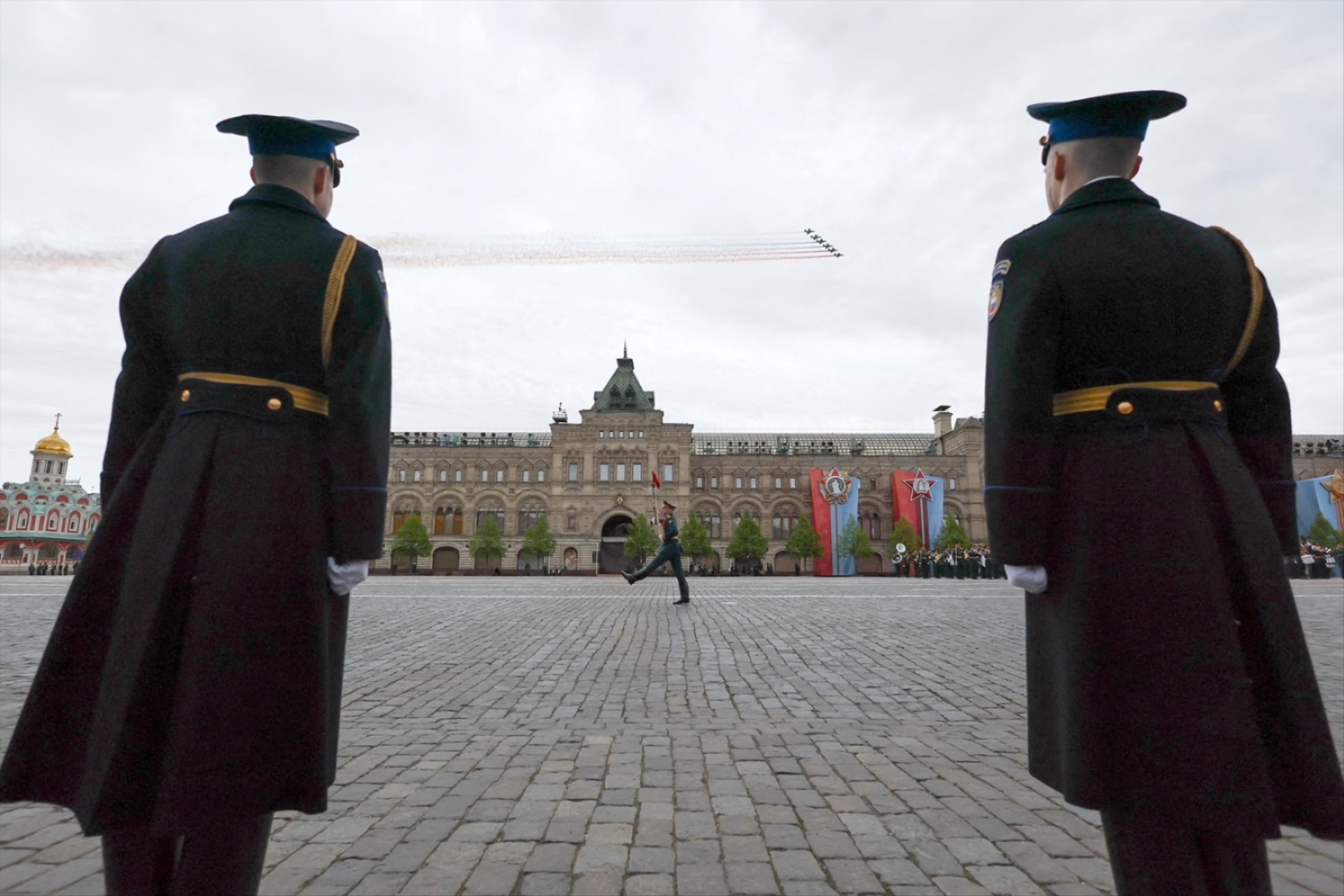
Moscow’s Latest Victory Day Parade Reveals Cracks in Putin’s Russia

Russia’s Su-25 jet aircraft release smoke in the colours of the Russian state flag during a military parade on Victory Day, marking the 81st anniversary of the victory over Nazi Germany in World War Two, in Red Square in central Moscow, Russia, on May 9, 2026.

Shamil Zhumatov/Reuters

The country’s Victory Day parade was shorter, quieter, and notably tank-free—a reflection of how dramatically Russia’s position has shifted since the invasion of Ukraine, CFR expert Thomas Graham writes in this article.


What’s Next

  • Today, the Bahamas holds general elections.
  • Today, the Cannes Film Festival begins.
  • Tomorrow, eastern flank NATO countries hold the B9 summit in Bucharest.


Europe’s Response to the Iran War