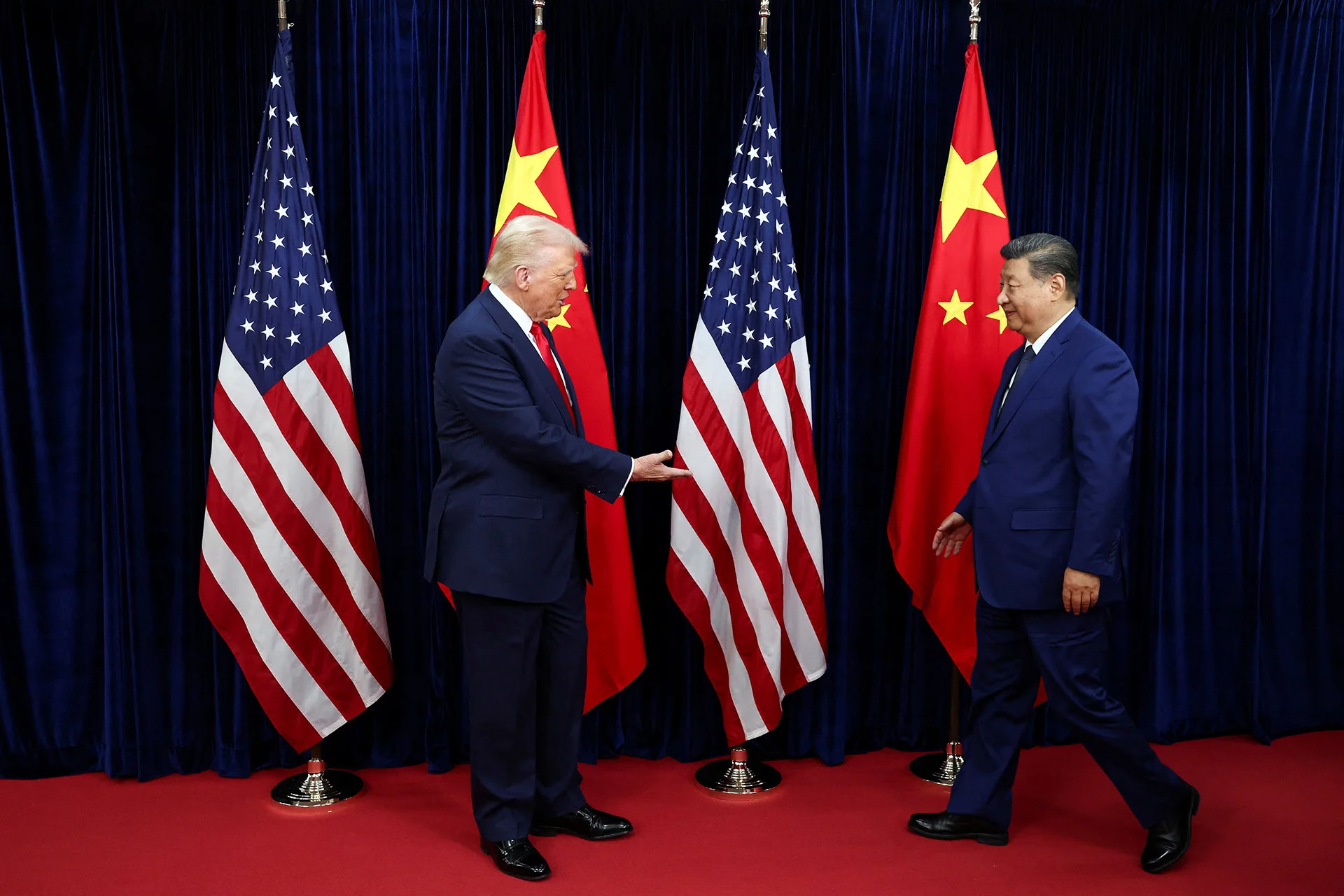
The meeting between U.S. President Donald Trump and Chinese President Xi Jinping comes as the U.S.-led war against Iran generates instability—and China continues to secure its energy and critical minerals dominance. CFR experts Rush Doshi, Chris McGuire, Heidi E. Crebo-Rediker, David Sacks, and David M. Hart assess the key dynamics at play.
CFR President Michael Froman analyzes the issues on the table ahead of the meeting, noting that “the world is a safer place when its two largest economies and most powerful countries are on speaking terms.”
“The summit is unlikely to alter the character and course of the U.S.-China relationship long-term. It is about managing for stability, not solving outstanding concerns.”
Trump is arriving to the summit seeking headline deals and visible momentum ahead of the U.S. midterms, while Xi is playing a longer game that is focused on strategic patience, writes Zongyuan Zoe Liu.
China will not negotiate in good faith on artificial intelligence (AI) safety. Narrowly scoped dialogue paired with maximum pressure on export controls is the only way to shift its calculus, writes Chris Maguire.
Iran could not defeat the United States militarily, but by choking the Strait of Hormuz, it never needed to. China is taking note, write Elisa Ewers and Michael Schiffer.
Differences over Taiwan’s status have fueled rising tensions between the island and mainland China, making it the likeliest potential flash point in U.S.-China relations.
In this episode of The Spilloverpodcast, Rebecca Patterson and Sebastian Mallaby unpack the growing U.S.-China rivalry, the risks facing global markets and supply chains, and whether the world is entering a new era of economic fragmentation and technological competition.
U.S. President Donald Trump extends his hand to greet Chinese President Xi Jinping on the sidelines of the Asia-Pacific Economic Cooperation (APEC) summit in Busan, South Korea, on October 30, 2025.(Evelyn Hockstein/Reuters)